
Is a Local Wine Club Worth It? A Buyer's Checklist (and Red Flags to Avoid)
You've probably seen wine club ads pop up everywhere—sleek bottles on marble countertops, promises of "sommelier-curated" selections arriving monthly. Every one claims to offer the best value, the most exclusive bottles, the easiest experience.
Here's what we've learned running a wine club at The Pip in Downtown Dixon: not all wine clubs deliver what they promise. Some offer genuine discovery and real value. Others lock you into rigid commitments, ship generic bottles you could grab at any grocery store, and make cancellation feel like escaping a timeshare presentation.
We've had members join our club after frustrating experiences elsewhere, and the stories are remarkably similar. So we put together this checklist—both to help you evaluate any wine club (including ours) and to explain what we think actually matters.
Local Wine Clubs vs. National Subscription Boxes: What's Actually Different?
Before diving into the checklist, it's worth understanding why local wine clubs deserve separate consideration from big national subscription services.
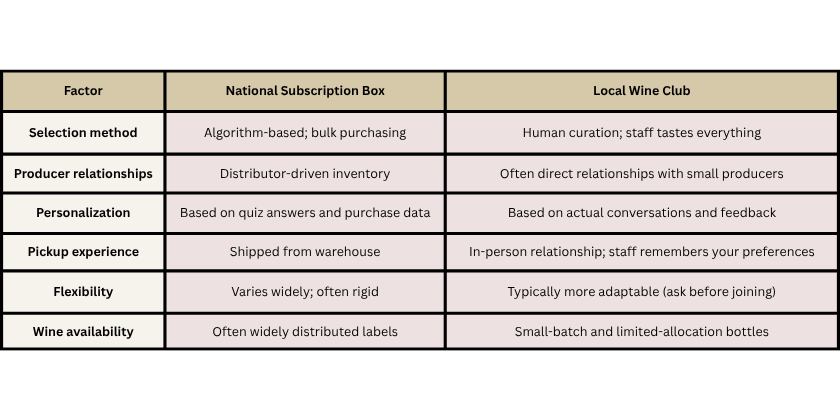
National subscription boxes operate at massive scale. They negotiate bulk deals, ship from centralized warehouses, and match you with bottles based on data. That model works for some people—but their selections often skew toward widely available wines that need to move volume.
A local wine club works differently. At The Pip, we taste every wine before it hits the shelf. We know the producers. We can tell you why we picked that particular Albariño from Rías Baixas or that small-production Grenache from Paso Robles—and we'll remember what you liked last month when we're choosing next month's bottles.
That personal curation is the real value proposition. But only if the club is structured to actually deliver it.
The Buyer's Checklist: Seven Things to Evaluate Before Joining
Run any wine club through these criteria before committing your credit card.
1. Transparency About What You're Getting
A trustworthy wine club tells you exactly what to expect upfront:
How many bottles per shipment or pickup
Price range of included wines
Whether selections are red-only, white-only, or mixed
Retail value compared to member price
If a club is vague about these details—or buries them in fine print—that's your first warning sign. You shouldn't have to join just to find out what you're paying for.
2. Flexibility in Selection and Pickup
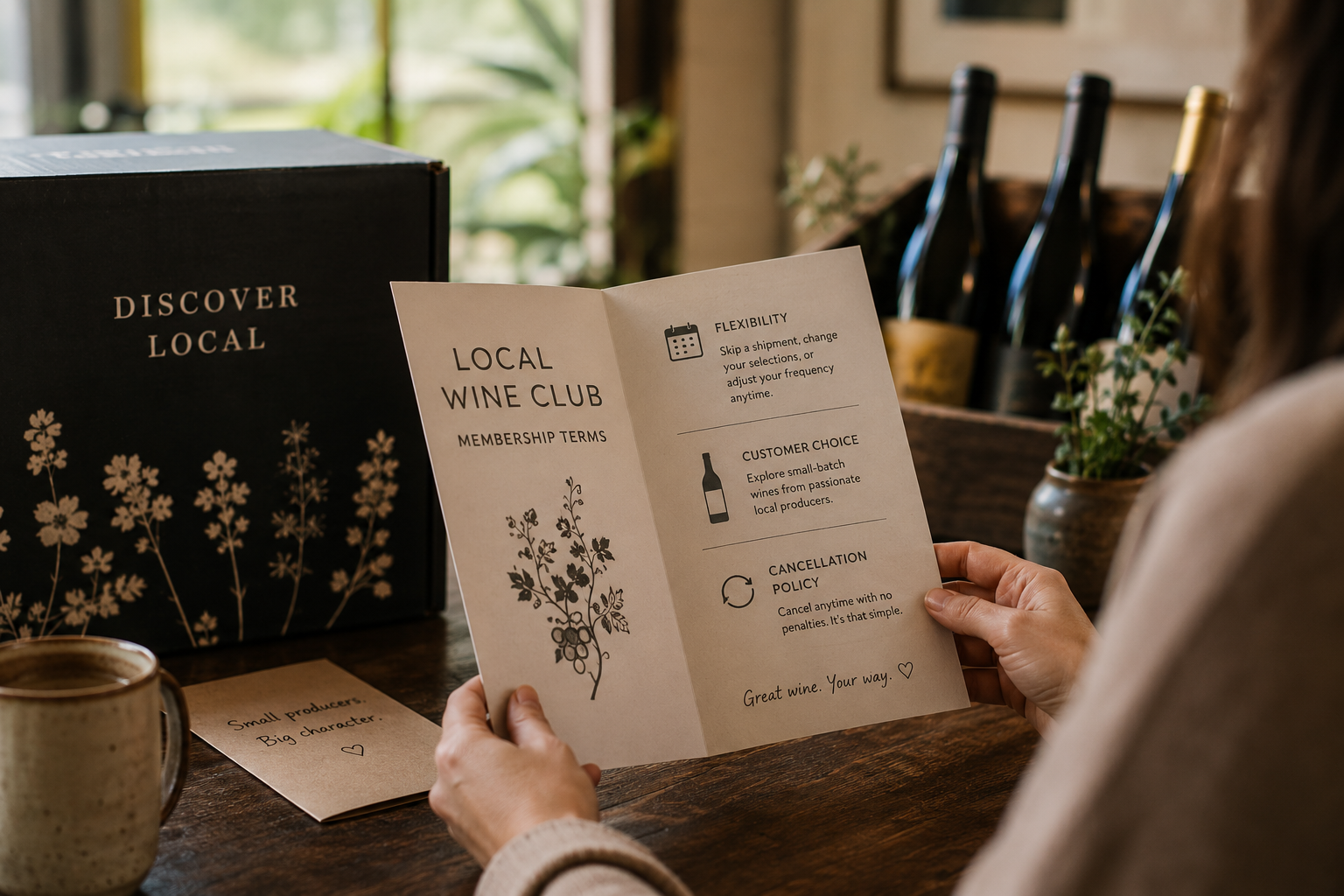
Life happens. Schedules change. Travel comes up. A good wine club works with your life, not against it.
Look for clubs that offer:
Skip options when you're traveling or overstocked
Pickup windows that fit your schedule (not just "Tuesday between 2-4pm")
Swap options if you genuinely can't drink a particular varietal
Hold policies for bottles you can't grab right away
Rigid clubs that penalize you for missing a pickup or charge fees for skipping? That's a red flag. Consumer advocacy organizations consistently find that subscription services with inflexible terms generate significantly more complaints than those offering easy modification options.
3. Clear Cancellation Policies
This is the big one. And it's where many wine clubs fail spectacularly.
Before joining, you should be able to answer these questions:
Can I cancel anytime, or is there a minimum commitment?
Do I need to call, email, or can I cancel online?
Are there cancellation fees or "final shipment" requirements?
How much notice do I need to give?
If you can't find this information easily—or if the process sounds complicated—proceed with caution. The Federal Trade Commission has pushed for "click to cancel" rules precisely because so many subscription services make leaving unreasonably difficult.
4. Actual Curation, Not Just Volume
Anyone can throw twelve random bottles in a box. Real curation takes expertise and intention.
Ask the club (or look for evidence of):
Who selects the wines? What's their background?
Do they visit producers or just order from distributors?
Can they explain why specific bottles were chosen?
Do selections change seasonally or follow a coherent theme?
At our shop, we might feature a natural winemaker from the Sierra Foothills one month and a family-run estate from Portugal's Douro Valley the next. The connecting thread isn't geography—it's that we tasted the wines, got excited about them, and think our members will too.
Generic clubs can't tell you that story. They're moving inventory, not sharing discoveries.
5. Perks That Actually Get Used
Many clubs advertise long lists of "exclusive benefits." But be honest with yourself: will you actually use them?
Valuable perks might include:
Meaningful discounts on additional bottle purchases
Priority access to limited-allocation wines
Free or discounted tastings and events
First notification when rare bottles arrive
Less valuable (but commonly advertised):
"VIP" access to events you'd never attend
Discounts at partner businesses across the country
Points systems with complicated redemption rules
Wine industry research consistently shows that member retention correlates strongly with perceived value of secondary benefits beyond the wines themselves. If the perks feel useful to your actual life, you'll stay. If they feel like marketing filler, you'll eventually cancel.
6. The People Behind the Selections
Can you actually talk to someone who knows wine? This matters more than most people realize.
A local wine club should feel like having a knowledgeable friend in the industry—someone who filters through hundreds of options so you don't have to. When you come in to grab your bottles, they should be able to:
Explain what makes this month's selections interesting
Recommend food pairings for your weekend dinner
Remember that you loved (or hated) something similar before
Pour you a taste of something new while you're there
That ongoing relationship makes the curation better over time. The more they know what you like, the more precisely they can select for you.
7. Location and Convenience
For local wine clubs specifically, think practically:
Is the pickup location somewhere you'd actually go?
Are the hours realistic for your schedule?
Is it a place you'd want to spend time, or just a quick in-and-out?
The best local clubs double as destinations. You're not just grabbing a box—you're walking into a space where you might stay for a glass, discover something new, or run into a friend.
Red Flags That Should Make You Walk Away
Any of these warning signs should give you serious pause.
Pressure to Commit Immediately
"Join today for this special rate!" or "Offer expires at midnight!" tactics exist because they work—on impulse decisions you might regret.
A legitimate wine club with genuine value doesn't need high-pressure sales tactics. The wines speak for themselves. If someone's rushing you, ask yourself why.
Vague or Hidden Pricing
If you can't find clear pricing without entering your credit card, something's off. Watch for:
"Starting at" prices that don't reflect actual costs
Separate shipping fees buried in checkout
Automatic upgrades to premium tiers
"Processing fees" that appear after signup
Difficulty Reaching Actual Humans
Can you call or email with questions before joining? Do you get a real response—from a person, not a bot?
A club that's hard to reach during the sales process will be even harder to reach when you have a problem. Local wine clubs should feel local—meaning actual people who know your name and answer your questions directly.
Generic Selections Available Everywhere
If the club's featured bottles are the same wines you've seen stacked at Costco or your grocery store, what are you actually paying for?
The whole point of a curated wine club is access to bottles you wouldn't discover on your own—small producers, limited runs, selections the person curating actually believes in. If you recognize everything from the supermarket aisle, that's not curation. That's convenience markup.
Guilt-Heavy Cancellation Processes
"We're sorry to see you go" emails are fine. But if cancellation requires multiple phone calls, guilt-trip messages, or "retention specialist" conversations designed to wear you down? That's a business model built on friction, not value.

Questions to Ask Before Joining Any Wine Club
Still interested after running through the checklist? Good. Here are the specific questions to ask before you hand over your payment information.
About flexibility:
Can I skip a month if I'm traveling or overstocked?
How much notice do I need to give?
Is there a fee for skipping?
About pickup or delivery:
What's the pickup window? Can I come any time during business hours?
How long will you hold my bottles if I can't grab them right away?
If you ship, which states do you deliver to?
About cancellation:
Can I cancel anytime without penalty?
How do I cancel—online, email, phone?
Is there a minimum number of shipments required?
About the wines:
Who picks the selections and what's their approach?
Can I provide feedback on what I liked or didn't like?
Will you swap a bottle if I genuinely can't drink a particular varietal?
A good wine club will answer these questions clearly and without defensiveness. They want members who are genuinely excited to be there—not people who feel trapped.
Making the Final Decision
Here's the honest assessment: a wine club is only worth it if you'll actually use it.
Before joining, ask yourself:
Do I realistically drink enough wine to justify monthly bottles?
Will I actually visit to pick up, or will bottles pile up unclaimed?
Am I excited about discovery, or do I already know exactly what I like?
Does this club's flexibility match how my life actually works?
If you're someone who enjoys trying new things, appreciates guidance from people who know wine, and wants a reliable source of bottles you won't find at the grocery store—a good local wine club can genuinely enhance your life.
If you're perfectly happy with your current wine-buying routine and would view a membership as one more obligation? Save your money. No judgment.
Ready to Find Your Wine Club Home?
At The Pip Wine Bar & Shop in Downtown Dixon, we built our Wine Club around everything we've talked about here: genuine curation from people who taste every bottle, flexible pickup that works with your schedule, and cancellation policies that don't require a lawyer to understand.
We pick wines you won't find at big-box stores—small producers, interesting bottles, selections we're genuinely excited about. And when you come in to grab your monthly picks, we'll remember what you liked last time.
Dixon's also a great halfway point if you're meeting friends from the Bay Area, Sacramento, Napa, or heading to Tahoe. Swing by, grab your bottles, and hang out for a bit.
Curious if it's right for you? Come hang out, taste some wine, and ask us anything. No pressure, no hard sell—just good bottles and honest answers.
Frequently Asked Questions
How much should I expect to pay for a local wine club membership?
Most local wine club memberships range from $30 to $80 per month, depending on the number of bottles and their retail value. The key question isn't just price—it's whether you're getting bottles you couldn't easily find elsewhere. A good club provides access to small-producer wines and curated selections that justify the membership over simply buying retail.
What's the difference between a wine subscription box and a local wine club?
Wine subscription boxes typically ship from centralized warehouses using algorithm-based selections from large inventories. Local wine clubs are curated by actual people—often wine bar owners or shop buyers—who taste everything personally and can adjust selections based on your feedback. The local relationship means better curation over time and someone to ask questions when you pick up.
Can I cancel a wine club membership if I don't like it?
That depends entirely on the club's policies, which is why checking cancellation terms before joining is essential. Reputable clubs allow cancellation anytime without penalty or complicated processes. If a club requires phone calls to retention specialists or imposes fees for leaving, consider that a major red flag and look elsewhere.
How do I know if a wine club is actually curated versus just random bottles?
Ask who selects the wines and how they choose them. Genuinely curated clubs can explain their selection philosophy, tell you about the producers, and describe why specific bottles made the cut. If answers are vague or generic—or if selections look like the same wines you'd find anywhere—the "curation" is likely more marketing than substance.
What should I do if I can't pick up my wine club bottles on time?
Check the club's hold policy before joining. Good local clubs understand that schedules vary and will hold your bottles for a reasonable period without penalty. Some offer extended pickup windows or delivery options for members who can't make it in. Clubs that charge fees for late pickup or forfeit bottles after short windows aren't prioritizing member experience.
About Our Expertise
The Pip Wine Bar & Shop is a curated wine bar and bottle shop in Downtown Dixon, California. Our team tastes hundreds of wines each year to select the bottles we carry—focusing on small producers and unique selections you won't find at grocery stores or big-box retailers. We built our Wine Club around the principle that membership should feel like a benefit, not an obligation. Every recommendation in this guide reflects our firsthand experience running a member program designed for flexibility, transparency, and genuine discovery.
Works Cited
[1] Federal Trade Commission — "FTC Proposes Rule to Make It Easier for Consumers to Cancel Subscriptions."
https://www.ftc.gov/news-events/news/press-releases/2023/03/ftc-proposes-rule-provision-making-it-easier-consumers-click-cancel