
Private Party Food Options: How to Plan Bites, Pizza Nights, and "Enough to Feel Like Dinner"
Planning a private party means juggling guest lists, dates, and venues—but the food question tends to trip up even experienced hosts. The challenge isn't finding a caterer. It's figuring out how to feed a group without overcommitting to a formal dinner setup or leaving guests picking at a sad cheese plate by 8 PM.
Private party food planning works best when you match how people actually behave at celebrations: moving around, catching up with drinks in hand, and grazing through the night rather than sitting down for courses.
This guide breaks down how to plan tapas-style bites, when pizza makes sense as an anchor, and how to create that "enough to feel like dinner" experience without a commercial kitchen.
Key Takeaways:
Tapas-style service keeps guests moving and socializing better than plated meals
Plan 6–8 pieces per person for the first hour, 4–6 pieces per additional hour
A pizza anchor mid-event satisfies the "I haven't eaten all day" crowd
Smart timing prevents awkward food gaps and keeps energy high
Dietary restrictions are easier to accommodate with varied small plates
Why Tapas-Style Service Works for Private Parties
Most private party planners assume guests need full plated entrées, but celebration dynamics tell a different story.
When people gather for birthdays, reunions, work milestones, or girls' nights, they want to move around. They want variety. They want something in hand while they're laughing, catching up, and enjoying a cocktail. According to culinary historians, the small-plate approach originated precisely for this purpose—encouraging conversation and connection over rigid meal structures [1].
Tapas-style bites solve the "stuck in your seat" problem that plated dinners create. Nobody's waiting for their entrée while conversation stalls. And counterintuitively, most guests eat more total food when it's passed or shared in waves throughout the evening, because there's no single moment where they feel "done."
The practical advantage for hosts: you're not locked into one entrée everyone has to tolerate. You're creating an experience where every guest finds something they love—and that flexibility extends naturally to dietary accommodations.
The "Enough to Feel Like Dinner" Formula
Event planning professionals generally recommend 6–8 pieces per person for the first hour and 4–6 pieces per hour after that for heavy appetizer-style events [2]. But raw math only gets you partway there. The real planning happens in texture, timing, and anchoring.
For a 2-hour party with 15 guests:
Plan for roughly 150–180 individual bites total
Mix textures deliberately: something crunchy, something savory, something indulgent
Include at least one "anchor" item that feels substantial—soft pretzels, flatbreads, or heartier boards
For a 3-hour event:
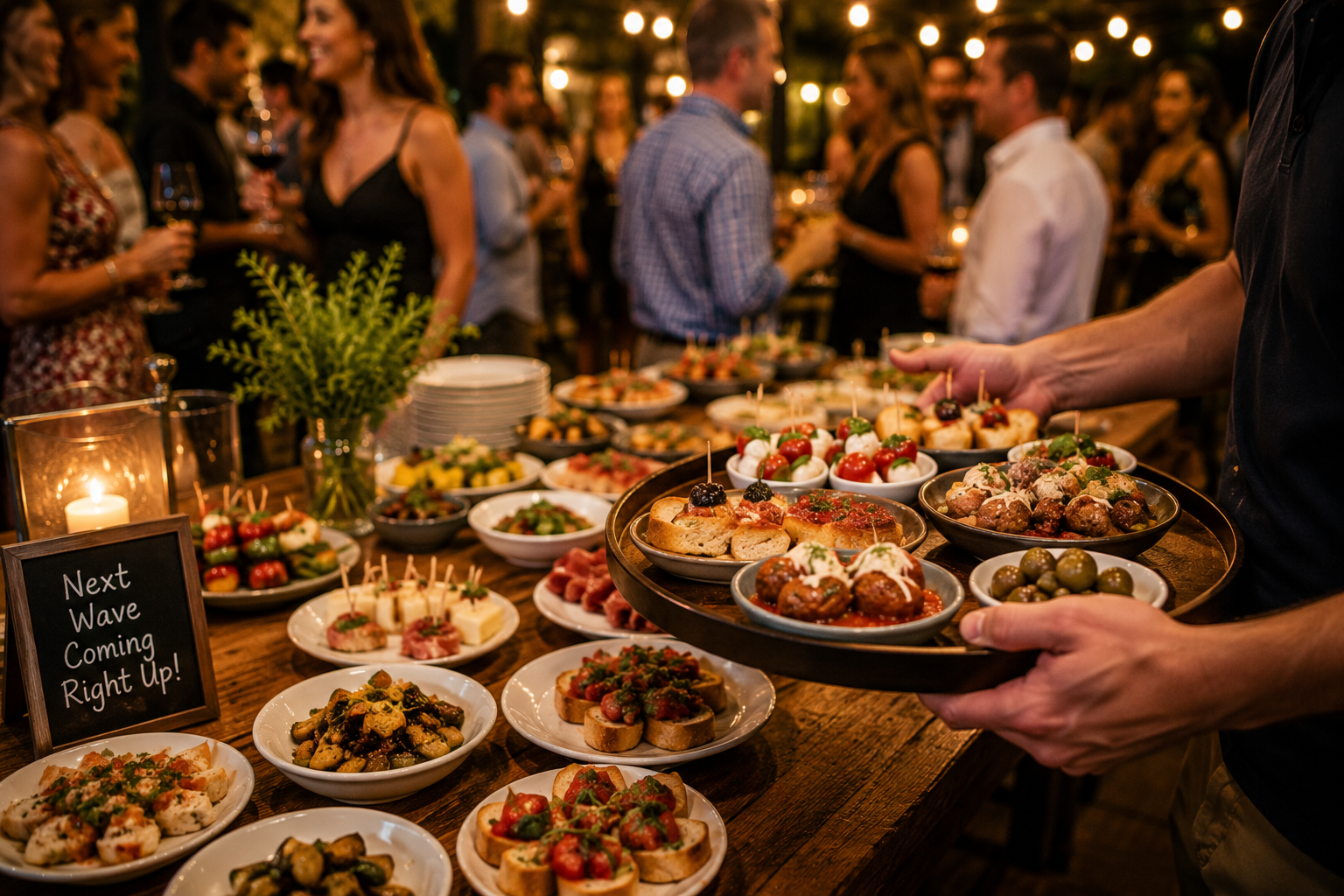
Add another food wave midway through
Consider a pizza feature in hour two to reset energy and satisfy hungrier guests
Variables that shift your numbers:
Evening events (6 PM start) typically require more food than later gatherings (8 PM+)
Events with alcohol service increase eating—plan toward the higher end of ranges
Mixed-age crowds often have wider appetite variance
The goal isn't calorie math. It's making sure nobody leaves hungry or feels shortchanged when they expected something more substantial.
When Pizza Night Makes Sense for Private Parties
Sometimes tapas alone doesn't match the vibe. Maybe you're hosting a birthday with a mixed crowd arriving straight from work, actually hungry. Maybe it's a Friday celebration where light bites won't cut it.
That's where a pizza anchor changes the equation.
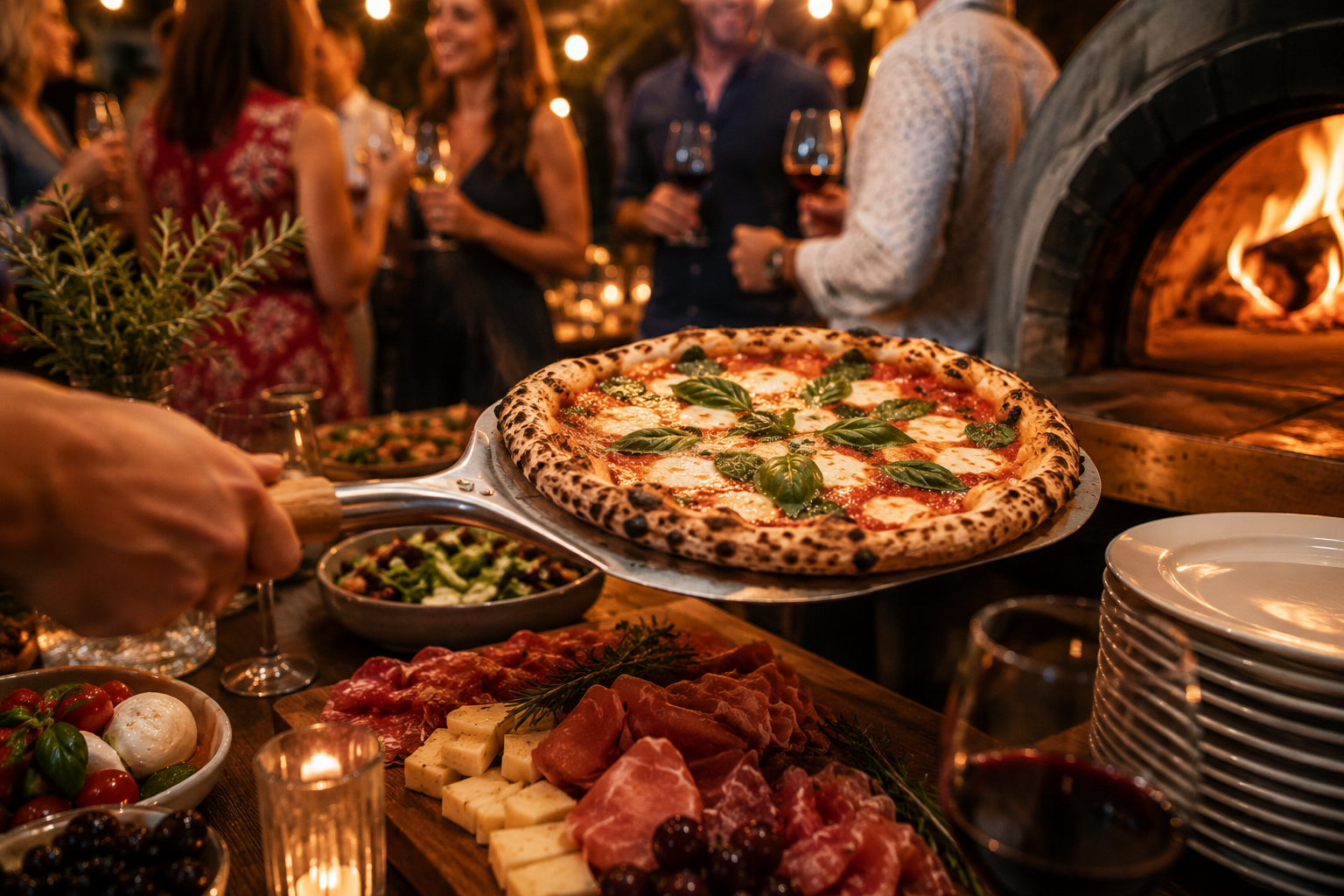
Mobile pizza vendors create a "real food" centerpiece without requiring a full kitchen or formal catering contract. Sacramento-based Jodie Chavious, for example, brings wood-fired pizza directly to events—fresh, made on-site, with the kind of visual appeal that gives guests something to gather around and photograph [3].
Why pizza works at private parties:
It feels generous (unlimited slices eliminate portion anxiety)
It photographs well for social sharing
It satisfies the "I skipped lunch" crowd without disrupting the casual atmosphere
It pairs naturally with wine and cocktails
It anchors the night without requiring formal service staff
The timing matters. Pizza works best as a mid-event anchor—served about 60–90 minutes in, after guests have had a drink or two and some lighter bites. Leading with pizza front-loads the food energy; saving it creates a natural second act.
Building Your Private Party Food Timeline
Strategic pacing keeps energy consistent without overwhelming guests or leaving awkward gaps. Here's a realistic flow for a 3-hour evening event:
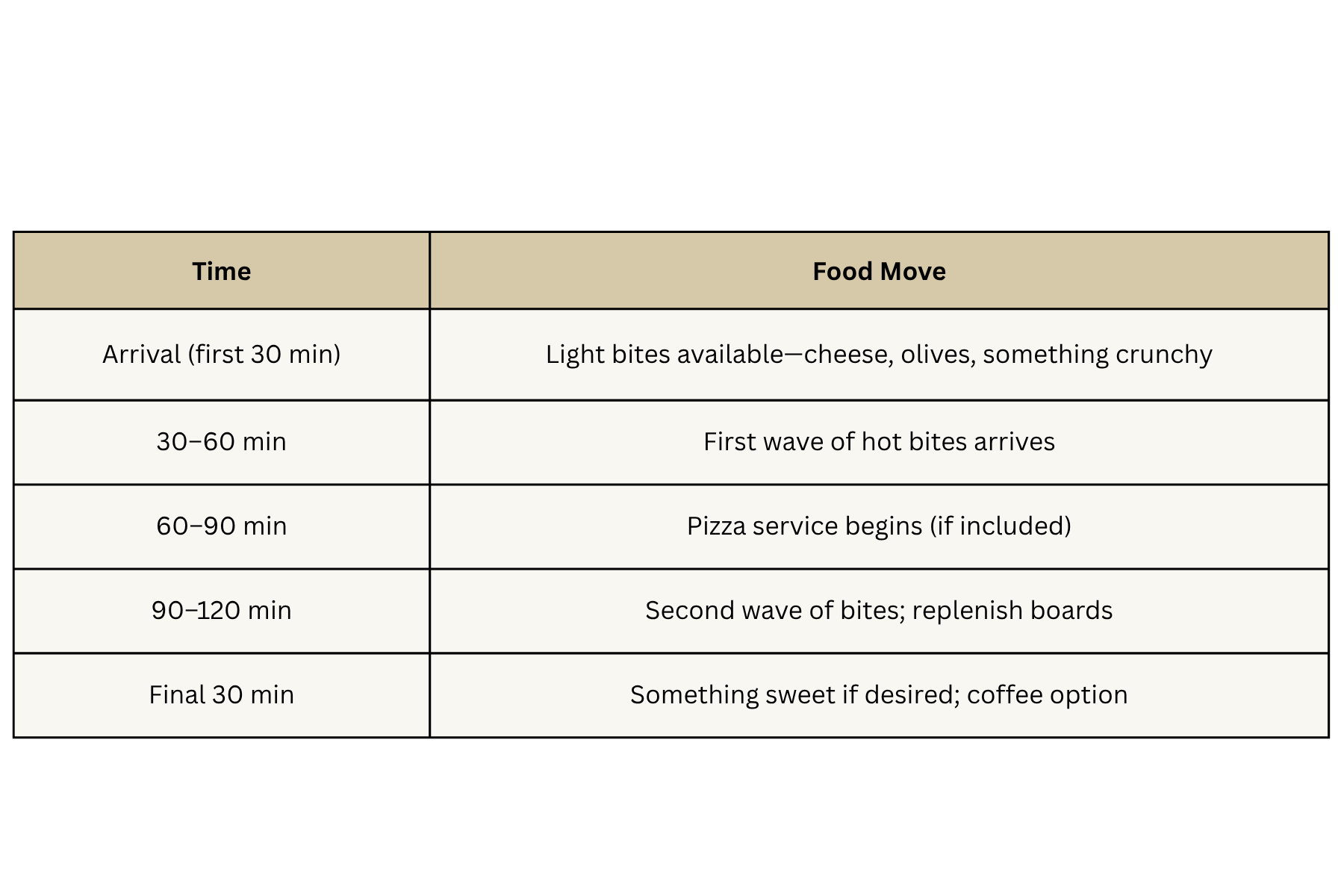
This structure does two things: it prevents the "all the food came out at once and now there's nothing" problem, and it gives guests permission to keep grazing rather than feeling like they missed their window.
For venues that handle private events regularly, this pacing is built into their planning process. Ask specifically about food timing during booking conversations—you want control over when things come out, not a kitchen making those calls independently.
What Tapas-Style Actually Means for Party Planning
Tapas-style service isn't code for "not enough food." The small-plate philosophy, as food writers have noted, emphasizes intentional variety in manageable portions—designed for sharing and discovery rather than individual entrée isolation [4].
For private events, think in categories:
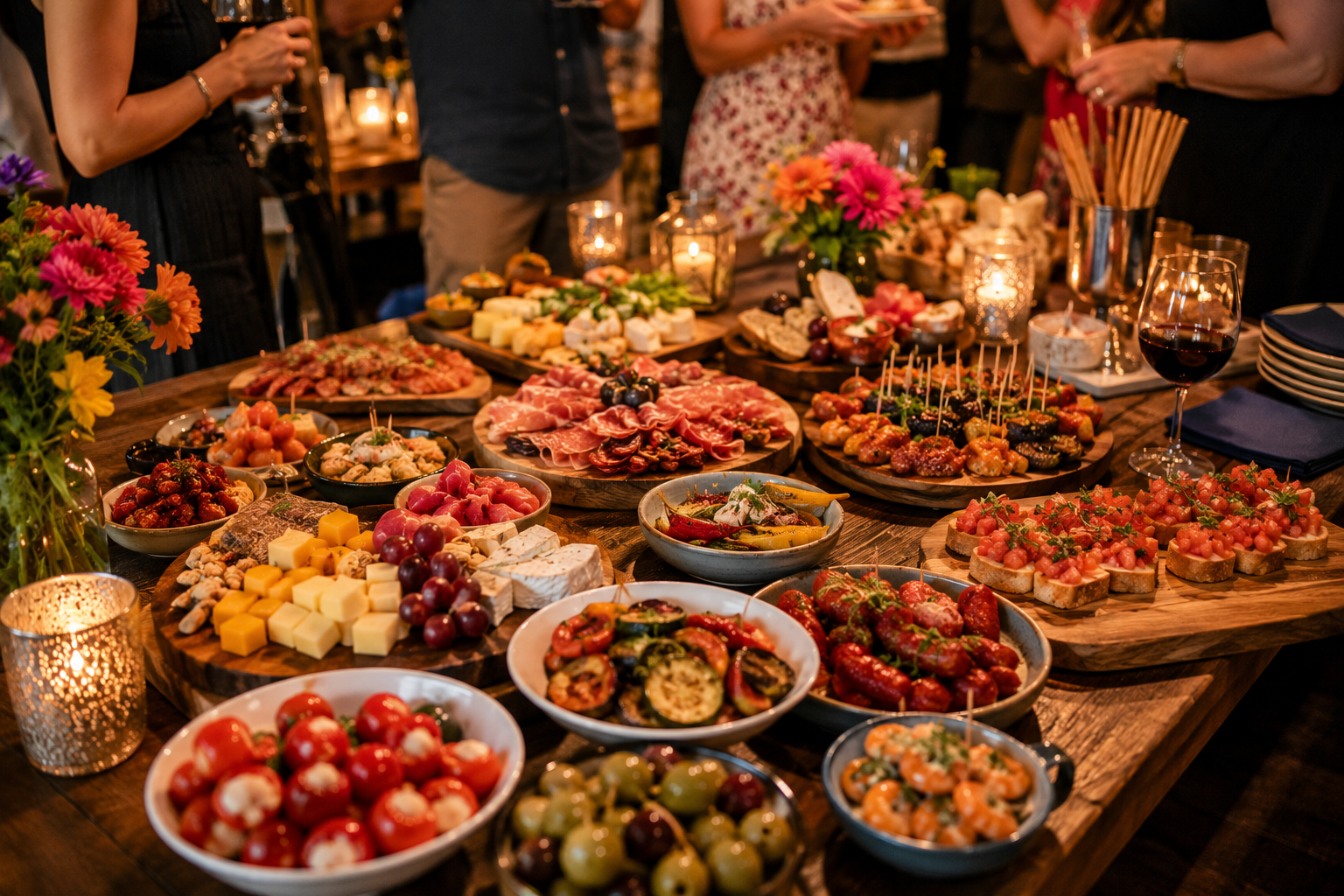
Cured meats and cheese boards (classic for a reason—satisfies early arrivals immediately)
Soft pretzels with dipping options (substantial enough to anchor without feeling heavy)
Seasonal vegetables done right (not sad crudité trays—roasted, dressed, or prepared with actual care)
One rotating hot item that arrives fresh throughout the night
Something unexpected that gives people a reason to talk ("Have you tried the ___?")
The beauty of this approach is built-in flexibility. You're not betting everything on one entrée that half the room tolerates. You're creating an experience where variety itself becomes part of the event.
How Tapas and Pizza Naturally Handle Dietary Restrictions
The traditional plated-dinner model creates a dietary accommodation headache: separate entrées, special orders, kitchen coordination for individual guests. Tapas-style service sidesteps most of this friction.
When you're serving 8–10 different small plates throughout the night, accommodating vegan, vegetarian, gluten-free, or dairy-free guests becomes a matter of ensuring a few items in each wave work for restricted diets—not preparing entirely separate meals.
Practical accommodation strategies:
Include at least one clearly plant-based option in each food wave
Soft pretzels and flatbreads can often be sourced gluten-free with advance notice
Cheese boards naturally separate dairy from accompaniments
Pizza vendors like Jodie Chavious typically offer gluten-free crust and plant-based topping options
When booking, ask venues specifically: "Can you accommodate dietary restrictions across the menu, or only through substitutions?" The first answer means built-in variety. The second means you're asking the kitchen to make exceptions—which works, but requires more advance coordination.
Questions to Ask Before You Book
When scoping out private party venues and food options, get specific about how food actually works:
What's included in your standard food offering—tapas-style, passed, or plated?
Can you accommodate dietary restrictions across the menu or only through substitutions?
Is there a pizza night or guest vendor option available for private events?
How does food timing work—can we control when things come out?
What's the per-person estimate for "enough to feel like dinner"?
What's the process for finalizing the menu and quantities?
Good venues have clear answers. Great venues help you build a timeline and talk through your specific guest count and event flow.
The Real Goal: Comfortable, Connected, Well-Fed
Private party food planning isn't about impressing people with formality. It's about keeping energy high, making sure everyone's comfortable, and creating moments worth remembering.
Tapas-style bites keep people moving and mingling. Pizza anchors the night for the crowd that needs something substantial. Smart timing means you're not scrambling mid-party wondering if you ordered enough—or watching guests eye the door at 8:30.
Planning a private party and want help building the right food flow? The Pip Wine Bar & Shop in Downtown Dixon specializes in private events with curated tapas-style bites—and pizza night options through Sacramento's own Jodie Chavious. Private parties are our favorite. Reach out to start planning your event.
Frequently Asked Questions
How much food per person for a cocktail-style private party?Plan for 6–8 pieces per person for the first hour and 4–6 pieces each additional hour, typically totaling 12–15 pieces per person for a 2–3 hour event. Evening events and gatherings with alcohol service generally require the higher end of these ranges. When food arrives in waves with good variety, this quantity consistently satisfies without significant waste.
Can tapas-style bites replace dinner at a private event?Yes—when planned with intention. The key is including at least one substantial anchor item (soft pretzels, flatbreads, or pizza) and timing service so food arrives consistently throughout the event rather than all at once. Guests should never feel like they're waiting for the next round or that they missed their chance to eat.
What's the benefit of having a pizza vendor at a private party?Pizza vendors create an experience, not just a meal. Fresh, made-on-site pizza satisfies hungrier guests, pairs well with wine and cocktails, and gives your event a memorable centerpiece. It's especially effective for casual celebrations, Friday night gatherings, or mixed crowds arriving straight from work.
How do I handle dietary restrictions with tapas-style service?Tapas naturally accommodates restrictions better than plated dinners because you're serving variety rather than individual entrées. Ensure each food wave includes at least one option that works for common restrictions (vegan, gluten-free, dairy-free). Ask venues whether they accommodate across the menu or only through special substitutions—the first approach requires less coordination.
How do I time food service at a 3-hour private party?Start with light bites at arrival, serve hot items around 30–45 minutes in, bring pizza (if included) around the 60–90 minute mark, and keep lighter bites circulating through the final hour. This pacing maintains energy, prevents awkward gaps, and gives guests permission to keep grazing throughout the event.
About Our Expertise
This guide draws on established event planning principles for cocktail-style gatherings and tapas service, combined with practical insights from venues specializing in private celebrations. The Pip Wine Bar & Shop hosts private parties throughout the year in Downtown Dixon, developing their approach to food timing, portion planning, and guest satisfaction through direct experience with events across various group sizes, occasions, and dietary needs. Private parties are consistently one of their most requested—and most refined—offerings.
Cited Works
[1] Serious Eats — "A Brief History of Tapas." https://www.seriouseats.com/a-brief-history-of-tapas
[2] The Spruce Eats — "How Much Food to Serve at a Party." https://www.thespruceeats.com/how-much-food-to-serve-at-a-party-4150642
[3] Food & Wine — "Why Mobile Pizza Is Having a Moment." https://www.foodandwine.com/lifestyle/mobile-pizza-trucks-catering
[4] Bon Appétit — "The Art of the Small Plate." https://www.bonappetit.com/entertaining-style/trends-news/article/small-plates-appetizers