
Wine and Oyster Pairings Beyond Muscadet: A Guide to Finding Your Perfect Match
At The Pip, we get asked about oyster pairings constantly—and we love the question. There's something undeniably satisfying about helping someone discover that their favorite raw oyster deserves better than whatever bottle happens to be closest. Muscadet earned its classic status for good reason, but it's far from the only option worth opening.
Here's what we've learned from years of guiding guests through these decisions: different oyster preparations call for entirely different wines. A raw Kumamoto shares almost nothing with a crispy fried oyster or a charred, grilled specimen dripping with garlic butter. Treating them all the same misses the point entirely.
We've organized this guide by how the oysters actually hit your plate—because that's what matters most when you're standing in front of a wine selection trying to make a decision.
[Image: Raw oysters on ice with two glasses of sparkling wine. Alt-text: Fresh raw oysters on the half shell served alongside Champagne at a wine bar.]
Raw Oysters: Where Bubbles and Bright Whites Shine
Raw oysters showcase the ocean in its purest form. Depending on where they're harvested, you'll taste everything from cucumber-like sweetness to intense brininess, with metallic mineral notes and a clean, cold finish. These flavors need wines that complement rather than overpower them.
Understanding East Coast vs. West Coast Oysters
Before reaching for a bottle, consider where your oysters come from. East Coast oysters (think Wellfleet, Blue Point, or Malpeque) tend toward higher brininess with pronounced mineral and metallic notes. They pair beautifully with wines that can stand up to that salinity—Champagne, Chablis, and bone-dry Muscadet remain excellent choices here.
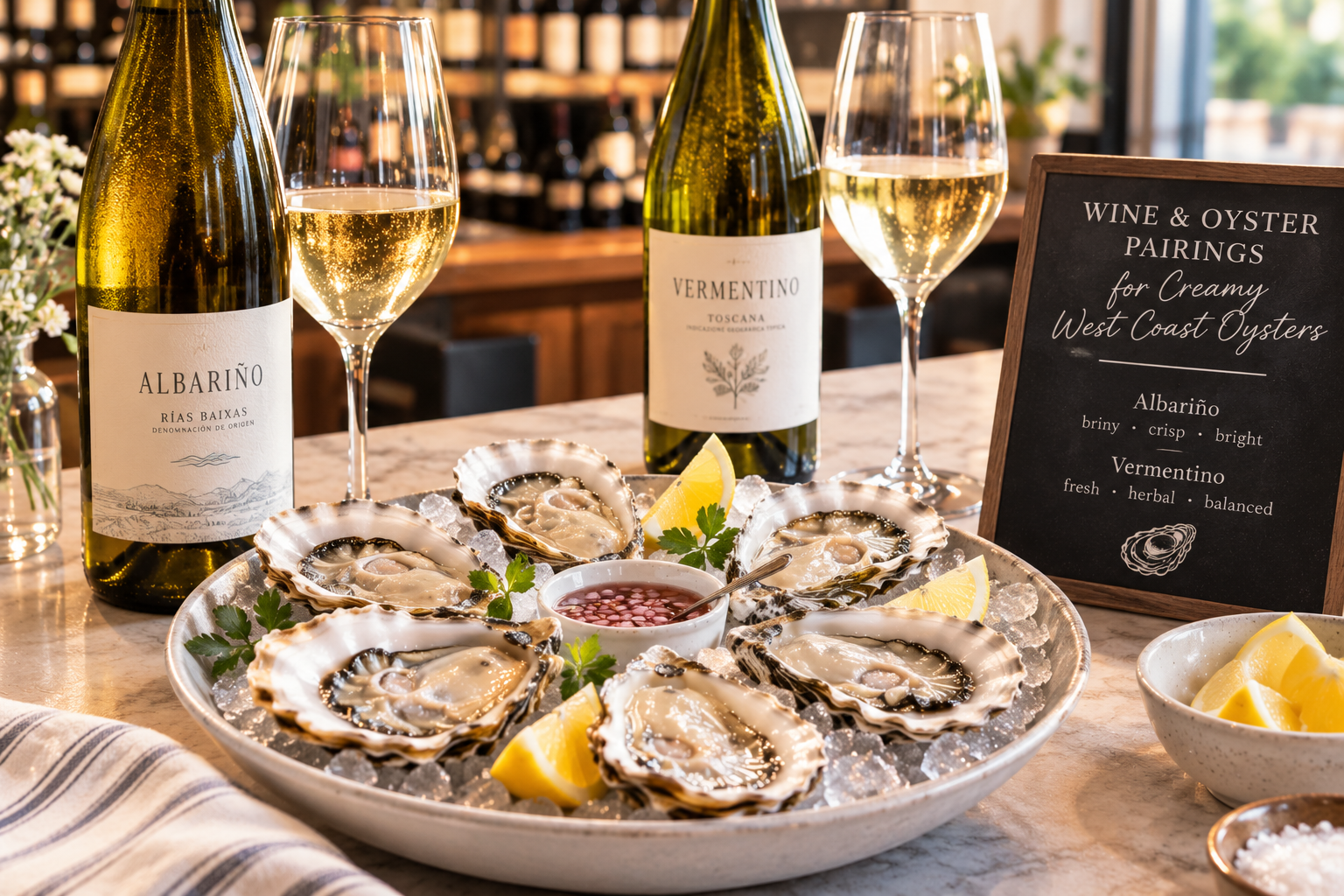
West Coast oysters (Kumamoto, Pacific, Olympia) often present creamier textures with melon, cucumber, and sweeter flavor profiles. These call for wines with softer edges: Albariño from Spain's Rías Baixas, Vermentino from coastal Italy, or a Crémant d'Alsace with delicate fruit notes.
Champagne and Sparkling Wine
Effervescence and oysters work together beautifully. The bubbles create a palate-cleansing effect that prepares your mouth for each new bite, while the acidity mirrors the oyster's natural brightness.
As Master Sommelier Ronan Sayburn has noted, "The combination of high acidity and fine mousse in quality Champagne acts as a palate cleanser between each oyster, while the wine's chalky minerality finds a natural echo in the oyster's brine" [1].
Blanc de Blancs Champagne—made entirely from Chardonnay—offers a particularly elegant match. Its citrus and mineral notes complement rather than compete with delicate oyster flavors.
Crémant from regions like the Loire Valley or Alsace provides similar qualities at friendlier prices. Cava works well too, especially Brut Nature styles with zero dosage (no added sugar whatsoever), which keeps the pairing crisp and clean.
[Image: East Coast oysters next to a bottle of Chablis. Alt-text: Briny East Coast oysters paired with mineral-driven Chablis wine.]
Saline-Forward White Wines
Look for whites grown near coastlines. These wines often carry a subtle salinity that echoes the oyster's ocean character.
Consider:
Albariño from Rías Baixas (Spain's Atlantic coast)
Picpoul de Pinet from southern France
Vermentino from Sardinia or Liguria
Assyrtiko from Santorini, with its volcanic mineral punch
These wines share a common thread: high acidity, restrained fruit, and a sense of place that connects to the sea. The phenomenon of "salinity" in wine—that subtle briny quality found in coastal vineyards—has become a serious area of study among sommeliers, with many attributing it to the maritime influence on both soil composition and vine stress [2].
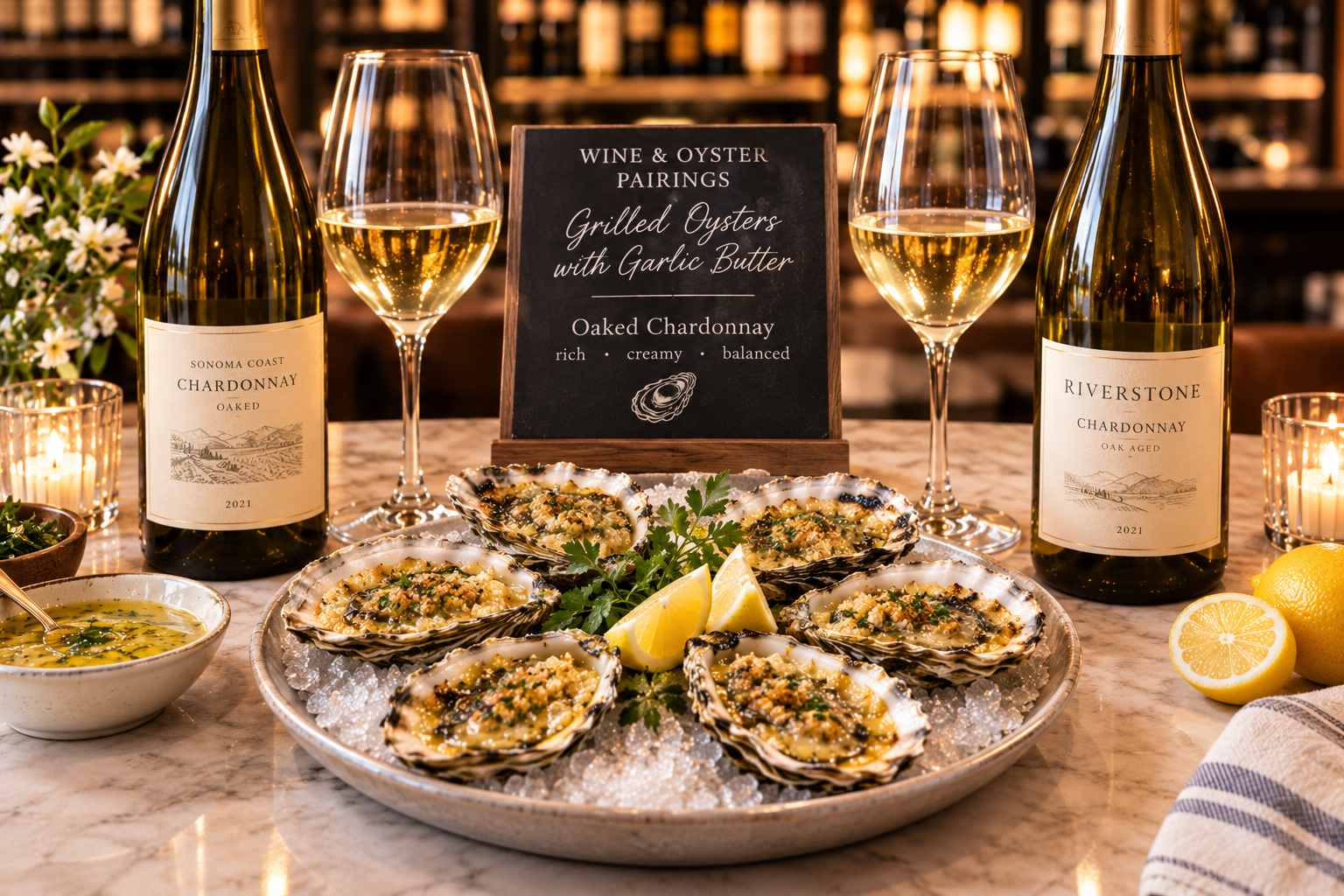
Grilled Oysters: Time for More Body
Fire changes the equation completely. Grilled oysters develop smoky, caramelized flavors—often enhanced with garlic butter, Parmesan, or herb compounds. They need wines with enough weight to stand up to that richness.
Oaked Chardonnay
Here's where California or white Burgundy can finally join the party. The toasty, buttery notes from oak aging complement the char and butter on a grilled oyster.
At the shop, we recommend looking for wines with balanced oak—enough to add texture without turning into a butter bomb. A well-made Mâcon-Villages or restrained California Chardonnay hits the sweet spot.
Dry Sherry
Manzanilla or Fino sherry might be the most underrated oyster pairing out there. These bone-dry wines develop under a layer of flor yeast, picking up nutty, saline qualities that work magic with grilled preparations.
The slight oxidative character also handles smoky flavors better than most whites—something we point guests toward when they're planning a grilled oyster night at home.
[Image: Grilled oysters with garlic butter alongside glasses of white wine. Alt-text: Charred grilled oysters topped with garlic butter paired with oaked Chardonnay.]
Fried Oysters: Crispy Calls for Contrast
Golden, crunchy fried oysters are a different animal entirely. You've got hot oil, seasoned breading, and a creamy interior fighting for attention. Cutting through that richness matters most here.
High-Acid Sparklers
Champagne shines again, but so do Prosecco and Franciacorta. The bubbles and acidity slice through the fried coating, resetting your palate between bites.
Sake
Junmai styles—particularly those served slightly chilled—offer a clean, umami-rich profile that complements fried seafood beautifully. The lack of tannins keeps things smooth, while the rice-based flavor finds harmony with the oyster's sweetness.
We've turned quite a few skeptics into sake believers with this pairing.
Dry Rosé
A bone-dry rosé from Provence or Tavel brings enough fruit to match the richness while maintaining the acidity you need. There's something undeniably fun about pink wine and fried food—and it genuinely works.
Oysters with Mignonette and Condiments
Toppings complicate things. That shallot mignonette adds sharpness. Cocktail sauce brings sweetness and heat. Horseradish is pure fire.
Match the condiment, not just the oyster.
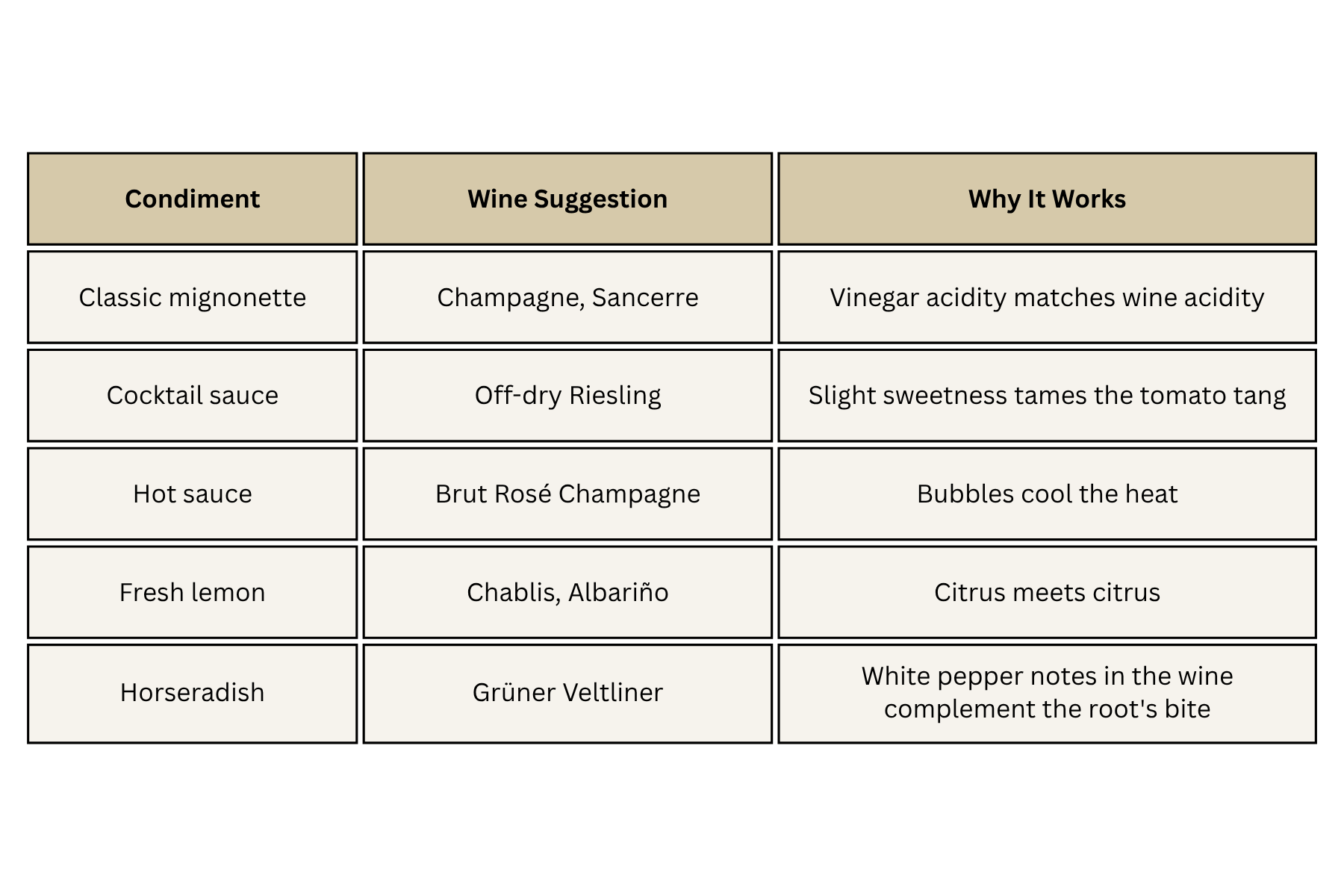
Building Your Own Oyster Pairing Adventure
The best way to learn? Taste side by side. Order a half dozen oysters, open two or three different bottles, and compare how each combination hits differently.
Here's a simple framework we share with guests:
Start with bubbles. They work with almost everything.
Match weight to preparation. Raw = light wines. Cooked = more body.
Consider the sauce. It often matters more than the oyster itself.
Trust your palate. If you love a pairing that "shouldn't" work, enjoy it anyway.
[Image: Wine bottles displayed alongside a seafood spread. Alt-text: Curated wine selection at The Pip Wine Bar paired with various oyster preparations.]
Why Curation Beats the Big-Box Approach
Walking into a warehouse store and grabbing whatever sparkling wine is stacked highest won't get you here. These pairings require bottles from small producers—wines with character, grown in specific places, made with intention.
That's where guidance matters. We spend our time hunting down bottles worth recommending, so when you walk in and say "oysters," the conversation can actually go somewhere useful.
Ready to Explore?
Planning an oyster night? Swing by and tell us what you're working with—raw, grilled, fried, or all of the above. We'll point you toward bottles that actually make sense for how you eat.
Check the menu and current pours to see what's open now, or stop by Downtown Dixon and let us guide you toward something perfect.
Frequently Asked Questions
What wine pairs best with raw oysters?Champagne and high-acid sparkling wines consistently deliver the best results with raw oysters. The bubbles cleanse the palate while the wine's mineral notes echo the oyster's briny character. Saline whites like Albariño and Assyrtiko also work beautifully, offering citrus and ocean-like qualities without overwhelming delicate flavors.
Can you drink red wine with oysters?Most red wines don't work well with oysters. Tannins clash with the brininess, creating metallic or bitter flavors that distract from both the wine and the oyster. If you must have red, try a very light, chilled style like young Beaujolais—but honestly, this is where white wine and bubbles earn their reputation.
Is sake a good pairing for oysters?Absolutely. Junmai sake offers clean, umami-rich flavors that complement oysters—especially fried preparations. Served slightly chilled, sake's smooth texture and lack of tannins let the oyster's natural sweetness shine. It's an underrated pairing worth trying.
Why does Champagne work so well with oysters?Three reasons: acidity, bubbles, and minerality. The high acid mirrors the oyster's brightness, effervescence cleanses your palate between bites, and Champagne's chalky mineral character harmonizes with the oyster's ocean flavors. Blanc de Blancs styles work particularly well with delicate raw preparations.
What should I drink with grilled oysters in garlic butter?Grilled oysters with rich toppings need wines with more weight. Oaked Chardonnay handles the butter beautifully, while dry sherry (Manzanilla or Fino) complements both the char and the garlic with its nutty, saline profile.
About Our Guidance
The Pip Wine Bar & Shop has spent years helping guests navigate pairing decisions without the pretense. Our curated selection focuses on small producers and wines with genuine character—not big-box bottles that look good on a shelf but taste like nothing special. When you ask us about oysters (or anything else), we listen to what you actually like and guide you toward something that makes dinner better. That's what a neighborhood wine bar should do.
Cited Works
[1] Decanter — "Master Sommelier Ronan Sayburn on Champagne and Seafood Pairings." https://www.decanter.com/learn/champagne-seafood-pairings-guide/
[2] Punch — "The Science of Salinity in Coastal Wines." https://punchdrink.com/articles/science-of-salinity-coastal-wines-albarino-muscadet/