
Brunch Drinks Beyond Mimosas: A Food-First Guide
Mimosas are fine. Totally fine. But if you're putting together a real brunch spread—eggs, pastries, something salty, maybe fresh fruit—you can do better than orange juice and bubbles on autopilot.
This guide takes a food-first approach to brunch beverages. We'll map specific dishes to wines, ciders, fortified options, cocktails, coffee, tea, and nonalcoholic alternatives that make each bite better. Because a great brunch isn't just about what's on the plate.
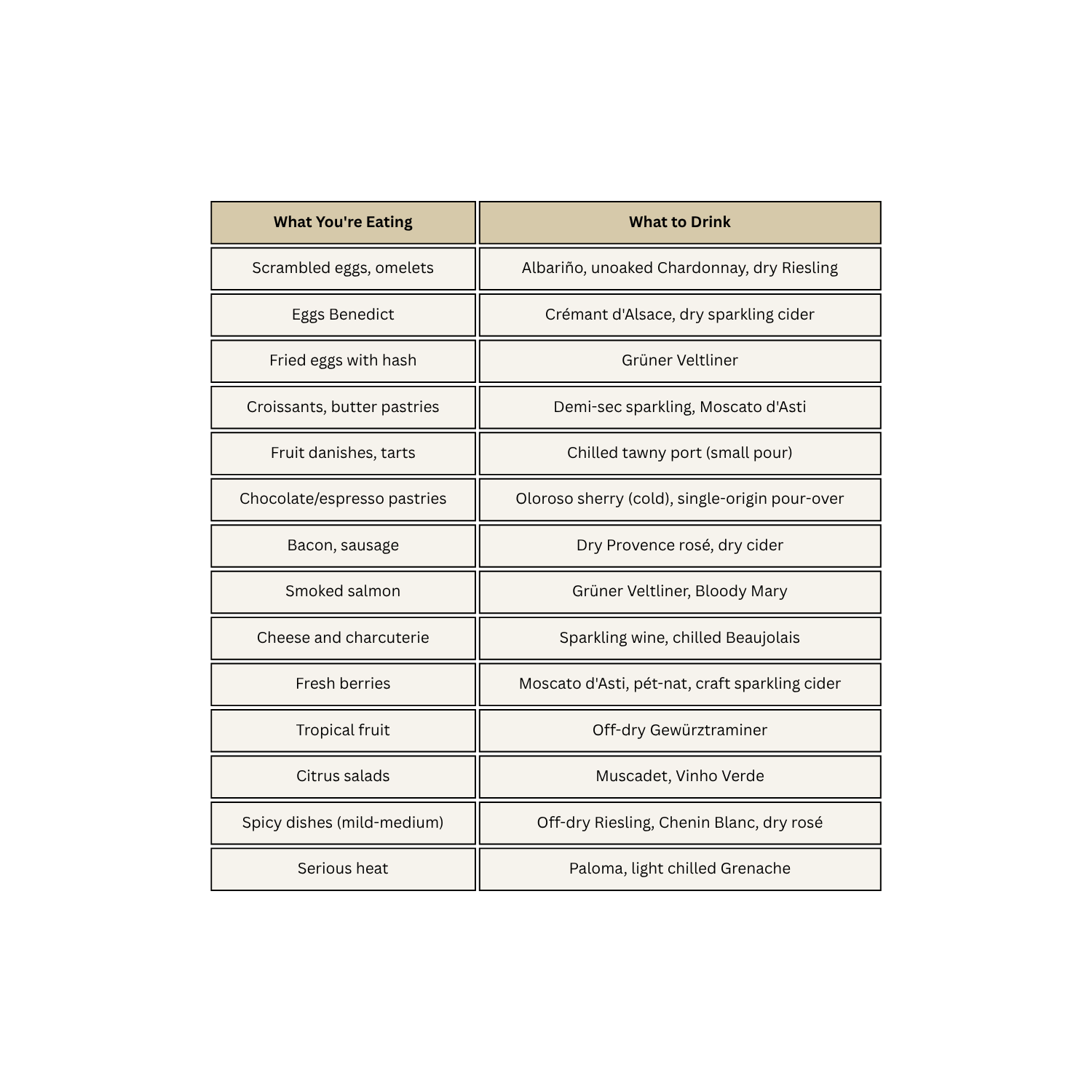
Quick Pairing Cheat Sheet
Why Food-First Pairing Matters at Brunch
Most people order their brunch drink before the food arrives. That's backwards.
The best beverage choices come after you know what you're eating. A rich eggs Benedict calls for something different than a fruit-forward açaí bowl. A salty charcuterie plate wants a drink with enough acidity to cut through fat, while a sweet pastry might need something that won't compete.
Food-first pairing isn't about being fussy. It's about making both the food and the drink taste better together. When acidity, sweetness, and weight are balanced between what's on your fork and what's in your glass, both elements shine [1].
Egg Dishes: Your Most Versatile Starting Point
Eggs anchor most brunch menus, but they're surprisingly tricky to pair. The sulfur compounds in cooked eggs can clash with tannic reds or oaky whites, leaving a metallic taste [2].
Scrambled and Omelets
Soft, creamy scrambled eggs and cheese-filled omelets want wines with enough acidity to refresh the palate between bites. A crisp Albariño or unoaked Chardonnay works beautifully here. The wine's brightness lifts the richness without overwhelming the eggs' delicate flavor.
Adding herbs or vegetables to your omelet? Consider a dry Riesling. Its subtle sweetness plays well with savory preparations.
Eggs Benedict and Hollandaise
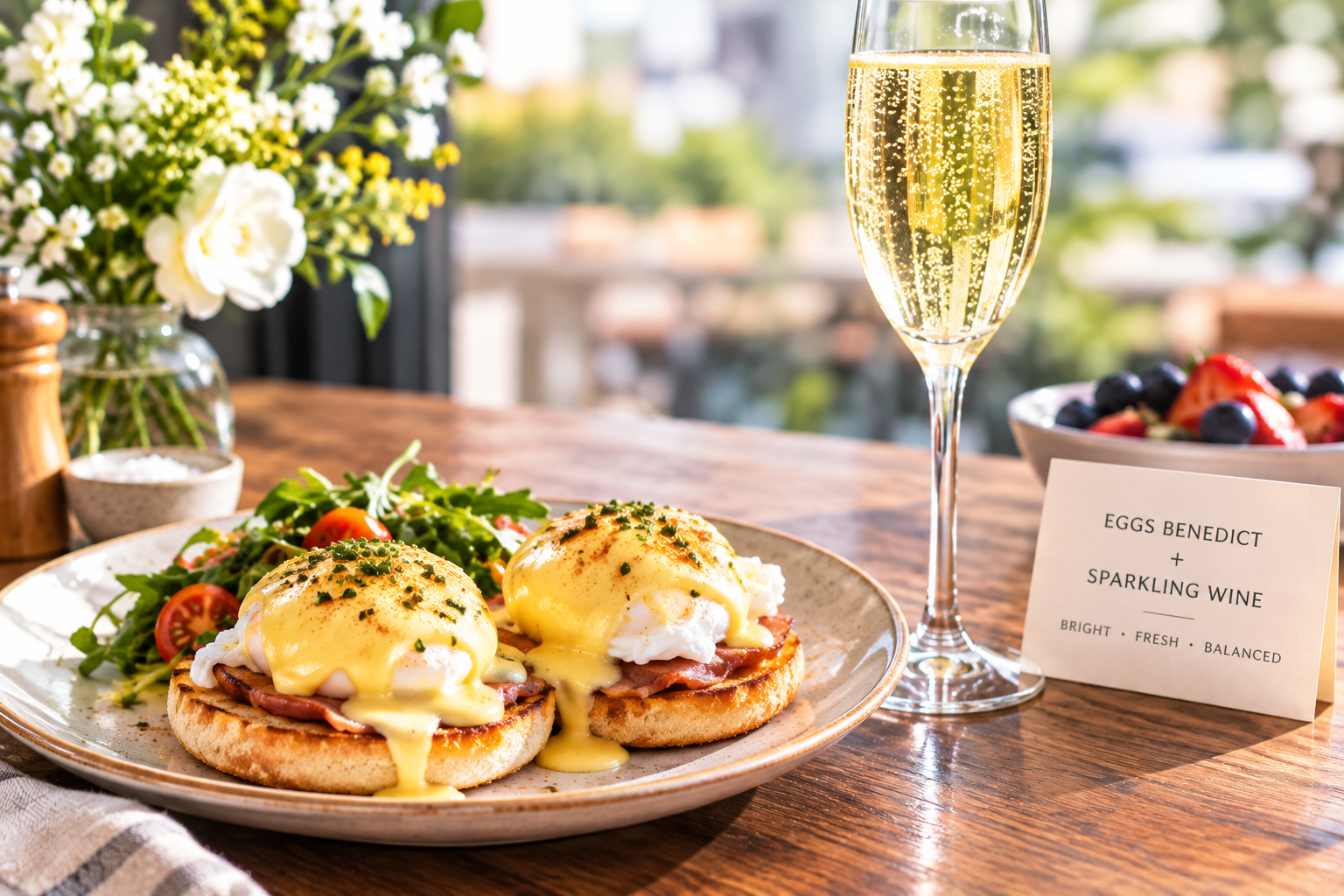
The buttery weight of hollandaise demands a drink that can stand up to it. Crémant d'Alsace—French sparkling wine with more body than typical Champagne—mirrors the dish's richness while the bubbles cut through the fat [3]. Dry sparkling cider is another excellent choice, offering similar textural contrast with a touch of apple brightness.
Fried Eggs with Hash
Crispy edges, runny yolks, golden potatoes—reach for something with a little more structure. Grüner Veltliner handles the contrast between crispy and soft textures while complementing any black pepper in the dish.
Pastries and Baked Goods: Sweet Needs Sweet (But Not Too Sweet)
The classic pairing mistake with pastries? Going too dry. When your beverage is significantly drier than your food, the pastry tastes overly sweet and the drink tastes thin.
Croissants and Butter-Based Pastries
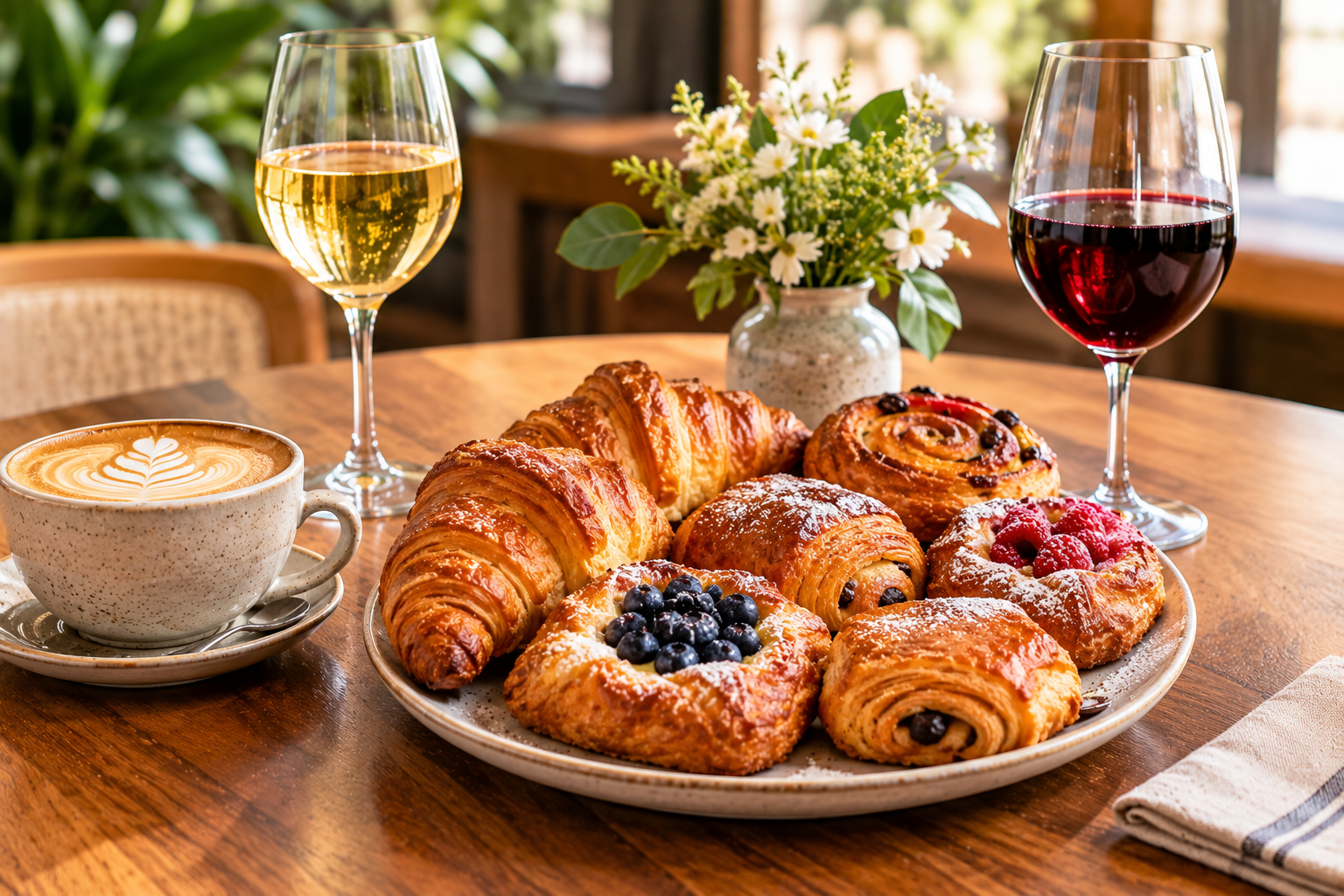
Plain croissants pair beautifully with demi-sec (slightly sweet) sparkling wines. The wine's subtle sweetness matches the buttery pastry while bubbles keep things from getting heavy. Moscato d'Asti—low alcohol, gently effervescent—is another natural fit [4].
Fruit Danishes and Tarts
Fruit-topped pastries open the door to fortified wines. A chilled tawny port (yes, at brunch) brings caramel and dried fruit notes that complement berry and stone fruit fillings. Keep the pour small—fortified wines are meant to be sipped slowly.
Chocolate or Espresso Pastries
Coffee-flavored pastries or chocolate croissants can handle darker, nuttier profiles. A dry Oloroso sherry—served cold—offers roasted almond and coffee notes that sync perfectly with these richer baked goods.
Salty Plates: Charcuterie, Bacon, and Cured Everything
Salt is brunch's secret weapon, and it's also one of the easiest flavor profiles to pair.
Bacon, Sausage, and Breakfast Meats
The fat and salt in breakfast meats need acidity to balance. This is where rosé earns its place at the table—specifically, dry Provence-style rosé with its zippy acidity and subtle berry notes. The wine refreshes the palate between bites of smoky, salty meat without competing for attention [5].
Dry cider is another standout here. The apple notes complement pork beautifully, and the effervescence scrubs your palate clean.
Smoked Salmon and Cured Fish
Smoked salmon on a bagel wants something that won't clash with the fish's oils or the cream cheese's richness. Grüner Veltliner is a classic pairing—its white pepper and citrus notes enhance the salmon's smokiness. Avoid anything oaky or heavily buttery; it'll taste fishy.
For a cocktail option, a well-made Bloody Mary with its tomato acidity and savory spice actually complements smoked fish in a way most wines can't match.
Cheese Boards and Charcuterie Spreads
A mixed board calls for versatile wines. Sparkling wine works across most cheeses and cured meats—the bubbles and acidity reset your palate between different flavors. If you're heavy on aged cheeses, a light red like a chilled Beaujolais can handle the intensity.
Fresh Fruit: Lighter Pairings for Lighter Plates
When fruit is the centerpiece—açaí bowls, berry platters, citrus salads—you need drinks that enhance without overpowering.
Berry-Forward Dishes
Moscato d'Asti is the obvious choice, but don't sleep on pét-nat (pétillant naturel) wines made from aromatic grapes. These naturally sparkling wines often carry their own berry and floral notes that harmonize with fresh fruit.
For a nonalcoholic option, a high-quality sparkling apple cider—look for craft producers using real fruit—delivers similar refreshment without the alcohol.
Tropical Fruit Plates
Mango, papaya, and pineapple have more aggressive sweetness and acidity. Match their intensity with an off-dry Gewürztraminer, which brings lychee and tropical notes of its own. The wine's subtle sweetness balances the fruit's tartness.
Citrus Salads
Citrus needs careful handling—it can clash with tannic or heavily oaked wines. Stick with clean, minerally whites like Muscadet or Vinho Verde. Both have the acidity to match grapefruit and orange without competing.
Spice-Forward Brunch: Heat Needs a Cooling Partner
Huevos rancheros, shakshuka, or anything with hot sauce changes the pairing game entirely.
Mild to Medium Heat
Off-dry whites like Riesling or Chenin Blanc work beautifully with moderate spice. The touch of residual sugar in these wines soothes heat while their acidity keeps the pairing lively [6].
Dry rosé can also handle spice, especially with tomato-based dishes like shakshuka. The wine's fruit-forward profile complements tomato's natural sweetness.
Serious Heat
When the dish is genuinely spicy, consider a cocktail instead. A classic Paloma—tequila, lime, grapefruit soda—offers effervescence and citrus that cool the burn. The salt rim doesn't hurt either.
For wine, look to slightly chilled, fruit-forward reds like a light Grenache. Avoid anything tannic; heat amplifies the drying sensation of tannins.
Coffee and Tea: The Brunch Essentials Nobody Talks About
Let's be honest—coffee is probably the most common brunch beverage. It deserves the same pairing attention as wine.
Coffee with Pastries and Baked Goods
A single-origin pour-over with bright, fruity notes pairs surprisingly well with butter croissants and fruit danishes. The coffee's acidity cuts through richness the same way sparkling wine does.
For chocolate or espresso pastries, lean into the flavor overlap. A medium-roast with chocolate or nutty notes creates harmony rather than competition.
Coffee with Savory Dishes
Here's where most people go wrong: dark, bitter coffee with delicate eggs creates a flavor collision. If you're eating eggs or lighter savory dishes, either opt for a lighter roast or save your coffee for after the meal.
Bacon and sausage can handle bolder coffee. The salt and fat stand up to darker roasts without either getting overwhelmed.
Tea as a Pairing Option
Earl Grey with its bergamot notes works beautifully alongside citrus-forward dishes or fruit plates. Jasmine green tea complements smoked salmon and lighter preparations.
For something heartier, a black breakfast tea handles eggs and breakfast meats well—the tannins in tea work similarly to wine in cutting through fat.
Matcha and Specialty Tea Drinks
A matcha latte pairs with lighter fruit dishes and pastries without overwhelming them. The vegetal, slightly sweet profile complements rather than competes. Just avoid pairing it with heavily spiced or smoked foods—the flavors clash.
Brunch Cocktails That Actually Complement Food
Beyond the mimosa, several classic cocktails work beautifully with specific brunch dishes.
Bloody Mary
The tomato, celery, and spice profile pairs naturally with eggs, bacon, and smoked salmon. Think of it as a liquid side dish—its savory notes enhance rather than compete with your plate.
Aperol Spritz
The bitterness and citrus work with lighter fare: salads, fruit, fresh cheeses. Skip it if you're having something heavy or smoked; the bitterness can clash.
French 75
Gin, lemon, simple syrup, and sparkling wine create a bright, effervescent cocktail that handles pastries and egg dishes equally well. It's essentially a more interesting mimosa.
Espresso Martini
Save this for dessert-forward brunches or chocolate pastries. Its coffee intensity overwhelms most savory dishes but shines alongside sweet endings.
Nonalcoholic Options Worth Ordering
Not drinking doesn't mean settling for orange juice or water. Several nonalcoholic options pair just as thoughtfully as their alcoholic counterparts.
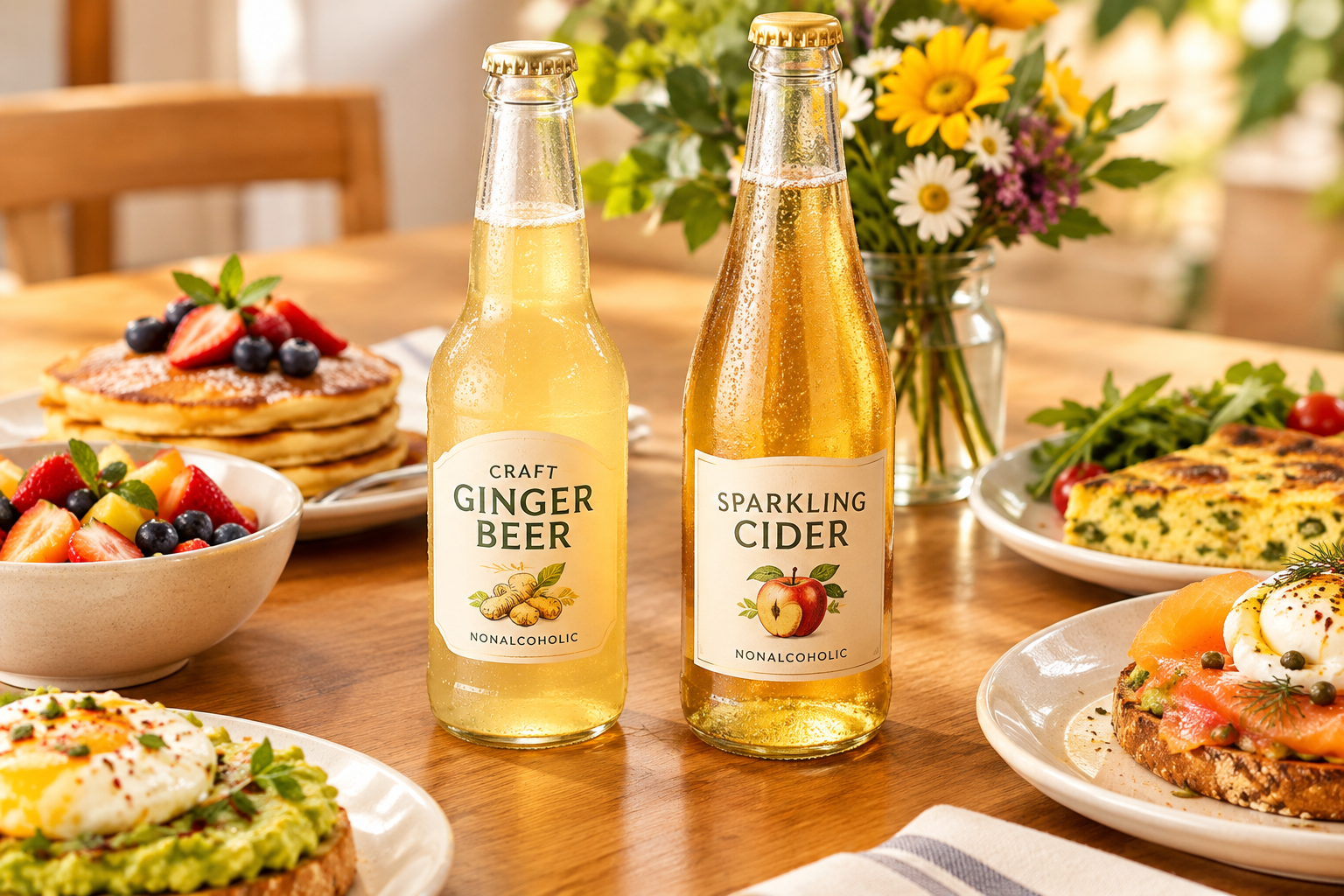
Craft Ginger Beer
The spice and effervescence of quality ginger beer cuts through rich dishes like eggs Benedict or buttery pastries. Look for brands that use real ginger—the heat adds genuine complexity.
Sparkling Apple Cider
Craft producers making traditionally fermented (then dealcoholized or naturally nonalcoholic) apple ciders offer real depth. These pair with breakfast meats and cheese the same way alcoholic cider does.
Shrubs and Drinking Vinegars
Shrubs—fruit preserved with vinegar and sugar, then diluted with sparkling water—offer acidity and complexity that mimics wine's food-friendliness. Berry shrubs with salty dishes; apple shrubs with pork.
Quality Sparkling Water
Sometimes the best pairing is no flavor at all. High-mineral sparkling water refreshes the palate between bites, letting the food speak for itself.
Building Your Own Brunch Beverage Strategy
Next time you're ordering, try this approach:
Scan the food first. What's the dominant flavor profile? Rich and fatty? Light and fruity? Spicy?
Match weight to weight. Heavy dishes (hollandaise, sausage) want wines or cocktails with body. Light dishes (fruit, salads) want lighter pours.
Use acidity as a reset. Regardless of what you're eating, acidity in your drink cleanses the palate and prepares you for the next bite.
Don't fear sweetness. Off-dry wines aren't "dessert wines." With spicy or salty food, a touch of sweetness creates balance.
Ask for guidance. If you're somewhere with a curated selection, tell them what you're eating. Good staff love matching food and drinks—it's way more interesting than just pouring mimosas.
Discover Your New Brunch Favorite
Moving beyond mimosas isn't about being fancy. It's about having a better experience.
When your drink complements your food, both taste better. You notice flavors you'd miss otherwise. You try things you wouldn't normally order. Brunch becomes a little more memorable.
Planning a group brunch or looking for a comfortable spot to explore new pairings? Check our events calendar or swing by and tell us what you're in the mood to eat. We'll guide you to something that makes the whole plate sing.
Frequently Asked Questions
What wine pairs best with eggs Benedict?
Eggs Benedict needs something that can handle hollandaise's buttery richness. Crémant d'Alsace or a fuller-bodied sparkling wine works well—the bubbles cut through the fat while the wine's structure matches the dish's weight. Dry sparkling cider offers similar balance if you prefer something different.
Can you pair red wine with brunch?
Absolutely, but choose carefully. Light, slightly chilled reds like Beaujolais or Grenache work with breakfast meats and spiced dishes. Avoid heavily tannic reds—they clash with eggs and overpower lighter brunch fare. Think refreshing and fruit-forward rather than bold and structured.
What nonalcoholic drinks pair well with brunch food?
Craft ginger beer pairs beautifully with rich, fatty dishes. High-quality sparkling apple cider works with breakfast meats and cheese plates. Shrubs (drinking vinegars) offer wine-like acidity and complexity. For any pairing, look for drinks with real ingredients and genuine flavor complexity.
Why do mimosas pair with everything at brunch?
Mimosas work because sparkling wine's acidity and effervescence cleanse the palate, while orange juice adds familiar sweetness. They're versatile but not optimal—specific pairings bring out flavors mimosas simply can't. Think of mimosas as pleasant background music versus a song chosen specifically for the moment.
What should I drink with spicy brunch dishes?
Off-dry wines like Riesling or Chenin Blanc soothe heat while maintaining freshness. For serious spice, cocktails like a Paloma—with its citrus and salt—cool the burn effectively. Avoid tannic wines; heat amplifies the drying sensation and makes both the food and wine taste worse together.
About Our Expertise
This guide draws on years of hands-on experience curating wines, cocktails, and pairings at a working wine bar and bottle shop. We taste, test, and serve these combinations to real people every week—watching what works, what surprises, and what becomes someone's new favorite. Our recommendations come from actual beverage service, not just theory, combined with ongoing study of food and wine pairing principles.
Cited Works
[1] Wine Folly — "Food and Wine Pairing Basics." https://winefolly.com/tips/food-and-wine-pairing-basics/
[2] Guild Somm — "Pairing Wine with Eggs." https://www.guildsomm.com/tc/study-aids/articles/pairing-wine-with-eggs
[3] Decanter — "Sparkling Wine Food Pairing Guide." https://www.decanter.com/learn/sparkling-wine-food-pairing-guide-472702/
[4] Wine Enthusiast — "A Guide to Sweet Wine Styles." https://www.winemag.com/2019/08/15/guide-sweet-wine-styles/
[5] VinePair — "The Essential Guide to Rosé Wine." https://vinepair.com/wine-101/guide-rose-wine/
[6] Wine Spectator — "Pairing Wine with Spicy Foods." https://www.winespectator.com/articles/pairing-wine-with-spicy-foods