How to Plan a Client-Appreciation Wine Tasting That Actually Strengthens Relationships
Last month, I watched a financial advisor tank what should have been a perfect client event. Beautiful venue, expensive wines, catering on point. But within twenty minutes, half the guests were checking phones while he droned through a slideshow about market performance. The wine went warm. The conversation went cold. Three clients left early.
The thing is, he had the right instinct. Your best clients deserve more than another gift basket collecting dust on their desk. They deserve something memorable—an experience that says "we value you" without the awkward formality of a boardroom or the forgettable blur of a standard happy hour.
A client-appreciation wine tasting hits that sweet spot when you get the details right. Personal. Relaxed. The kind of genuine connection that keeps business relationships strong for years.
Pulling this off takes more thought than booking a table and ordering bottles. The details matter—from who guides the tasting to whether your client who's three months pregnant has something worth drinking.
Here's how to plan one that actually works.
Why Wine Tastings Work for Client Appreciation
Wine has been part of relationship-building for centuries because the ritual of tasting, discussing, and sharing creates natural conversation without forced small talk. Your clients aren't stuck making awkward eye contact across a conference table. They're swirling, sniffing, comparing notes—and actually enjoying themselves.
A well-planned tasting signals something important: you've put thought into this. Anyone can send a bottle with a ribbon. Planning an experience shows you understand what your clients actually enjoy.
The format adapts across industries because the core appeal—shared discovery in a comfortable setting—translates everywhere. Financial advisors host them for top clients. Real estate agents celebrate closings. Agencies thank long-term accounts. The wine becomes the excuse for connection, not the point.
Setting the Right Tone from the Start
Invitation Language That Feels Genuine
Skip the corporate-speak. Your invitation sets expectations, and stiff language creates stiff events.
Instead of "You are cordially invited to a client appreciation event," try something warmer: "We'd love to have you join us for an evening of wine, good conversation, and zero PowerPoint slides."
Be clear about what guests can expect. A simple line like "We'll taste through five wines with guidance from our host—no wine expertise required" puts people at ease immediately.
Include the essentials without making the invitation feel like a legal document:
Date, time, and address
Parking or arrival guidance
Whether food is included
A note about bringing a guest (if that's appropriate for your event)
Guided vs. Social: Pick Your Format
This decision shapes the entire evening.
Guided tastings work well when you want structure. A knowledgeable host walks everyone through each pour, explaining what they're tasting and why. This format keeps conversation flowing, helps guests who might feel intimidated by wine, and creates shared moments of discovery.
Social tastings feel more like a relaxed party with wine as the centerpiece. Guests mingle, pour what interests them, and conversation happens naturally. This works better for groups where people already know each other.
Most successful client events land somewhere in the middle—a brief introduction to each wine, then time to enjoy and discuss without feeling like you're in a classroom.
Guest Comfort Should Drive Every Decision
Your clients are doing you a favor by showing up. Every choice you make should prioritize their comfort.
Timing That Respects Busy Schedules
Weekday evenings between 5:30 and 7:30 PM tend to work well for professional events. After work hours but early enough that people can still get home at a reasonable time.
Keep the event itself to 90 minutes to two hours. Long enough to feel substantial, short enough that no one starts checking their phone.
Creating a Welcoming Atmosphere
Think about the first five minutes of arrival. Is there someone to greet guests immediately? Is it obvious where to go and what to do?
Small touches matter:
Name tags (unless it's a very small group where everyone knows each other)
A welcome glass of something easy while people settle in
Background music at conversation-friendly volume
Seating that encourages mixing rather than people clustering with whoever they arrived with
The physical environment significantly impacts how people perceive wine—and by extension, how they experience your event. Temperature, lighting, noise level, and comfort all shape whether guests relax or stay guarded.
Accommodating Dietary Needs and Preferences
Here's where many corporate events fail. Someone plans a beautiful evening, then realizes too late that two guests don't drink alcohol.
Ask ahead of time. A simple question on your RSVP—"Any dietary restrictions or preferences we should know about?"—prevents awkward moments later.
Quality nonalcoholic options are non-negotiable. This isn't about offering water or soda. Stock thoughtful alternatives:
Sparkling grape juice or nonalcoholic wines
Craft mocktails
Interesting sodas or botanical drinks
Someone choosing not to drink should still feel included in the experience, not like an afterthought. They showed up to spend time with you—make sure they feel just as valued as the wine enthusiasts.
Food accommodations matter too. If you're serving bites alongside the wine, ensure vegetarian, vegan, and gluten-free guests have real options—not just the garnish.
Building Your Wine Selection
How Many Wines to Feature
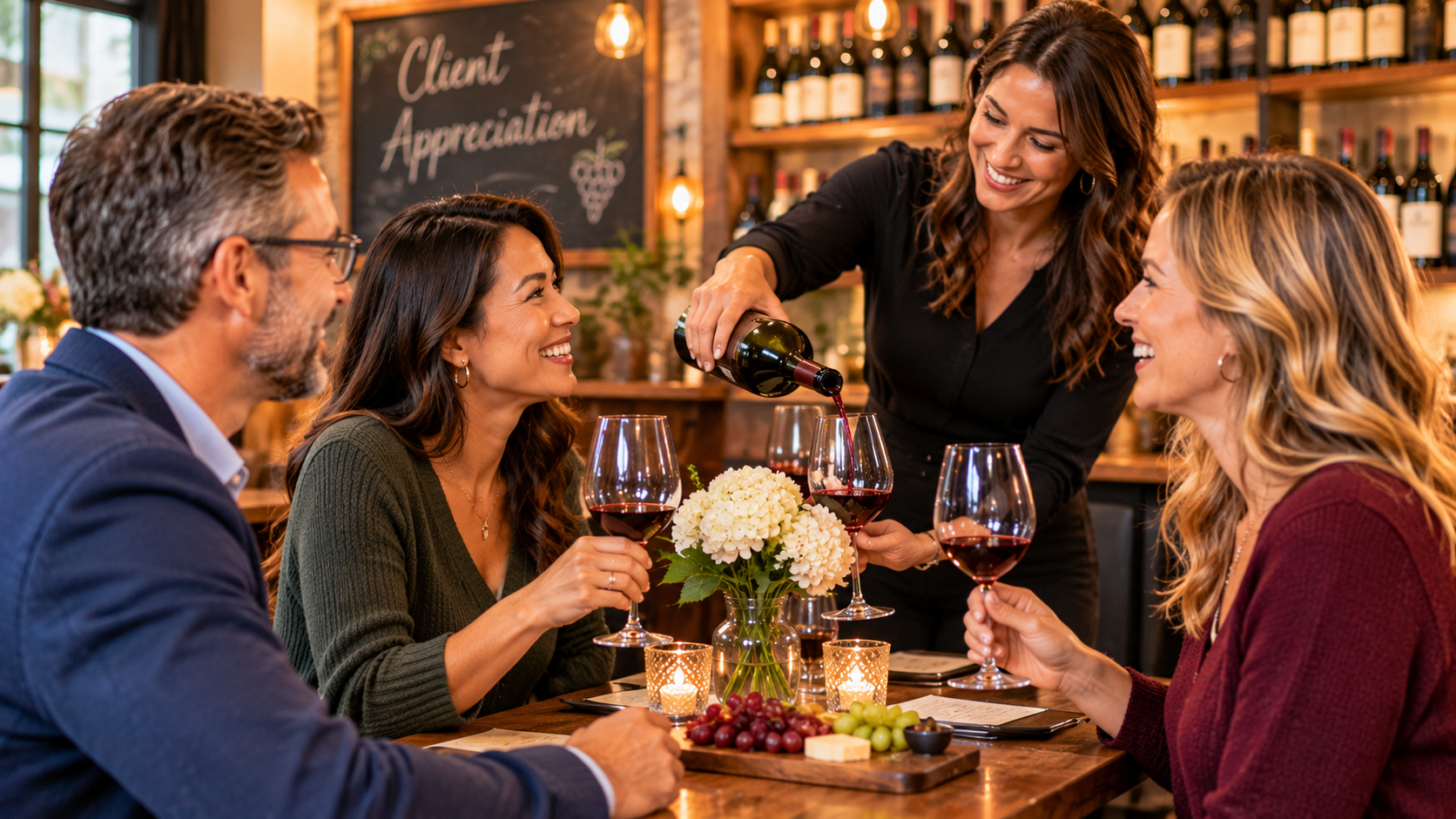
For a client-appreciation event, four to six wines is the sweet spot. Fewer feels sparse. More becomes overwhelming, especially for guests who aren't regular wine drinkers.
A classic structure:
One or two whites
One rosé (optional, especially in warmer months)
Two to three reds
Perhaps a dessert wine or sparkling to close
This gives variety without tasting fatigue.
Balancing Approachable and Adventurous
You want wines interesting enough to spark conversation but accessible enough that no one feels lost.
Anchor with one or two familiar varieties (a Chardonnay, a Cabernet Sauvignon) and then introduce something unexpected. Maybe a Grüner Veltliner or a Tempranillo from a small producer your guests won't find at the grocery store.
The goal isn't to impress people with obscure bottles. It's to create moments of discovery—"I've never tried this before, but I love it."
Work with your venue or wine provider to curate a selection that tells a story. Wines from a specific region, a theme like "old world meets new world," or simply "wines you won't find in big-box stores" all give guests something to engage with.
Budgeting and Cost Expectations
Corporate events have real budget constraints. Knowing typical costs helps you plan realistically and avoid surprises.
What to Expect Per Person
Most private wine tastings run between $35 and $85 per person for the tasting portion alone, depending on wine quality and whether a guide is included. Add food, and you're typically looking at $60 to $120 per head for a complete experience.
Venue minimums vary widely. Some wine bars require a minimum spend of $500 to $1,500 for private events, while dedicated event spaces may have room fees on top of per-person costs.
Hidden Costs to Ask About
Before signing anything, clarify:
Gratuity: Is it included, or should you budget 18–22% on top?
Corkage or wine selection fees: If you want specific bottles, are there upcharges?
Staffing fees: Private hosts or servers may cost extra
Overtime charges: What happens if your guests are having a great time and want to stay longer?
Setup and cleanup: Some venues charge for event coordination
Balancing Cost with Perceived Value
Spending more doesn't automatically create a better experience. A comfortable venue with excellent guidance and curated wines beats a flashy space with mediocre service every time.
Focus budget on:
Wine quality (this is the centerpiece)
A knowledgeable host who creates flow
Food that genuinely pairs well
Nonalcoholic options that don't feel like afterthoughts
Cut costs on:
Excessive décor
Printed materials guests will throw away
Overly complicated food that distracts from the wine
The Role of Food in Your Tasting
Wine without food is fine for a quick tasting. For a client event lasting an hour or more, you need something to eat.
The approach matters as much as the menu. Tapas-style bites work better than heavy passed appetizers. Think:
Cheese selections that pair with your wine choices
Charcuterie with varied textures
Nuts, olives, and bread
Small savory bites like bruschetta or stuffed mushrooms
Keep portions small but frequent. Guests should be able to graze throughout without getting too full or—importantly—drinking on an empty stomach.
Coordinate with your venue to ensure food arrives at appropriate moments, ideally paired with wines that complement the flavors.
Choosing the Right Venue
Questions to Ask Before Booking
Not every venue that offers private events understands how to host a proper tasting. Before committing, get clear answers:
About the space:
What's the capacity for a seated tasting versus standing?
Is the space private, or will we share it with other guests?
What's the noise level typically like?
Is the space climate-controlled?
About the experience:
Do you provide a host or guide for the tasting?
What's included in your tasting packages?
Can we customize the wine selection?
What food options are available?
About logistics:
What's the minimum group size or spend?
Can we bring materials (brochures, small gifts)?
What time can we arrive for setup?
What's your policy on extending the event?
A venue that answers these questions confidently—and asks good questions back about your goals—is likely to deliver a better experience.
The Case for Local Wine Bars
Local wine bars and tasting rooms often provide warmer, more personal experiences than large event spaces. You get character instead of generic. You get staff who actually care about wine instead of event coordinators who could be hosting anything.
Supporting local businesses often resonates with clients too. It shows you're connected to your community.
If you're in the Sacramento area, Downtown Dixon has become a popular midway meeting point for groups coming from the Bay Area, Napa, or Sacramento. For private events, The Pip Wine Bar & Shop offers curated selections in a comfortable setting designed for exactly this kind of gathering—where the focus stays on good wine, good company, and zero corporate awkwardness.
Planning Timeline
Keeping yourself on track prevents last-minute scrambling. Here's a realistic timeline:
Six Weeks Out
Set your budget and guest list size
Research and contact potential venues
Lock in your date and book the space
Confirm venue policies on outside items, setup time, and payment terms
Four Weeks Out
Send invitations with clear RSVP deadline
Begin discussing wine selection with your venue
Confirm dietary restriction question is included on RSVP
Two Weeks Out
Collect final RSVPs and follow up with non-responders
Finalize wine selection based on group size
Confirm food menu and accommodations for dietary needs
Arrange transportation credits if offering them
Brief your team on their roles during the event
One Week Out
Confirm headcount with venue
Prepare any materials you're bringing (name tags, gifts, tasting notes)
Send reminder to guests with parking and arrival details
Walk through the evening flow with your venue contact
Day Of
Arrive 30–45 minutes early for setup
Check wine temperatures and glassware
Position someone to greet guests at arrival
Take a breath—you've done the work
Running the Event Itself
Starting Strong
The first fifteen minutes set the tone. Have someone from your team positioned near the entrance to welcome guests personally—not just a sign pointing to the back room.
Once most guests have arrived, a brief welcome from you (not a speech) acknowledges the purpose: "Thank you for being here. We wanted to do something a little different to show our appreciation. No agenda tonight—just great wine and even better company."
Then hand it off to your host or let the tasting begin.
Keeping Things Moving Without Rushing
Good events have rhythm. The wine host should pace pours so there's time to taste and discuss, but not so much time that energy dips.
Between wines, encourage mixing. People naturally cluster with who they know. A quick "grab your next glass from the other end of the bar" gets people moving and creates new conversations.
If you're doing a seated tasting, consider switching seats between courses. It feels more dynamic and ensures your clients interact with more of your team (and each other).
Handling Hiccups
Corks break. Wines disappoint. Someone spills on themselves. These moments don't ruin events—awkward responses to them do.
Keep your composure. Have a backup wine available. Offer club soda and a laugh, not profuse apologies. Your clients will remember how you handled the hiccup more than the hiccup itself.
The Underrated Importance of Follow-Up
The event ends, but the relationship-building shouldn't.
Within 48 hours, send a genuine thank-you note. Not an email blast—a real note. If you can personalize it ("Great talking with you about your upcoming trip to Portugal—here's that wine region recommendation I mentioned"), even better.
Consider a small follow-up gift for attendees: a list of the wines tasted with tasting notes, a bottle of their favorite from the evening, or a gift card to explore more on their own.
The goal isn't to immediately pitch services. It's to extend the warm feeling of the event into the days and weeks that follow.
Common Mistakes to Avoid
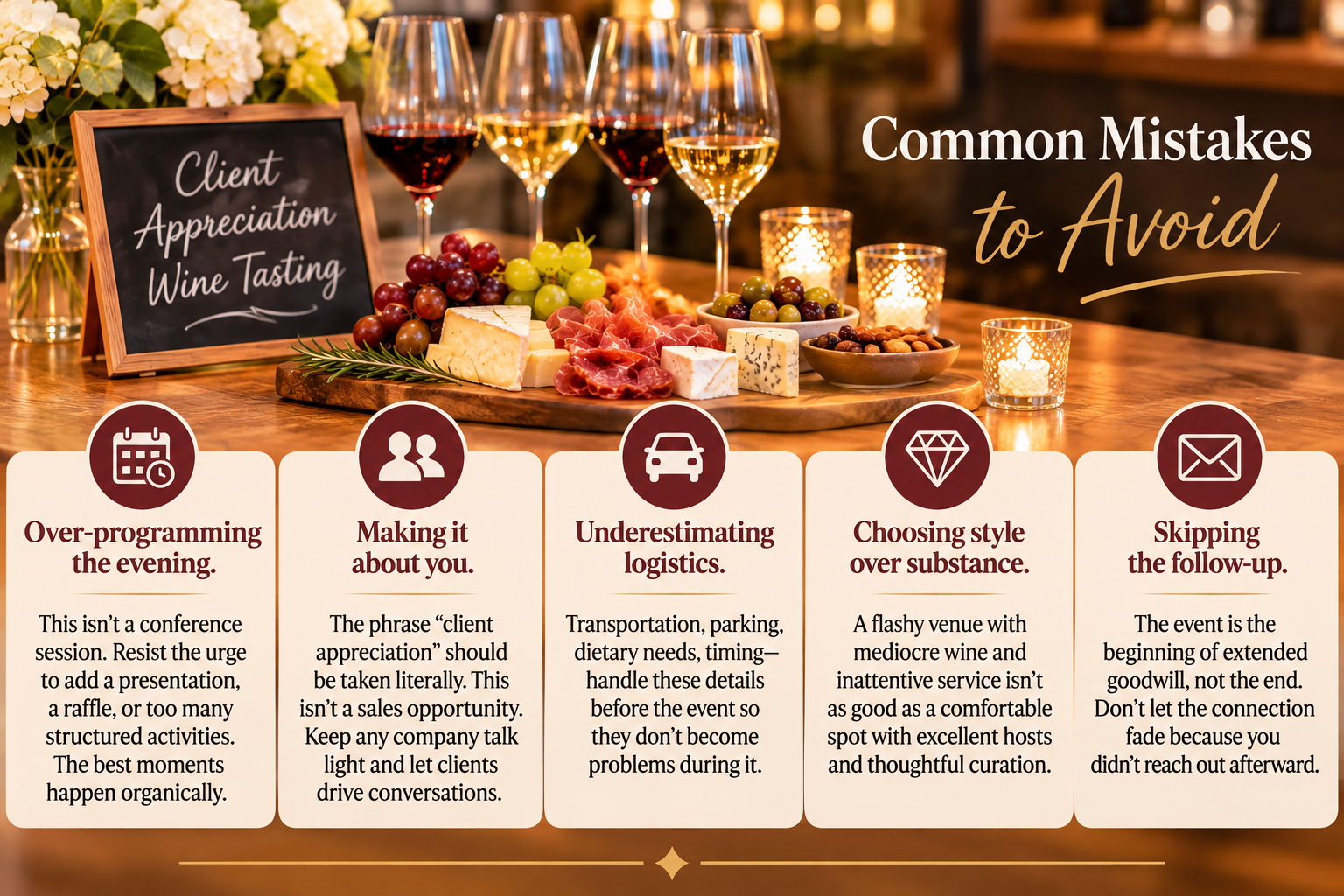
Over-programming the evening. This isn't a conference session. Resist the urge to add a presentation, a raffle, or too many structured activities. The best moments happen organically.
Making it about you. The phrase "client appreciation" should be taken literally. This isn't a sales opportunity. Keep any company talk light and let clients drive conversations.
Underestimating logistics. Transportation, parking, dietary needs, timing—handle these details before the event so they don't become problems during it.
Choosing style over substance. A flashy venue with mediocre wine and inattentive service isn't as good as a comfortable spot with excellent hosts and thoughtful curation.
Skipping the follow-up. The event is the beginning of extended goodwill, not the end. Don't let the connection fade because you didn't reach out afterward.
Making It Repeatable
If your first client-appreciation tasting goes well, consider making it an annual tradition. Clients start to anticipate it. The event becomes part of your relationship rhythm.
Keep notes on what worked:
Which wines got the best reactions?
What time and format felt right?
Which clients mentioned enjoying it later?
Each event becomes easier to plan and more effective at strengthening relationships.
Ready to host something your clients will actually remember?
Start by finding a venue that understands what makes these events work—comfortable atmosphere, curated wine selection, and staff who know how to create memorable experiences. If you're in Northern California and want to explore private event options, check out what's available at The Pip Wine Bar & Shop for a setting that's halfway between the Bay and Sacramento, with the kind of welcoming vibe your clients will appreciate.
Come hang out. Bring your best clients. Skip the PowerPoint.
Frequently Asked Questions
How far in advance should I plan a client-appreciation wine tasting?
Book your venue at least four to six weeks ahead, especially for popular venues or busy seasons. This gives you time to send invitations, collect RSVPs, finalize the wine selection, and coordinate food and logistics without rushing. Smaller, more intimate venues often book up quickly for private events, so earlier is better if you have a specific date in mind.
How many clients should I invite to keep the event personal?
Groups of eight to twenty typically work best for client-appreciation tastings. Smaller groups allow deeper conversation and feel more exclusive. Larger groups risk becoming impersonal or making it harder for guests to interact with your team. If your client list is bigger, consider hosting multiple smaller events rather than one large gathering.
Should I provide transportation or rideshare credits for guests?
This thoughtful gesture shows you care about your clients' safety and comfort. Even if most guests plan to pace themselves, offering a rideshare credit removes any hesitation about attending. It also prevents the awkward situation of someone feeling stuck because they didn't plan ahead for transportation.
What's a reasonable budget for a client-appreciation wine tasting?
Expect to spend $60 to $120 per person for a complete experience including wine, food, and venue. Costs vary based on wine quality, venue minimums, and add-ons like private hosts or transportation credits. Focus your budget on wine quality and a knowledgeable host rather than excessive décor or complicated food.
Can I host a successful tasting with a mix of wine experts and complete beginners?
Absolutely. A good host makes everyone feel comfortable regardless of experience level. Choose wines that are accessible but interesting, and encourage language like "this reminds me of..." rather than technical jargon. Beginners often bring fresh perspectives that enhance discussion for everyone—and experts appreciate discovering something new.
Our Commitment to Quality
This guide draws on established practices for hosting professional events and wine tastings, along with direct experience helping businesses create meaningful client experiences. We focus on what actually matters: your clients feeling valued, comfortable, and genuinely happy they showed up. Every recommendation prioritizes practical execution over theory—because a great plan only works if you can actually pull it off.