
Team-Building Wine Tasting for Groups That Hate Forced Fun
The words "mandatory team-building activity" have sent a collective shudder through every office in America at least once.
Trust falls. Escape rooms with that one coworker who takes it way too seriously. Awkward icebreakers that somehow make everyone feel less connected than before.
Your team still needs to actually bond. And if you're reading this, you're probably the person tasked with making that happen—without causing a mutiny.
For teams scattered between the Bay Area and Sacramento—or anywhere along that corridor—wine tasting might be your answer. Not the stuffy, intimidating kind where someone swirls a glass for three minutes and says words like "barnyard" with a straight face. The relaxed, genuinely enjoyable kind where people actually talk to each other and leave thinking, "That was... fun?"
Dixon, CA sits right in the middle of the Bay Area-to-Sacramento stretch, making it an ideal halfway point for teams meeting from different directions. And a comfortable wine bar in a small downtown? That signals "off the clock" in a way conference rooms never will.
Why Traditional Team-Building Falls Flat
Most forced-fun activities fail for predictable reasons.
They require performance. They put people on the spot. They assume everyone has the same comfort level with competition, physical activity, or public participation.
The quiet analyst who crushes it at their desk? They're miserable at laser tag. The brilliant creative who solves impossible problems? They shut down when asked to "share something nobody knows about them" in front of fifteen people.
Good team-building works differently. It creates space for natural conversation without forcing it. It gives people something interesting to focus on—so the bonding happens almost accidentally.
Wine tasting, done right, checks every box.
What Makes Wine Tasting Actually Work for Teams
Wine tasting hits different than most corporate activities for a few specific reasons.
There's no winning or losing. Nobody's keeping score. There's no "best" palate or right answer. When someone says a wine tastes like "cherries and maybe... dirt?" that's a perfectly valid observation. Tasting is subjective by design.
Participation scales naturally. Some people want to ask questions and dive deep. Others prefer to sip, listen, and enjoy the atmosphere. Both approaches work. A well-run tasting doesn't put anyone on the spot.
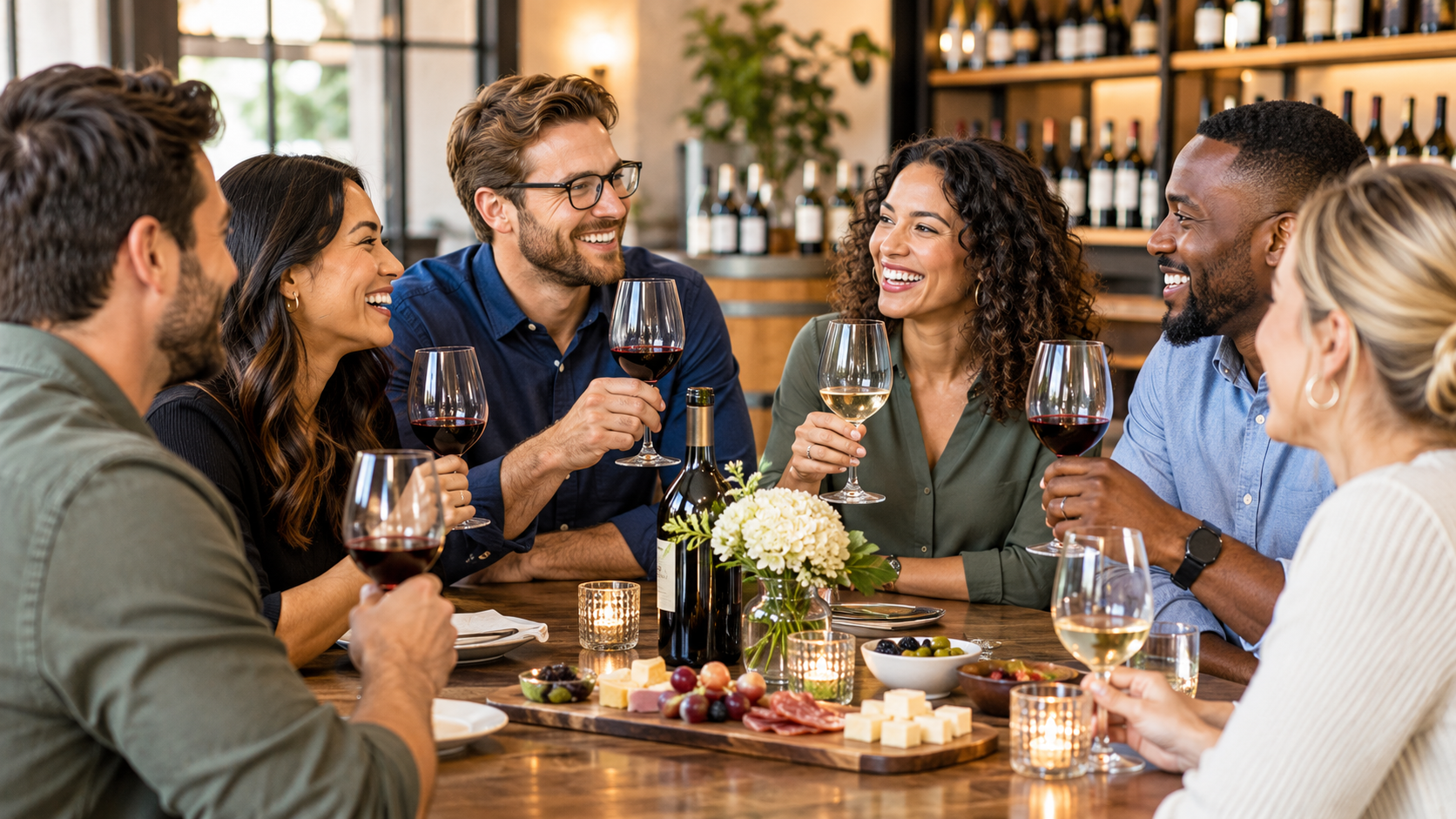
It creates genuine conversation starters. "What do you think of this one?" is a low-stakes question that can lead anywhere. Work stress. Weekend plans. That show everyone's watching. The wine gives people something to talk about while they're actually getting to know each other.
The setting matters. Getting out of the office—into a comfortable, adult space designed for relaxation—signals that this is different. You're not in a conference room with bad fluorescent lighting. You're somewhere people actually want to be.
Two Formats That Work for Groups Who Hate Forced Fun
Not all wine tastings are created equal. The format makes or breaks whether your team actually enjoys it. Here are two approaches that consistently work for corporate groups:
The Casual Guided Tasting
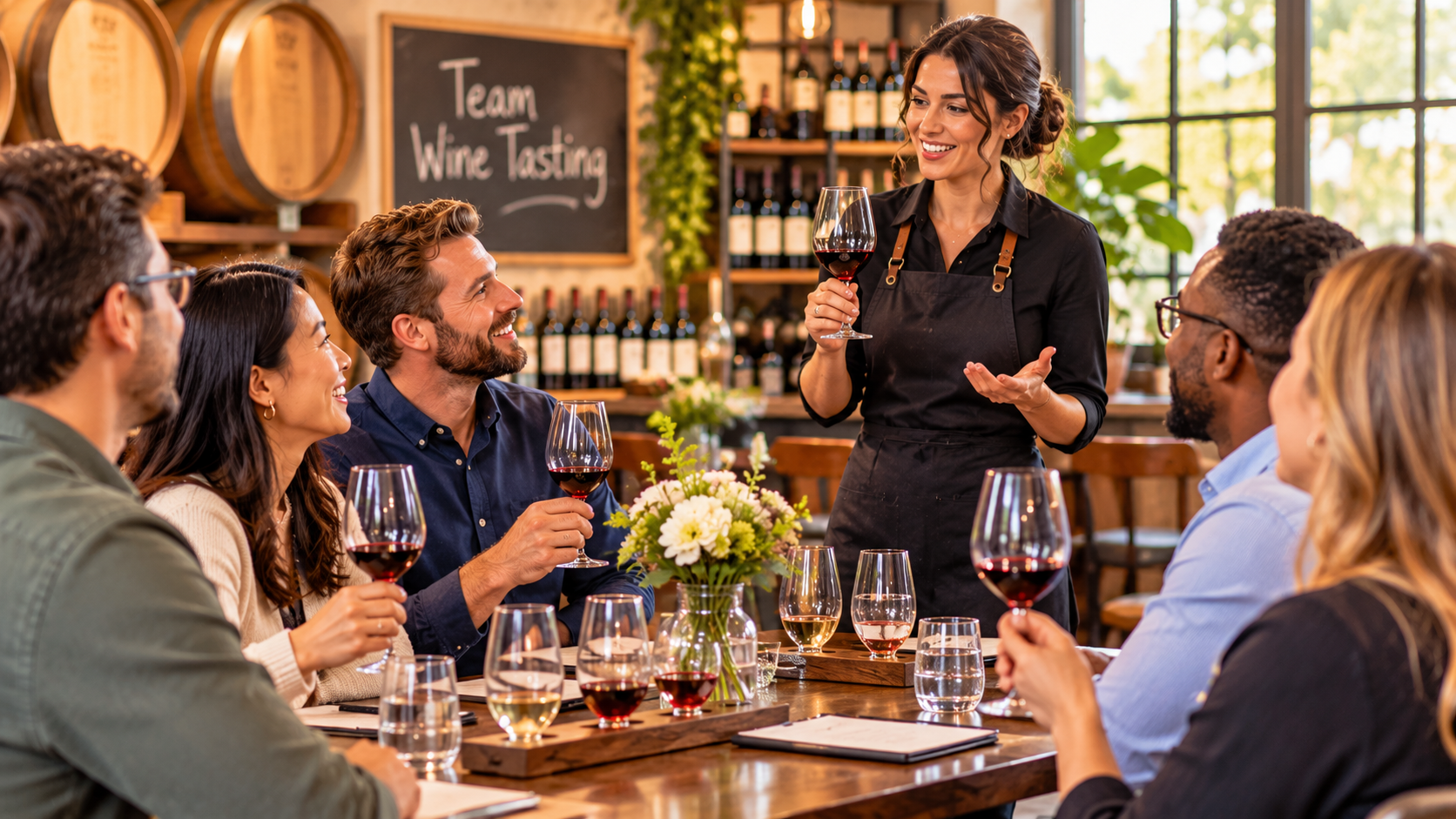
This is the most common format for team-building: your group gathers around a table (or cluster of tables), and a knowledgeable host walks everyone through a curated selection of wines.
What makes it work for skeptical teams:
Storytelling over lecturing. The host shares where each wine comes from, what makes it interesting, maybe a detail about the winemaker—without quizzing anyone afterward.
Conversation built into the pacing. Between pours, there's natural time for people to chat, compare notes, and react together.
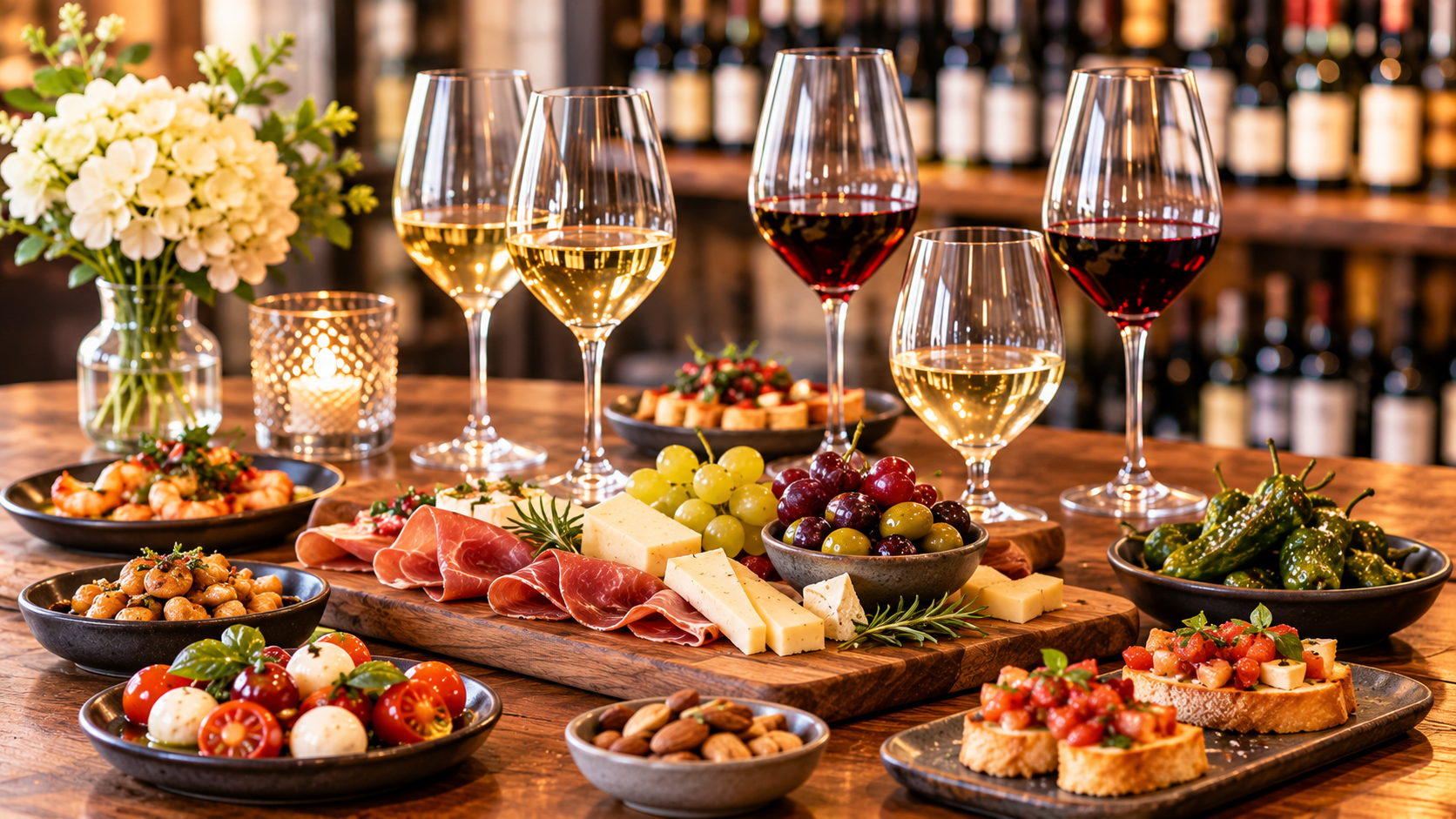
Food alongside wine. Tapas-style bites give everyone something to share and discuss. Passing plates creates connection without anyone having to try.
This format works well for groups of 8–20 who want a shared experience with a clear structure but no pressure.
The Station-Based "Walk Around" Tasting
For larger groups or teams that prefer more freedom, a walk-around format lets people move at their own pace between tasting stations.
What makes it work:
Self-directed engagement. Introverts can take their time; social butterflies can work the room.
Natural mixing. People cluster and re-cluster throughout the event, creating organic cross-team conversations.
Lower intensity. Nobody's waiting for you to react or comment. You can simply taste and move on.
This format works well for groups of 20+ or teams where some members might feel claustrophobic in a structured sit-down setting.
For either format, the key is finding a venue that can customize the experience to your group's size and energy—not force you into a rigid script.
Designing a Low-Pressure Experience: What to Request
When you're planning a corporate wine tasting, these details make the difference between "genuinely enjoyable" and "another thing to endure."
Skip the Quiz Format
Some venues structure tastings like a test. Guess the grape. Name the region. Compete for prizes.
For team-building, you want education without evaluation. A guide who shares interesting stories about the wines without putting anyone on the spot.
Make Everything Genuinely Optional
The best tastings give people choices:
Try all six wines or stick with three
Ask questions or just listen
Participate in conversation prompts or quietly enjoy the atmosphere
"Optional" should be genuinely optional—not "optional but you'll feel weird if you don't."
Include Non-Drinkers Without Making It Weird
Your team likely includes people who don't drink—for health reasons, personal preference, religious practice, or because they're driving. A good venue handles this seamlessly: sparkling water, craft sodas, or non-alcoholic alternatives presented as equally valid choices.
Nobody should have to explain or justify their drink selection. When evaluating venues, their answer to "how do you accommodate non-drinkers?" tells you a lot about their overall hospitality approach.
Build In Conversation Prompts (But Gently)
The right prompts create connection without cringe:
"What's a place you've traveled that you'd go back to in a heartbeat?"
"What's something you're looking forward to this season?"
"If this wine was a movie, what movie would it be?"
Light. Fun. No vulnerability required.
Mix Up the Groups
If you're doing a larger tasting, consider seating arrangements that put people from different departments together. The accounting team already talks to each other all day. This is a chance for cross-team connections that wouldn't happen otherwise.
Finding the Right Venue: What to Look For
Not every wine bar or tasting room knows how to handle groups well. Here's what separates a good corporate experience from a forgettable one:
Comfortable seating for your group size. Standing-room-only works for a casual happy hour. For actual team-building, people need to sit, relax, and settle in.
A host who reads the room. You want someone who can adjust their approach based on your group's energy. More stories, less lecture. More "try this and see what you think," less jargon.
Flexibility on format. Can they customize the tasting to your group? Offer food pairings? Accommodate dietary restrictions and non-drinkers?
A vibe that signals "off the clock." Look for spaces with personality—local spots with character rather than generic corporate event venues.
Private or semi-private options. If your team can hear three other groups doing tastings simultaneously, the intimacy disappears.
What to Ask Before Booking
These questions help you find the right fit:
What's your typical group tasting format? (Listen for flexibility vs. rigid structure)
How do you handle non-drinkers? (Should be seamless and judgment-free)
Can we do food pairings? (Eating together matters for team dynamics)
What's the atmosphere like? (Ask for photos or schedule a visit)
Do you do private events or would we be with other groups?
What's included in the per-person price? (Wines, food, private space, guide?)
How long does a typical tasting run? (90 minutes to 2 hours is usually ideal)
Red flags: venues that can't customize, won't accommodate non-drinkers, or seem more interested in upselling bottles than creating an experience.
What to Budget for a Corporate Wine Tasting
Quality guided tastings typically range from $40 to $100 per person. Where you land in that range depends on:
Wine selection quality (everyday pours vs. premium or reserve wines)
Food inclusion (light bites vs. full tapas spread)
Private space (shared room vs. dedicated event space)
Group size (some venues have minimums for private bookings)
Duration and format (standard tasting vs. extended experience)
Private events with dedicated space and customized formats typically fall on the higher end—but you're paying for an experience your team will actually remember.
When requesting quotes, ask for package options that include everything. Surprises in the final bill are never fun to explain to accounting.
The Unexpected Benefit: People Actually Talk
Here's what happens at a well-designed wine tasting that doesn't happen in most team-building scenarios.
People actually have conversations.
Not forced "share your name and a fun fact" conversations. Real ones. About travel. About what they're cooking this weekend. About that project they're stressed about.
The wine gives everyone something to focus on—a shared experience that naturally generates comments and reactions. "Oh wow, I actually like this one." "This reminds me of a trip I took to Oregon." "I had no idea rosé could taste like this."
Those small moments of connection add up. By the end, your team has shared an experience that wasn't about work. They've learned something small about each other's preferences and personalities. They've laughed at the same jokes and agreed about which wine was "the weird one."
That's the stuff that actually builds team cohesion.
Making It Even Better: Food and Pacing
If the venue offers food pairings, say yes.
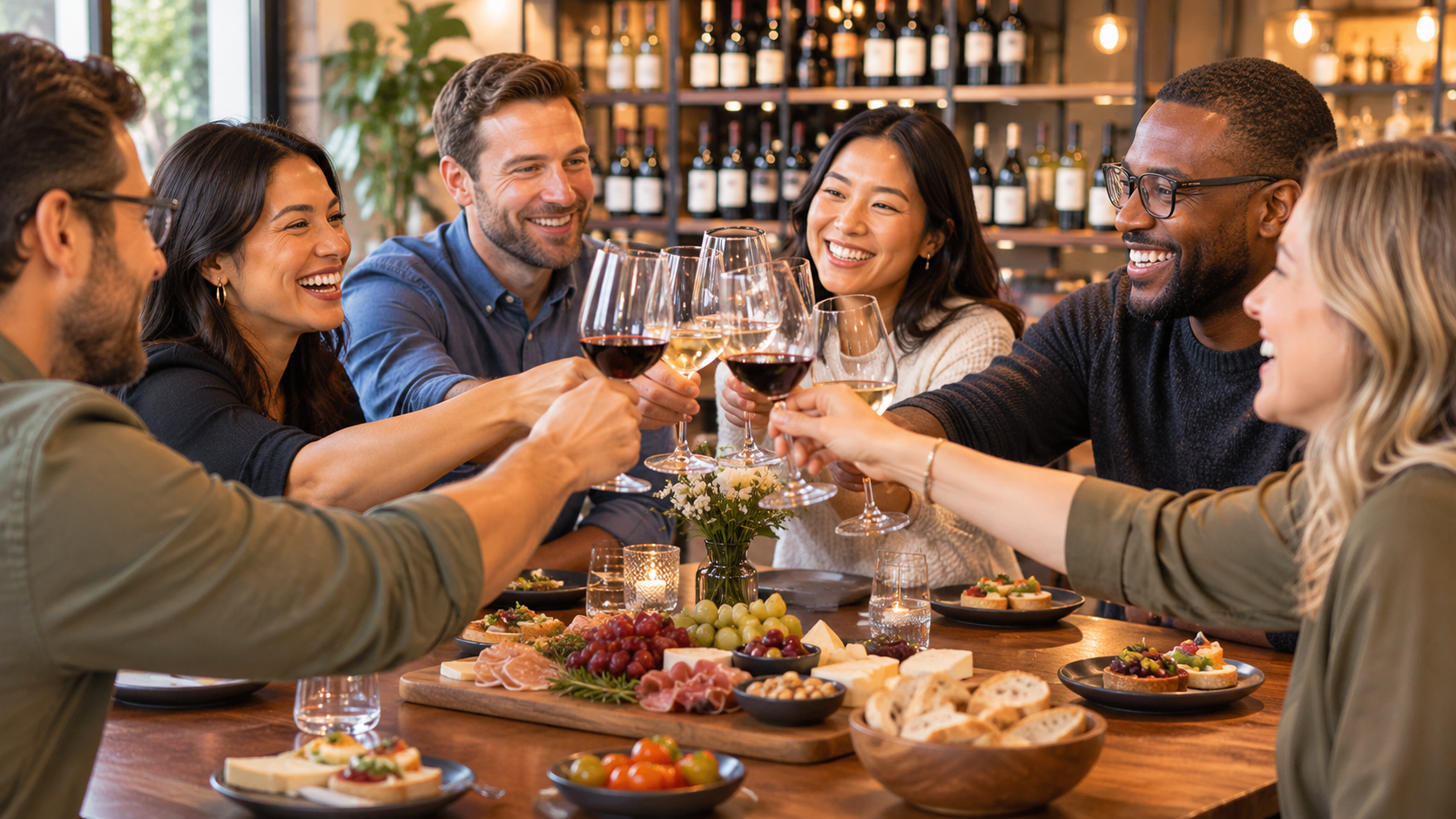
Eating together is one of the oldest forms of human bonding. There's something fundamentally communal about sharing plates—passing bread, debating which bite pairs best with which wine, reaching for the last piece of cheese.
Tapas-style small plates work especially well for groups. Everyone shares. Nobody's stuck with an entrée they didn't want. The food keeps appearing, which naturally extends conversations and gives people things to react to together.
Food also helps everyone pace themselves. Nobody wants to be the coworker who got too enthusiastic with the pours. Substantial snacks throughout the tasting keep the experience fun and professional.
Timing and Length: The Sweet Spot
Two hours is the sweet spot for most wine tasting team-building events.
Shorter than that and people don't fully settle in. Longer and it starts to drag—especially for folks who aren't hardcore wine enthusiasts.
Within that window, build in natural breaks:
Time between wines for conversation
A pause for a food course
A moment where the host shares a story that doesn't require anyone to do anything except listen
The goal is relaxed engagement, not an information marathon.
Should Attendance Be Mandatory?
This question is worth asking before you book: Is this for everyone, or should it be opt-in?
When people choose to attend, they arrive with completely different energy than when they're required to show up. Mandatory attendance at after-hours events can breed resentment—especially when personal time is already stretched thin.
If your company culture allows it, consider framing the event as "highly encouraged" rather than required. You'll get fewer attendees who resent being there and more who genuinely want to connect.
For genuinely mandatory events (leadership retreats, quarterly all-hands), the format matters even more. Keep it during work hours when possible, keep it comfortable, and keep it short enough that people aren't checking their watches.
Why Dixon Works for Bay Area and Sacramento Teams
If your team is scattered between the Bay Area and Sacramento—or anywhere in that corridor—finding a central meeting point matters.
Dixon sits right in the middle. Close enough that nobody's driving two hours. Far enough from the office that it actually feels like getting away.
The town's small, relaxed, and distinctly un-corporate. No convention centers. No chain restaurants masquerading as local spots. Just a genuine downtown with places designed for adults who want good drinks and comfortable vibes.
For teams tired of the same old Sacramento happy hour or overpriced San Francisco event venues, meeting halfway in a place like Dixon offers a change of scenery that makes the whole event feel more special. Several groups have discovered The Pip specifically because they wanted a comfortable spot to hang for a couple hours while meeting halfway.
Planning Your Corporate Wine Tasting: A Quick Checklist
Before you book, run through this list:
Logistics
Confirm headcount (and get a buffer for last-minute changes)
Verify venue capacity and private space options
Check parking availability for your group size
Confirm the venue is 21+ (no awkward surprises)
Format
Request a relaxed, non-competitive structure
Ask about non-drinker accommodations
Confirm food is included or available
Discuss timing and pacing with the host
Team Communication
Frame the event positively (not "mandatory fun")
Share what to expect so introverts can mentally prepare
Make clear that full participation isn't required
Provide venue details, parking info, and timing in advance
Follow-Through
Send a quick thank-you afterward
Share a few photos (with permission)
Note what worked for future events
The Bottom Line
Your team deserves better than trust falls and awkward icebreakers.
Wine tasting works because it creates the conditions for real connection: a comfortable environment, something interesting to experience together, and zero pressure to perform. People can engage as much or as little as they want. Conversations happen naturally. Nobody leaves feeling embarrassed or exhausted.
Is it going to transform your entire company culture? Probably not. But it might give your team a genuinely good memory together—one where they laughed, learned something new, and actually enjoyed each other's company.
That's more than most team-building activities can claim.
Ready to Plan Something Your Team Won't Dread?
The Pip Wine Bar & Shop in Downtown Dixon hosts private events and group tastings in a comfortable, curated setting—no wine snobbery required. Private parties are one of their specialties, and the space is designed for groups who want to actually relax together.
Come check out The Pip for private event options, or reach out directly to start planning something your team will actually enjoy.
Frequently Asked Questions
How many people can typically participate in a private wine tasting?Most wine bars accommodate groups ranging from eight to thirty guests for private tastings, though capacity varies by venue. Smaller groups often get more personalized attention, while larger groups may need a dedicated event space. Always confirm capacity and format options when booking—some venues can adjust their setup based on your specific headcount.
How do we handle team members who don't drink alcohol?The best venues treat non-drinkers as welcomed guests, not afterthoughts. Look for places offering quality non-alcoholic alternatives presented alongside regular options. Your team members shouldn't have to announce or explain their choice. When evaluating venues, their answer to "how do you accommodate non-drinkers?" tells you a lot about their overall hospitality approach.
Should a wine tasting be during work hours or after?When possible, schedule during work hours—it signals the company values the activity enough to give it real time, and it doesn't cut into personal evenings. If after-hours is unavoidable, keep it short, make attendance genuinely optional, and choose a venue close to where people already are. Respecting people's time builds more goodwill than any team-building activity.
Do participants need any wine knowledge beforehand?None whatsoever. A well-run tasting welcomes complete beginners and enthusiasts equally. Good hosts explain everything in plain language and create space for questions without judgment. If a venue makes you feel like your team needs to study first, find a different venue—that's the opposite of the relaxed, inclusive vibe you're looking for.
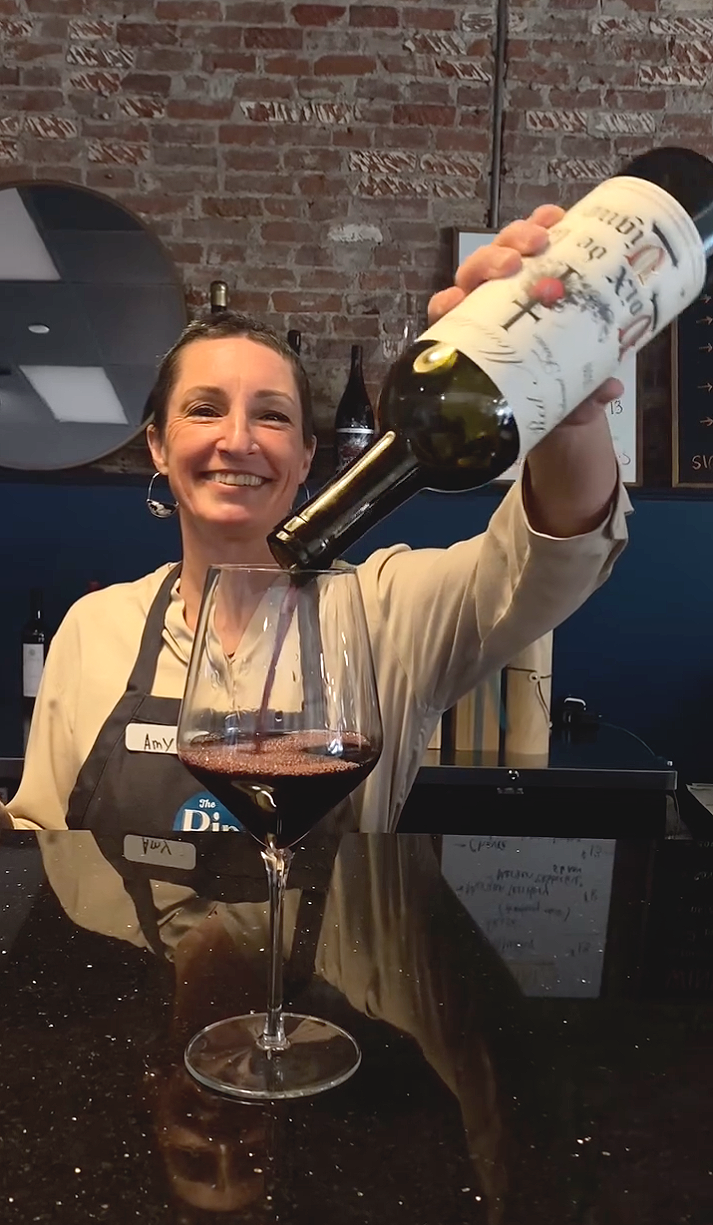
What makes wine tasting better than other team-building options?Wine tasting succeeds where other activities fail because participation is naturally flexible. There's no scoreboard, no physical challenge, no public performance required. People who want to engage deeply can ask questions; people who prefer to observe can simply enjoy the atmosphere. The shared sensory experience gives everyone something to react to together without forcing anyone into the spotlight.
Why Trust This Guide
This guide was developed drawing on principles of inclusive event design and direct experience with what makes group wine experiences genuinely enjoyable versus painfully awkward. The Pip Wine Bar & Shop specializes in creating comfortable, curated wine experiences in Downtown Dixon—a welcoming spot for groups who want quality over pretension and real conversation over forced fun. Private parties and group events are among their specialties, with a focus on making every guest feel at ease regardless of their wine expertise.