
How to Host a Book Club at a Wine Bar: Your Guide to Better Literary Gatherings
Let's be honest about traditional book club hosting. Someone's shoving laundry into a closet. Someone else is apologizing for their "messy" kitchen that looks fine. There's never quite enough seating, and the host spends half the evening refilling glasses instead of actually discussing the book.
Wine bars fix all of that.
You get a space designed for lingering conversation. Comfortable seating. Drinks handled by people whose entire job is making sure your glass stays full. And a neutral territory where everyone can relax—no one feels like they're imposing, no one feels like they're working.
The wine itself becomes part of the experience. Reading a novel set in Burgundy? Order something from the region. Diving into a moody thriller? Go bold and red. The sensory connection adds a layer to the discussion that a random bottle from the grocery store just doesn't deliver.
Plus, there's the accountability factor. When you've made an actual reservation at an actual venue, people show up. "Meet at Sarah's around 7-ish" becomes "We're at the wine bar at 7—see you there."
Here's how to make it work.
What to Look for in a Wine Bar Venue
Not every wine bar fits every book club. Spend a little time choosing the right spot before you commit.
The Sound Factor
You need a space where conversation can actually happen. Visit during the time slot you'd normally meet and pay attention to:
Ambient noise level (can you hear someone across the table without shouting?)
Music volume (background vibes, not competing soundtrack)
Table spacing (enough buffer from neighboring groups)
Some wine bars have designated corners, back rooms, or semi-private areas perfect for groups. Ask about these when you call—they may not be obvious from the main room.
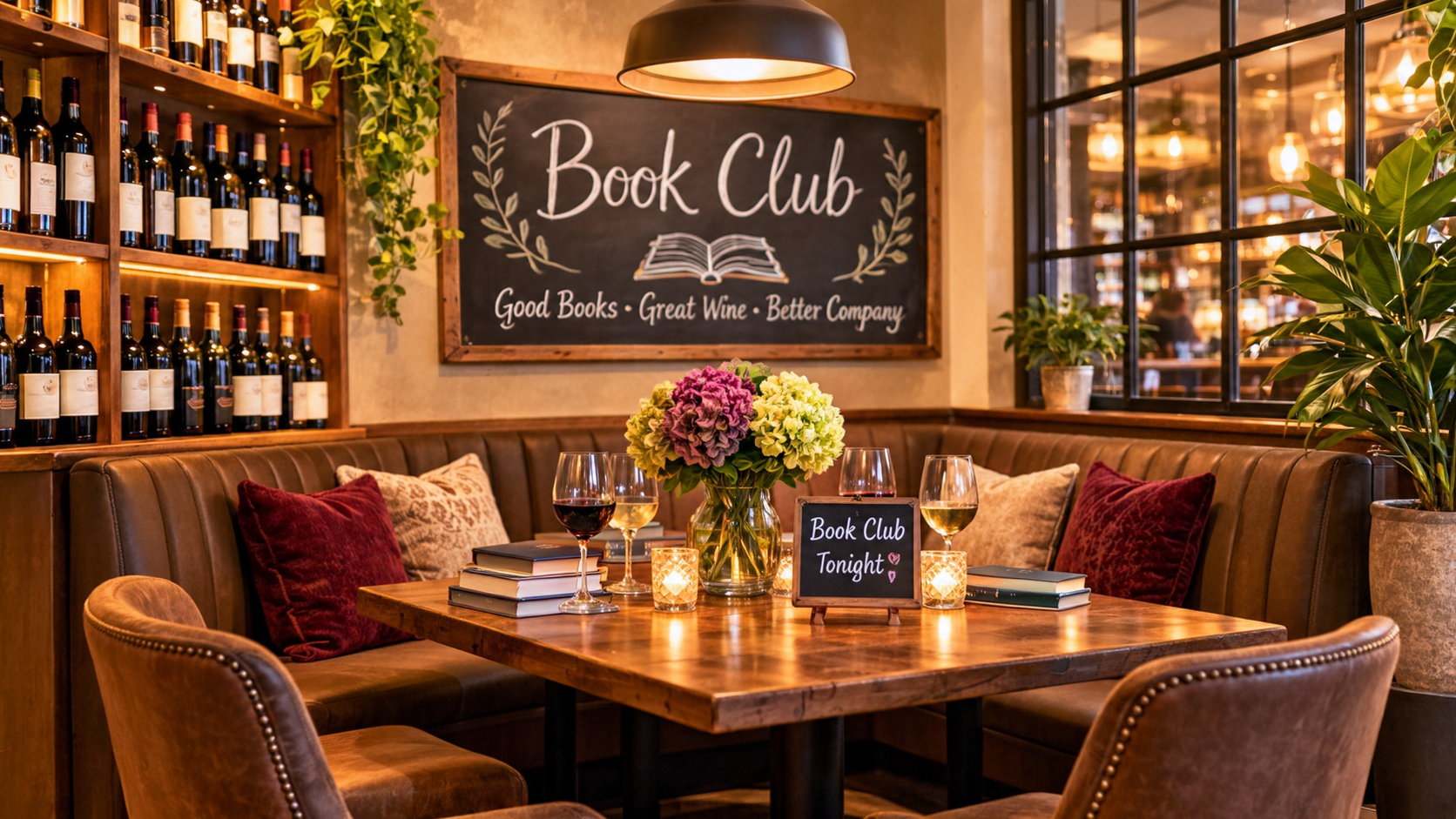
Seating That Works for Discussion
Consider your typical attendance. Most book clubs run somewhere between 6 and 12 members, with fluctuation depending on the month.
Round tables or communal seating arrangements work best. Everyone can see each other, no one's stuck at the awkward end shouting to be heard, and the conversation flows naturally instead of splitting into side discussions.
When you inquire, give them your attendance range so they can suggest appropriate seating.
Menu Depth
A solid wine bar for book club should offer:
Wine by the glass so members can explore different pours without committing to bottles
Shareable small plates or tapas-style bites that fuel conversation without making everyone sleepy
Non-alcoholic options for designated drivers or members who don't drink
Range in selection from approachable everyday wines to more adventurous picks
The food question matters more than you'd think. Light bites work better than heavy meals—you want energy for discussion, not a food coma by chapter three.
Setting Up Your First Wine Bar Meeting
Getting started is simpler than you might expect.
Make Contact Early
Reach out to your chosen venue two to three weeks before your first gathering. Wine bars appreciate the heads-up for group reservations and can often suggest the best times or seating areas for your needs.
When you call or email, share:
Your expected group size and how much it typically fluctuates
Preferred day and time
Approximate duration (most book discussions run 90 minutes to two hours)
Any accessibility needs or special requests
Establish the Rhythm
Nail down the basics before that first meeting:
Frequency: Monthly works for most groups. Enough time to actually finish the book, not so long people forget what happened.
Duration: Plan for 90 minutes to two hours. Wine bars are built for lingering—don't rush.
Leadership rotation: Will someone different lead discussion each month? Handle book selection?
Sort Out the Money Stuff
Here's where book clubs sometimes stumble. Talk about the practical stuff upfront:
Does everyone order their own drinks and food?
Will you share bottles for the table and split the cost?
Is there a minimum spend expectation from the venue?
Many wine bars welcome groups without requiring set minimums, especially on quieter weeknight evenings. But asking during your initial inquiry avoids awkward surprises when the check arrives.
Making the Evening Flow
The wine bar setting naturally encourages relaxed conversation. A few habits help everything run smoothly.
The Pre-Discussion Buffer
Encourage members to arrive 10-15 minutes early. This gives everyone time to order their first drink, browse the menu for bites, and settle into the space before discussion begins.
Starting on time respects everyone's evening and keeps the energy focused on the book rather than logistics.
Loose Structure, Not Rigid Format
You don't need formal rules—but having a rough shape helps:
Someone kicks off with initial thoughts or a question
Open it up for reactions, favorite moments, confusing parts
Save the controversial opinions or heated debates for after everyone's had a chance to weigh in
End with ratings, recommendations for similar reads, or next month's selection
The relaxed atmosphere is a feature, not a bug. Let conversations meander a little. Some of the best book club moments happen in the tangents.
Volume Awareness
You're sharing space with other guests. When someone drops a major plot twist opinion, keep the passionate response at a reasonable volume.
If your group tends toward enthusiastic debates (the best book clubs do), consider:
Choosing off-peak times when the bar is quieter
Asking about semi-private seating options
Picking a corner or back table with natural sound buffer
Wine Pairing Ideas by Genre
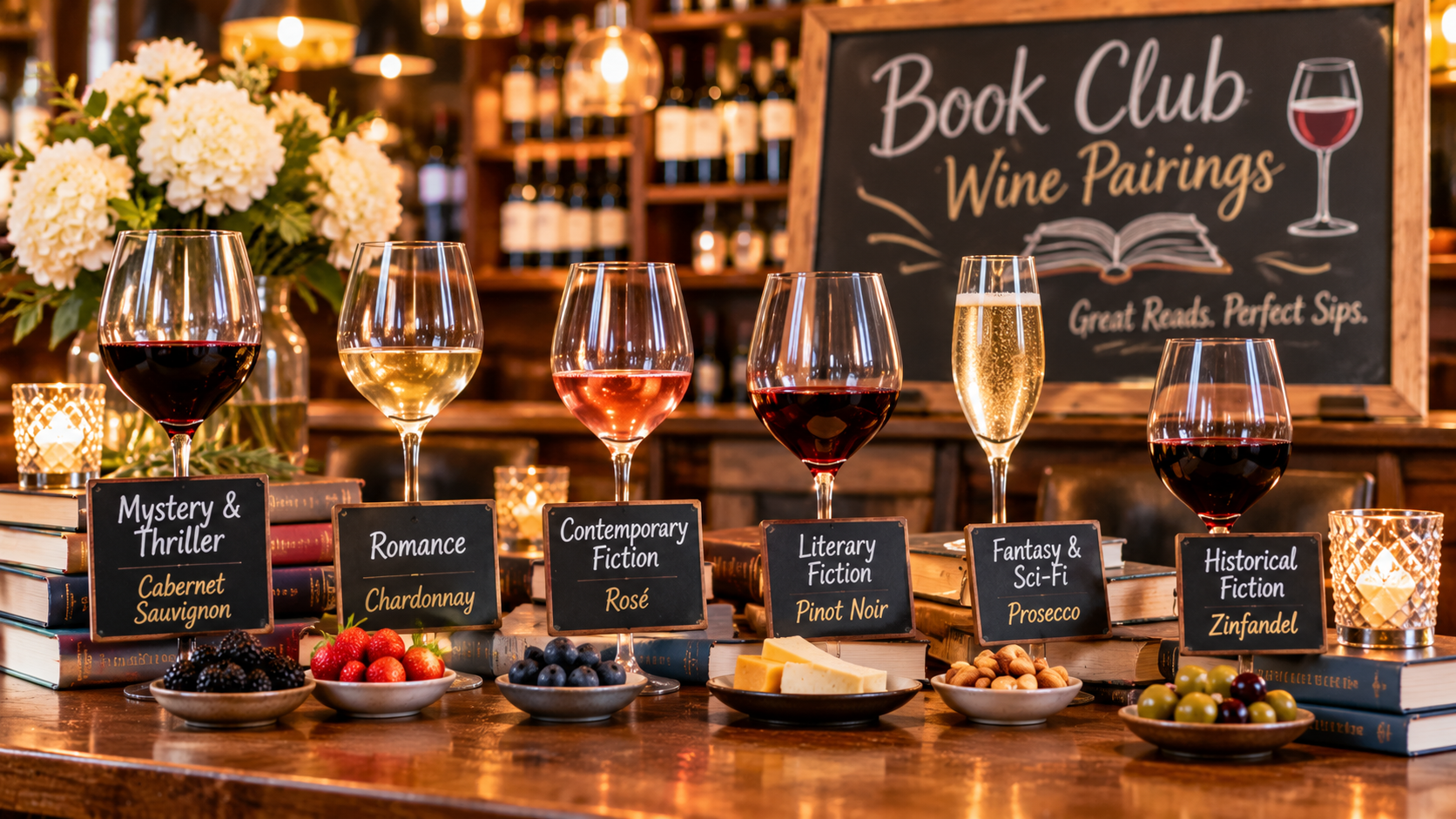
Part of the fun is matching your wine to your reading material. Here are some starting points:
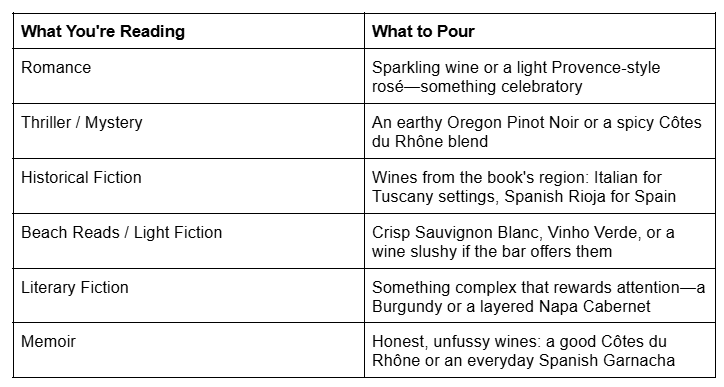
Not sure what to order? That's what the staff is there for. A good wine bar team can guide you toward options that fit your mood, the book's setting, or just what sounds interesting tonight. Don't be shy about asking—it's their favorite part of the job.
Making Everyone Feel Welcome
Great book clubs include everyone. Keep these factors in mind when choosing your venue and planning your gatherings.
Physical Accessibility
When scoping out venues, check for:
Step-free entry or ramp access
Accessible restrooms
Seating that accommodates mobility devices
Adequate lighting for members with vision needs
If you're unsure, call ahead and ask directly. Good venues will give you honest answers.
Drinking Preferences
Not everyone drinks alcohol—and that's completely fine. Look for wine bars that offer quality non-alcoholic options: mocktails, interesting sparkling waters, NA wine alternatives if available.
The focus is the conversation and the company. What's in each person's glass is secondary.
Budget Sensitivity
Wine bars range widely in price point. Choose a venue where most members can comfortably participate without financial stress. Being upfront about typical costs (average spend per person, whether you'll share bottles or order individually) helps everyone plan accordingly.
Growing Your Book Club at the Wine Bar
Once you've established a rhythm, the venue becomes more than a meeting spot—it becomes part of your book club's identity.
Building Venue Familiarity
Regular visits create familiarity. Staff learn your group's preferences. You discover your favorite table. You might even become the "book club that comes on the second Thursday" in the best possible way.
Special Occasion Gatherings
Consider elevating certain meetings:
Anniversary celebrations for your book club
End-of-year "best books we read" discussions with a tasting flight
Genre-themed evenings with wines to match
Author Q&A nights (virtual or in-person if you can arrange it)
When to Consider Private Events
For larger groups or milestone celebrations, many wine bars offer private event options. This gets you dedicated space, customized experiences, and the ability to fully own the evening's atmosphere.
Private gatherings work particularly well for:
Annual book club celebrations
Combined book clubs or literary social events
Book launch parties
Groups larger than your typical attendance
Private parties are often a wine bar's favorite kind of event to host—worth asking about even if you're not sure what's possible.
The Long Game
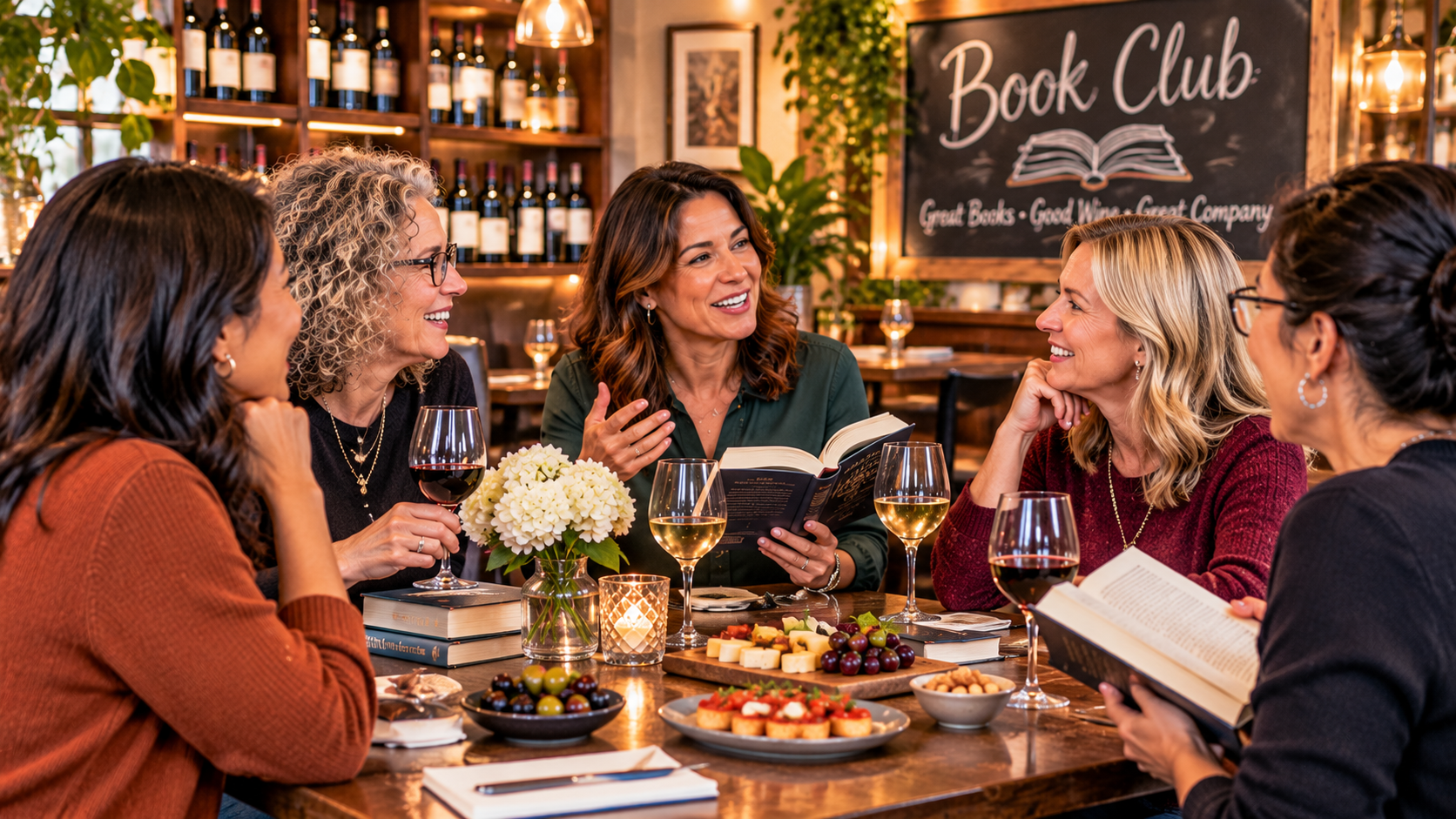
The best book clubs become anchors in people's social calendars. Hosting at a wine bar reinforces that commitment.
You're not just meeting to talk about a book. You're creating a monthly ritual—an appointment with friends, good conversation, interesting wine, and the kind of slow-paced evening that feels increasingly rare.
The comfortable wine bar setting does the heavy lifting. All you need to bring is the book. Or at least some opinions about it.
Planning a book club gathering—or something bigger? A cozy wine bar might be exactly the spot you're looking for. Reach out to your favorite local venue to ask about group seating, semi-private options, or private event availability. Or just swing by to scope out the vibe—sometimes that's the best research.
Frequently Asked Questions
How many people is ideal for a wine bar book club?
Most book clubs work well with 6 to 12 members. This size creates enough varied perspectives to fuel discussion while keeping things intimate enough that everyone can participate without shouting. When you contact a venue about group seating, mention your typical attendance range so they can suggest appropriate arrangements.
Do wine bars require a minimum spend for book club groups?
Policies vary by venue and often depend on when you're meeting. Many wine bars welcome groups without formal minimums, especially on quieter weeknight evenings. Always ask when making your reservation—it's a normal question and avoids surprises. Private rooms or reserved sections may have different arrangements.
What if some members don't drink alcohol?
Great book clubs make everyone comfortable regardless of what's in their glass. Look for wine bars with quality non-alcoholic options like mocktails, interesting sparkling waters, or NA alternatives. The focus is the conversation and company—the specific beverage is secondary.
What's the best day and time for meetings?
Weeknight evenings—particularly Tuesday through Thursday—often work well. You'll typically find a calmer atmosphere than weekend nights, making conversation easier. Ask your chosen venue about their slower periods when group discussion won't compete with heavy crowds or loud music.
Can we bring books and reading materials?
Absolutely. Wine bars expect book clubs to reference their reads during discussion. Just be mindful of table space when ordering food and drinks, and keep books away from where spills might happen. A tote bag under the table works better than a stack next to the wine glasses.
About This Guide
This guide comes from our experience welcoming book clubs, friend groups, and private parties into wine bar spaces. We love seeing community form around shared interests—whether that's a great bottle, a great book, or both. If you're looking for a comfortable spot to host your next literary evening, we'd be happy to help you find the right fit.