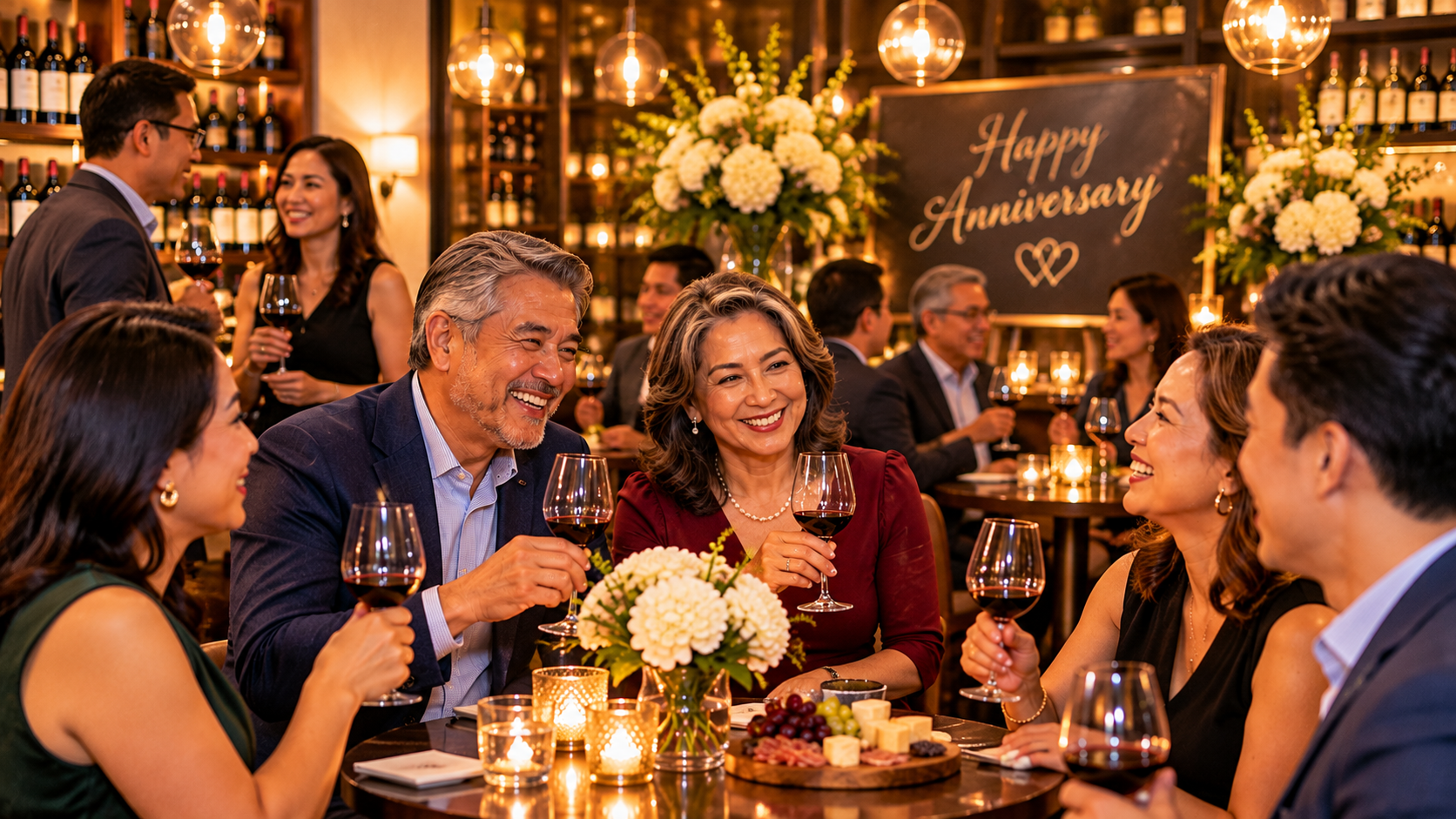
How to Plan an Anniversary Party at a Wine Bar
Planning an anniversary party shouldn't feel like a second job. Yet here you are, juggling guest lists, venue calls, and the nagging worry that something will go sideways the night of.
Take a breath. Wine bars exist for exactly this kind of celebration—intimate, relaxed, built for conversation and connection. The venue does most of the heavy lifting. Your job is bringing the right people together and creating a few moments worth remembering.
This guide walks you through the practical stuff: timelines, venue questions, drink formats, accessibility considerations, and the small details that separate a forgettable gathering from a night people actually talk about later.
Planning Timeline: Working Backward From Your Date
Anniversary parties need more lead time than casual get-togethers. Wine bars often have limited private event capacity, and the dates you want book fast.
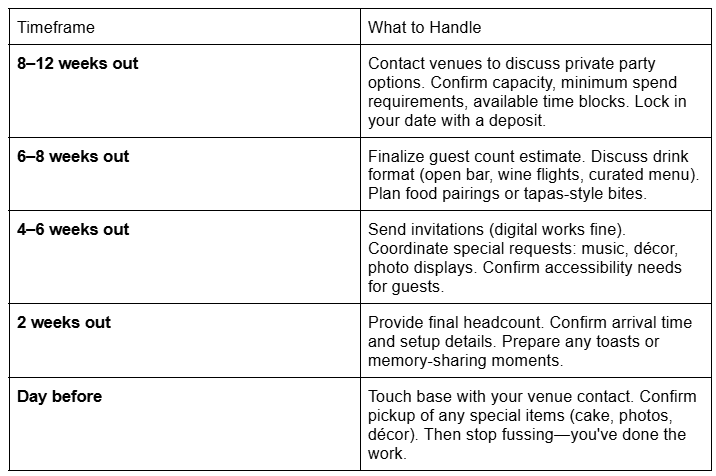
Starting early gives you breathing room. Rushing creates stress, and stress has a way of showing up at parties.
Questions to Ask Before Booking Your Wine Bar
Not every wine bar handles private events the same way. Before you commit, get clarity on the details that actually matter.
Space and Layout
A venue that holds 40 people might feel cramped with 35 guests if the layout doesn't support mingling. Ask whether you'll have a dedicated space or share the room with regular patrons. Private or semi-private areas create a more cohesive celebration where your group isn't competing with background noise.
Booking Structure and Costs
Most wine bars use minimum spend requirements rather than flat rental fees for private events [1]. This approach often benefits hosts—you're paying for what guests consume rather than renting empty square footage.
Minimum spends vary significantly based on day, time, and season. A Tuesday afternoon might require $500–$800, while a Saturday evening at a popular spot could run $1,500–$3,000 or higher. Always ask for specific numbers during your initial conversation so you can budget accurately.
Food Service
Some wine bars offer full appetizer menus while others focus on lighter tapas-style bites. Clarify what's available and whether outside food—especially anniversary cake—is permitted. Many venues accommodate cakes with advance notice, though some charge a small service fee.
Drink Flexibility
Can you pre-select wines for the group? Are wine flights an option? What about guests who prefer cocktails or beer? The best wine bars offer guidance without rigidity.
Budgeting for a Wine Bar Anniversary Party
Knowing what to expect financially prevents unpleasant surprises.
Typical cost components:
Minimum spend requirement: $500–$3,000+ depending on day, time, venue popularity, and guest count
Per-person beverage average: $25–$50 for a 2–3 hour event with moderate drinking
Food: $15–$30 per person for tapas-style bites; less if ordering shared platters
Gratuity: 18–22% is standard for private events; confirm whether it's included in the minimum
Cake cutting fee: $0–$3 per person (if applicable)
Décor: Usually minimal cost if working with the venue's existing aesthetic
A 25-person anniversary party on a Saturday evening might run $2,000–$4,000 all-in, including food, drinks, tax, and gratuity. Smaller weekday gatherings can come in well under $1,500.
Ask your venue contact to walk through a realistic estimate based on your guest count and preferences. They've seen hundreds of these events—they know what things actually cost.
Drink Format Options That Shape the Vibe
How you structure drinks affects everything from budget predictability to how guests interact.
Open bar: Guests order freely within a set budget or time window. Most relaxed option, but costs are harder to predict. Works well when you trust your crowd's drinking pace.
Pre-selected menu: You choose 4–6 wines plus a few cocktails that guests can order from. Controls costs while still offering meaningful choice. Simplifies decision-making for guests who feel overwhelmed by full wine lists.
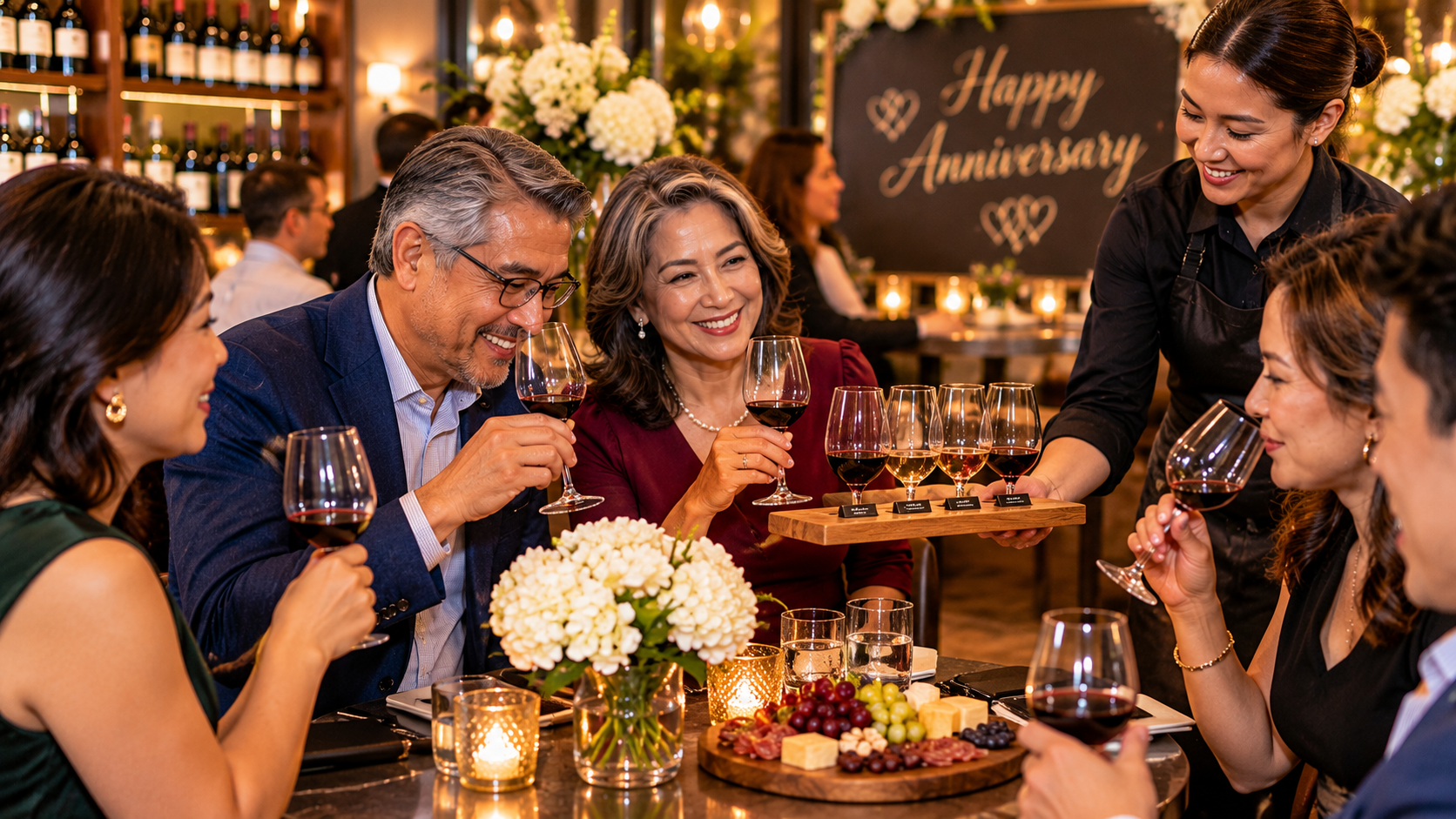
Wine flight format: Curated tastings work beautifully for anniversary parties. Guests experience the same wines together, creating natural conversation starters and shared memory [2]. This format turns drinking into an activity rather than just consumption.
Hybrid approach: Offer a welcome pour and one wine flight, then open ordering for the remainder. Balances structure with freedom. Guests get a shared starting experience, then can explore on their own.
Ask your wine bar which format their space handles best. They've watched what works and what creates bottlenecks at the bar.
Guest Flow That Actually Works
Anniversary parties succeed when guests feel welcomed and included—not like they're attending a formal event with invisible rules.
Arrival window: Give a 30-minute arrival window rather than a hard start time. This prevents awkward early arrivers standing alone and lets energy build naturally. "Join us between 6 and 6:30" works better than "Party starts at 6:00 sharp."
Opening moment: Start with a welcome pour—one wine already selected that guests receive as they arrive. This eliminates the "what do I order?" hesitation and creates immediate shared experience. Everyone's holding the same glass, which feels unifying.
Middle stretch: Allow guests to explore. Wine bars work best when people can order what interests them, sample different options, and move between conversations. Over-programming kills the vibe. You don't need structured activities when the setting encourages natural connection.
Toast timing: Plan your toast for about 90 minutes in, when everyone has arrived, settled, and had a glass. Toast too early and it feels rushed—people are still finding their footing. Too late and energy wanes, guests start checking phones.
Toast and Memory-Sharing Ideas That Land
The toasts make anniversary parties distinct from regular gatherings. Here's how to make those moments feel personal without becoming awkward.
Toast Approaches Worth Trying
The timeline toast: Share one brief story from each decade of the marriage. Keeps it moving, covers ground, gives guests a narrative arc.
The gratitude toast: Thank specific people in the room for their role in the couple's journey. Names matter. "Thank you for being there" hits harder than generic appreciation.
The wisdom request: For milestone anniversaries, invite 2–3 guests to share one-line pieces of advice or observations. Cap it at a sentence each—this isn't open mic night.
The prepared storyteller: Ask close friends or family members in advance to prepare short stories. Two minutes max. Gives people time to think rather than rambling on the spot.
Keep toasts under three minutes each. Wine bars have warm, intimate acoustics. You don't need to fill space with words.
Memory-Sharing Without the Cringe
Skip the open mic entirely. Instead, try:
Photo display: A simple arrangement of photos from throughout the relationship creates conversation without demanding attention. Guests discover them naturally, share reactions, tell their own stories.
Memory cards: Small cards at each seat where guests write favorite memories or wishes. Collect them for the couple to read later, privately. No pressure to perform publicly.
Anniversary trivia: A short, playful quiz about the couple that guests complete in pairs. Low-stakes fun that sparks conversation. "What year did they meet?" "Where was their first trip together?"
The wine bar atmosphere does heavy lifting. Comfortable setting, good drinks, soft lighting—you don't need elaborate activities on top of that.
Wine Bar Constraints Worth Knowing
Wine bars have specific limitations that differ from restaurants or event halls. Planning around these prevents day-of frustrations.
Space considerations: Many wine bars have tight footprints. There may not be room for a gift table, elaborate centerpieces, or a dedicated photo area. Ask what surface space is available.
Décor restrictions: Fire codes often prohibit open-flame candles. Some venues restrict confetti, glitter, or anything that creates cleanup challenges. Ask what's allowed before you buy supplies.
AV limitations: Most wine bars lack projectors, screens, or built-in sound systems for slideshows. If you want to show photos or play a video tribute, confirm technical capabilities—or plan to skip it entirely.
Noise realities: Wine bars can get loud when full. If your celebration overlaps with regular business hours, conversations compete with ambient noise. Private rooms or off-peak timing helps.
Outside vendor policies: Bringing in photographers, DJs, or other vendors may require advance approval or carry restrictions. Don't assume—ask.
Accessibility and Practical Guest Considerations
Thoughtful hosts consider what guests actually need to enjoy themselves.
Mobility: Ask the venue about accessible entrances, seating arrangements, and restroom accessibility. Wine bars vary significantly in physical layout. Historic downtown buildings sometimes have stairs, narrow doorways, or tight restroom access.
Dietary needs: Confirm whether guests with food allergies or restrictions can be accommodated. Communicate what food will be available when you invite guests, so they can eat beforehand if needed.
Transportation: Downtown venues often have parking considerations. Include parking guidance in your invitation, or suggest rideshare coordination for groups traveling from the same area.
Timing for comfort: Afternoon celebrations (2–5pm) often work better for older guests or those traveling distances. Evening parties (6–9pm) suit working-age friend groups. Know your crowd and plan accordingly.
Non-drinkers: Ensure non-alcoholic options exist. Good wine bars typically offer interesting alternatives beyond water and soda—ask what's available so you can mention it when inviting guests who don't drink alcohol.
Children and minors: Most wine bars are 21+ establishments. Confirm the venue's policy before assuming kids can attend, even for daytime events.
Your Venue Confirmation Checklist
Before you finalize any booking, confirm these details in writing. Email documentation protects both you and the venue.
[ ] Date, start time, and end time
[ ] Expected guest count and deadline for final numbers
[ ] Deposit amount and payment schedule
[ ] Minimum spend requirement and what counts toward it
[ ] Cancellation and refund policies
[ ] Private vs. semi-private space confirmation
[ ] Food menu options and outside food policies
[ ] Drink format and pricing structure
[ ] Gratuity expectations (included or additional)
[ ] Accessibility accommodations
[ ] Décor permissions (what's allowed, what's prohibited)
[ ] Cake/dessert policy and any service fees
[ ] Setup time and access
[ ] Cleanup expectations
[ ] Point of contact for day-of questions
[ ] AV equipment availability (if needed)
Get everything in email form. Verbal confirmations get forgotten or misremembered.
What Makes Wine Bar Celebrations Work
The biggest mistake anniversary party planners make is trying too hard. Wine bars already provide ambiance, quality drinks, and a reason for people to linger. The venue has character—your job is working with it, not against it.
Keep décor simple. A few photos, maybe flowers that match the existing aesthetic. You don't need to transform the space.
Keep the schedule loose. A welcome pour, a toast window, maybe one planned activity. The rest handles itself when the setting is right.
Keep the focus clear. This celebrates a relationship. Everything else—the wine, the venue, the food—is backdrop for the people.
The best private parties feel effortless to guests, which means the planning happens well in advance. Give yourself time to make decisions without pressure, and you'll actually enjoy the night instead of managing it.
Ready to Start Planning?
Private celebrations create memories in ways that restaurant dinners simply don't. The intimacy, the shared experience, the chance to actually spend time with people who matter.
Planning an anniversary celebration? Start conversations with your preferred wine bar early. Ask the questions on this list, get the details in writing, and give yourself enough runway to enjoy the process.
The best dates book quickly—especially weekend evenings during popular months. Reach out now, and you'll have options instead of scrambling.
Frequently Asked Questions
How far in advance should I book a wine bar for an anniversary party?Plan to secure your date 8–12 weeks in advance, especially for weekend evenings or popular celebration months like December or summer. Wine bars often have limited private event capacity, and preferred dates book quickly. Starting early also gives you time to work through drink selections and guest logistics without last-minute pressure.
What's the typical cost for a private wine bar anniversary party?Most wine bars use minimum spend requirements rather than flat rental fees [1]. Minimums range from $500 for small weekday gatherings to $3,000+ for Saturday nights at popular venues. A 25-person Saturday celebration typically runs $2,000–$4,000 total, including drinks, food, tax, and gratuity. Ask for specific estimates during your venue conversations.
Can I bring an anniversary cake to a wine bar?Many wine bars accommodate outside cakes with advance notice. Ask during your initial booking conversation about their policy, whether they charge a cake cutting or service fee (typically $0–$3 per person), and whether they can store and serve it for you. Some venues request day-of delivery rather than advance drop-off.
What if some guests don't drink wine or alcohol?Quality wine bars typically offer alternatives including craft cocktails, beer selections, and non-alcoholic options beyond basic soda and water. Discuss guest preferences when planning, and confirm your venue can accommodate everyone. A good venue wants all guests to enjoy themselves, not just the wine drinkers.
Are children allowed at private wine bar events?Most wine bars are 21+ establishments due to licensing requirements, even for private daytime events. Always confirm the venue's policy before assuming family members under 21 can attend. Some venues make exceptions for private buyouts; many do not. Clarify this early to avoid awkward conversations with guests.
About This Guide
This planning guide draws from established private event coordination practices and wine bar hospitality standards. The recommendations reflect industry norms for minimum spend structures, event timing, and venue policies, combined with practical understanding of what makes anniversary celebrations successful in intimate settings.
Looking to host your celebration at a wine bar that knows how to handle private parties? Reach out to discuss your event—private celebrations are some of our favorite nights.
Works Cited
[1] Eventbrite — "How to Plan a Private Event at a Bar or Restaurant." https://www.eventbrite.com/blog/plan-private-event-bar-restaurant/
[2] Wine Folly — "How to Host a Wine Tasting Party." https://winefolly.com/tips/how-to-host-a-wine-tasting-party/