
How to Plan a Retirement Party at a Wine Bar: A Complete Hosting Guide
Your favorite retiree has spent decades navigating early mornings, endless meetings, and "quick questions" that somehow turned into hour-long conversations. They deserve a send-off that actually honors the moment—not a fluorescent-lit conference room with a sheet cake, not a rushed happy hour where half the guests are checking their phones.
A wine bar offers something different. The atmosphere is already built for lingering, for real conversation, for being genuinely present with the person you're celebrating. At a venue like The Pip Wine Bar & Shop in Downtown Dixon, you're not scrambling to create ambiance from scratch. The comfortable, curated space does that work for you, which means you can focus on what actually matters: making your guest of honor feel celebrated.
But memorable doesn't happen by accident. You need the right questions answered before you book, a timeline that flows naturally, and a few thoughtful touches that transform a gathering into something worth remembering. This guide walks you through everything from your first venue conversation to the final toast.
Why Wine Bars Work So Well for Retirement Celebrations
Retirement marks one of life's biggest transitions. The celebration should feel equally significant—but not stuffy or overwrought.
Wine bars hit a sweet spot that restaurants and event halls often miss. They're designed for lingering. For conversation that actually goes somewhere. For being present with the people who showed up.
When you're hosting a group that spans colleagues, friends, and family—some meeting for the first time—environment matters enormously. The intimate scale means guests aren't shouting over kitchen noise or competing with a birthday party in the next room. A curated drink selection gives people something to explore and discuss, which naturally sparks conversation beyond the usual small talk.
What makes wine bars particularly well-suited for these celebrations:
Intimate, comfortable scale. Groups stay connected rather than scattered across a cavernous space. The energy stays focused on your guest of honor.
Built-in ambiance. When the venue already feels warm and inviting, you're not hauling in decorations or transforming a blank room.
Guided drink exploration. Guests can discover interesting wines with knowledgeable staff instead of defaulting to whatever's familiar. At The Pip, staff are trained to help guests find something they'll love—no wine expertise required.
Flexible timing. Unlike restaurants with rigid seating windows, wine bars often allow groups to settle in for a few hours without pressure.
Adult-only atmosphere. A 21+ environment means the vibe stays relaxed and the focus stays on celebration.
For someone transitioning from busy to blissfully unscheduled, this kind of venue sends exactly the right message: this chapter is about savoring, not rushing.
Essential Questions to Ask Before You Book
The difference between a smooth celebration and a logistical headache often comes down to the questions you asked—or didn't ask—during planning.
Capacity and Space Configuration
Every venue has limits that aren't always obvious from a website visit or a peek through the window. A space that looks perfect for 30 guests might feel cramped once you add a gift table and space for speakers.
Ask directly:
What's the maximum guest count for a private or semi-private event?
Is the space fully private, or will other patrons be nearby?
How is seating arranged—communal tables, individual seating, standing room, or a mix?
Can furniture be rearranged for speeches or a small presentation?
Is there a designated area where guests can gather for toasts without blocking traffic?
Getting specific about layout early prevents awkward surprises on the day of the event. If you're planning any kind of program—even just a few short toasts—you'll want to know exactly where speakers will stand and whether guests can see and hear them comfortably.
Accessibility Considerations
This matters more than many party planners realize, especially for retirement celebrations where guests often span multiple generations. The honoree's college roommate, their twenty-something mentee, and their elderly parent might all be attending.
Questions to ask:
Is the entrance wheelchair accessible?
Are restrooms accessible?
Is there convenient parking nearby, including accessible spaces?
Will guests need to navigate stairs at any point?
Is the venue easy to find for out-of-town guests?
A thoughtful host confirms these details early. Nothing derails a celebration faster than discovering that a guest you care about can't comfortably attend because of physical barriers you didn't think to ask about.
Date, Time, and Duration
Retirement parties tend to work best during afternoon or early evening hours, when energy levels are high and guests can transition smoothly into their evening plans.
Timing windows worth considering:
Weekday afternoon (2–5 PM): Works beautifully for recently retired honorees and guests with flexible schedules. The relaxed pace feels appropriate for the occasion.
Early evening (5–7 PM): Solid for mixed groups that include people still working—they can come straight from the office.
Weekend afternoon: Often best for larger groups with varied schedules, though popular venues book weekend slots quickly.
Confirm exactly how long you'll have the space. Two to three hours typically provides enough time for mingling, toasts, and leisurely enjoyment without feeling rushed or dragging past its natural endpoint.
Building Your Retirement Party Run-of-Show
A retirement party doesn't need a rigid minute-by-minute agenda that makes guests feel like they're at a corporate training. But it does need enough structure to ensure important moments actually happen.
Without a plan? Awkward silences, overlapping conversations, and heartfelt speeches that never get delivered because no one knew when to start.
Sample Timeline: Two-Hour Wine Bar Retirement Party
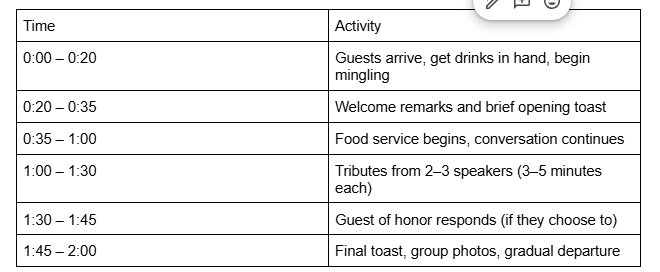
This provides enough structure to keep things moving while leaving room for organic conversation. Adjust based on your group size and venue constraints.
Timeline Management Tips
Assign someone to keep things on track. This doesn't need to be a formal emcee—just someone who knows the plan and can gently nudge transitions along when conversations run long.
Build in buffer time. People run late. Conversations go longer than expected. The honoree might want extra time catching up with someone they haven't seen in years. Plan for these realities rather than fighting them.
Resist overscheduling. Three planned speakers is plenty. More than that, and you risk losing the room's attention before the final toast. Quality matters far more than quantity.
Check the honoree's preferences. Some people love the spotlight and will happily deliver a twenty-minute career reflection. Others find public speaking genuinely stressful. Ask beforehand rather than putting them on the spot.
Planning Toasts and Tributes That Actually Land
The toast is the emotional centerpiece. It reminds everyone why they showed up and sends the honoree off with warmth and genuine appreciation. Get it right, and people remember it for years. Get it wrong, and the awkwardness undermines everything else you've built.
Choosing the Right Speakers
Select speakers based on relationship depth, not org chart position. The CEO who's met the retiree twice shouldn't automatically get a slot just because they're the CEO. A longtime colleague with genuine stories and real affection will always deliver a more meaningful tribute.
Strong speaker choices often include:
A longtime colleague who can share specific, illustrative stories
A direct report who can speak authentically to the honoree's mentorship
A friend from outside work who knows a different side of them
A family member (spouse, adult child) if appropriate for the gathering
A Toast Structure That Works
Keep individual toasts to three to five minutes maximum. Longer than that, and even the most heartfelt tribute starts to lose the room.
A reliable framework:
The hook: Open with a quick story or moment that captures something essential about who this person is. Specificity lands better than generic praise.
The impact: Explain how they made work (or life) better for those around them. What did they contribute that will outlast their time in the role?
The send-off: Close with what you genuinely wish for them in this next chapter. Make it personal and forward-looking.
What to Avoid
Inside jokes that exclude most of the room
Roast-style humor that could land wrong or embarrass the honoree
Reading from your phone for five minutes without eye contact
Opening with "I don't really know what to say..." (which signals you didn't prepare)
If speakers need coaching, offer it directly but kindly: "Keep it to three minutes and definitely tell that story about the Nashville conference" gives structure without micromanaging.
Food and Drink Planning: Making the Most of a Wine Bar Setting
Wine bars specialize in beverages, but food matters too—especially for events lasting more than an hour. The right approach keeps energy steady and gives guests something to do with their hands while mingling.
Drink Considerations
Questions to clarify with the venue:
Do you offer a set wine menu for groups, or can guests order freely?
Are cocktails, beer, and non-wine options available?
Can staff guide guests who feel uncertain about wine?
Is there a minimum spend requirement for private events?
If your guest list includes people who don't know much about wine, choose a venue known for approachable service. The goal is everyone feeling comfortable, not overwhelmed by an extensive list they don't know how to navigate.
At The Pip, craft cocktails and wine slushies offer excellent alternatives for guests who want something other than traditional wine—and they often become conversation starters themselves.
Wine-Centric Activities That Elevate the Celebration
A wine bar setting opens up creative possibilities that generic venues can't offer. Consider incorporating:
A retirement year vintage. If your honoree started their career in 1985, ask the venue if they can source a wine from that vintage. Even if it's not the primary pour, opening it during toasts creates a meaningful moment that ties their whole career arc together.
A guided tasting station. Work with venue staff to set up a small tasting flight—perhaps three wines that represent different chapters of the honoree's career or places they've lived. Staff can guide guests through the selections during the mingling portion.
"Pair a wine with a memory" prompts. Place cards at tables asking guests to match a wine characteristic to a memory of the honoree: "Which wine reminds you of [Name]'s approach to problem-solving?" This sparks conversation and gives people something to discuss beyond small talk.
A blind tasting game. For smaller groups, a quick blind tasting (guess the grape, region, or price point) adds interactive energy without requiring elaborate setup. The venue can typically handle logistics if you ask in advance.
Food Considerations
Most wine bars offer tapas-style bites rather than full entrées, which actually works well for celebrations. Guests can graze while moving around and talking to different people, rather than being locked into formal seating that limits interaction.
What to confirm:
What food options are available for groups your size?
Can you accommodate dietary restrictions (vegetarian, vegan, gluten-free, common allergies)?
Is outside food or a celebration cake permitted? (Policies vary—always ask.)
How is food timed—all at once, or in waves?
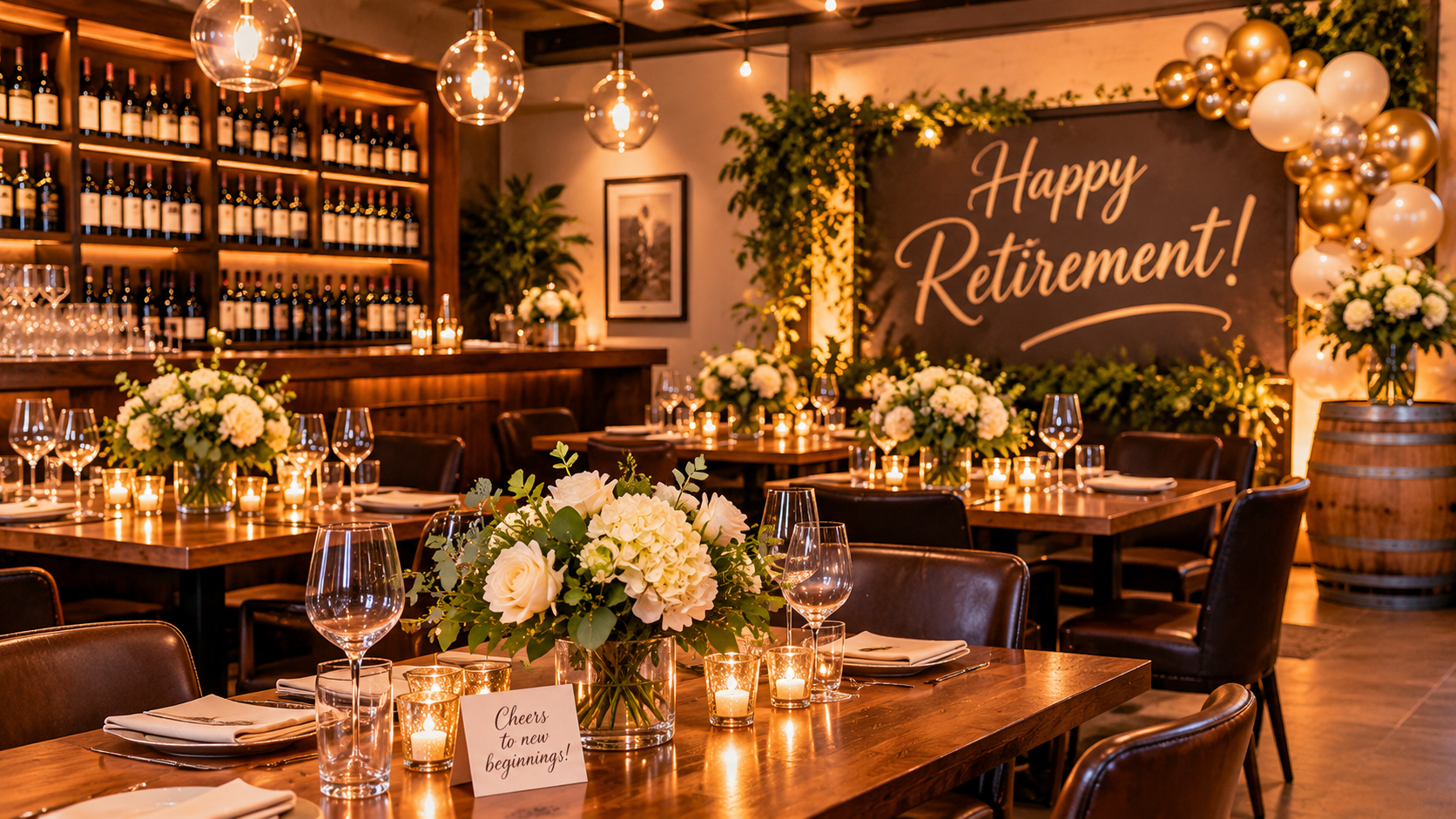
Light but substantial tends to work best. Think charcuterie boards, cheese selections, flatbreads, and shareable appetizers. You want guests to eat enough to enjoy their wine comfortably without heavy entrées that leave them sluggish.
Guest Flow and Experience Design
The best parties feel effortless to attend. Guests don't notice the planning because everything flows naturally. That ease comes from intentional design, not luck.
Creating a Smooth Arrival Experience
The first ten minutes set the tone for everything that follows.
Station one or two people near the entrance to greet arrivals, point them toward drinks, and help them orient to the space. This is especially valuable for guests who don't know many other attendees.
Create a visible welcome moment. A small sign, a photo display featuring the honoree over the years, or simply a warm face at the door who says "so glad you're here" makes guests feel expected.
Ensure first drinks get into hands quickly. Nothing kills momentum like guests standing around awkwardly while a single overwhelmed bartender tries to catch up. Confirm adequate staffing for your group size.
Thinking Through Guest Movement
Consider how people will naturally flow through the space:
Is there room for standing conversations near the bar without blocking access?
Are seating areas arranged to encourage small group discussions?
Is there a clear focal point where speakers can stand for toasts?
Can guests access restrooms without walking through the main gathering area?
If you can do a venue walkthrough before the event, take it. Seeing the space in person helps you anticipate flow issues that aren't obvious from photos.
Planning a Strong Exit
Endings matter as much as beginnings. Plan for a clear conclusion rather than letting things fizzle out with guests unsure whether to leave or stay.
A final toast signals "this is wrapping up" without feeling abrupt. It gives everyone a shared moment to conclude together.
Present gifts or memory books before people start drifting. Build this into your timeline so the honoree receives it while the full group is engaged.
Thank guests personally as they leave. A simple "thanks so much for being here" reinforces that their presence mattered.
Creating Opportunities for Meaningful Contributions
Beyond formal toasts, consider ways for guests to contribute without requiring public speaking. Not everyone is comfortable addressing a group, but that doesn't mean they have nothing meaningful to say.
Memory Book or Card Collection
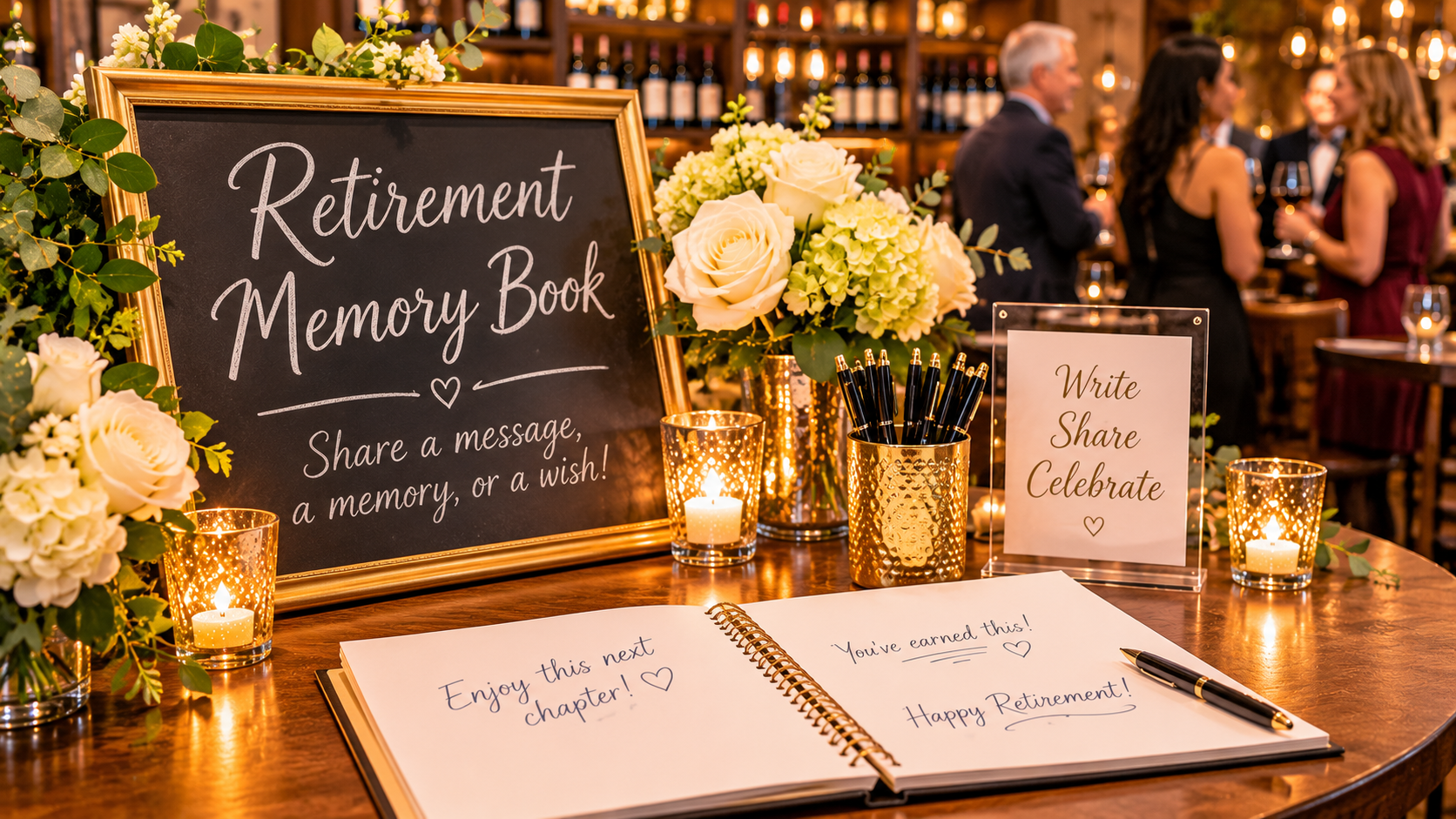
Set up a station where guests can write notes, memories, or advice. This becomes a lasting keepsake the honoree can revisit long after the party ends.
What you'll need:
A nice blank book or assembled card set
Several pens (they tend to walk away—bring extras)
Simple prompts: "My favorite memory of [Name]..." or "One thing I learned from working with you..."
Place it somewhere visible but not blocking traffic, and mention it during welcome remarks so guests know it's there.
Photo Display
A small collection of photos from throughout the honoree's career and life naturally sparks conversation and nostalgia. A simple table display or a few framed photos typically works better than elaborate slideshows requiring A/V equipment.
Choose images showing different eras and relationships: early career shots, team photos, milestone moments, and candid images that capture personality.
Video Messages from Those Who Can't Attend
For colleagues, friends, or family who can't be there, collect short video messages in advance. Play them during a natural program break, or share privately with the honoree afterward.
Keep technology simple. Phone-recorded videos work fine—professional production quality often creates more stress than it's worth.
Wine Bar Retirement Party Planning Checklist
Use this to track what's confirmed and what still needs attention.
Venue Coordination
[ ] Private or semi-private space confirmed and reserved
[ ] Guest count communicated and verified within capacity
[ ] Date, start time, and end time confirmed in writing
[ ] Minimum spend or deposit requirements understood
[ ] Day-of contact person identified at venue
[ ] Accessibility confirmed for all expected guests
Food and Beverage
[ ] Menu or food options selected
[ ] Dietary restrictions communicated
[ ] Drink packages or ordering process confirmed
[ ] Outside cake/dessert policy clarified
[ ] Non-alcoholic options confirmed
[ ] Wine-centric activities discussed with venue (vintage, tasting station, etc.)
Program Elements
[ ] Speakers confirmed and briefed on timing
[ ] Toast order and timing established
[ ] Memory book or card station supplies gathered
[ ] Photos or display items collected
[ ] A/V needs (if any) confirmed
Day-Of Logistics
[ ] Point person assigned to manage timeline
[ ] Guest arrival time clearly communicated
[ ] Parking or transportation instructions shared
[ ] Gift or keepsake ready for presentation
[ ] Final guest count confirmed with venue
Frequently Asked Questions
How far in advance should I book a wine bar for a retirement party?
Book at least four to six weeks ahead for smaller gatherings of fifteen people or fewer. For larger groups or weekend dates, two to three months is safer. Popular wine bars fill private event slots quickly, especially during holiday seasons and graduation months. According to event planning research from Cornell University's hospitality program, securing your date early while finalizing details as headcount solidifies leads to smoother execution.
What's an appropriate budget per person for a wine bar retirement party?
Costs vary significantly by venue, location, and inclusions. Generally expect more per person than a casual restaurant but less than formal catering. Ask about package pricing or minimum spend requirements upfront. Factor in tax, gratuity, and extras like cake or decorations when calculating your total.
Should the retirement party be a surprise?
This depends entirely on the honoree's personality. Some people treasure walking into an unexpected celebration; others find surprises stressful. If uncertain, consider a "semi-surprise" where they know some celebration is happening but don't know the full scope, venue, or guest list. When in doubt, ask someone close to them.
What if some guests don't drink wine or alcohol?
A well-run wine bar offers alternatives—sparkling water, craft sodas, mocktails, and specialty non-alcoholic beverages. Confirm variety when booking. Hospitality industry standards emphasize that ensuring non-drinkers feel equally welcomed is fundamental good hosting, not an afterthought.
How do I handle gifts at a wine bar retirement party?
Coordinate gift collection before the party or designate someone to receive items and keep them organized. A group gift or contribution toward an experience often works better than a pile of individual presents. If doing a formal presentation, build it into your timeline rather than leaving it as a scrambled afterthought.
Who typically pays for a retirement party at a wine bar?
Payment structures vary by context. For workplace retirements, the employer or colleague collection often covers costs. For personal celebrations, the host or close friends and family usually split expenses. HR best practices suggest clarifying this early to avoid awkward assumptions—be transparent if contributions are expected.
Ready to Start Planning?
A wine bar retirement party gives your honoree something far better than a generic send-off. It gives them an actual experience worth remembering—surrounded by people who care, great wine in hand, no reason to rush.
The key is thoughtful preparation. Ask the right questions before you book. Build a simple timeline that leaves room for spontaneity. Choose speakers who'll deliver genuine tributes. And pick a venue that makes the whole celebration feel easy and welcoming.
If you're looking for a comfortable, curated space built for exactly this kind of gathering—come visit The Pip Wine Bar & Shop in Downtown Dixon. Private parties are genuinely one of our favorite things to host. Reach out and let's talk about what you're planning.
About Our Expertise
The Pip Wine Bar & Shop has hosted countless private celebrations in Downtown Dixon—milestone birthdays, retirement parties, bridal showers, and everything in between. Our team understands what makes group events flow smoothly: the right space configuration, comfortable pacing, and a curated selection that makes every guest feel welcome. Whether you're a longtime wine enthusiast or a complete beginner just looking for something you'll enjoy, we've got you. We've seen what works and what creates unnecessary stress, and we bring that experience to every event inquiry.