
How to Plan an Engagement Party at a Wine Bar
You said yes—now it's time to gather your favorite people and celebrate properly.
A wine bar engagement party hits a sweet spot that's hard to replicate elsewhere. The setting is already designed for connection: warm lighting, interesting bottles lining the walls, and a pace that encourages conversation over chaos. You're not renting a blank room and hoping decorations save it. You're stepping into a space that already feels like a celebration.
This guide walks you through the full planning process—from booking questions to toast timing to graceful goodbyes. Whether you've hosted dozens of parties or this is your first, you'll finish with a clear plan and the confidence to enjoy your own night.
Why Wine Bars Work So Well for Engagement Parties
Wine bars have become a go-to choice for engagement celebrations, and the reasons are practical as much as aesthetic.
The room does most of the work for you. Good wine bars are designed to feel inviting—think soft lighting, curated décor, and backdrops that photograph well without requiring a florist or rental company. You're working with the space, not against it.
The scale matches the occasion. Engagement parties typically land between 20 and 50 guests [1]. That's exactly the range most wine bars handle best. Your group fills the room with energy without anyone feeling lost in a cavernous venue.
Staff who actually know wine. You don't need to become an expert overnight. The team can guide hesitant guests through the menu, suggest pairings, and keep service smooth. That's one less thing on your plate.
You get to be a guest at your own party. No pre-event deep cleaning. No scrambling for enough glassware. No midnight cleanup. The venue handles logistics so you can focus on the people who showed up to celebrate with you.
For couples in Northern California, Dixon sits at a convenient midpoint—easy to reach whether guests are coming from Sacramento, the Bay Area, or wine country. That "meet halfway" factor matters when you're asking people to show up on a weekday evening or a busy weekend.
Your Two-Hour Engagement Party Timeline
Most wine bar celebrations run two to three hours. That's enough time for real connection without energy fading toward the end.
Here's a run-of-show that keeps things moving naturally:
30 Minutes Before Guests Arrive
Confirm setup details with the venue team
Place personal touches: framed photos, a small welcome sign, a guest book
Walk through toast timing and any special requests with your point of contact
Capture a few photos of the space before it fills up
First 30 Minutes: Arrivals and Settling In
Station yourself near the entrance to greet guests personally
Have welcome drinks ready—either a signature selection or the bar's recommendation
Keep this window loose; people need time to arrive, find parking, and say hello
Music should be present but low enough for easy conversation
Minutes 30–60: Peak Energy
This is your liveliest stretch
Move through the room together as a couple—you don't need to anchor in one spot
Staff should be offering refills and helping anyone who seems stuck on the menu
If you're serving food, small bites should be circulating steadily
Minutes 60–75: The Toast
Designate someone close to you—a sibling, best friend, or parent—for a brief toast
Keep it short: two to three minutes hits the sweet spot [2]
Position your photographer or a phone-ready friend to capture reactions
A few words of thanks from the couple afterward wraps it nicely
Minutes 75–110: Settling Into Celebration
Energy naturally shifts after the toast—smaller conversations, deeper catch-ups
Good time for cake cutting if you have one, or a second round of passed bites
Optional: a simple activity like a polaroid station or "advice for the couple" cards
Final 10 Minutes: Winding Down
Thank guests as they head out
Gather any personal items you brought
Settle remaining details with the venue
One last photo together before the room resets
Layout and Flow: Making Mingling Easy
How you arrange the space affects how people move and connect. A thoughtful layout prevents awkward clustering and keeps energy circulating.
Think in Zones
Even a smaller venue benefits from distinct areas:
Entry zone: Where guests arrive, check in, grab a first drink
Main mingling zone: Central space with a mix of seating and standing room
Quiet corner: Somewhere with seating for guests who want longer conversations
Service zone: Where drinks are poured and food is stationed
Encourage Movement
Keep pathways clear—don't block natural flow with furniture or decorations
Place food and drinks in slightly different spots so guests move between them
If there's an obvious focal point (fireplace, large window, interesting backdrop), position your toast there
Seating: Less Is More
For a two-hour party, you don't need seats for everyone—and too many chairs can anchor people in place.
Aim for seating that covers about half to two-thirds of your guest count. This gives options for those who need to sit while encouraging most of the room to stay on their feet and circulate.
Drink Pacing and Selection
Wine bars obviously excel at wine, but smart pacing keeps the celebration comfortable for everyone.
Build Gradually
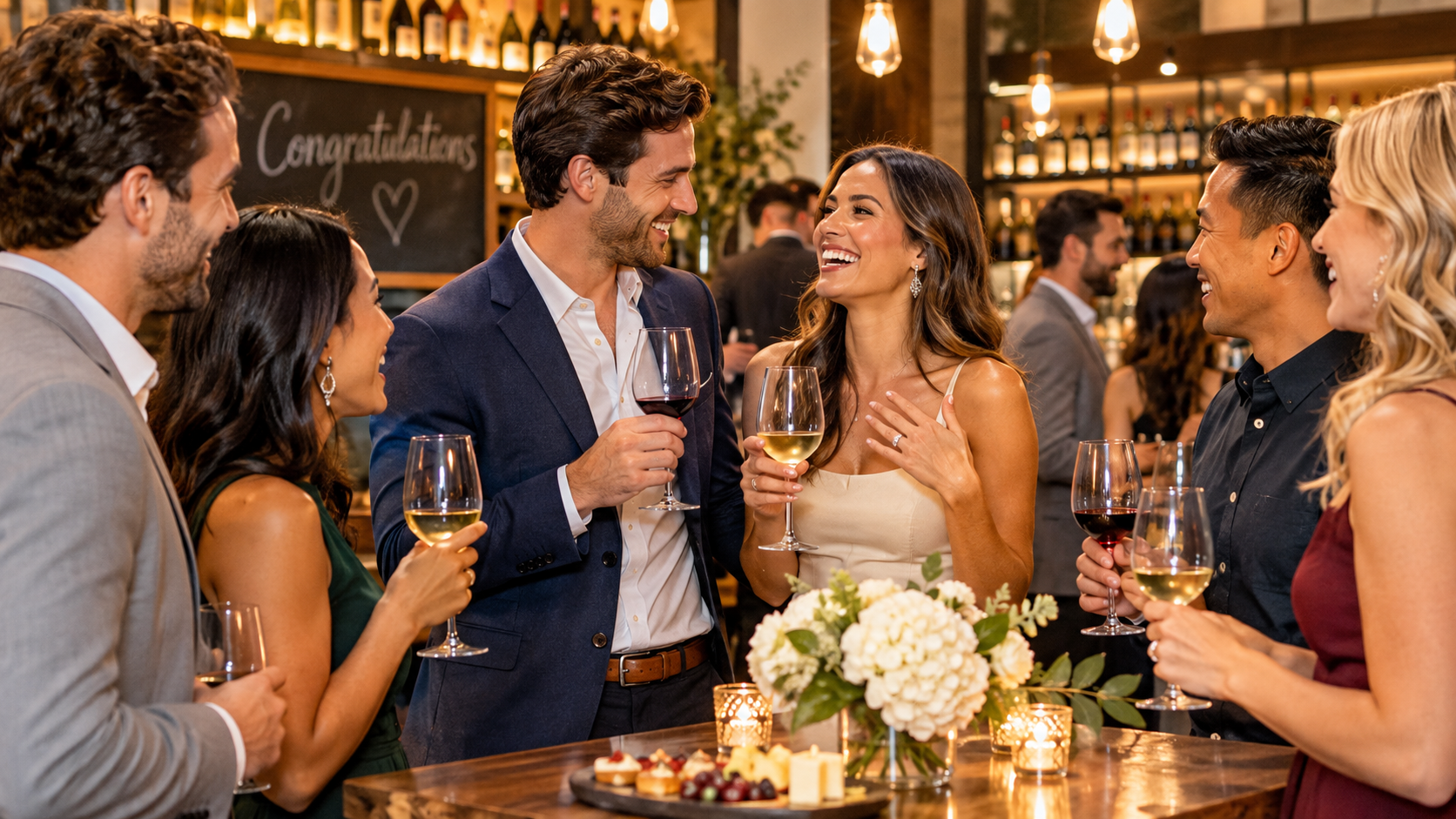
Welcome drink: Start light and approachable. Sparkling wine or a crisp white sets an easy tone.
Mid-party: Guests can explore fuller reds, bolder whites, or signature cocktails.
Late party: If you're serving dessert, consider a dessert wine or port.
Use the Venue's Expertise
Ask the staff what they'd recommend for a group celebration. They've guided similar events and know what works.
Provide a few anchor options so less confident guests don't freeze:
A crowd-pleasing white (balanced, not too dry)
A medium-bodied red
Something fun like wine slushies, if the venue offers them
Practical Estimates
Plan for roughly two to three drinks per guest over two hours
Make sure non-alcoholic options are clearly available—sparkling water, mocktails
Ask staff to check in with guests who seem uncertain
Capturing the Night: Photo Moments That Matter
You'll want photos from this celebration, but you don't need a full production. Focus on moments that happen naturally.
Shots Worth Prioritizing
The couple arriving and seeing the setup
Toast reactions—both the person speaking and the couple's faces
Candid mingling shots across the room
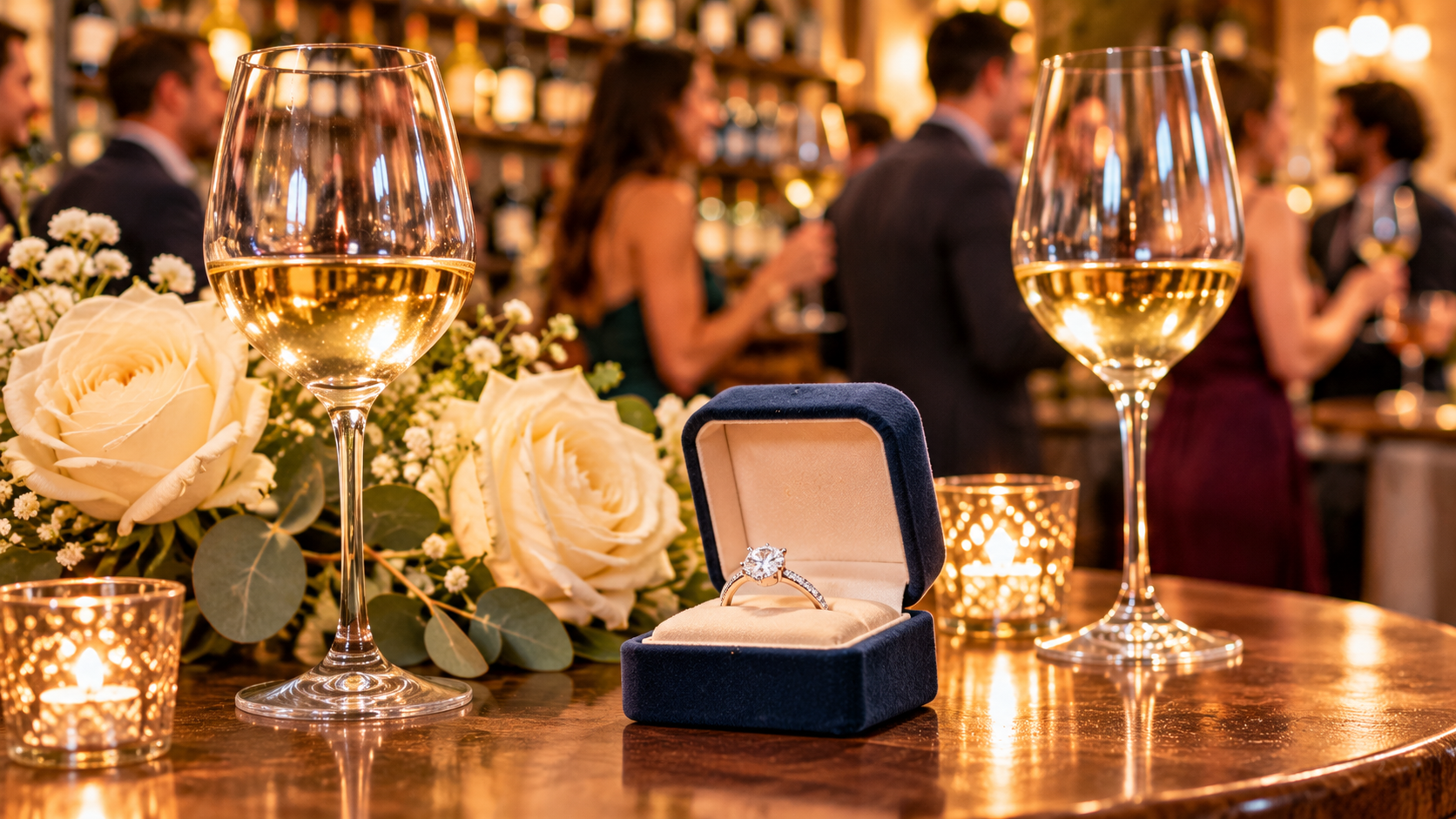
The ring (everyone will ask to see it anyway)
Full group photo
Any personalized décor or details
Setting Up Good Opportunities
Position the toast in front of the most photogenic backdrop
Pay attention to lighting—if one area has better light, use it
A simple "ring selfie station" with decent lighting lets guests snap and share
Who Handles Photos?
Hire a photographer for an hour or two (many specialize in smaller events)
Designate a photo-savvy friend with a good phone
Set up a polaroid station where guests contribute to a guest book
Food That Fits the Format
Most wine bars serve tapas-style bites rather than full meals—which actually works perfectly for this kind of celebration.
Why Small Plates Make Sense
Guests graze throughout instead of sitting for a formal dinner
Smaller bites pair naturally with wine tasting
Movement between food and drink stations keeps energy up
Less formality, more flow
Questions to Ask the Venue
What bites pair best with the wines you're serving?
Can they accommodate dietary restrictions?
Will food be passed or stationed?
What's included in any event package versus ordered separately?
Timing Matters
Get food circulating early and keep it coming. Wine on an empty stomach shifts the party's energy in the wrong direction quickly.
Invitations and Dress Code
Two details that often get overlooked until the last minute: letting people know about the party, and helping them know what to wear.
When to Send Invitations
Send invitations three to four weeks before the party. This gives guests enough notice to plan while keeping the event fresh in their minds. Digital invitations work well for engagement parties—they're quick to send and easy to update if details change.
Include the basics: date, time, location, and any parking guidance. Skip registry information on the invitation itself—that's a question for the wedding.
Communicating Dress Code
Wine bar celebrations call for smart casual—nicer than jeans and a t-shirt, but not black-tie formal. If you want guests to dress up a bit, say so directly: "cocktail casual" or "dress to impress" gives clear direction without overthinking it.
If the venue has any quirks (outdoor patio, uneven flooring), a heads-up about footwear never hurts.
Your Pre-Booking Inquiry Checklist
Before committing to a venue, get clear answers on the details that matter:
Capacity and Logistics
What's the maximum guest count for a private or semi-private event?
Can you have exclusive use of a section, or is it shared space?
What time slots work for private events?
How far in advance do you need to book?
Costs and Policies
Is there a minimum spend requirement? What does it include?
What's the deposit structure and cancellation policy?
Are rental fees separate from food and beverage minimums?
Can you bring outside desserts or a cake?
Service Details
Will you have a dedicated server or point of contact?
Can staff help guide guests through wine selections?
What's the music situation—can you control it?
Are there restrictions on decorations?
Practical Considerations
What's the parking situation?
Is the venue accessible for guests with mobility needs?
What happens if you run over your reserved time?
Making It Feel Like Your Celebration
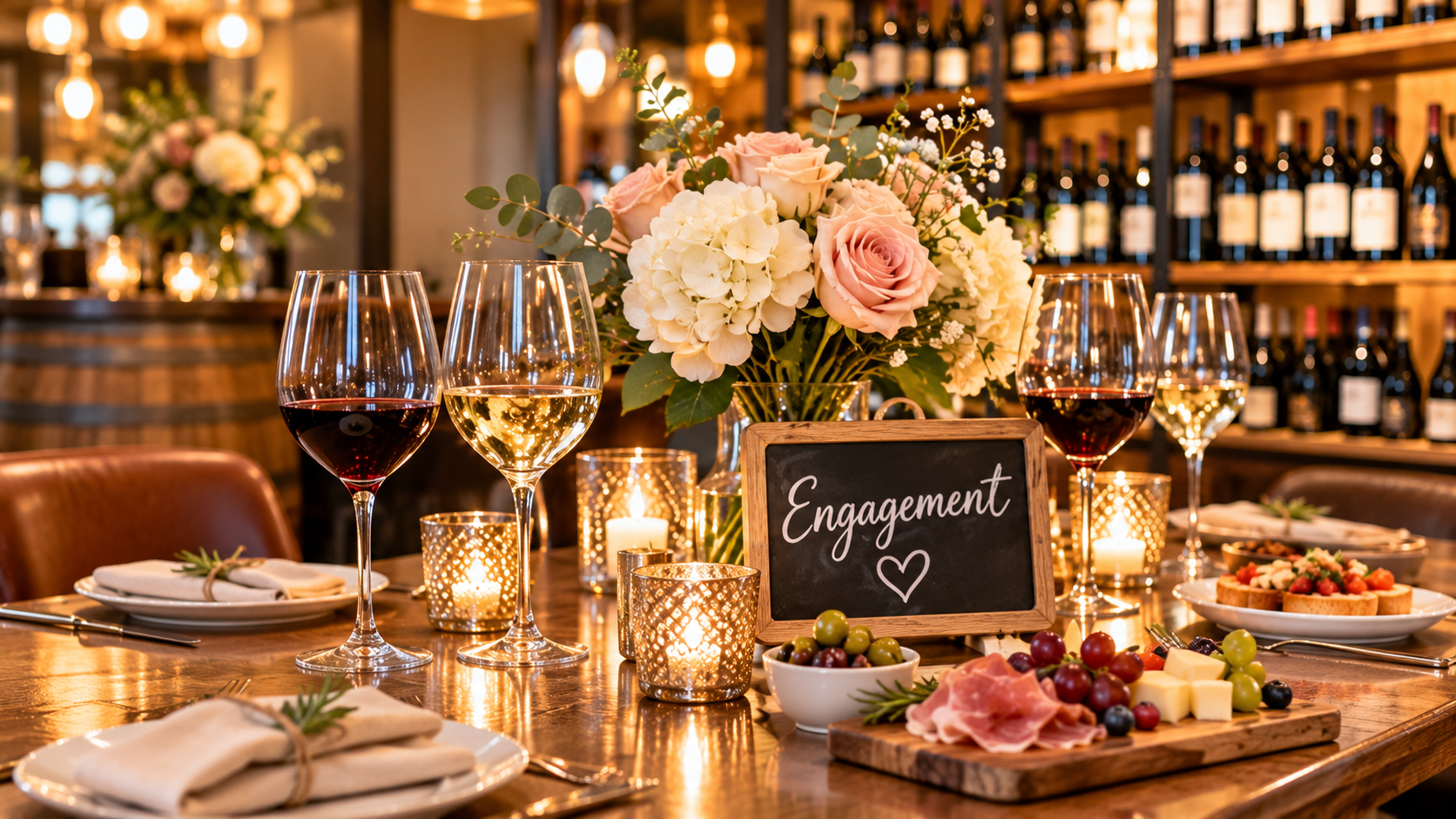
Wine bar engagement parties shine because they feel personal without requiring massive DIY effort. A few intentional touches go a long way:
Simple Personalization Ideas
A framed photo of the two of you near the entrance
"How we met" story cards on tables
A custom wine label on a bottle or two
A handwritten menu board with your curated selections
A guest book with prompts ("advice for our marriage" or "favorite memory with us")
What You Can Skip
Elaborate centerpieces, table numbers, and anything that feels more "wedding reception" than "casual celebration." The venue's atmosphere is already doing the heavy lifting.
Budgeting Your Celebration
Costs vary by location and venue, but here's how to think about the main categories:
Typical Cost Buckets
Venue fee or minimum spend: Often your biggest fixed cost
Drinks: Per-bottle, per-glass, or package pricing
Food: Usually priced per person or per platter
Optional extras: Photographer, flowers, cake, decorations
Keeping Costs Manageable
Weekday evenings often have lower minimums than weekends
Choose a signature wine or two rather than a full open bar
Let the venue's existing décor handle most of the styling
A guest list of 20–30 often feels more special than 50+ anyway
The Week-Of Checklist
One week before:
Confirm final headcount with the venue
Finalize wine and menu selections
Confirm timing with whoever's giving the toast
Send guests a reminder with parking and arrival details
Day before:
Prepare any personal items you're bringing
Charge your phone and any cameras
Confirm plans with your photographer or photo point-person
Get a good night's sleep
Day of:
Eat a real meal before arriving
Arrive 30 minutes early
Take a breath—this is your celebration
If you're planning a celebration in the Dixon area, check out the private events and wine club options at The Pip Wine Bar & Shop. It's a comfortable, curated space that's hosted plenty of gatherings just like this one—and the team genuinely enjoys helping couples plan their night.
Frequently Asked Questions
How many guests should we invite to a wine bar engagement party?
Most wine bars handle 20 to 50 guests comfortably for private or semi-private events. This range creates good energy without overcrowding. Check with your venue about capacity limits, especially if you want exclusive use of the space rather than a reserved section within a larger room.
When should we host the engagement party after the proposal?
Engagement parties traditionally happen within a few months of the proposal, though there's flexibility. The main consideration is giving guests breathing room before wedding-related events start stacking up. Weekday evenings often offer better availability and sometimes lower venue minimums.
Do we need a formal program or can we just let people mingle?
A loose structure works best. Plan for one toast moment—it gives the evening a sense of occasion—but otherwise let conversation happen naturally. Over-programming makes the party feel like a rehearsal for the wedding rather than its own celebration.
Should we include registry information for the engagement party?
Engagement party etiquette suggests gifts aren't expected, though close friends and family often bring something small [3]. Don't include registry details on invitations—save that for the wedding. If someone asks directly, you can share information then.
Can we bring our own decorations and cake to a wine bar?
Policies vary. Most venues allow simple personal touches—photos, a guest book, signage—and outside desserts with advance notice. Always confirm before assuming, since some venues have restrictions related to licensing or cleanup. Ask early so there are no surprises.
About This Guide
This guide was developed to help couples plan engagement celebrations with confidence. The recommendations reflect established event planning practices and hospitality industry knowledge. For questions about hosting your celebration at The Pip Wine Bar & Shop in Downtown Dixon, reach out directly—the team can walk you through options and help you plan a night that fits.
Works Cited
[1] The Knot — "Engagement Party Etiquette: Your Top Questions Answered." https://www.theknot.com/content/engagement-party-etiquette
[2] Martha Stewart — "How to Give an Engagement Party Toast." https://www.marthastewartweddings.com/613182/engagement-party-toast-advice
[3] Emily Post Institute — "Engagement Party Etiquette." https://emilypost.com/advice/engagement-parties