Cigar Night Drinks: Matching Bourbon, Port, and Red Wine With a Cigar
Settling into a comfortable seat with a good cigar and exactly the right drink—that's the whole point of Cigar Night at The Pip Wine Bar & Shop in Downtown Dixon. But here's the honest truth about pairing: what works for your palate might fall flat for someone else. Figuring out your own preference is half the fun.
At The Pip, we've watched guests discover unexpected favorites and confirm long-held loyalties. Whether you lean toward bourbon, Port, or a bold red wine, understanding how different drinks interact with cigar smoke helps you find your sweet spot—and we're always happy to pour you a starting point.
Why Pairing Matters (But Isn't Complicated)
Cigars bring intensity. Smoke, earth, leather, spice, sometimes a little sweetness—there's a lot happening. Your drink needs to hold its own without getting bulldozed.
The goal isn't finding some mythical "perfect match." It's about balance and contrast. You want flavors that complement each other, not compete or disappear entirely.
A delicate white wine gets lost next to a full-bodied cigar. But a drink with enough weight, sweetness, or complexity creates a conversation between what you're smoking and what you're sipping.
Bourbon and Cigars: The Classic American Pairing
Bourbon remains one of the most popular cigar companions for good reason. The spirit's natural sweetness—those vanilla, caramel, and oak notes from aging in charred barrels—creates a natural bridge to tobacco's earthiness.
What Makes Bourbon Work
Sweetness balances smoke. Bourbon's inherent sweetness softens the drier, more tannic qualities of many cigars.
Oak mirrors oak. Since both bourbon and aged cigar tobacco carry wood-influenced flavors, they speak a similar language.
Proof matters. Higher-proof bourbons stand up better to full-bodied cigars, while mellower expressions pair well with lighter smokes.
Bourbons Worth Trying
When a guest asks what bourbon to start with, we typically reach for a few reliable options:
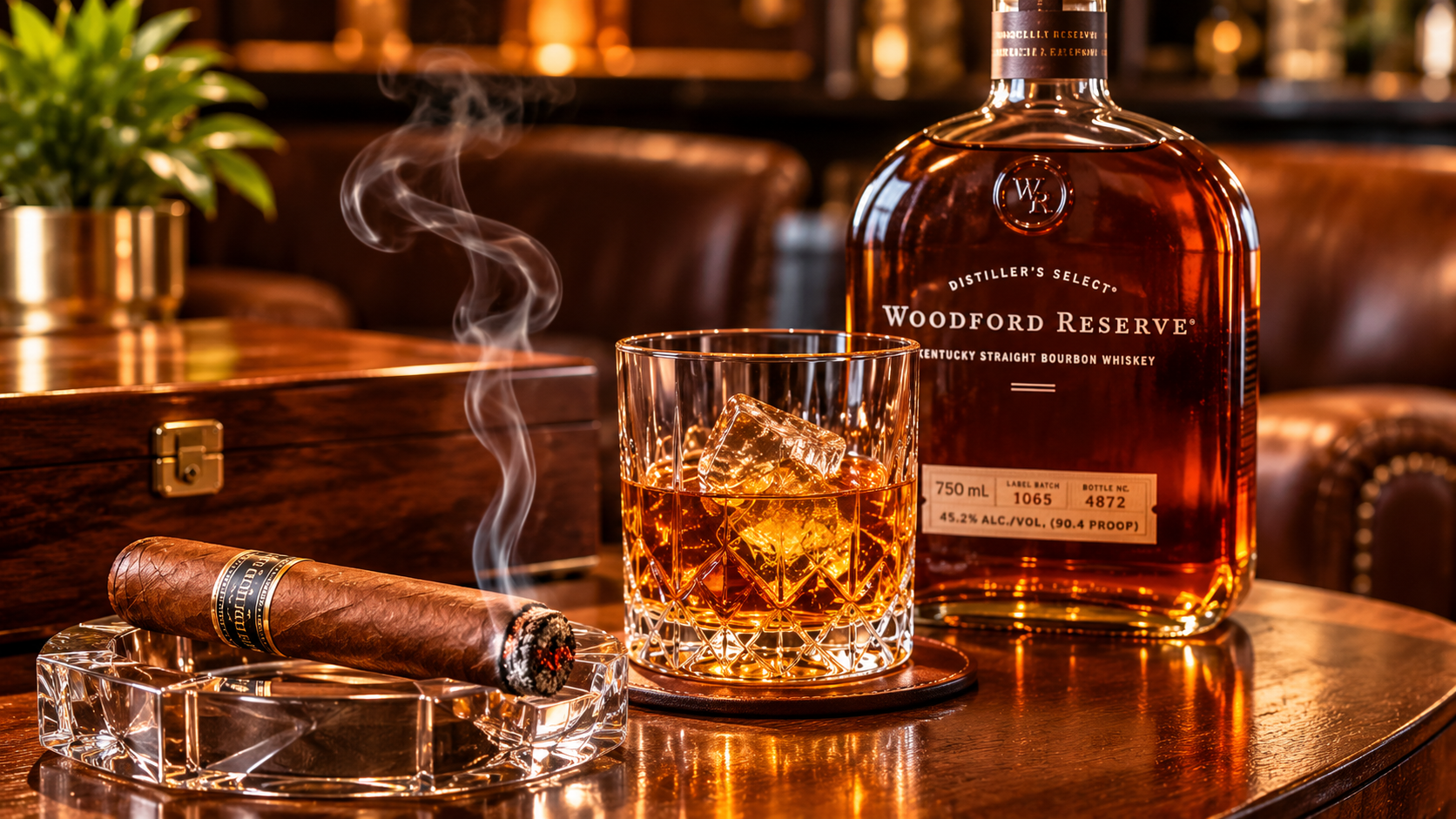
Woodford Reserve offers that classic caramel-and-vanilla profile with a smooth finish—a crowd-pleaser that doesn't overpower milder cigars but still holds its own with something richer.
Buffalo Trace brings a slightly spicier edge with hints of brown sugar and orange peel. It's approachable enough for beginners but interesting enough that bourbon regulars keep coming back.
Maker's Mark, with its wheated mash bill, runs softer and sweeter—perfect if you're smoking a lighter Connecticut Shade wrapper and want harmony rather than heat.
For guests who want more intensity, we might pour something with higher proof. The alcohol warmth meets the cigar's spice head-on, and bold drinkers often love that combination.
Finding Your Bourbon Match
Start by considering the cigar's wrapper and strength:
Maduro wrappers (dark, rich, slightly sweet) pair beautifully with bourbons that have caramel depth and a longer finish. The shared sweetness creates harmony rather than competition.
Connecticut Shade wrappers (lighter, creamier, milder) work better with wheated bourbons or lower-proof options that won't overpower the tobacco's subtlety.
Habano wrappers (spicy, peppery) can handle higher-proof bourbon—heat meets heat.
The finish is key. Bourbons with a long, warming finish extend the pleasure between puffs, giving you something to savor while the cigar smoke fades.
Port and Cigars: Old World Elegance
Port wine brings a completely different character to cigar night. This fortified wine from Portugal's Douro Valley offers concentrated sweetness, dried fruit notes, and often a nutty, oxidized complexity that plays beautifully against tobacco.
Why Port Works So Well
Natural sweetness. Port's residual sugar creates a lush counterpoint to cigar smoke—especially with spicier, more robust cigars.
Higher alcohol. At 19-22% ABV, Port has enough strength to stand alongside a cigar without fading into the background.
Complexity without aggression. Unlike spirits, Port offers layered flavors without the alcohol heat that can clash with sensitive palates.
Ports Worth Trying
Taylor Fladgate 20 Year Tawny is one we come back to often. Two decades in barrel gives it those gorgeous caramel, walnut, and dried fig notes that particularly complement Maduro-wrapped smokes. The oxidative aging creates flavors that feel like they belong together.
Graham's Six Grapes takes a different approach—it's a reserve Ruby Port with more fresh fruit intensity. Think dark cherry and plum with enough structure to match cigars that have brighter flavor profiles or a touch of natural sweetness in the wrapper.
Dow's Late Bottled Vintage (LBV) splits the difference: more accessible than vintage Port but with real depth. It's an excellent entry point if you're curious about the category.
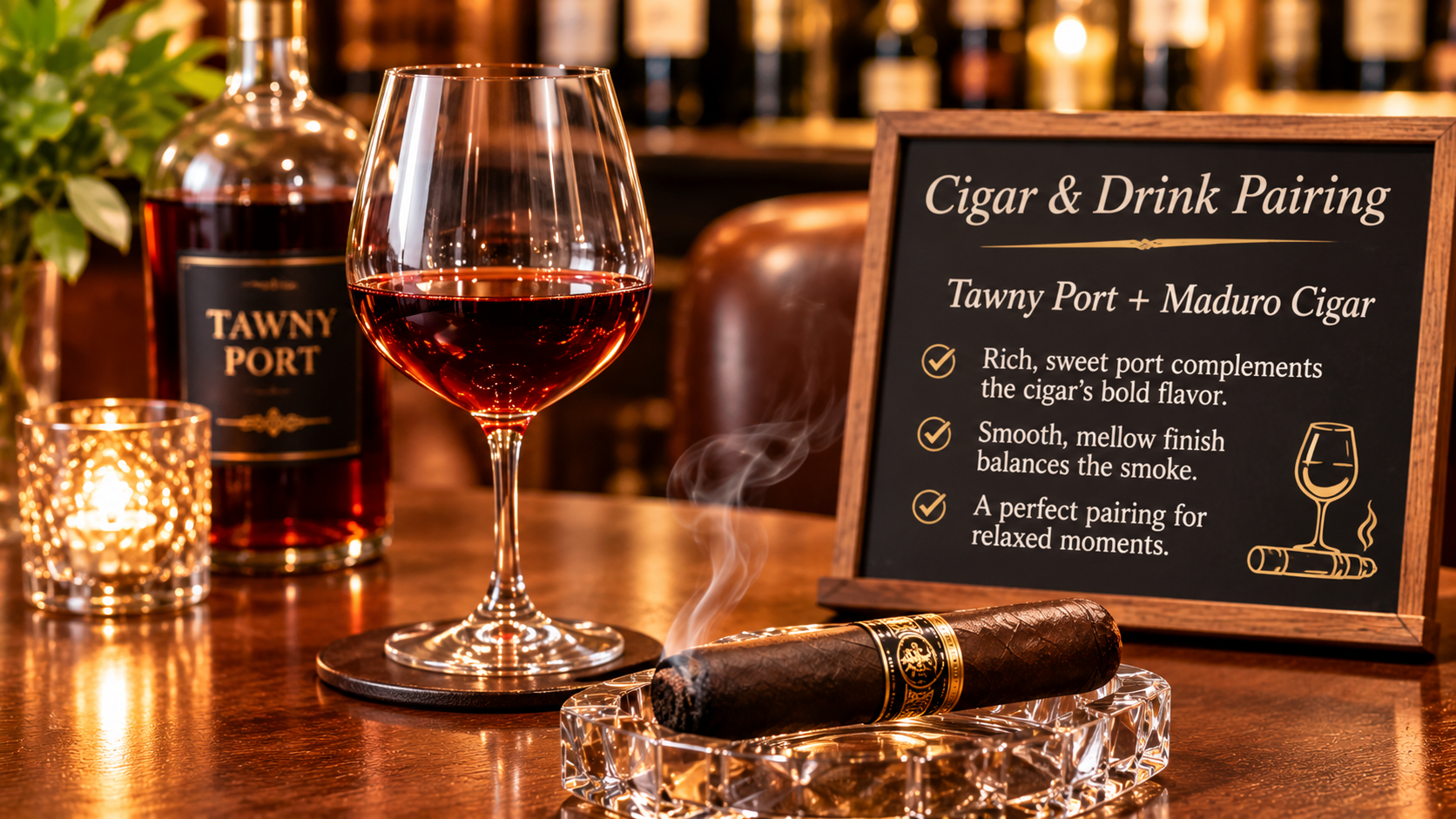
For guests new to Port, we often suggest starting with a Tawny. Its approachable sweetness and smooth texture create an easy bridge to cigar smoke without overwhelming your palate while you're still learning what you like.
Port Styles at a Glance
Tawny Port spends years aging in barrel, developing caramel and nutty characteristics. These oxidative notes particularly complement cigars with similar aged qualities.
Ruby Port and Late Bottled Vintage (LBV) retain more fresh fruit intensity. They work well with cigars that have brighter flavor profiles.
Vintage Port offers the ultimate luxury pairing—complex, mature, and capable of matching the most premium cigars you'll light.
Red Wine and Cigars: A Matter of Weight
Red wine might seem like the obvious choice, but not every red works equally well. The tannins in both wine and cigar smoke can compound each other, creating a drying sensation that overwhelms your palate.
The solution? Choose wines with enough fruit, body, and—ideally—ripe, plush character to balance things out.
Red Wines That Hold Their Own
Full-bodied reds with soft tannins create the most harmonious pairings. Look for wines that feel plush rather than grippy on the palate.
Ripe, fruit-forward styles offer natural sweetness that counters cigar smoke:
Zinfandel from warmer California regions (like Paso Robles) brings jammy fruit and spice that complements rather than clashes
Malbec from Argentina offers dark fruit and velvety texture
Grenache-based blends from Southern Rhône or Spain deliver richness without aggressive tannins
Wines with oak influence can echo the woody notes in aged tobacco, creating complementary rather than competing flavors.
Wrapper-Specific Wine Suggestions
Connecticut Shade cigars → Medium-bodied reds with bright fruit; avoid anything too tannic
Maduro cigars → Rich, fruit-forward reds; the wine's sweetness matches the wrapper's natural sweetness
Habano cigars → Bold reds that can stand up to spice; look for wines with their own peppery notes
A Word of Caution
Highly tannic, austere reds can make your mouth feel like sandpaper when combined with cigar smoke. If you love big, structured wines, try them with lighter cigars—or accept that the pairing might challenge your palate.
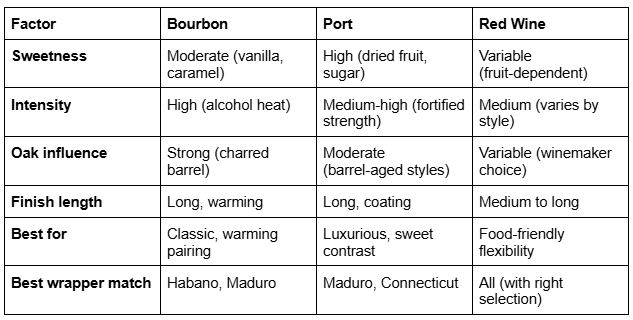
How to Compare: A Simple Framework
Not sure where to start? Here's how each option stacks up:
The Only Rule: Your Preference Wins
Your palate is the final judge. Wine experts, spirits aficionados, and cigar enthusiasts all have opinions. Some are helpful. None are universal laws.
The best way to discover your preference? Try them side by side.
That's exactly what Cigar Night at The Pip makes easy. You can explore bourbon, Port, and red wine pairings in a comfortable setting, with guidance if you want it and freedom to experiment if you don't. Not sure what you like? Tell us what you usually drink—we'll help you find a starting point.
Pacing Makes Better Pairings
A cigar isn't a race. Neither is the drink beside it.
Slower pacing lets you actually taste what's happening. Rush through either one, and you miss the nuance that makes pairing interesting in the first place.
Take a sip. Take a puff. Let the flavors settle. Notice what lingers, what changes, what you like. That's the whole experience.
A typical cigar takes 45 minutes to well over an hour to enjoy properly. Many enthusiasts recommend taking a sip between every few puffs, allowing both the smoke and the drink to clear your palate before the next taste. This pacing also means you enjoy the full evening—not just the first half of it.
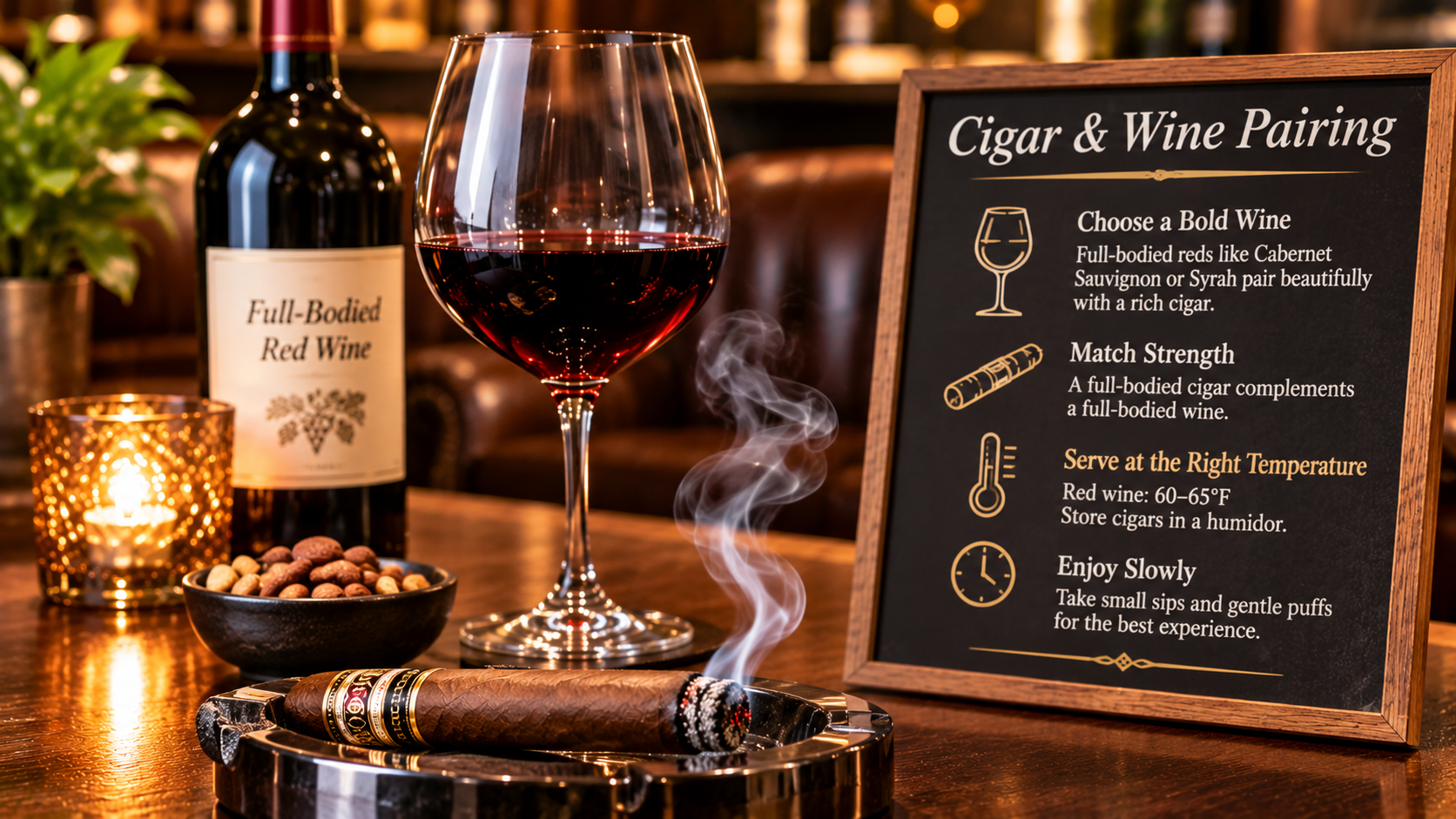
Experience Cigar Night at The Pip in Downtown Dixon
Downtown Dixon's most comfortable spot for grown-up evenings hosts Cigar Night for exactly this kind of exploration. Curated drink options, a relaxed atmosphere, and a selection designed for discovery—not pretension.
Dixon sits right at the crossroads—whether you're meeting friends halfway between the Bay Area and Sacramento, coming from Napa, or stopping on your way to Tahoe. The Pip is the kind of place where you can settle in for a couple hours, try a few pairings, and actually relax.
Whether you're a bourbon loyalist curious about Port, a wine lover wondering how your favorite red holds up, or completely new to cigar pairings, there's a seat waiting.
Check the Events calendar for upcoming Cigar Nights and reserve your spot.
Frequently Asked Questions
What drink pairs best with a cigar for beginners?
Port often makes the easiest starting point for newcomers. Its natural sweetness and smooth texture create an approachable bridge to cigar smoke without the alcohol intensity of straight bourbon. A Tawny Port like Taylor Fladgate 20 Year, with its caramel and nutty notes, pairs well with most medium-bodied cigars and won't overwhelm your palate while you're still learning what you like. At The Pip, we're happy to guide you toward a first pour that makes sense.
Can you drink red wine with a cigar?
Absolutely—though wine selection matters. Full-bodied reds with ripe fruit and softer tannins work best. Highly tannic, austere wines can compound the drying sensation from cigar smoke, so look for wines that feel plush and fruit-forward rather than grippy and structured. Zinfandel from warmer regions and Argentine Malbec are reliable choices. When in doubt, ask—we can recommend based on the specific cigar you're smoking.
Is bourbon or whiskey better with cigars?
Both can work wonderfully, but bourbon's natural sweetness from corn-based mash and charred oak aging often creates a more complementary pairing than drier whiskey styles. The vanilla and caramel notes in bottles like Woodford Reserve or Buffalo Trace soften cigar smoke's intensity. That said, some guests love the smoke-on-smoke combination of peated Scotch—it's genuinely a matter of personal preference.
Does cigar strength affect which drink to choose?
Yes, matching intensity helps create balance. Full-bodied, stronger cigars (often with Maduro or Habano wrappers) pair well with higher-proof bourbon or richer Port styles that won't get lost. Lighter, more delicate cigars (like those with Connecticut Shade wrappers) work better with mellower drinks—wheated bourbon like Maker's Mark, younger Port, or medium-bodied red wines—so neither element overwhelms the other.
What's the best way to pace drinks during a cigar?
Slow and steady. A typical cigar takes 45 minutes to over an hour to enjoy properly. Sipping your drink—rather than gulping—lets you appreciate how flavors evolve together. Take a sip between every few puffs, allowing both the smoke and the drink to clear your palate. This approach means you catch the nuances instead of missing them.
About This Guide
This pairing guide comes from The Pip Wine Bar & Shop, a curated wine bar and bottle shop in Downtown Dixon, California. Our team combines hands-on experience from hosting regular Cigar Nights with genuine enthusiasm for helping guests discover drinks they'll actually enjoy—without the pretension. We've watched plenty of guests find unexpected favorites at these events, and we believe the best pairing is simply the one that makes you want another sip.