
What to Drink With Charcuterie When the Board Has Everything
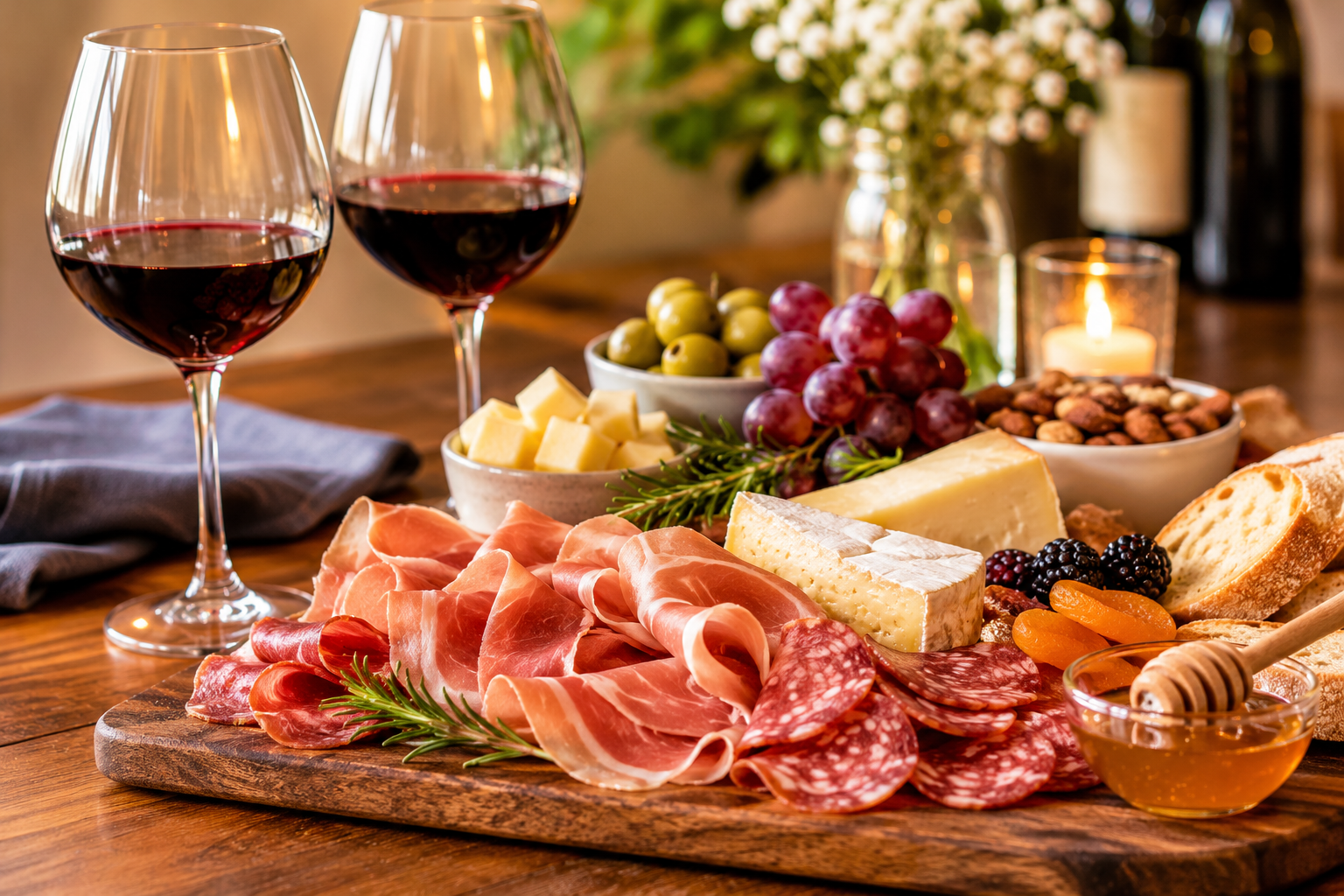
You're looking at a charcuterie board that could belong in a museum. Prosciutto draped next to spicy salami. Sharp aged cheddar beside creamy brie. Cornichons, fig jam, marcona almonds, and a drizzle of honey tying it all together.
So what wine actually works with all of that?
At The Pip, guests ask us this question constantly—and we love it. The honest answer: when your board has everything, you don't need one perfect wine. You need a strategy.
Why Traditional Pairing Rules Fall Apart With a Loaded Board
Classic wine pairing advice follows a simple formula. Match the wine to the food. Red wine with red meat. White wine with lighter fare. But a well-built charcuterie board ignores these rules entirely.
You've got salty cured meats competing with sweet preserves. Rich, fatty cheeses sitting next to bright, acidic pickles. Maybe some spicy 'nduja spreading its heat across the whole situation.
No single wine pairs perfectly with every element on a diverse board. And that's completely fine. The goal isn't perfection—it's finding wines flexible enough to work with the whole spread.
The One-Wine Strategy: Finding Your Versatile Workhorse
When you want simplicity—one bottle, no fuss—look for wines with these characteristics:
Medium body and balanced acidity. These wines have enough structure to handle rich meats and fatty cheeses without overwhelming delicate items. Think of acidity as the palate cleanser between bites. It cuts through richness and resets your taste buds for the next flavor.
Slight effervescence or freshness. Sparkling wines and lighter rosés work surprisingly well across diverse boards. The bubbles act like a scrubbing brush, lifting fat from your palate and preparing you for whatever comes next.
Moderate tannins (if going red). Heavy tannins clash with salty foods, creating an unpleasant metallic sensation. Lighter reds keep things friendly.
Top One-Wine Picks for Everything Boards
Dry rosé – A crisp Provence-style rosé or a fruity California Grenache rosé both deliver. Enough body for meats, enough freshness for pickled items.
Sparkling wine (brut) – Fat and bubbles are best friends. Traditional method sparkling wines handle almost anything on a board.
Off-dry Riesling – A German Kabinett-style Riesling offers a touch of sweetness that tames spicy elements while acidity manages the salt.
Light-bodied Grenache or Côtes du Rhône – Soft tannins and fruit-forward character play nice with the whole board.
When guests come into our Dixon shop looking for a single bottle for board night, we usually steer them toward one of these styles first.
The Two-Wine Strategy: Cover Your Bases
With two wines, you can handle virtually any board composition.
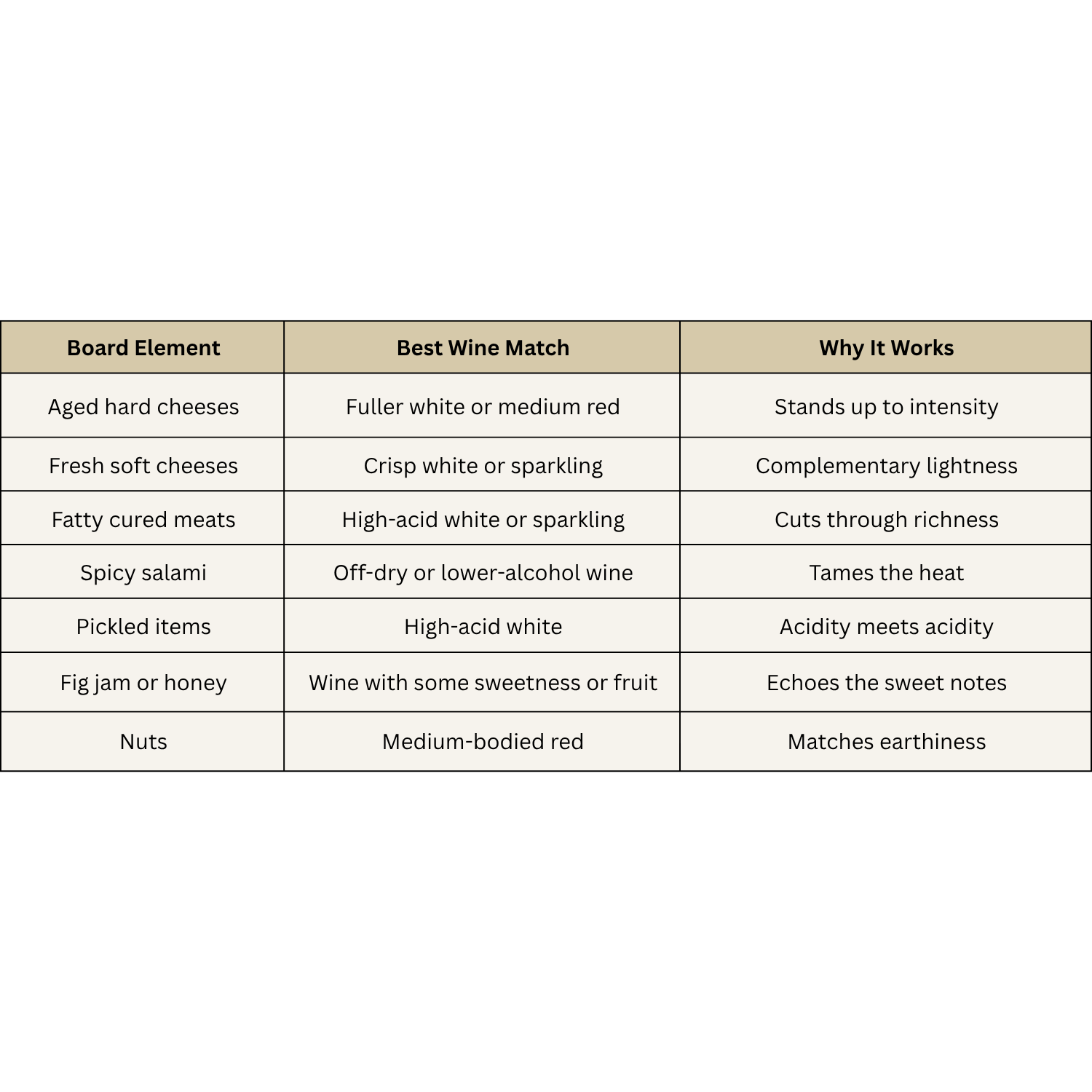
Wine One: The Crisp CompanionPick something with high acidity and lighter body. This handles your briny olives, tangy pickled vegetables, fresh cheeses, and anything acidic or salty on the board. Sauvignon Blanc, Albariño, or a crisp Grüner Veltliner all work beautifully.
Wine Two: The Rich PartnerChoose something with more body and softer edges. This pairs with your aged cheeses, fattier meats, nuts, and anything with sweetness or richness. A medium-bodied red like a Willamette Valley Pinot Noir, an oaked Chardonnay, or even a lightly chilled Beaujolais fits the bill.
How to Match Your Two Wines to Board Elements
When One Ingredient Dominates the Board
Sometimes a board has a clear star. Maybe it's an entire wedge of that funky blue cheese or a generous pile of prosciutto di Parma.
Salty items dominate (cured meats, olives, aged cheeses): Reach for wines with good acidity and avoid high tannins. Salt amplifies the perception of tannins and alcohol, making wines taste harsher and more astringent. Sparkling wine, off-dry whites, or fruit-forward, low-tannin reds keep things balanced.
Fatty items dominate (rich cheeses, pâté): Acidic wines are your secret weapon. Fat coats your mouth; acidity cuts through it. This is why Champagne and brie is such a classic combination—the bubbles physically lift the fat from your palate.
Spicy items dominate (spicy salami, pepper jam): Lower alcohol wines with a touch of residual sugar help here. Higher alcohol intensifies heat perception, so a 14% Zinfandel might turn mildly spicy 'nduja into a five-alarm situation. An off-dry Riesling or Gewürztraminer works much better.
Sweet items dominate (honey, dried fruit, jam): Match sweetness with sweetness, or contrast with high acidity. A wine that's drier than the food will taste thin and sour by comparison.
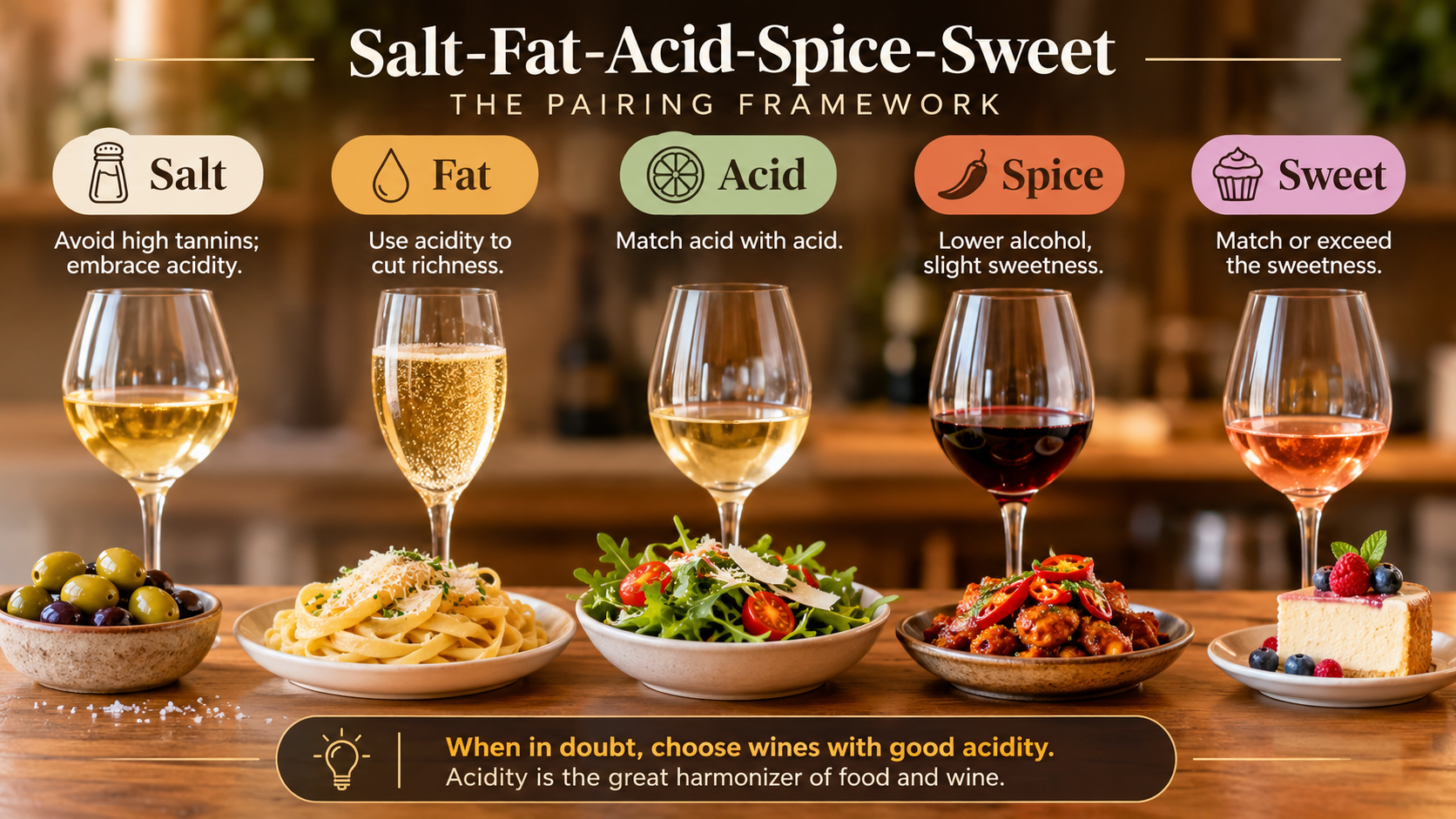
The Salt-Fat-Acid-Spice-Sweet Framework
Professional sommeliers often use a simple framework based on the five key taste elements:
Salt – Avoid high tannins; embrace acidity and slight sweetness.
Fat – Use acidity and effervescence to cut through richness.
Acid – Match acid with acid, or use a wine with similar brightness.
Spice (heat) – Lower alcohol, slight sweetness, avoid tannins.
Sweet – Match or exceed the sweetness level of the food.
When in doubt, wines with good acidity are almost always safer than wines without it. Acidity is the great harmonizer of food and wine pairing.
How to Build Your Board for Wine Success
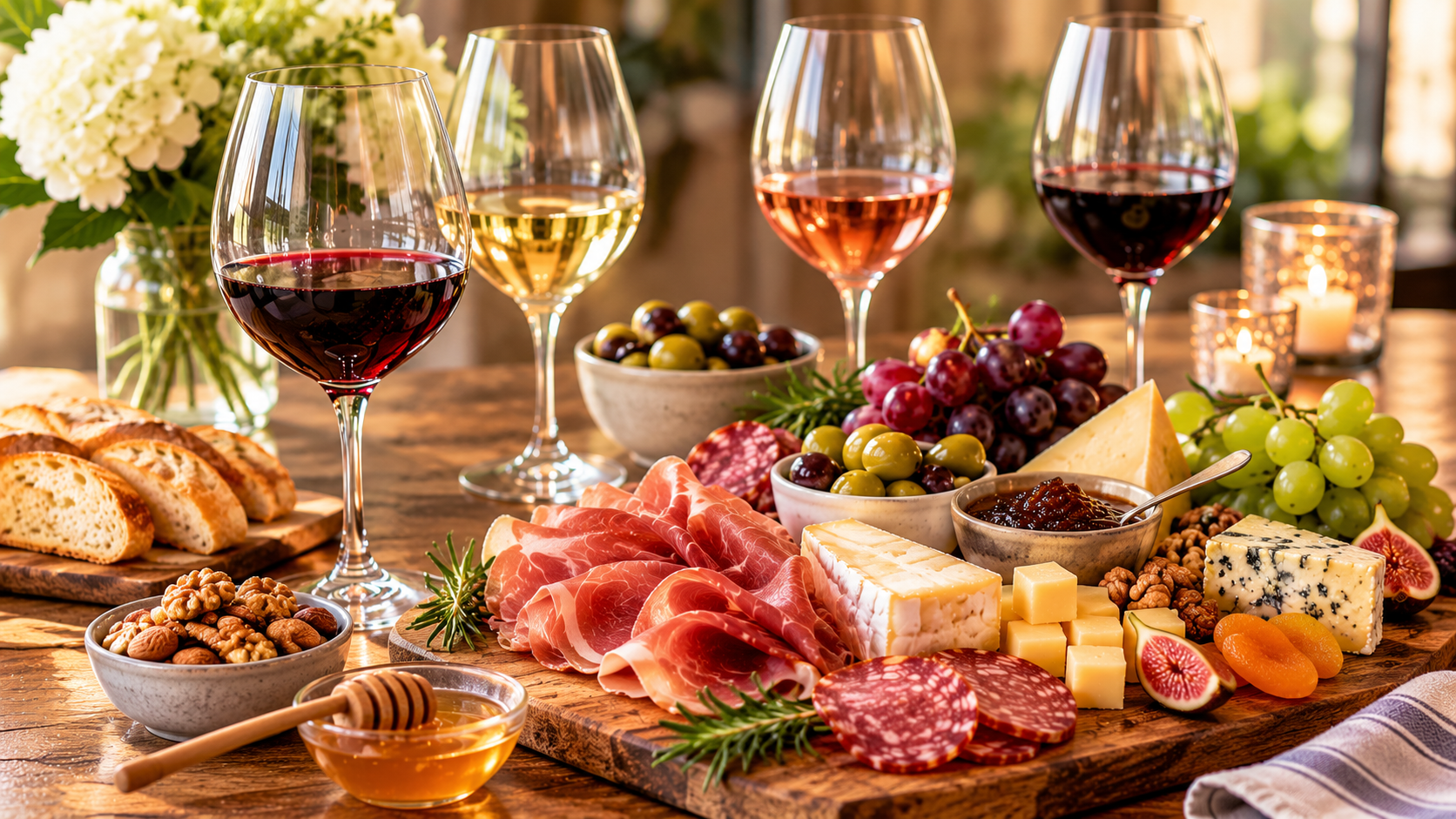
If you're planning ahead, consider building your board with wine pairing in mind:
Include fat and acid together. A board with prosciutto (salt and fat) plus cornichons (acid) plus soft cheese (fat) gives versatile wines plenty of places to shine.
Balance temperatures and textures. Room temperature meats and cheeses with cold pickled items and crunchy nuts create a more interesting tasting experience—and more opportunities for wine to complement different elements.
Add a sweet element. Even wine lovers who skip dessert appreciate a drizzle of honey or some fig jam on a savory board. This opens up the possibility of fruit-forward wines that might otherwise feel too sweet on their own.
Practical Tips for Your Next Board Night
Serve wines slightly cooler than you think. Cooler temperatures help even fuller-bodied wines play nice with diverse foods. You can always let a glass warm up in your hand.
Don't overthink it. The best pairing is the one you enjoy. These are guidelines, not laws.
Try before you buy a case. If you're building a board at home, taste wines with your actual ingredients before committing to a full bottle. What sounds good on paper doesn't always work in practice.
Ask for help. A good wine bar or bottle shop can point you toward food-friendly bottles if you describe what you're serving. At The Pip, that's literally what we love doing—come in, tell us what's on your board, and we'll guide you to something great.
Come Taste the Difference
Charcuterie and wine pairing doesn't have to be complicated. With the right strategy—whether that's one versatile bottle or two complementary pours—you can confidently handle any board that comes your way.
Want to put these strategies into practice? Check out what's on our menu and come hang out with us in Downtown Dixon. We'll help you find the perfect pour for whatever you're in the mood for—no stress, no pretense, just good wine and good company.
Planning a private party with a charcuterie spread? Private parties are our favorite—reach out and let's make it happen.
Frequently Asked Questions
What's the safest wine choice for a charcuterie board with many different items?
Dry rosé and brut sparkling wine are the most versatile options for diverse boards. Both have enough body to handle meats and cheeses while maintaining the acidity needed to cut through rich and salty elements. When in doubt, bubbles rarely let you down.
Should I serve red or white wine with charcuterie?
Either can work depending on your board composition. If your board leans heavily toward cured meats and aged cheeses, a lighter red like Pinot Noir or Grenache pairs nicely. For boards with more fresh cheeses, pickled items, and lighter fare, crisp whites or sparkling wines tend to shine.
Why does my wine taste harsh when I eat it with cured meats?
Salt intensifies the perception of tannins and alcohol in wine, making tannic reds taste more astringent and bitter. Try switching to a wine with softer tannins, higher acidity, or even a slight touch of sweetness to counteract this effect.
Can I pair sweet wines with charcuterie?
Absolutely. Off-dry wines like Riesling or Gewürztraminer work especially well with boards featuring spicy meats or sweet accompaniments like honey and dried fruit. The key is matching the wine's sweetness level to the sweetest element on your board.
How many wines should I serve with a charcuterie board?
For casual gatherings, one versatile wine is perfectly fine. For a more curated tasting experience, two wines—one crisp and one richer—allow guests to experiment with different pairings. More than two can become overwhelming unless you're hosting a dedicated tasting event.
About The Pip Wine Bar & Shop
The Pip Wine Bar & Shop is a curated wine bar and bottle shop in the heart of Downtown Dixon, California—right between Sacramento and the Bay Area, making it a perfect halfway meetup spot. Our team hand-selects unique wines from small producers, the kind of bottles you won't find in big-box stores. Whether you're exploring wine for the first time or you've been collecting for years, we're here to help you discover something new without the pretense. Come in, tell us what you like, and let us guide you to your next favorite pour.
Cited Works
[1] Wine Folly — "Wine and Cheese Pairing Ideas."
https://winefolly.com/deep-dive/wine-and-cheese-pairing-ideas/
[2] MasterClass — "Wine Pairing Basics: A Comprehensive Guide to Pairing Wine and Food." https://www.masterclass.com/articles/wine-pairing-basics
[3] Wine Enthusiast — "Why Sparkling Wine Pairs Well With Food." https://www.wineenthusiast.com/culture/wine/sparkling-wine-food-pairing/
[4] Guild of Sommeliers — "Foundations of Food and Wine Pairing." https://www.guildsomm.com/public_content/features/articles/b/food_and_wine_pairing