
What to Drink With Pizza: Pairings for Pepperoni, White Pizza, Veggie Pies, and Spicy Slices
Pizza and wine belong together—but grabbing any bottle off the shelf won't do your slice justice.
Most pairing advice oversimplifies things. "Red wine with red sauce" sounds logical until you realize pizza is way more complicated than that. You've got fat from cheese and cured meats, acid from tomato sauce (or none at all on white pies), and heat from pepperoni, sausage, or chili flakes. Each element changes what belongs in your glass.
At The Pip in Downtown Dixon, we pour wines alongside hand-crafted pizzas on our regular pizza nights—so we've tested these pairings plenty. The approach that actually works? Match your wine to what's happening on that slice: the fat content, the sauce base, and the spice level. Once you understand those three elements, choosing becomes intuitive.
Quick Reference: Pizza Pairing Cheat Sheet
Before we dive deep, here's the skimmable version for anyone mid-scroll at the grocery store or scanning a wine list:

Pizza Pairing
Cheat Sheet
Quick Reference
Now let's break down why these work—and what to skip.
Why Traditional Pizza Pairing Rules Miss the Mark
Generic pairing guides suggest Chianti with margherita and stop there. That works fine, but it ignores everything that makes pairing genuinely satisfying.
Pizza throws a lot at your palate simultaneously:
Fat from mozzarella, ricotta, olive oil, or cured meats
Acid from tomato sauce (or none at all on white pies)
Heat from spicy toppings like pepperoni, sausage, or chili flakes
Salt from cured meats and aged cheeses
Sweetness from caramelized onions, BBQ sauce, or pineapple
Each element needs something different from your glass. A wine that handles greasy pepperoni might fall flat against a delicate white pizza. A bold red that stands up to sausage could completely overwhelm a fresh veggie slice.
Think about what's dominating your pizza—then pick a wine that either complements or cuts through it.
The Fat Factor: Cutting Through Cheese and Meat
Fat is the biggest player on most pizzas. Mozzarella, pepperoni, sausage, olive oil drizzles—pizza delivers richness in multiple forms. Your wine needs enough acidity or tannins to slice through that richness and refresh your palate between bites.
High-acid whites like Vermentino or Grüner Veltliner work beautifully. They act like a squeeze of lemon, brightening each bite and resetting your taste buds for the next.
Reds with good tannins—that drying feeling like strong tea—do the same job differently. The tannins bind to fat proteins, essentially cleansing your mouth and making you reach for another slice.
This explains why light, simple wines often disappoint with pizza. They can't keep up with the richness. You need something with enough structure to hold its own against all that cheese.
Pepperoni Pizza Pairings: Embrace the Spice and Fat

Pepperoni remains America's favorite pizza topping for good reason. Those little cups of cured pork bring fat, salt, and a gentle kick of spice—all of which shape your wine choice.
Best Bets for Pepperoni
Barbera stands out. This Italian red has bright acidity that cuts through the grease, moderate tannins, and a fruit-forward character that plays well with tomato sauce's subtle sweetness.
Montepulciano d'Abruzzo offers similar compatibility—medium body, soft tannins, and enough acidity to handle the fat without overwhelming the pizza's flavors.
Sangiovese (think Chianti) works too, especially if your pepperoni leans more savory than spicy. Cherry notes and earthy undertones complement cured meats beautifully.
What to Skip
Avoid heavily oaked reds or big, jammy wines. The oak and fruit compete with the tomato sauce, and the flavors get muddy fast. You want brightness, not bombast.
White Pizza Pairings: No Sauce, Different Rules
White pizza changes everything. Without tomato sauce, you lose that acidic backbone—and suddenly, the cheese and olive oil take center stage.
A classic white pie features ricotta, mozzarella, garlic, and olive oil. It's creamy, rich, and much more subtle than its tomato-based cousins.
Best Bets for White Pizza
Chardonnay (especially unoaked or lightly oaked) shines here. The wine's natural richness mirrors the creaminess of the cheese, while its acidity keeps things balanced.
Soave brings bright acidity and subtle almond notes that complement the garlic and olive oil without competing for attention.
Sparkling wine deserves way more credit here. The bubbles physically scrub through the richness, and the acidity refreshes your palate completely. Prosecco or Crémant works perfectly—it doesn't need to be expensive Champagne.
If You Add Toppings
White pizza with arugula and prosciutto? Now you've got peppery greens and salty cured meat. Shift toward a Vermentino or Pinot Grigio with enough body to handle the additions.
Adding mushrooms? Consider a lighter Pinot Noir—the earthiness of both creates a beautiful echo.
Veggie Pizza Pairings: Match the Vegetables, Not the Crust
Vegetable pizzas vary wildly. A Mediterranean-style pie with artichokes, olives, and sun-dried tomatoes needs different wine than a fresh garden pizza with bell peppers, onions, and mushrooms.
Let the dominant vegetables guide you.
For Mediterranean-Style Veggie Pies
Olives, artichokes, capers, sun-dried tomatoes—these ingredients bring salt, brininess, and concentrated flavors.
Rosé handles this beautifully. A dry Provençal-style rosé has enough body to stand up to the intensity while its acidity complements the olive oil and tomatoes.
Verdicchio offers crisp acidity and a subtle saline quality that echoes the olives without clashing.
For Garden-Fresh Veggie Pies
Bell peppers, onions, mushrooms, spinach—these toppings taste cleaner and more delicate.
Pinot Grigio works well here, especially bottles with actual character (skip the ultra-light versions).
Grüner Veltliner brings herbal notes that mirror fresh vegetables and enough texture to feel satisfying.
Light Pinot Noir (think Oregon or Burgundy, not California blockbusters) pairs wonderfully with mushroom-heavy pies. The earthy notes play off each other.
Sweet and Smoky Pizza Pairings: BBQ Chicken, Hawaiian, and Beyond
BBQ chicken pizza. Hawaiian with ham and pineapple. Fig and prosciutto with balsamic drizzle. These pies break the traditional Italian mold—and they need wines that can handle sweetness, smoke, or both.
The trap here? Reaching for a bone-dry wine that clashes with the sweeter elements. Instead, lean into wines with fruit-forward profiles or a touch of residual sugar.
Best Bets for Sweet and Smoky Pizzas
Off-dry Riesling balances BBQ sauce's sweetness while its acidity keeps the pairing from feeling cloying. German Kabinett or Spätlese levels work great.
Grenache Rosé with its strawberry and watermelon notes complements ham on Hawaiian pizza without fighting the pineapple.
Zinfandel (moderate alcohol versions) brings jammy fruit and a hint of spice that mirrors smoky BBQ flavors. This is one style where bigger reds can actually work.
Gewürztraminer offers lychee and rose petal notes that surprisingly complement the tropical sweetness of pineapple.
What to Skip
Avoid austere, bone-dry whites or tannic reds with no fruit. They'll taste harsh against the sweetness and leave an unpleasant clash in your mouth.
Spicy Pizza Pairings: Cool the Heat Without Drowning Flavor
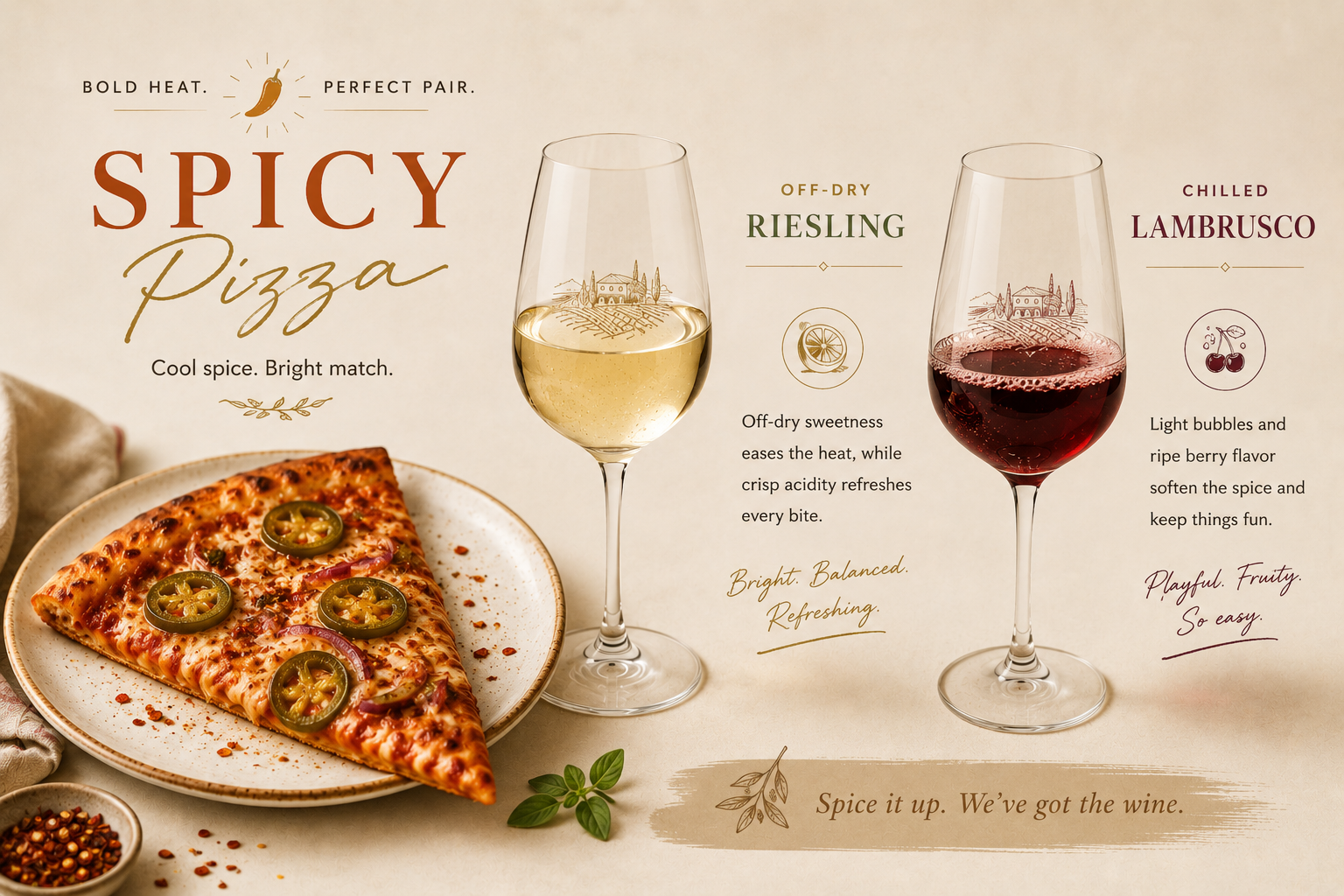
Spicy sausage, jalapeños, chili flakes, hot honey drizzles—heat on pizza has become increasingly popular. And it requires a specific approach.
When you eat something spicy, capsaicin binds to pain receptors in your mouth. Alcohol amplifies that sensation, which is why high-alcohol wines can make spicy food feel even hotter.
Best Bets for Spicy Slices
Off-dry Riesling might sound surprising, but it's brilliant with spicy pizza. The touch of residual sugar cools the heat, while the acidity still cuts through cheese and fat. German Kabinett-level Riesling is perfect.
Lambrusco (the sparkling red from Italy) works magic here. It's slightly chilled, often off-dry, and the bubbles help dissipate heat while the fruit complements tomato sauce.
Sparkling wine returns as a hero. The cold temperature and effervescence physically soothe your palate, making it easier to taste the pizza's actual flavors instead of just feeling the burn.
What to Avoid
Skip high-alcohol, tannic reds with spicy pizza. A 15% Zinfandel or bold Cabernet will turn mild heat into a five-alarm fire and leave you reaching for water instead of another slice.
Sparkling Wine: The Universal Pizza Pairing
Sparkling wine works with almost every pizza style—and it's worth knowing why.
The bubbles act like a palate cleanser between bites. The acidity cuts through fat and cheese. The cold serving temperature refreshes your mouth. And honestly? Bubbles make any pizza night feel more fun.
Prosecco pairs naturally with lighter pies and veggie options.
Cava (Spain's answer to Champagne) offers great value and enough body for meatier toppings.
Crémant (French sparkling from regions outside Champagne) delivers complexity without the premium price tag.
Lambrusco bridges the gap for people who want red wine with their pizza but need something that handles heat or richness more gracefully than still wine.
If you're ordering multiple pizzas for a group—pepperoni for some, veggie for others, maybe a white pie thrown in—sparkling wine keeps everyone happy without requiring a different bottle for each style.
Building Your Pizza Night Flight
Want to make pizza night more interesting? Order a flight.
A three-wine tasting alongside your pizza lets you compare how different wines interact with the same slice. It's a low-commitment way to learn what you actually like without buying a full bottle of something that might not work.
A Simple Pizza Flight Framework
Something sparkling (Prosecco, Cava, or Lambrusco)
A crisp white (Vermentino, Grüner Veltliner, or Soave)
A medium-bodied red (Barbera, Sangiovese, or Montepulciano)
Taste each wine with your pizza. Notice how the sparkling refreshes differently than the white, how the red's tannins interact with the cheese. Pay attention to which combinations make you want another bite—and another sip.
Trust Your Own Palate
Rules are helpful starting points. But the best pairing is the one you enjoy drinking.
If you love bold Zinfandel with spicy sausage pizza and don't mind the extra heat—pour away. If sparkling wine with pepperoni sounds weird until you try it and love it—that's a win.
The goal isn't following rules perfectly. It's understanding why certain combinations work so you can make better guesses and discover more pairings you love.
Next time you're planning pizza night, think about what's on your slice: Is it fatty? Acidic? Spicy? Sweet? Delicate? Then pick a wine that responds to those qualities. You'll be surprised how much better both the food and the wine taste when they're actually working together.
Rules are helpful starting points. But the best pairing is the one you enjoy drinking.
If you love bold Zinfandel with spicy sausage pizza and don't mind the extra heat—pour away. If sparkling wine with pepperoni sounds weird until you try it and love it—that's a win.
The goal isn't following rules perfectly. It's understanding why certain combinations work so you can make better guesses and discover more pairings you love.
Next time you're planning pizza night, think about what's on your slice: Is it fatty? Acidic? Spicy? Sweet? Delicate? Then pick a wine that responds to those qualities. You'll be surprised how much better both the food and the wine taste when they're actually working together.
Come Discover Your Perfect Pizza Pairing
Curious how these pairings actually taste? Join us for one of our pizza nights at The Pip, where hand-crafted pies meet curated wines in a cozy Downtown Dixon setting. Order a flight, try a few slices, and find your favorite combination.
Check our events calendar for the next pizza night—and bring your friends. Pizza's better shared anyway.
Frequently Asked Questions
What wine goes best with pepperoni pizza?
Barbera and Sangiovese top the list for pepperoni pizza. Both Italian reds have bright acidity that cuts through the fat from cheese and cured meat, while their fruit-forward flavors complement tomato sauce beautifully. Montepulciano d'Abruzzo works well too. Skip heavily oaked wines—they compete with the tomato rather than complement it.
Can you drink white wine with pizza?
Absolutely. White wine works especially well with white pizza, veggie pies, and lighter toppings. Unoaked Chardonnay, Vermentino, and Grüner Veltliner all pair beautifully with pizza. The key is choosing whites with enough acidity to cut through the cheese. Don't let anyone tell you pizza requires red wine—it's simply not true.
Why does sparkling wine work so well with pizza?
Sparkling wine might be the most versatile pizza pairing of all. The bubbles physically cleanse your palate between bites, the acidity cuts through cheese and fat, and the cold serving temperature refreshes your mouth. Prosecco, Cava, and Lambrusco all work beautifully—and bubbles make any pizza night feel more festive.
What should I drink with spicy pizza?
Off-dry Riesling and Lambrusco excel with spicy pizza. The touch of sweetness helps cool the heat from chili flakes or spicy sausage, while acidity still balances the cheese and sauce. Avoid high-alcohol reds—alcohol amplifies capsaicin's burning sensation, making spicy food taste even hotter than it actually is.
What wine pairs with BBQ chicken or Hawaiian pizza?
Pizzas with sweet or smoky elements need fruit-forward wines. Off-dry Riesling balances BBQ sauce beautifully, while Grenache Rosé complements Hawaiian pizza's ham and pineapple. Moderate-alcohol Zinfandel can work with smoky flavors too. Skip bone-dry wines—they'll clash with the sweetness and taste harsh.
About Our Recommendations
The Pip Wine Bar & Shop in Downtown Dixon specializes in helping guests discover wines they'll actually love—without the intimidation. Our curated selection features small producers and unique bottles you won't find at grocery stores, and our team genuinely enjoys guiding you toward pairings that work for your tastes. Whether you're planning a casual pizza night or booking a private party, we're here to help you drink better and enjoy it more.
Works Cited
[1] Madeline Puckette — "Pizza and Wine Pairing: The Complete Guide." Wine Folly. https://winefolly.com/tips/pizza-and-wine-pairing/
[2] Guild of Sommeliers Education Foundation — "Food and Wine Pairing Fundamentals." Guild of Sommeliers. https://www.guildsomm.com/public_content/features/articles/b/education/posts/food-and-wine-pairing-fundamentals
[3] Adam Teeter — "The Science Behind Food and Wine Pairing." VinePair. https://vinepair.com/articles/science-food-wine-pairing/
[4] National Restaurant Association — "Pizza Industry Statistics and Trends." Restaurant.org. https://restaurant.org/research-and-media/research/
[5] Italian Trade Agency — "Italian Wine and Regional Food Pairing Traditions." ITA Food & Wine. https://www.italtrade.com/
[6] Jane Anson — "Why Champagne and Sparkling Wine Work With Food." Decanter. https://www.decanter.com/learn/why-champagne-works-with-food/
[7] Ray Isle — "How to Pair Wine With Vegetables." Food & Wine. https://www.foodandwine.com/wine/how-pair-wine-vegetables
[8] J. Kenji López-Alt — "The Science of Spicy Food." Serious Eats. https://www.seriouseats.com/the-science-of-spicy-food
[9] Bruce Sanderson — "Lambrusco: A Sparkling Red Worth Knowing." Wine Spectator. https://www.winespectator.com/articles/lambrusco-sparkling-red-wine-guide