
Wine and Lobster Roll Pairings: Mayo, Butter, and Spice
A perfectly made lobster roll doesn't need much explanation. Sweet, briny lobster piled into a toasted bun—it's summer eating at its best. But the wine question trips people up more than it should.
Here's the thing: the lobster itself isn't what determines your wine choice. It's the dressing.
A butter-drenched Connecticut-style roll plays by completely different rules than a creamy Maine-style version loaded with mayo. And if there's spice involved? That changes everything again.
Jump to what you need:
Quick Reference: Wine Pairing Cheat Sheet
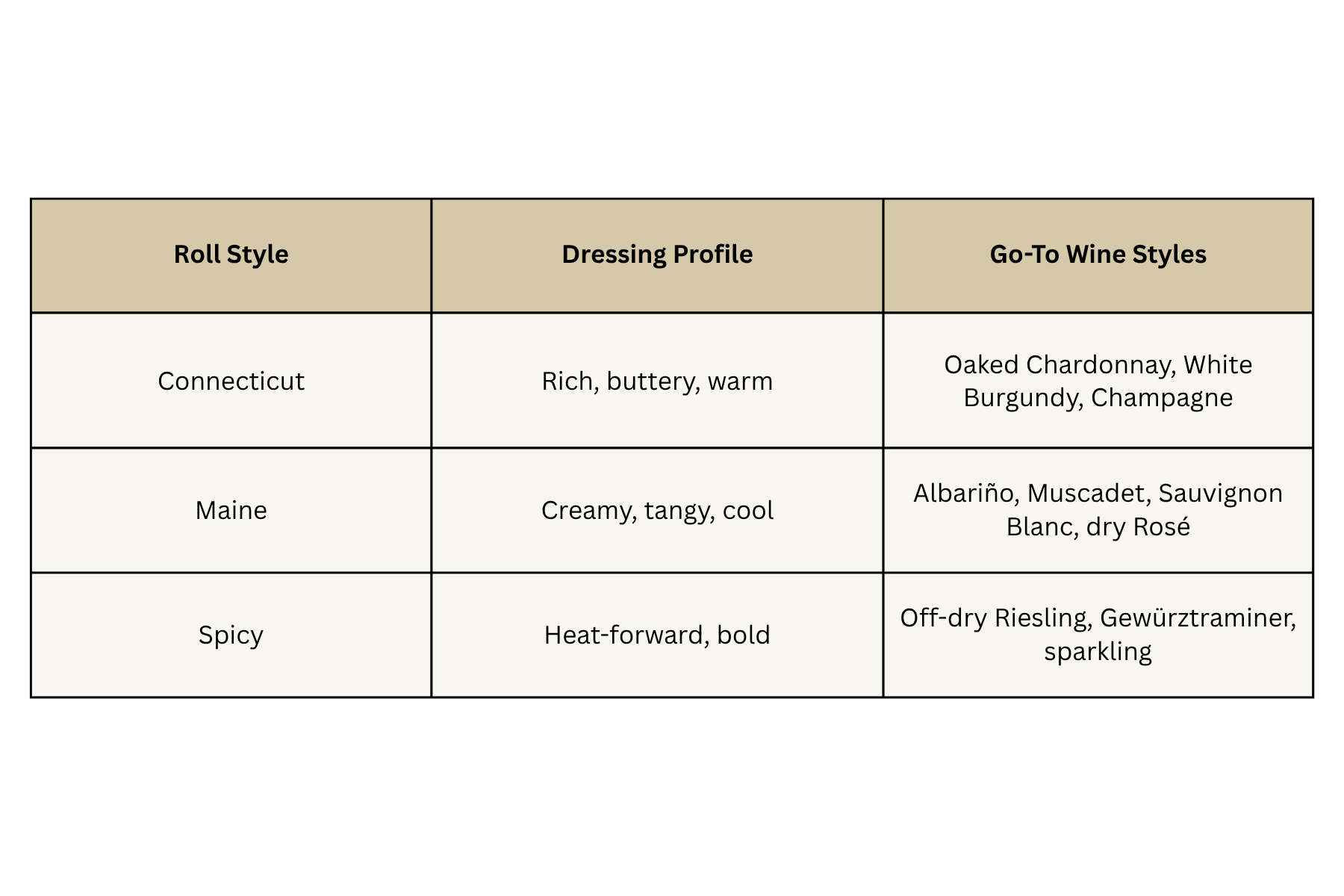
Why the Dressing Changes Everything
Lobster meat itself is delicate and sweet. That's not the variable here—it's what surrounds it.
Butter adds richness and coats your palate. Mayo adds creaminess and a slight tang. Spicy preparations bring heat that can clash hard with the wrong wine. Each calls for a different approach [1].
The goal is balance. You want a wine that complements the lobster without getting steamrolled by the dressing—or worse, fighting against it.
Connecticut-Style: The Butter-Drenched Classic
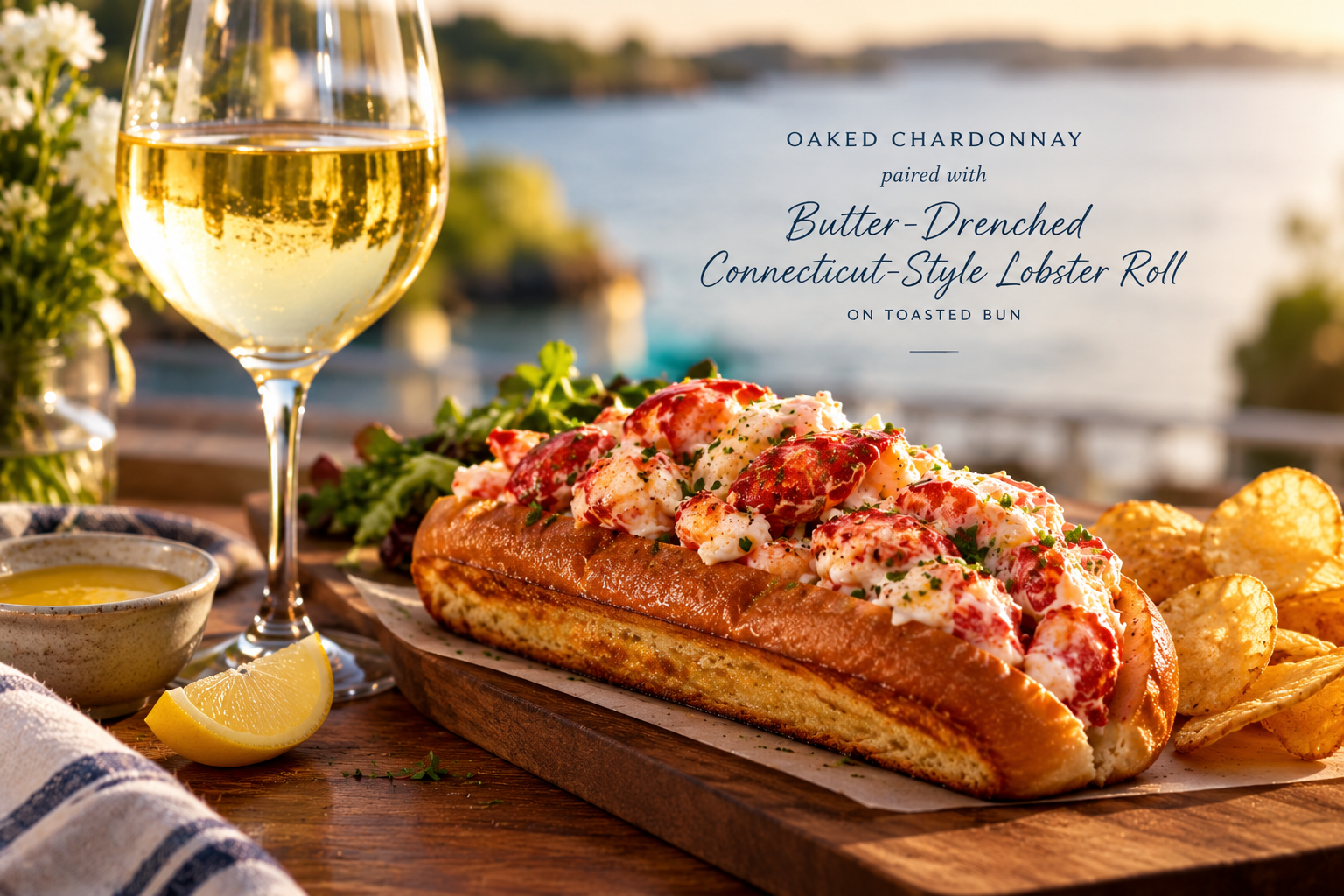
The Connecticut roll keeps things simple. Warm lobster, melted butter, a toasted split-top bun. That's it.
All that butter creates a rich, coating mouthfeel. You need a wine with enough acidity to cut through, plus enough body to stand up to the richness [2].
Best bets:
Oaked Chardonnay – A California or Burgundy-style Chardonnay with light oak aging mirrors the buttery quality while providing acidity to refresh your palate between bites. Look for bottles from Sonoma Coast or the Mâconnais region for good balance without overwhelming oak.
White Burgundy – If you want to go classic, wines from the Côte de Beaune work beautifully. The minerality adds an extra dimension that butter loves.
Champagne or quality sparkling wine – Those bubbles act like a palate cleanser, slicing through richness with every sip [3]. Serve it cold—around 45°F—for the best effect.
What to avoid: Light, crisp wines like basic Pinot Grigio get lost here. They don't have the body to match all that butter.
Maine-Style: Creamy, Cool, and Tangy
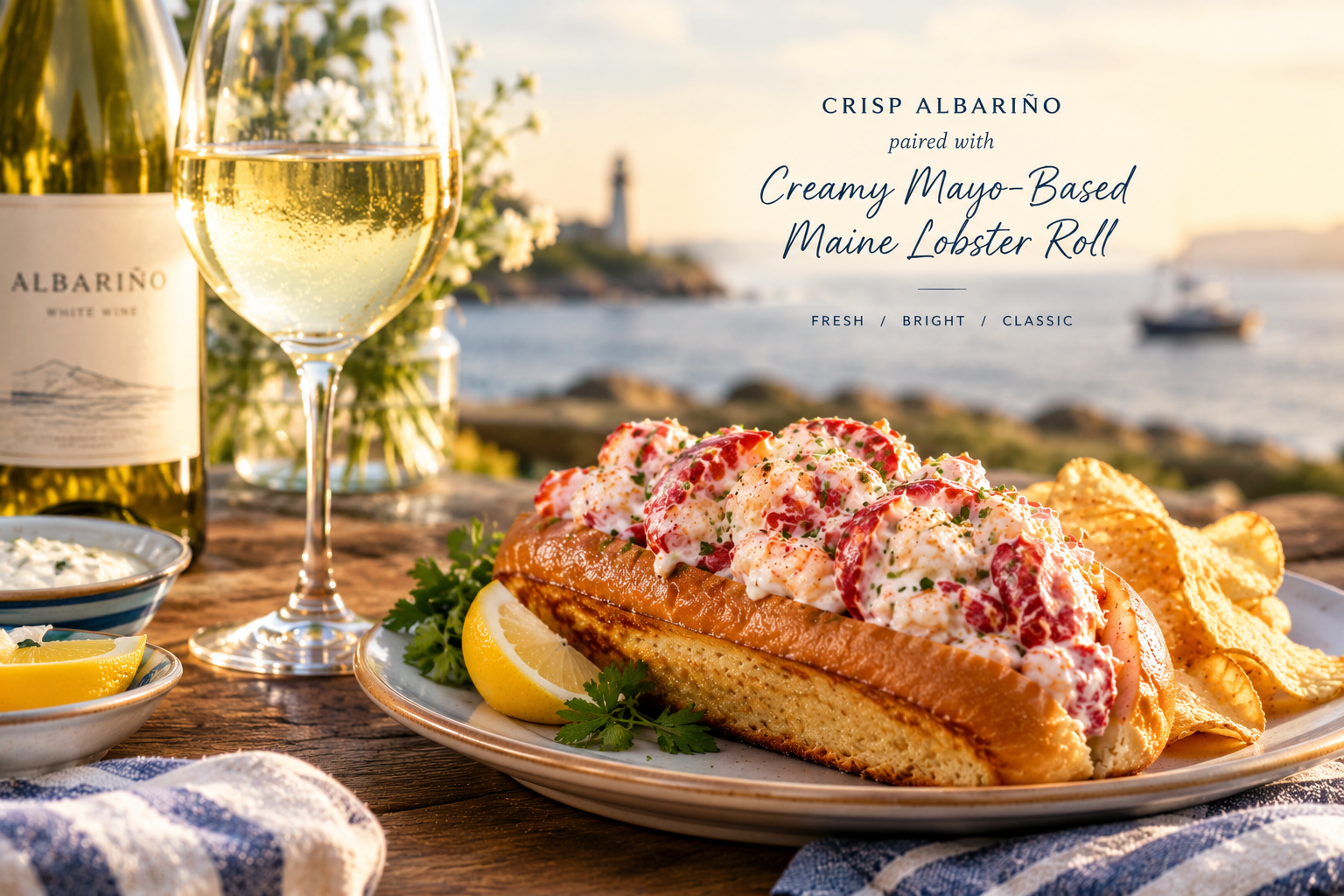
The Maine roll takes a different path. Cold lobster mixed with mayo, maybe some celery for crunch, served in a buttered and griddled bun.
That mayonnaise adds creaminess and a subtle acidity of its own. You want wines that are crisp and refreshing—something that complements rather than competes with the tang.
Best bets:
Albariño – This Spanish coastal white is practically made for seafood. Bright acidity, citrus notes, and enough weight to feel satisfying. Rías Baixas producers have been perfecting this pairing for generations [2].
Muscadet – Bone-dry, mineral-driven, and impossibly refreshing. French fishermen drink it with their catch for good reason.
Sauvignon Blanc – Look for one from the Loire Valley or Marlborough. The herbaceous, citrusy profile plays well with mayo's tanginess.
Dry Rosé – A crisp Provence-style rosé adds a hint of red fruit while keeping things light and refreshing.
What to avoid: Heavily oaked wines. That buttery, vanilla quality from oak fights with mayo instead of harmonizing with it.
Spiced or Spicy Lobster Rolls: Playing with Heat
Some lobster rolls bring heat—maybe a sriracha mayo, Old Bay seasoning, or a chili-lime situation.
Spice is the trickiest element to pair with wine. Alcohol amplifies heat, so high-alcohol wines can turn a pleasant kick into something overwhelming [1].
Best bets:
Off-dry Riesling – A touch of residual sugar tames the heat while the acidity keeps everything balanced. German Kabinett or Spätlese levels work great. Serve it quite cold (around 40°F) to further cool things down.
Gewürztraminer – Aromatic, slightly sweet, with enough body to handle bold flavors. It's like turning down the volume on the spice.
Sparkling wine (Crémant or Cava) – The bubbles and lower alcohol help cool things down without breaking the bank.
Vinho Verde – Slightly effervescent, low alcohol, and refreshing. It won't fight the spice.
What to avoid: Big, tannic reds and high-alcohol wines. They'll turn up the heat when you want relief.
Understanding Acidity and Body: The Simple Version
If wine pairing feels intimidating, here's what actually matters: match weight and consider acidity.
Body is about how heavy the wine feels in your mouth. Light-bodied wines (like Muscadet) feel closer to water. Full-bodied wines (like oaked Chardonnay) feel richer, almost creamy.
Rich food = fuller-bodied wine
Light food = lighter-bodied wine
Acidity is about freshness. High-acid wines taste bright and make your mouth water. They're essential for cutting through fat and richness [3].
Fatty or creamy dishes = higher-acid wines
Delicate dishes = balanced acidity
For lobster rolls, you almost always want good acidity. The question is just how much body you need based on the dressing.
A Starting Framework
If you're new to pairing, try this:
Identify the dressing style – Butter, mayo, or spice?
Match the weight – Rich dressing = fuller wine. Light and tangy = crisper wine.
Prioritize acidity – You want something refreshing, not flat.
Consider sweetness for heat – A touch of sugar tames spice.
Once you've got the basics down, start experimenting. Try a sparkling wine with your butter roll. See what a dry Riesling does with a classic Maine-style. Every palate is different, and discovering your own preferences is half the fun.
Here at The Pip, we love helping guests work through exactly this kind of thing. Someone comes in planning a summer get-together, we talk through what they're serving, and we find something that actually makes sense—not just whatever's trendy.
Ready to Try These Pairings?
The best way to learn wine pairing is to actually taste—ideally with some guidance and good company.
If you're curious about exploring pairings like these in a low-pressure setting, check out what's happening at The Pip. From themed tastings to food pairings, it's a relaxed way to discover what you like without the guesswork.
Come hang out, grab a glass, and we'll help you find your perfect pairing.
Frequently Asked Questions
What wine pairs best with a classic Maine lobster roll?For a mayo-dressed Maine lobster roll, reach for crisp, high-acid white wines. Albariño, Muscadet, and Sauvignon Blanc are all excellent choices—their bright acidity complements the creamy tang of the mayo without overwhelming the delicate lobster. Dry rosé also works beautifully if you want something a little different.
Can you drink red wine with lobster rolls?It's tricky. Most red wines have tannins that clash with seafood, creating a metallic taste. If you really want red, choose a very light, low-tannin option served slightly chilled—like a light Pinot Noir or a chilled Gamay. But honestly, white or sparkling wines give you a better overall experience.
Why does butter-drenched lobster need a different wine than mayo-based?Butter coats your palate and adds richness, so you need a wine with enough body and acidity to cut through. Mayo is tangy and lighter, calling for crisper wines. The dressing fundamentally changes the flavor profile and mouthfeel, which means the best wine match changes too.
What wine works with spicy lobster rolls?Off-dry wines are your friend when there's heat involved. A German Riesling with a touch of sweetness tames the spice, while Gewürztraminer's aromatic profile complements bold flavors. Serve them cold—around 40°F—to maximize the cooling effect. Avoid high-alcohol wines, which amplify heat rather than cooling it down.
Is Champagne a good pairing for lobster rolls?Absolutely. Champagne and quality sparkling wines pair wonderfully with lobster rolls—especially butter-forward preparations. The bubbles act as a palate cleanser, the acidity balances richness, and there's a celebratory quality that makes the whole experience feel a little more special.

About This Guide
This pairing guide was created by The Pip Wine Bar & Shop, a curated wine bar and bottle shop in Downtown Dixon, California. We specialize in helping guests discover wines they love through approachable guidance, hand-selected bottles from small producers, and tasting events designed for real people—not just wine experts. Whether you're planning a get-together or just curious what to sip with your next meal, come hang out and we'll help you find something great.
Cited Works
[1] Wine Folly — "Wine and Food Pairing Basics." https://winefolly.com/tips/wine-and-food-pairing-basics/
[2] VinePair — "The Best Wines to Pair With Lobster." https://vinepair.com/articles/best-wines-pair-lobster/
[3] Decanter — "How to Match Wine and Food." https://www.decanter.com/learn/how-to-match-wine-and-food/