
A Cocktail Drinker's Guide to Choosing Wine by Favorite Classic Cocktail
You know exactly what you want when you order a Manhattan. That perfect balance of strength and warmth. The way it finishes clean but lingers just enough.
Now imagine finding that same satisfaction in a glass of wine.
If you've ever stared at a wine list feeling completely stuck while your cocktail order rolls off the tongue without a second thought, you're in good company. Most cocktail lovers already have sophisticated palates—they just haven't learned to translate those preferences into wine language yet.
The flavor profiles you love in your favorite cocktails map remarkably well onto specific wine characteristics. That bitter edge in your Negroni? There's a wine for that. The citrus brightness in your Margarita? Wines deliver that too.
At The Pip Wine Bar & Shop in Downtown Dixon, we help cocktail enthusiasts make this crossover every week. Once you crack the code, wine selection becomes just as intuitive as ordering your go-to drink.
Why Your Cocktail Preferences Are Actually Wine Preferences in Disguise
The bridge between cocktails and wine is shorter than most people think. Both depend on the same fundamental taste elements: sweetness, acidity, bitterness, and body.
When you prefer an Old Fashioned over a Daiquiri, you're revealing something important about your palate. You gravitate toward rich, warming drinks with depth rather than bright, citrus-forward refreshers. That preference doesn't change when you pick up a wine glass.
Individual sensitivity to bitter compounds varies significantly from person to person. This explains why some drinkers love amaro-heavy cocktails while others reach for sweeter options—and why wine preferences often follow the same pattern. Research from sensory science confirms these individual taste thresholds influence beverage preferences across categories [1].
Wine professionals frequently use cocktail comparisons when training staff because the flavor vocabulary translates so directly. The systematic approach to tasting that sommeliers use relies on the same building blocks—acidity, sweetness, body, finish—that define cocktail profiles [2].
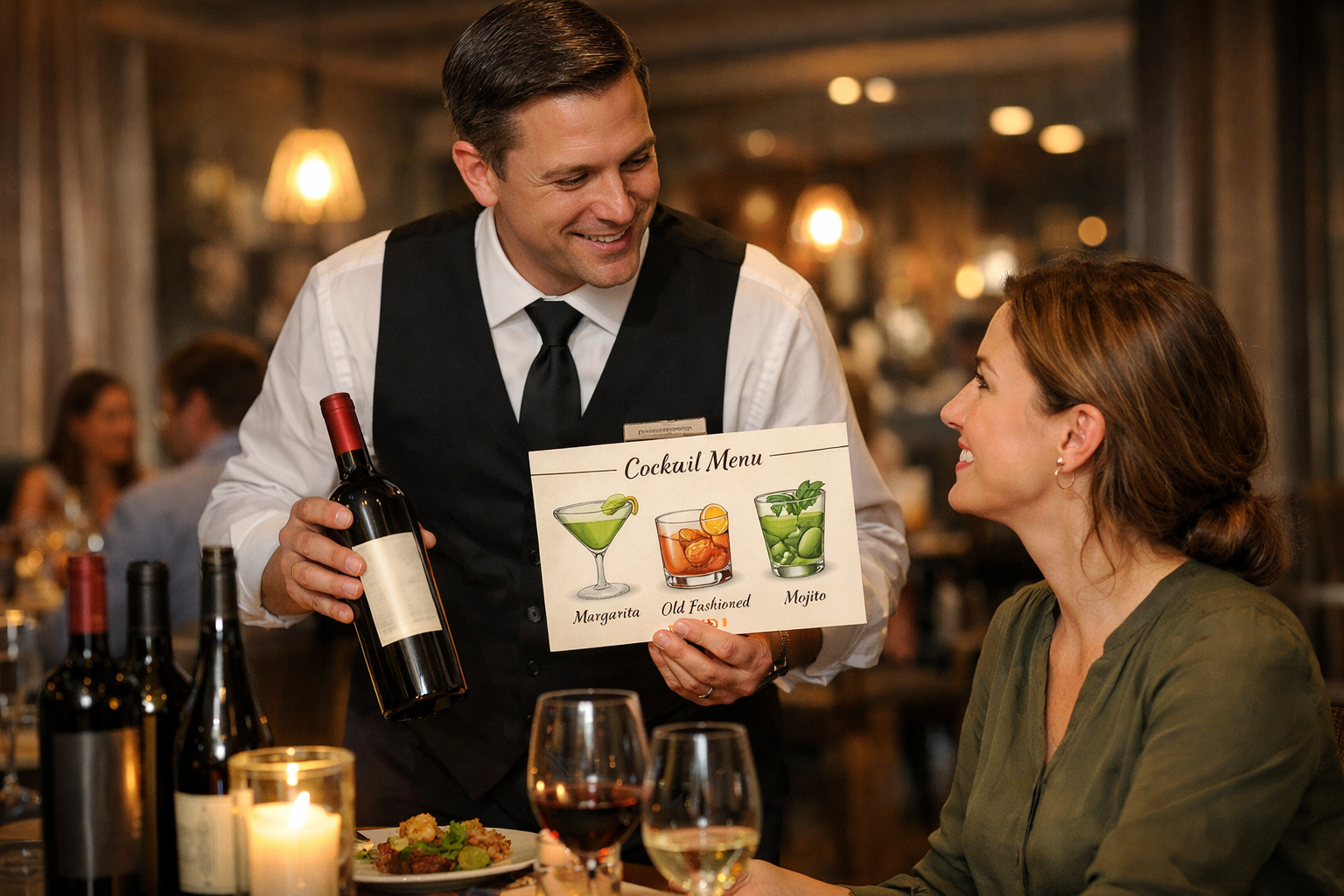
The Classic Cocktail to Wine Translation Guide
Manhattan Lovers: Reach for Bold Reds with Structure
The cocktail profile: Whiskey-forward warmth, sweet vermouth's herbal complexity, a bitter finish from aromatic bitters.
Your wine match: Full-bodied reds with noticeable tannins and dark fruit.
If you love Manhattans, you appreciate drinks with backbone. You want something that stands up and makes a statement. Wines that deliver this include:
Cabernet Sauvignon — That drying sensation from tannins mirrors the Manhattan's bitter-edged finish
Malbec — Offers similar dark fruit depth with a slightly softer landing
Syrah/Shiraz — Brings peppery spice that echoes bitters complexity
How to ask for it: "I like Manhattans—something full-bodied with some grip to it?"
Negroni Devotees: Explore Wines with Bitter Complexity
The cocktail profile: Equal parts bitter, herbal, and botanical. Campari's distinctive bite balanced by gin and sweet vermouth.
Your wine match: Wines with pronounced bitter or herbal notes and firm structure.
Negroni drinkers have palates that embrace bitterness as a feature, not a flaw. You're in the minority—and your wine options are fascinating:
Nebbiolo (like Barolo or Barbaresco) — High tannins create that familiar bitter-drying sensation. Tannins in wine produce astringency similar to the bitter compounds in Campari [3]
Sangiovese — Herbal undertones and bright acidity with a bitter finish
Orange wines — Extended skin contact creates tannic grip and complexity
How to ask for it: "I drink Negronis—anything with some bitter character or real tannic structure?"
Margarita Fans: Look for Crisp, Bright Whites
The cocktail profile: Citrus-forward brightness, clean acidity, refreshing and palate-cleansing.
Your wine match: High-acid white wines with citrus or mineral notes.
If Margaritas are your default, you want wines that wake up your palate rather than coat it. Freshness is everything:
Sauvignon Blanc — Grapefruit and lime notes with zippy acidity
Albariño — Citrus and stone fruit with a saline, almost margarita-salt finish
Vinho Verde — Light, slightly effervescent, incredibly refreshing
How to ask for it: "I usually order Margaritas—something really crisp and citrusy?"

Old Fashioned Aficionados: Seek Rich, Warming Reds
The cocktail profile: Spirit-forward simplicity, caramel and vanilla notes from bourbon, subtle sweetness balanced by bitters.
Your wine match: Rich, fruit-forward reds with oak influence.
Old Fashioned drinkers appreciate straightforward elegance. No fuss, no excessive ingredients—just quality and warmth:
Zinfandel — Ripe dark fruit with spice and often a hint of sweetness
Grenache blends — Warm, generous fruit with soft tannins
Oaked Chardonnay — This might sound strange to a bourbon drinker, but hear us out: barrel aging gives certain Chardonnays vanilla, caramel, and toasted oak notes that directly mirror what bourbon picks up from charred barrels. Same wood, similar flavor compounds. It's a white wine that drinks like it understands whiskey.
How to ask for it: "I'm an Old Fashioned person—something rich and warming with a little sweetness?"
Martini Minimalists: Try Lean, Precise Wines
The cocktail profile: Clean, cold, spirit-driven. Whether gin or vodka, it's about purity and precision.
Your wine match: Mineral-driven whites with elegance over fruit.
Martini drinkers don't want anything getting in the way. You appreciate restraint and clarity:
Chablis (unoaked Chardonnay) — Steel and mineral, no frills
Muscadet — Bone dry, oceanic, precise
Dry Champagne or sparkling wine — Clean, celebratory, no residual sweetness
How to ask for it: "Martini drinker—dry, crisp, nothing sweet or fruity?"
Daiquiri Enthusiasts: Discover Aromatic, Fruit-Forward Options
The cocktail profile: Rum's slight sweetness, fresh lime acidity, clean and tropical.
Your wine match: Aromatic whites with fruit character and balancing acidity.
Daiquiri lovers want fruit and refreshment without heaviness. Aromatics are your friend:
Riesling (dry or off-dry) — Stone fruit and citrus with bright acidity
Gewürztraminer — Lychee and tropical notes, aromatic but not cloying
Torrontés — Floral and fruity, Argentina's aromatic standout
How to ask for it: "Love a good Daiquiri—something aromatic with some tropical fruit?"
Whiskey Sour Seekers: Balance Is Your Wine Word
The cocktail profile: The push-pull of sour citrus against whiskey's warmth and simple syrup's sweetness.
Your wine match: Medium-bodied wines where no single element dominates.
You appreciate tension and resolution in your glass. Look for wines described as "balanced":
Pinot Noir — Red fruit, earth, and acidity in harmony
Côtes du Rhône blends — Fruit, spice, and structure without extremes
Chenin Blanc — Can range from dry to off-dry, always balancing fruit and acid
How to ask for it: "Whiskey Sour fan—something really well-balanced, not too anything?"
Aperol Spritz Lovers: Keep It Light and Bubbly
The cocktail profile: Gentle bitterness, effervescence, low alcohol, easy-drinking refreshment.
Your wine match: Light, sparkling, or gently bitter wines that don't demand attention.
You want something social and sessionable—a drink that keeps the conversation going without slowing you down:
Prosecco — The base of your favorite spritz, crisp and celebratory on its own
Light dry rosé — Refreshing, versatile, no commitment required
Lambrusco — Lightly sparkling red with gentle fruitiness
How to ask for it: "I usually go for an Aperol Spritz—something light and easy-drinking?"
Moscow Mule Enthusiasts: Fresh with a Little Kick
The cocktail profile: Ginger spice, lime brightness, refreshing but with some bite.
Your wine match: Crisp whites with subtle spice or herbal notes.
You like refreshment with personality—something that wakes p the palate:
Grüner Veltliner — White pepper notes and citrus with refreshing acidity
Dry rosé — Clean and crisp with enough character to stay interesting
Verdejo — Herbal hints with bright, zesty finish
How to ask for it: "Moscow Mule drinker—something fresh with a little spice to it?"
Mojito Fans: Herbal, Bright, and Refreshing
The cocktail profile: Fresh mint, lime, light sweetness, incredibly refreshing.
Your wine match: Herbal whites with vibrant acidity.
You love that green, garden-fresh quality—wines with herbal character will feel familiar:
Verdejo — Herbal and grassy with citrus brightness
Grüner Veltliner — Crisp with green herb notes
Sauvignon Blanc from cooler climates — Herbaceous with high acid
How to ask for it: "I'm a Mojito person—something herbal and super fresh?"
Quick Reference: Your Cocktail-to-Wine Cheat Sheet
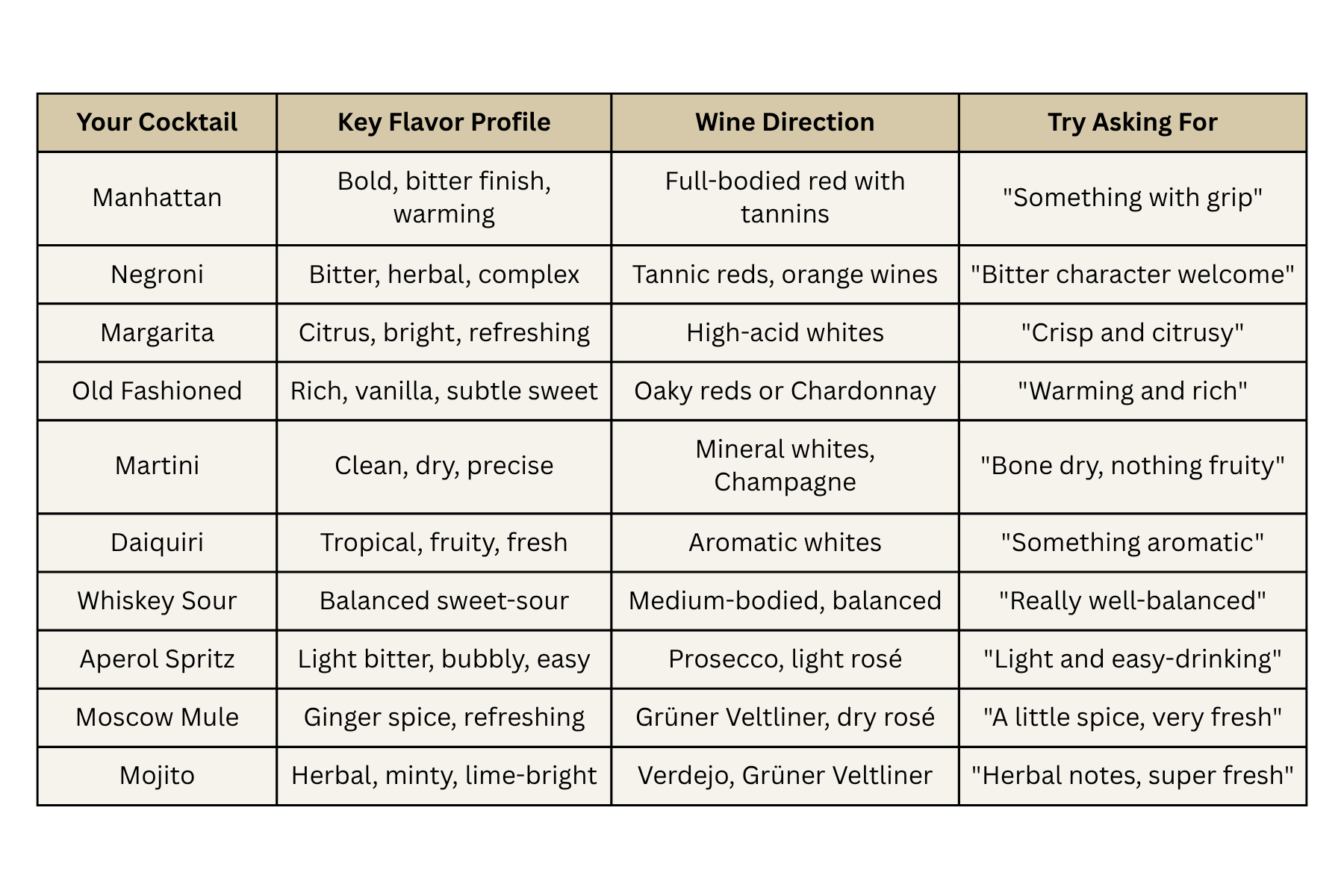
The Phrases That Actually Work When Ordering Wine
Forget memorizing grape varieties. These conversation starters translate your cocktail knowledge into useful wine guidance:
Instead of guessing, try:
"I usually drink [cocktail]—what would you suggest in wine?"
"I like drinks with [bitter/sweet/citrus/warming] flavors."
"Something with the same weight as a [cocktail name]?"
"I don't love [sweet/dry/tannic] drinks—what should I avoid?"
Describing what you want:
"Refreshing" = high acid, lighter body
"Warming" = higher alcohol, fuller body
"Something with grip" = noticeable tannins
"Easy-drinking" = lower alcohol, fruit-forward
"Clean finish" = minimal residual sugar, good acidity
At spots like The Pip, where the team knows both cocktails and wine, these translations happen naturally. Tell us what you usually order at a bar, and we'll point you toward bottles that make sense.
Building Your Bridge: A Practical Progression
If you're ready to explore beyond your usual cocktail order, here's a low-risk approach:
Week One: Order your usual cocktail first. Then ask for a wine recommendation based on that preference. Compare the two side by side if you're feeling adventurous.
Week Two: Start with the wine recommendation. See if it satisfies the same craving your cocktail usually does.
Week Three: Try a wine from an adjacent category. If you loved the full-bodied red that matched your Manhattan, try something slightly different—maybe a Rhône blend instead of a Cab.
The goal isn't to replace cocktails with wine. It's to expand your options so you can match the drink to the moment. Sometimes a perfectly crafted cocktail is exactly right. Other times, splitting a bottle with friends makes more sense.
Why Small Producers Make This Translation Easier
Cocktail lovers often discover something interesting: wines from smaller producers tend to have more distinct personalities. Just like a craft cocktail bar uses quality spirits and house-made ingredients, small-production wines often showcase clearer flavor profiles than mass-produced alternatives.
When a Nebbiolo actually tastes like Nebbiolo—with all its tannic, bitter-edged complexity—it's easier to recognize why it matches your Negroni preference. Generic wines blur these distinctions. Mass-produced bottles often aim for broad appeal, smoothing out the distinctive characteristics that make wine-to-cocktail comparisons click [4].
The Pip focuses on curated selections from small producers specifically because these wines have something to say. They make the cocktail-to-wine connection more intuitive, not less.
What to Expect When You Make the Switch
A few honest notes for cocktail drinkers exploring wine:
Wine takes longer to reveal itself. Cocktails hit you immediately—the first sip delivers the full experience. Wine often evolves in the glass, especially reds. Give it a few minutes.
Sweetness perception differs. Most cocktails contain some sugar (even if you don't taste it as "sweet"). Dry wines have almost no residual sugar. If wines taste "sour" at first, you might need off-dry options as a bridge.
You might prefer wine with food. Cocktails work as standalone experiences. Many wines are designed to accompany food—their acidity cuts through richness, their tannins soften with protein. Pairing wine with tapas-style bites often makes the wine click in a way it might not solo.
Your palate will adapt. What tastes too dry or too tannic on week one might become your preference by month two. Palates are trainable.
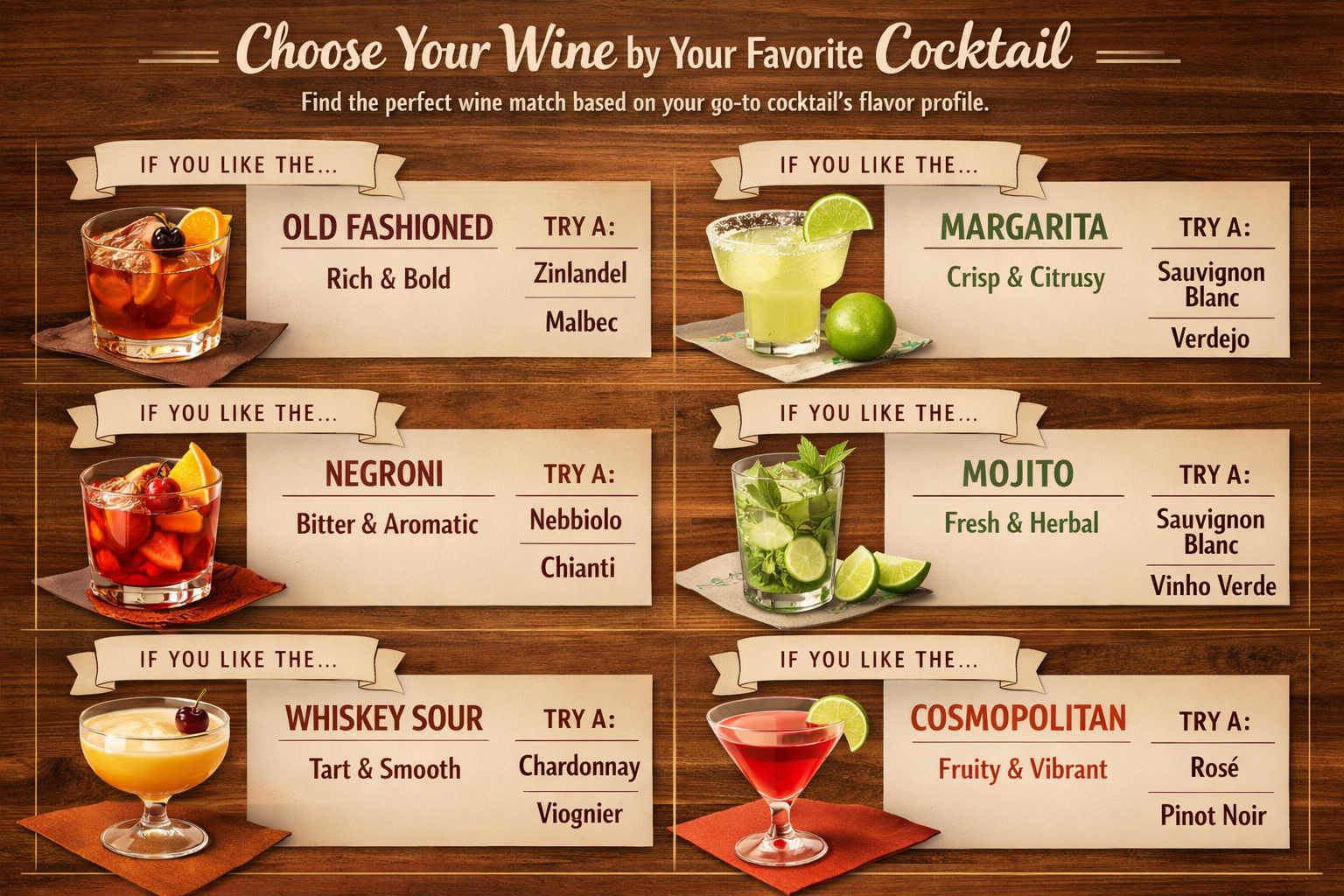
Beyond the Glass: Pairing Your New Wine Discoveries
Once you've found wines that match your cocktail preferences, pairing them with food follows naturally:
Bold reds (Manhattan matches) — Stand up to rich, savory bites
Bitter, tannic wines (Negroni matches) — Love fatty, salty foods
Crisp whites (Margarita matches) — Perfect with anything citrus-dressed or briny
Aromatic whites (Daiquiri matches) — Great with lightly spiced or herbal dishes
The current menu at The Pip offers tapas-style options designed to complement both cocktails and wines. Asking "what pairs with this?" is always a valid question—and one we love answering.
Come Find Your Wine Match
Ready to put this guide into practice? The Pip Wine Bar & Shop in Downtown Dixon is the spot to experiment.
Tell us what cocktails you love, and we'll guide you toward wines that scratch the same itch. No judgment, no wine-speak quizzes, just good drinks and honest recommendations.
Whether you're a die-hard Negroni devotee curious about Nebbiolo or a Margarita lover ready to try Albariño, swing by and hang out. We'll help you find your wine match—and you might just discover a new favorite.
Check the events calendar or just walk in when you're ready to explore.
Frequently Asked Questions
Do I need to know wine terminology to order confidently?
Not at all. Simply telling your server which cocktails you typically enjoy gives them useful information about your palate. Phrases like "I like Manhattans" or "something refreshing like a Margarita" communicate more than you might think. Good wine bars translate cocktail preferences into recommendations regularly—it's one of our favorite conversations to have.
Will wine taste too sour if I'm used to cocktails?
Many people experience this initially because most cocktails contain some sugar. Starting with off-dry wines (slightly sweet) or fruit-forward options can bridge the gap. Your palate adjusts surprisingly quickly—within a few weeks, wines that seemed too dry often become appealing. Think of it like adjusting to black coffee after years of adding cream and sugar.
Can I order both a cocktail and wine in the same visit?
Absolutely. Many people start with a familiar cocktail, then transition to wine for their second drink. This is actually a great way to compare flavor profiles side by side. At The Pip, we make both craft cocktails and curated wines, so switching between them is perfectly normal—and encouraged.
What if the wine recommendation doesn't match my taste?
That's valuable information too. Telling your server "this is too tannic" or "I wanted something more refreshing" helps narrow down what you actually prefer. Wine exploration involves some trial and learning—a good bar expects this and will help you find better matches. We'd rather you tell us than sit there disappointed.
Are there wines that cocktail lovers almost universally enjoy?
Sparkling wines tend to work for most cocktail drinkers because the bubbles and acidity feel refreshing and celebratory. Rosé also bridges the gap well—it's approachable, versatile, and rarely too intense in any direction. Both make excellent starting points if you're not sure where to begin.
About This Guide
This guide was developed in collaboration with The Pip Wine Bar & Shop, a curated wine bar and bottle shop in Downtown Dixon, California. The Pip specializes in hand-selected wines from small producers alongside craft cocktails, creating an environment where both wine enthusiasts and cocktail lovers feel welcome. The team regularly helps guests translate their drink preferences across categories, drawing on direct experience with thousands of customer conversations about flavor, preference, and discovery.
Cited Works
[1] Bartoshuk, L.M. — "Genetic and Pathological Taste Variation: What Can We Learn from Animal Models and Human Disease?" Ciba Foundation Symposium 179 - The Molecular Basis of Smell and Taste Transduction. https://pubmed.ncbi.nlm.nih.gov/8168373/
[2] Wine & Spirit Education Trust — "Systematic Approach to Tasting Wine®." WSET Level 2 Award in Wines Specification. https://www.wsetglobal.com/qualifications/wset-level-2-award-in-wines/
[3] Gawel, R. — "Red Wine Astringency: A Review." Australian Journal of Grape and Wine Research. https://onlinelibrary.wiley.com/journal/17550238
[4] Robinson, J., Harding, J., & Vouillamoz, J. — Wine Grapes: A Complete Guide to 1,368 Vine Varieties, Including Their Origins and Flavours. Ecco/HarperCollins.