Wine Tasting Class for Beginners: What Happens, What to Wear, and How to Taste
You signed up for a wine tasting class. Now what?
Maybe you're second-guessing yourself. What if everyone else knows more than you? What if you can't tell the difference between a Pinot and a Merlot? What if you say something ridiculous?
Here's the truth: a wine tasting class for beginners is designed exactly for people who feel that way. The whole point is to learn, ask questions, and discover what you actually like—without pretense.
Whether you're prepping for your first tasting event at a local wine bar or just want to know what to expect, this guide walks you through everything. Arrival to final sip. What to wear. How to taste. And how to participate without feeling like you need a sommelier certification first.
Let's make this easy.
What Actually Happens at a Wine Tasting Class
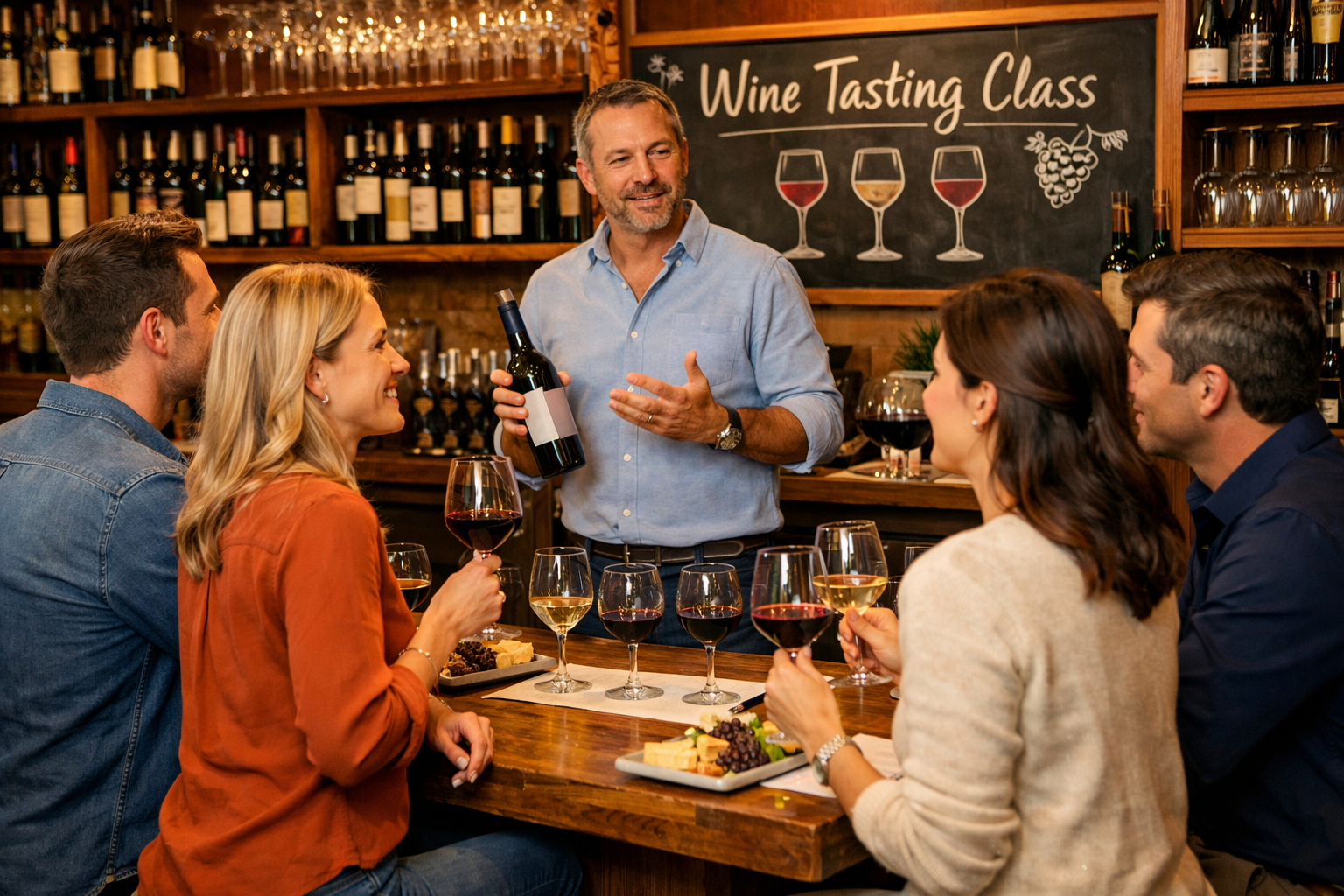
Wine tasting classes vary depending on the venue and format, but most follow a similar flow. Understanding the structure ahead of time takes the mystery out of it.
The Arrival and Setup
You'll typically check in, grab a seat, and find a tasting setup waiting for you. This usually includes:
Multiple wine glasses (often three to six, depending on the tasting)
A tasting sheet or menu describing each wine
Water for palate cleansing
Sometimes bread, crackers, or light bites
The host or educator will introduce themselves and explain the format. Some tastings are structured around a theme—like wines from a specific region, grape varieties, or food pairings. Others are more casual "try a few and see what you like" setups.
The Guided Tasting
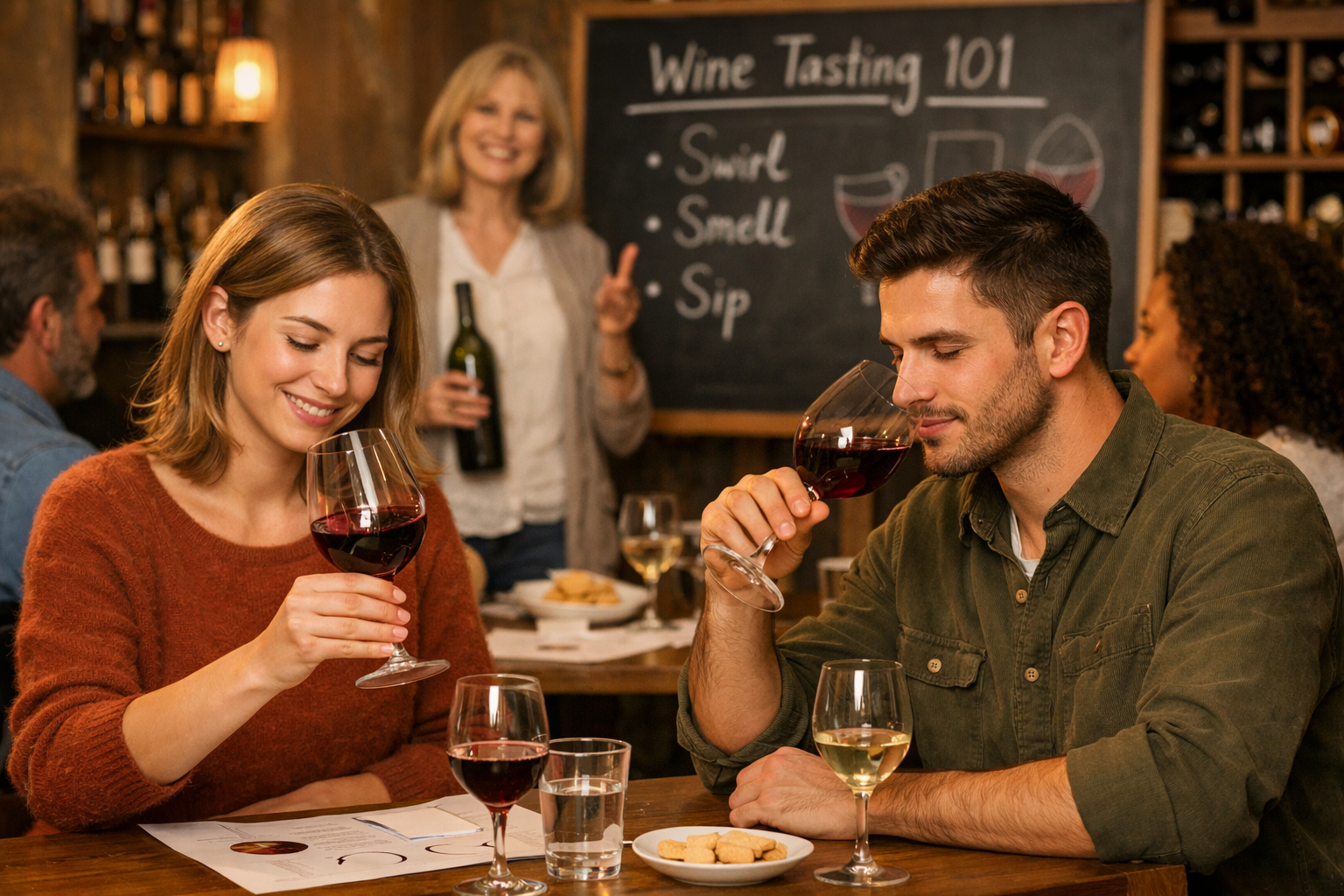
The host pours each wine and guides you through tasting it. This is the heart of the experience.
You'll learn to observe the wine's color and clarity, smell its aromas, taste it properly, and notice how it finishes. More on the actual technique below.
Good hosts explain what you're tasting in plain language. They'll translate wine-speak into something useful: "bright acidity" means it's lively and makes food taste better; "tannins" refers to that drying sensation, like strong tea [1].
Questions and Conversation
Ask anything. Seriously.
Beginners often worry they'll sound silly. But instructors expect questions like "Why does this one taste different?" or "What food would go with this?" That's the whole point.
Wine professionals consistently emphasize that tasting is personal—there are no wrong answers about what you prefer [2]. The goal is helping you identify what you enjoy, not testing your expertise.
The Wrap-Up
Most classes end with a chance to purchase wines you liked, ask follow-up questions, or learn about upcoming events. Some venues offer wine club memberships or private tasting options for groups who want to go deeper.
How to Taste Wine Like You Know What You're Doing
You don't need a trained palate. You need a method. The standard approach used by professionals and taught to beginners worldwide involves five steps: see, swirl, smell, sip, and savor [3].
Step 1: Look at the Wine
Hold your glass against a white background (a napkin works). Notice the color and clarity.
White wines range from pale straw to deep gold
Red wines span from light ruby to nearly opaque purple
Older wines often show amber or brown tones at the edges
Color hints at grape variety, age, and winemaking style. You're not judging—just observing.
Step 2: Swirl the Glass
Give the wine a gentle swirl. This releases aromatic compounds so you can smell them more easily.
Pro tip: keep the base of the glass on the table and move it in small circles. Less chance of spilling on yourself.
Step 3: Smell Before You Sip
This is where most of the "tasting" actually happens. Your sense of smell does heavy lifting in flavor perception [4].
Stick your nose into the glass. Take a few short sniffs. What do you notice?
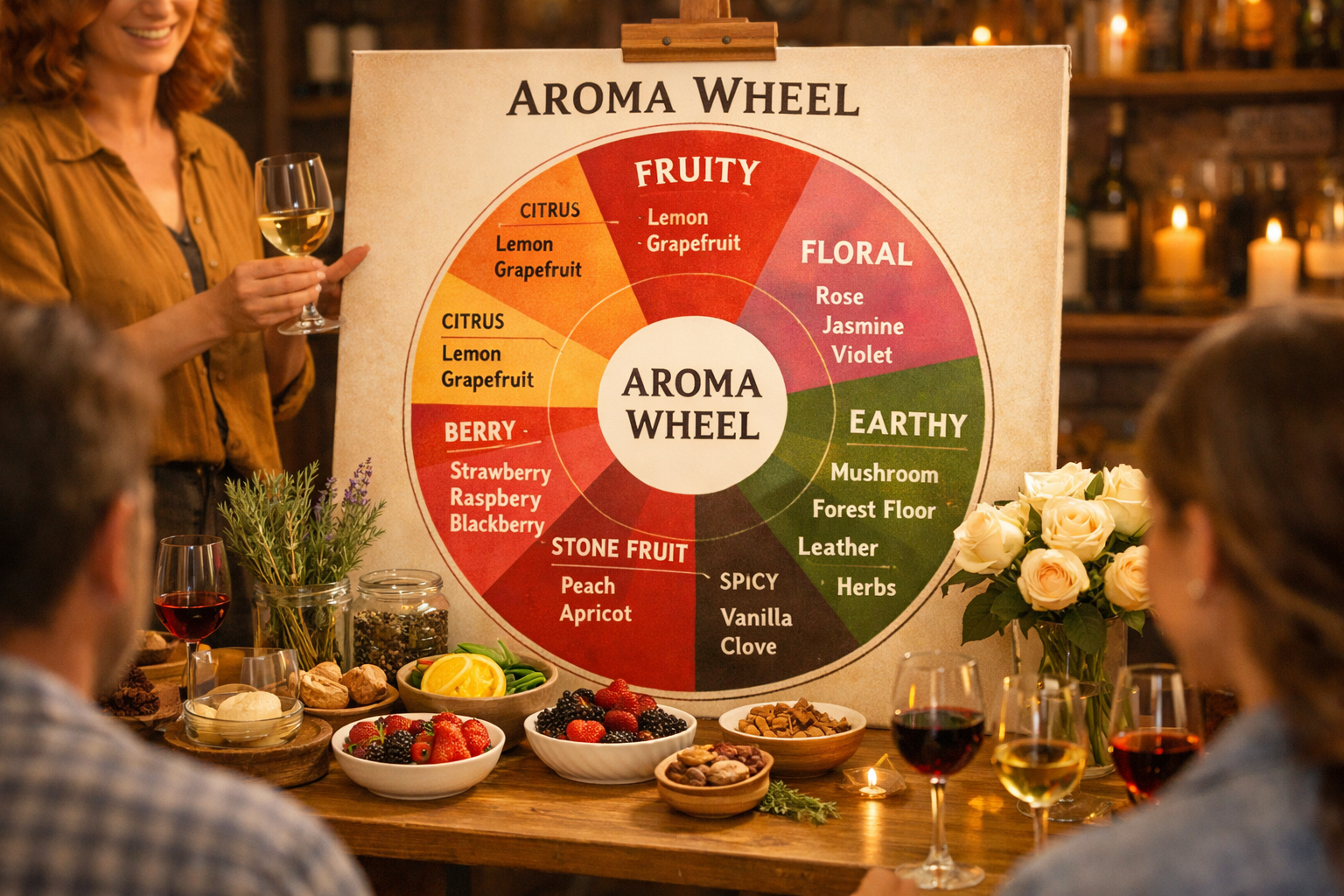
Common descriptors for wine aromas include:
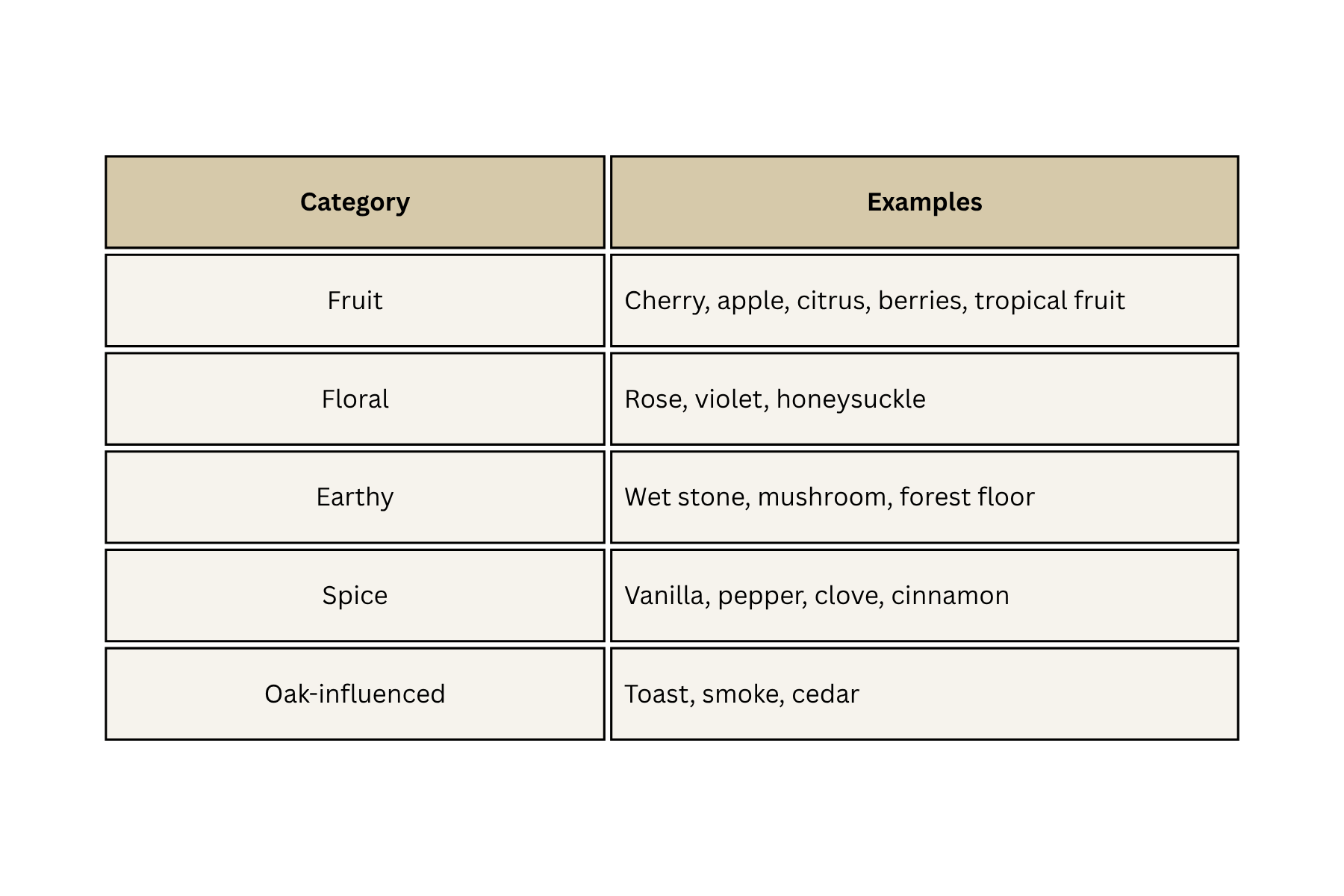
Don't stress about naming specific aromas. If it smells like "something fruity" or "kind of earthy," that's a perfectly valid observation.
Step 4: Taste the Wine
Take a sip—not a gulp. Let it sit on your tongue for a moment.
Notice where you sense different things:
Sweetness registers on the tip of your tongue
Acidity creates a mouth-watering sensation on the sides
Tannins (in reds) cause a drying feeling, especially along your gums
Body refers to the weight—does it feel light like water or heavier like whole milk?
Some people swish the wine around. Some draw in a little air. Do whatever feels comfortable. This isn't a performance.
Step 5: Savor the Finish
After you swallow (or spit—more on that below), pay attention to what lingers. Does the flavor fade quickly or stick around? Do you notice different flavors now than you did initially?
A longer, pleasant finish is generally considered a quality marker, but personal preference matters most.
What to Wear to a Wine Tasting Class
Dress code anxiety is real. The good news: most wine tasting classes are casual.
General Guidelines
Comfortable, casual-nice clothing works. Think date-night-at-a-wine-bar, not black-tie gala.
Avoid white or very light colors if you're worried about spills. Red wine stains are no joke.
Skip strong fragrances. Perfume, cologne, and scented lotions interfere with your ability to smell the wine—and everyone else's [5].
Wear comfortable shoes if you'll be standing or moving between stations.
What Most People Actually Wear
A typical beginner tasting crowd looks like this:
Dark jeans or slacks
A blouse, button-down, or casual top
Closed-toe shoes or nice flats
Light jewelry (nothing that clinks against the glass)
If you're unsure, lean slightly more casual than formal. Wine bars and tasting rooms want you comfortable and relaxed—that's when you enjoy the wine most.
Common Questions Beginners Ask
Do I Have to Spit?
At professional tastings where you're sampling many wines, spitting is standard practice. It keeps you clear-headed enough to actually evaluate what you're tasting.
At casual beginner classes? Usually optional. Most people swallow. There's typically a dump bucket available if you want to discard wine you don't enjoy or if you're pacing yourself.
What If I Don't Like a Wine?
That's fine. Actually, it's useful information.
Knowing what you don't like helps narrow down your preferences. A good instructor will ask follow-up questions: "What don't you like about it? Too dry? Too fruity?" This helps them point you toward wines that fit better.
Should I Eat Before a Tasting?
Yes. Don't show up on an empty stomach.
A light meal or snack before arrival helps you pace yourself and keeps the alcohol from hitting too hard. Many tastings include small bites—cheese, crackers, bread—but don't rely on that as your only food.
What If I Don't Know Any Wine Terms?
Neither do most beginners. That's why you're taking a class.
Use your own words. If a wine tastes like "summer" or "that candle my mom likes," say so. Good educators meet you where you are and help translate your descriptions into the broader wine vocabulary over time.
Can I Take Notes?
Absolutely. Many tasting sheets have space for your impressions. Jot down what you liked, what you didn't, and any descriptors that resonated.
These notes become invaluable when you're shopping for wine later. "I liked the second red—medium-bodied, berry flavors, not too tannic" is much more useful than trying to remember a name weeks later.
Tips for Getting the Most Out of Your First Class
Arrive a Few Minutes Early
Check in, settle in, and orient yourself before things start. Rushing in stressed doesn't help you relax into the experience.
Pace Yourself
You don't have to finish every pour. Smaller sips let you taste more wines without overwhelming your palate—or yourself.
Drink Water Between Wines
Water cleanses your palate and keeps you hydrated. Use it freely.
Engage With the Host
Ask about their favorite pick, what inspired the tasting theme, or what they'd pair with a specific wine. These conversations often yield the best recommendations.
Focus on What You Like, Not What's "Correct"
Wine enjoyment is subjective. Research confirms that personal preference matters more than expert ratings for most drinkers [6]. If you love the wine everyone else finds unremarkable, great. You found your wine.
What to Do After the Tasting
Your first tasting is just the beginning.
Take Home What You Loved
Most venues let you purchase bottles from the tasting. If something stood out, grab it while you remember why you liked it.
Ask About Wine Club Options
Wine clubs offer ongoing discovery with member perks—discounts, early access to new releases, pickup events, and more. If the tasting confirmed you want to keep exploring, this is an easy next step.
Check the Events Calendar
Tastings often run on a regular schedule with rotating themes. Seasonal focuses, regional explorations, food pairings—there's always something new.
Consider a Private Tasting
If you loved the experience and want to share it with friends, many wine bars offer private group tastings. These work great for birthdays, bachelorette outings, team gatherings, or just an excuse to hang out with good wine.
Ready to Try Your First Wine Tasting?
Now you know what to expect: how the class flows, what to wear, how to actually taste wine, and how to participate without feeling like a fraud.
The secret? Everyone started somewhere. Even the most knowledgeable wine enthusiasts had a first tasting where they weren't sure which glass to pick up first.
Come hang out, ask your questions, and discover what you like. That's the whole point.
Check the events calendar at The Pip Wine Bar & Shop to find upcoming tastings and reserve your spot. Not sure which event fits? Swing by, say hi, and we'll point you in the right direction.
Frequently Asked Questions
How long does a typical wine tasting class last?
Most beginner wine tasting classes run between 60 and 90 minutes. This gives enough time to taste multiple wines, learn the technique, and ask questions without feeling rushed. Some themed or in-depth tastings may run longer, especially if food pairings are included.
Do I need any prior wine knowledge to attend?
None at all. Beginner classes assume you're starting from scratch. The instructor explains everything—grape varieties, tasting technique, vocabulary—as you go. Your job is simply to show up curious and ready to try a few things.
How many wines will I taste at a class?
Typically between four and six wines per session. This provides enough variety to compare styles and identify preferences without overwhelming your palate. Pours are small—usually one to two ounces each—so you're not consuming a full bottle's worth by the end.
Should I bring anything to a wine tasting class?
Just yourself and an open mind. The venue provides glasses, tasting notes, water, and any food accompaniments. Some people bring a small notebook or use their phone to jot down favorites, which helps when shopping for wine later.
What's the difference between a wine tasting and a wine pairing class?
A standard tasting focuses on the wines themselves—observing, smelling, and tasting to understand characteristics and preferences. A pairing class adds food to the equation, teaching how certain wines complement or contrast with different dishes. Both are great for beginners; pairings just add another layer of learning.
About This Guide
This guide was created by The Pip Wine Bar & Shop, a curated wine bar and bottle shop in Downtown Dixon, California. We host regular tastings and events designed for wine lovers at every level—from first-timers to seasoned enthusiasts. Our team brings hands-on experience guiding guests through wine discovery in a comfortable, no-pretense environment. We believe good wine should be accessible, enjoyable, and easy to explore.
Cited Works
[1] Wine Folly — "Wine Tasting Basics: How to Taste Wine."
https://winefolly.com/tips/wine-tasting-basics/
[2] Guild of Sommeliers — "Introduction to Wine Tasting."
https://www.guildsomm.com/education
[3] Wine & Spirit Education Trust (WSET) — "The Systematic Approach to Tasting Wine." https://www.wsetglobal.com/knowledge-centre/
[4] Society of Wine Educators — "The Role of Smell in Wine Tasting." https://www.societyofwineeducators.org/
[5] Court of Master Sommeliers — "Best Practices for Wine Evaluation." https://www.mastersommeliers.org/
[6] Journal of Wine Economics — "Consumer Preferences and Expert Ratings."
https://www.wine-economics.org/journal/