
Cider for Wine Lovers: Dry, Tannic, and Sparkling Styles
You've spent years developing your palate. You know the difference between a crisp Sauvignon Blanc and a rich, buttery Chardonnay. You can pick out tannins in a Cabernet and appreciate the delicate bubbles in a well-made sparkling wine.
At The Pip, we often hear wine lovers ask what else they should try. Our answer? Craft cider deserves a spot on your radar.
Not the sugary stuff from college. We're talking about serious cider—the kind made by small producers who approach apples with the same reverence winemakers bring to grapes. Dry. Complex. Sometimes tannic. Often sparkling. And surprisingly wine-like in structure and sophistication.
If you're a wine lover who hasn't explored craft cider, you're missing an entire world of flavor that speaks your language.
Why Wine Drinkers Make the Best Cider Converts
Craft cider shares DNA with wine in ways most people don't realize.
Both fermented beverages rely on fruit sugars converting to alcohol. Both express terroir—the idea that where fruit grows shapes how it tastes [1]. Both reward patience, careful production, and thoughtful pairing with food.
The overlap runs deeper than process. The vocabulary you already use for wine—dryness, acidity, tannin, body, finish—translates directly to cider evaluation. Your trained palate doesn't need to start over. It just needs a new application.
Craft cidermakers often draw explicit inspiration from winemaking traditions. Some age cider in oak barrels previously used for wine. Others practice méthode traditionnelle for sparkling styles, using the same labor-intensive process behind Champagne [2]. A few even blend apple varieties the way winemakers blend grapes, seeking complexity through combination.
The result: ciders that feel familiar to wine drinkers while offering something genuinely new.
Understanding the Cider Spectrum: A Wine Lover's Framework
Your wine knowledge translates directly. Here's how.
Dryness
In wine, dryness means little to no residual sugar. The same principle applies to cider.
Fully dry ciders finish clean and crisp, with no sweetness lingering on the palate. Semi-dry versions carry just a whisper of fruit sweetness—think off-dry Riesling territory. Sweet ciders land closer to dessert wine, though quality versions balance sugar with acidity rather than tasting cloying.
Most craft ciders worth exploring fall on the dry to semi-dry spectrum. Mass-market ciders skew sweet because sugar masks flaws and appeals to broader audiences. Artisan producers trust their fruit and fermentation enough to let dryness shine.
Acidity
Wine lovers already understand acidity as the backbone of a good bottle—the quality that makes wine refreshing, food-friendly, and age-worthy.
Cider acidity works similarly. Apples naturally contain malic acid (the same acid in green apples and some white wines). High-acid ciders feel bright and lively, cutting through rich foods the way a crisp Albariño slices through fried seafood.
Some cidermakers encourage malolactic fermentation, converting sharp malic acid into softer lactic acid. This creates rounder, creamier ciders—parallel to what happens in barrel-aged Chardonnay [3].
Tannin
This is where cider surprises most wine drinkers.
Tannins in wine come from grape skins, seeds, and sometimes oak aging. They create that drying, gripping sensation across your gums and tongue—think bold Cabernet or Nebbiolo.
Cider tannins come from apple skins, particularly in bittersweet and bittersharp apple varieties traditional to English and French cidermaking [4]. These aren't eating apples. They're cider-specific cultivars bred for structure and complexity.
A tannic cider drinks like a light red wine—dry, slightly astringent, with real grip and a long finish. If you love the texture of Pinot Noir or the earthy structure of a good Côtes du Rhône, tannic ciders will feel like familiar territory.
Bubbles
Sparkling cider ranges from gently effervescent to fully carbonated.
Pétillant naturel (pét-nat) styles undergo a single fermentation, bottled before complete, creating gentle, often slightly cloudy bubbles. These mirror pét-nat wines—refreshing, rustic, without aggressive fizz.
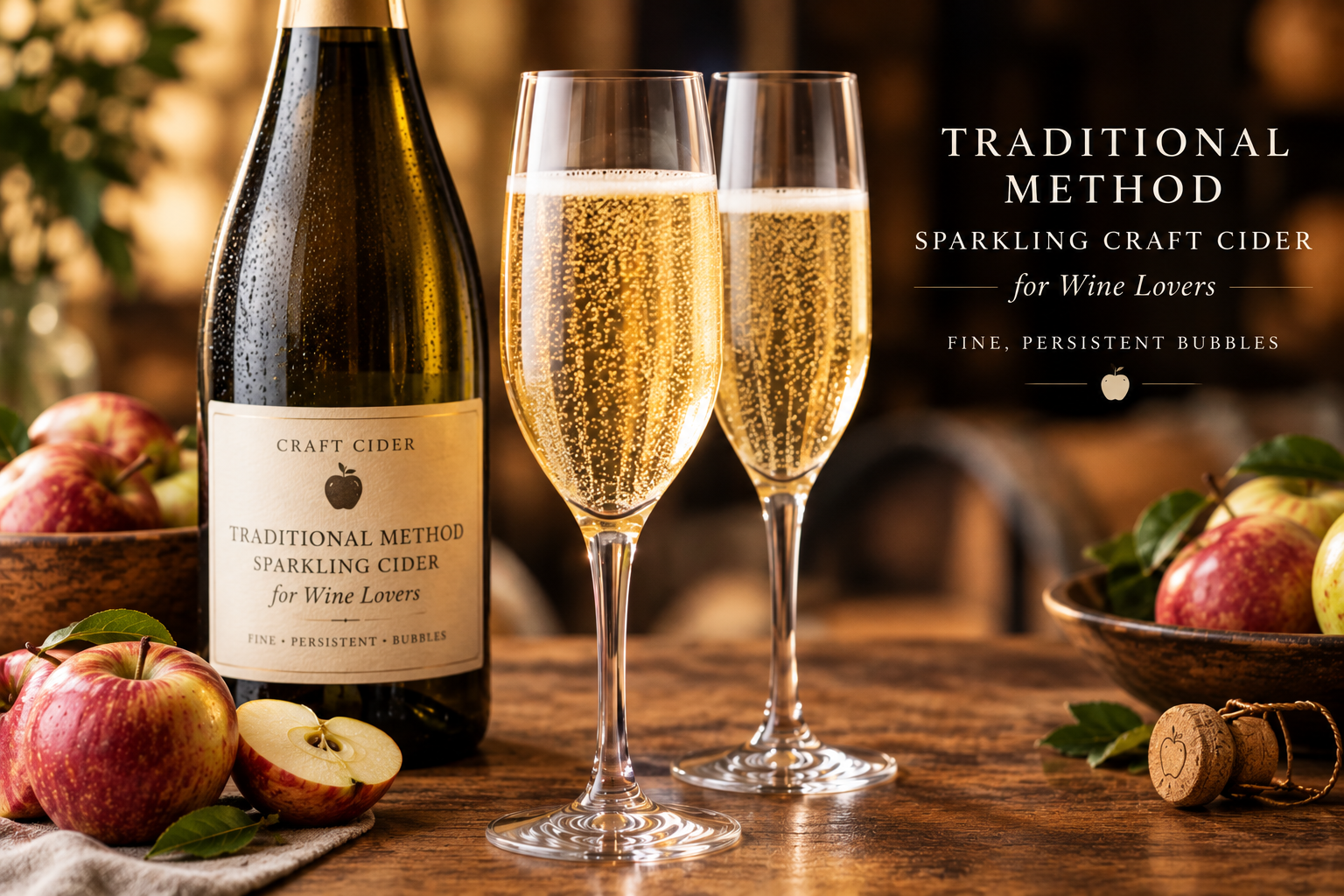
Traditional method sparkling ciders follow the Champagne process: complete primary fermentation, then a second fermentation in the bottle with added yeast and sugar, followed by aging on lees. This creates fine, persistent bubbles and adds brioche and toast notes [2].
Still ciders exist too, though they're less common. These drink more like white wine, allowing fruit character and structure to take center stage without carbonation's distraction.
Mapping Wine Styles to Cider: Your Tasting Guide
Your wine knowledge becomes a cider roadmap.
If You Love Sauvignon Blanc
Look for: Dry, high-acid ciders made from sharp apple varieties.
These ciders share Sauvignon Blanc's nerve—bright, zesty, almost electric on the palate. They finish bone-dry with citrus and green apple notes. Many American craft ciders using heirloom sharp apples land in this territory.
Food pairing: fresh goat cheese, raw oysters, grilled vegetables, anything you'd pour Sauvignon Blanc with.
Serving temperature: well-chilled, around 40-45°F.
If You Love Oaked Chardonnay
Look for: Barrel-aged ciders or those with malolactic fermentation.
The oak contributes vanilla and toast notes while softening acidity. Malolactic conversion adds that creamy, buttery quality Chardonnay lovers recognize. These ciders feel richer and rounder than their unoaked counterparts.
Food pairing: roasted chicken, buttered lobster, mushroom dishes, soft ripened cheeses.
Serving temperature: slightly less chilled, around 50-55°F, so the oak complexity can emerge.
If You Love Pinot Noir
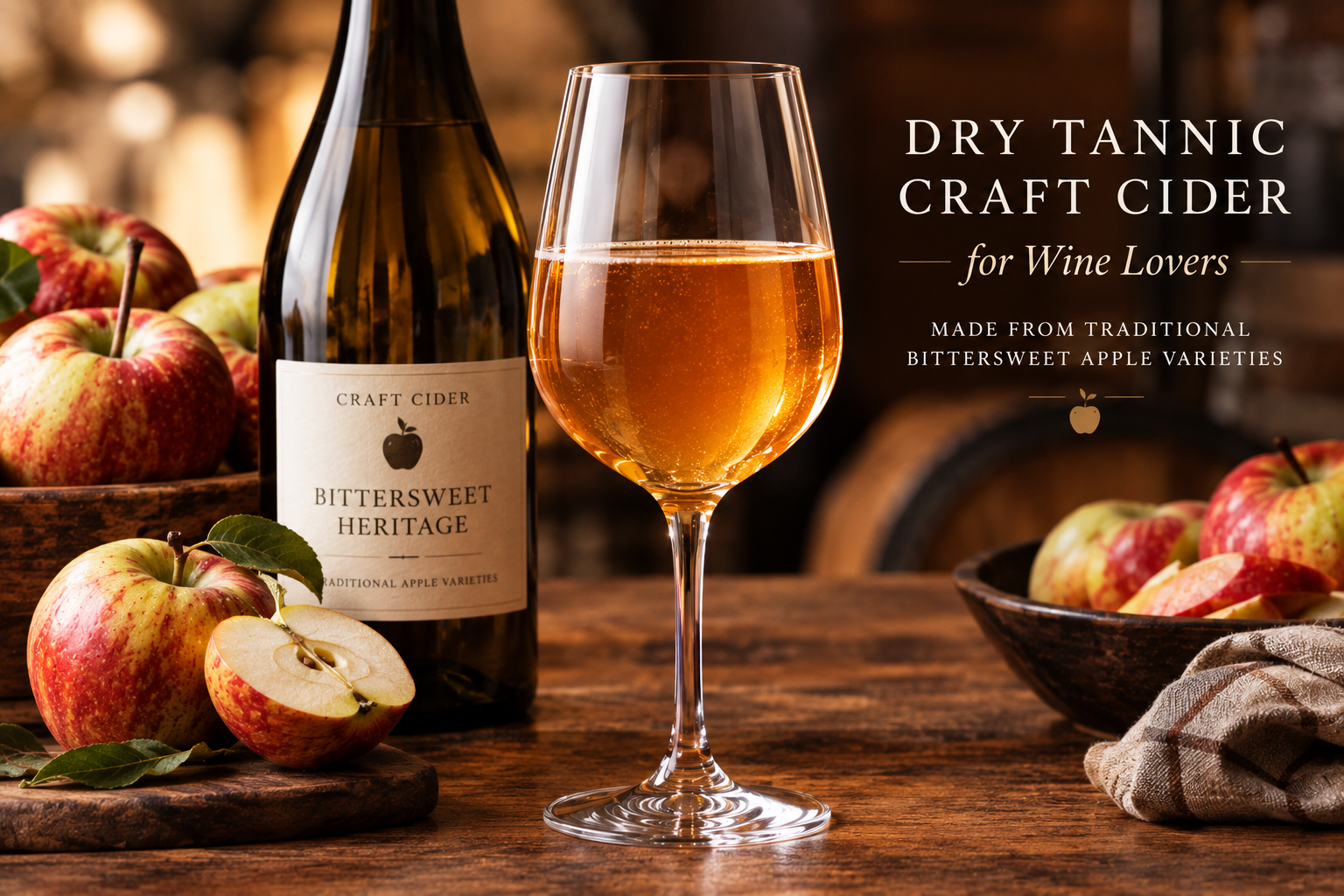
Look for: Tannic ciders made from bittersweet apple varieties.
This is the red wine lover's entry point. Bittersweet apples (common in traditional French and English ciders) bring earthy, slightly bitter tannins without harshness. The body feels medium—lighter than Cabernet but substantial enough to satisfy.
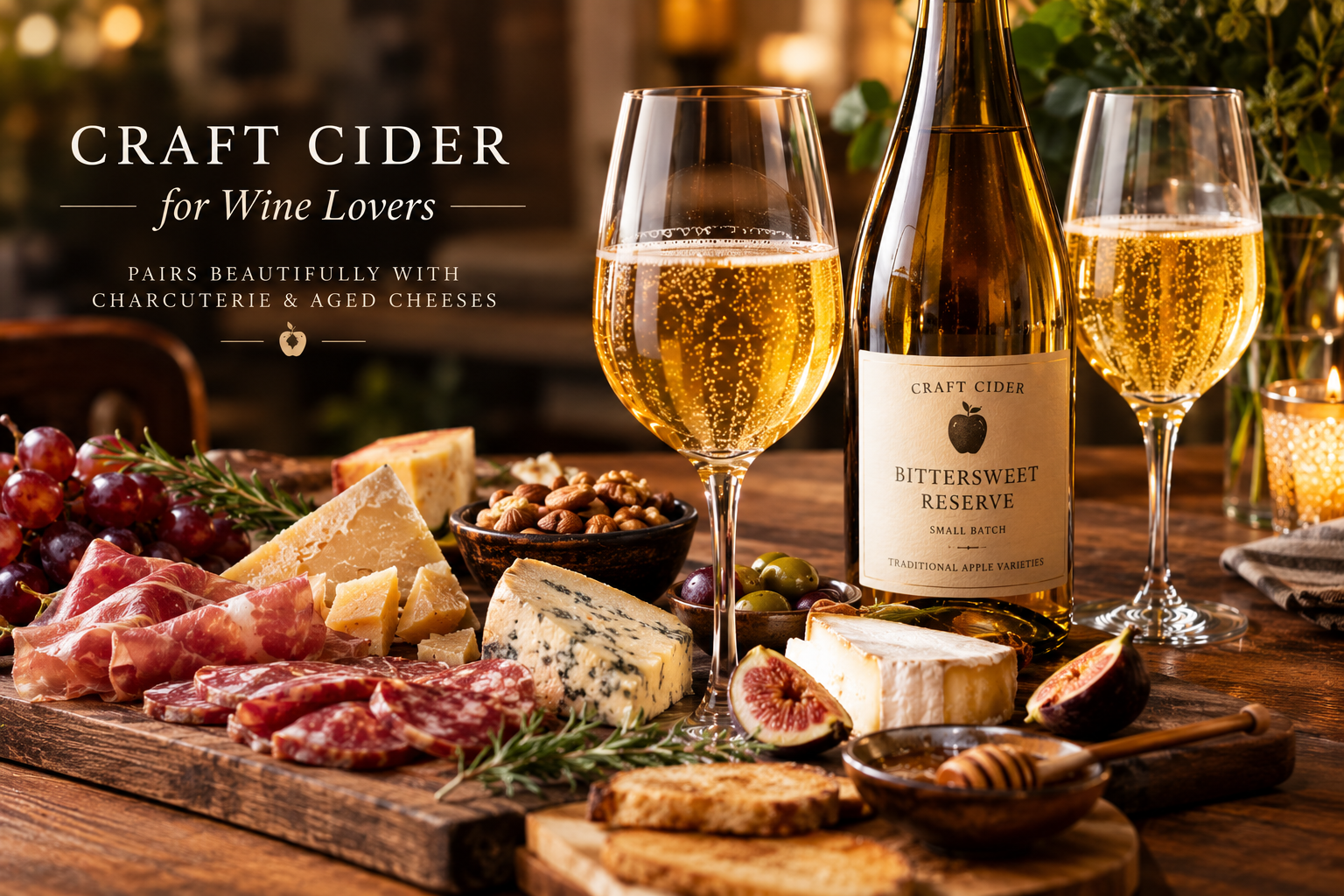
Food pairing: roasted pork, duck, aged hard cheeses, charcuterie boards.
Serving temperature: cellar temperature, around 55-60°F. Warming reveals complexity.
If You Love Champagne
Look for: Traditional method sparkling ciders.
True méthode traditionnelle ciders undergo secondary fermentation in the bottle, then aging on lees (spent yeast). This creates fine, persistent bubbles and adds brioche, biscuit, and toast notes—exactly what you taste in quality Champagne [2].
These ciders represent the high end of craft production. They require patience and technique, reflected in their price points and complexity.
Food pairing: anything you'd serve with Champagne—fried foods, shellfish, caviar, salty snacks.
Serving temperature: cold, around 38-42°F.
If You Love Dry Rosé
Look for: Red-fleshed apple ciders or blends with berry fruit.
Some apple varieties have naturally pink or red flesh, creating ciders with beautiful rose hues and subtle berry-like notes alongside apple character. Others blend apple cider with cherry, cranberry, or other fruits for similar effect.
These land somewhere between refreshing and contemplative—perfect for warm weather sipping.
Food pairing: Mediterranean mezze, grilled salmon, light salads.
Serving temperature: well-chilled, around 42-45°F.
If You Love Sherry or Oxidative Wines
Look for: Wild fermented or intentionally oxidized ciders.
Some producers embrace controlled oxidation, creating ciders with nutty, savory, almost umami-like qualities. These are challenging and rewarding—not for beginners, but fascinating for adventurous palates.
Food pairing: aged cheeses, cured meats, roasted nuts, tapas-style bites.
Serving temperature: cellar temperature to slightly cool, around 55-60°F.
Beyond Grape Wine: The Apple's Unique Gifts
While cider shares plenty with wine, it offers flavors you simply can't get from grapes.
Orchard character is the obvious one. Cider can taste like biting into a fresh apple, or it can evoke memories of autumn orchards, dried fruit, or baked apple desserts. These flavors exist on a spectrum depending on apple variety and production choices.
Farmhouse funk appears in some wild-fermented ciders. Natural yeasts create earthy, slightly funky notes that fans of natural wine will immediately recognize and appreciate.
Honey and floral notes emerge in ciders made from certain aromatic apple varieties. These qualities feel wine-adjacent but distinctly cider.
Gentle bitterness from tannins registers differently than in red wine. It's softer, more integrated, often described as reminiscent of tea or almond skin rather than grape tannin's astringency.
Cider and Food: Pairing Principles for Wine Lovers
Your wine pairing instincts translate directly.
Match weight with weight. Light, dry ciders pair with delicate dishes. Fuller-bodied, tannic ciders stand up to richer fare.
Balance acidity. High-acid ciders cut through fatty or fried foods. Lower-acid styles complement dishes that don't need that cutting edge.
Consider sweetness. Off-dry ciders handle spicy food beautifully, the way off-dry Riesling tames chili heat. Dry ciders work better with savory preparations.
Think regionally. English tannic ciders love pork dishes—a pairing centuries in the making. French ciders from Normandy suit creamy, buttery French cuisine. American craft ciders often shine with New American cooking.
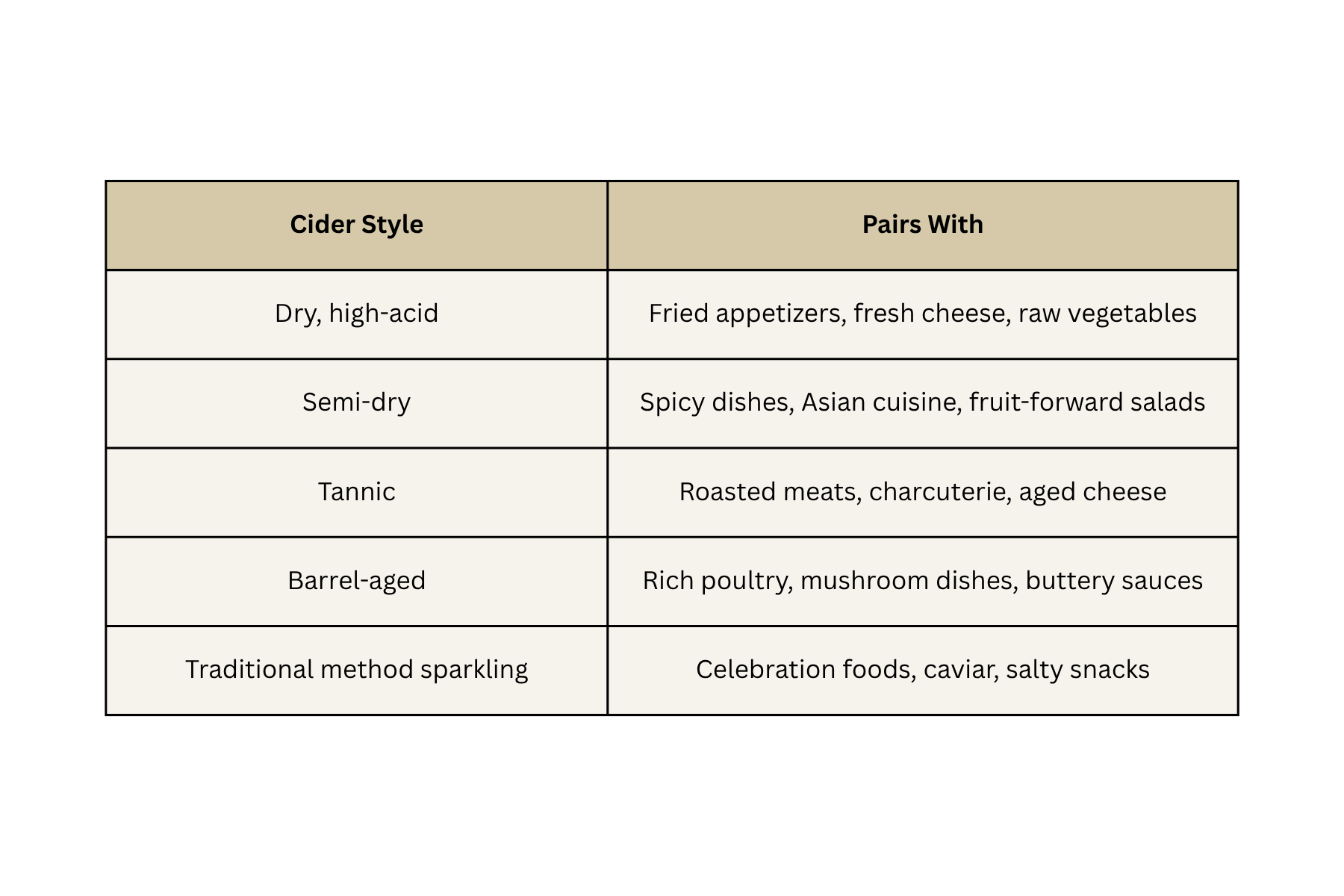
A Quick Pairing Cheat Sheet
Serving Cider Right: Details Matter
Temperature affects cider as much as wine.
Temperature: Too cold mutes complexity. Too warm loses freshness. Lighter ciders drink colder (38-45°F), while fuller or tannic versions benefit from warming slightly (50-60°F).
Glassware: Skip the pint glass. A wine glass—especially a medium-sized stemmed glass—concentrates aromas and elevates the tasting experience. You wouldn't drink fine wine from a beer mug. Give cider the same respect.
Pouring: Pour gently for sparkling styles, preserving carbonation. Aggressive pouring creates excessive foam and releases bubbles prematurely.
Building Your Cider Vocabulary
You already speak wine. Here's how to expand into cider:
Bittersweet: Apple varieties high in tannin but low in acid. The backbone of traditional English and French ciders.
Bittersharp: Apple varieties high in both tannin and acid. Creates structured, complex ciders.
Sharp: High-acid, low-tannin apples. Contributes brightness and freshness.
Sweet: Low-acid, low-tannin apples. Adds body and fruit character without structure.
Perry: Pear cider. Similar principles apply, though pear tannins behave differently than apple tannins.
Ice cider: Concentrated cider made from frozen apples or frozen juice. Think ice wine's apple equivalent—intensely sweet, complex, dessert-worthy.
Keeved cider: A traditional French technique producing naturally sweet, low-alcohol ciders through arrested fermentation. The wine parallel? Think Moscato d'Asti—gentle sweetness, lower ABV, refreshing rather than heavy. Perfect for wine lovers who appreciate dessert styles without cloying richness.
Starting Your Cider Journey
If you're new to serious cider, start with styles that mirror your wine preferences. Like dry whites? Begin with bone-dry, high-acid options. Prefer fuller reds? Jump straight to tannic, bittersweet-based ciders.
Seek out small producers. Just as industrial wine differs fundamentally from artisan bottles, mass-market cider differs from craft production. Small cidermakers select specific apple varieties, control fermentation carefully, and often grow or source fruit from single orchards. This attention shows in the glass.
Taste thoughtfully. Use the same approach you bring to wine—look at color and clarity, note aromas, assess structure and finish. Cider rewards this attention.
Ask questions. Good retailers and venues curate their cider selections the way they curate wine. They want to share recommendations and find bottles that match your palate.
Ready to explore beyond the grape? Come hang out at The Pip. We've curated a selection of wines from small producers—and we're always happy to point curious palates toward something new. Whether you're a Chardonnay devotee or a sparkling wine obsessive, tell us what you love. We'll guide you from there.
Frequently Asked Questions
Is craft cider as complex as wine?
Absolutely. High-quality craft cider offers comparable complexity to wine, with distinct characteristics from apple variety, fermentation technique, and aging. Tannic ciders from bittersweet apples can be as structured as medium-bodied red wines, while traditional method sparkling ciders rival Champagne in production sophistication. The key is seeking out small producers who approach apples with winemaker-level intention rather than mass-market brands optimized for sweetness.
How long does cider last after opening?
Sparkling ciders should be consumed within one to two days of opening, just like sparkling wine—the bubbles dissipate quickly. Still ciders last three to five days refrigerated, similar to white wine. Higher-acid and higher-tannin ciders hold up slightly longer than delicate, low-acid versions. Seal bottles well and keep cold to maximize freshness.
Can I age craft cider like wine?
Some ciders age beautifully, particularly tannic versions, barrel-aged styles, and ice ciders. These can develop complexity over several years when stored properly in cool, dark conditions. However, most craft ciders are made for relatively near-term consumption—within one to two years of production. Check with producers for specific aging recommendations, as this varies widely.
What's the difference between hard cider and regular cider?
"Hard cider" simply means fermented, alcoholic cider—distinguishing it from fresh-pressed apple juice (sometimes called sweet cider or apple cider in the US). In Europe, "cider" automatically implies the alcoholic version. Craft producers often drop "hard" from their labels, following the European convention and emphasizing cider's status as a serious beverage category.
Why does some cider taste tannic like red wine?
Tannins come from specific apple varieties called bittersharps and bittersweets, traditional to English and French cidermaking. These apples aren't meant for eating—they're bred specifically for cider production, contributing structure, complexity, and grip. If your cider tastes tannic, it likely includes these heritage varieties rather than common culinary apples.
Our Commitment to Quality
The Pip Wine Bar & Shop is a hand-selected, small-producer-focused destination in Downtown Dixon. We spend considerable time tasting and evaluating what ends up on our shelves and in our pours. Our guidance comes from genuine enthusiasm for helping guests discover what they love—without pretension or pressure. When we recommend exploring beyond wine, it's because we believe curious palates deserve to discover the full range of what craft beverages offer.
Cited Works
[1] Gastronomica — "Terroir: The Taste of Place." https://gastronomica.org/2008/02/01/the-taste-of-place-terroir/
[2] Wine Folly — "How Champagne is Made: The Traditional Method." https://winefolly.com/deep-dive/how-champagne-is-made/
[3] Guild of Sommeliers — "Malolactic Fermentation." https://www.guildsomm.com/public_content/features/articles/b/guest-blogger/posts/malolactic-fermentation
[4] Long Ashton Research Station / Cider Museum — "Cider Apple Classification System." https://cidermuseum.co.uk/appletype.htm