
Port for Cheese, Chocolate, and After-Dinner Sipping: Your Guide to Effortless Pairing
That moment after dinner when the plates are cleared but nobody wants the evening to end—that's when Port shines. This fortified wine from Portugal's Douro Valley transforms a simple cheese board or piece of chocolate into something worth lingering over. And yet, Port intimidates people. Too sweet? Too strong? Too old-fashioned?
Here's the thing: Port for cheese, chocolate, and after-dinner sipping isn't complicated once you understand a few basics. The key is matching the wine's intensity to your food's intensity. Get that right, and you'll wonder why you ever saved Port only for holidays.
Let's break it down so your next after-dinner pour feels effortless—whether you're hosting friends or just treating yourself on a Tuesday.
Understanding Port Styles (Without the Lecture)
Port comes in several styles, and each brings different sweetness levels, flavor profiles, and food-matching potential. Think of it like this: the style tells you how bold to go with your pairing.
Ruby Port is the entry point—young, fruity, and vibrant with fresh berry flavors. It's aged briefly in large tanks to preserve that fruit-forward character [1]. Ruby works beautifully when you want something approachable that won't overpower lighter desserts.
Tawny Port spends years aging in smaller wooden barrels, developing nutty, caramel, and dried fruit notes [1]. The longer it ages (10-year, 20-year, 40-year), the more complex and mellow it becomes. Tawny is incredibly food-friendly because those oxidative flavors play well with nuts, caramel desserts, and aged cheeses.
Late Bottled Vintage (LBV) sits between Ruby and Vintage. It ages four to six years in barrel before bottling, giving you more depth than basic Ruby without the price tag of Vintage Port [2].
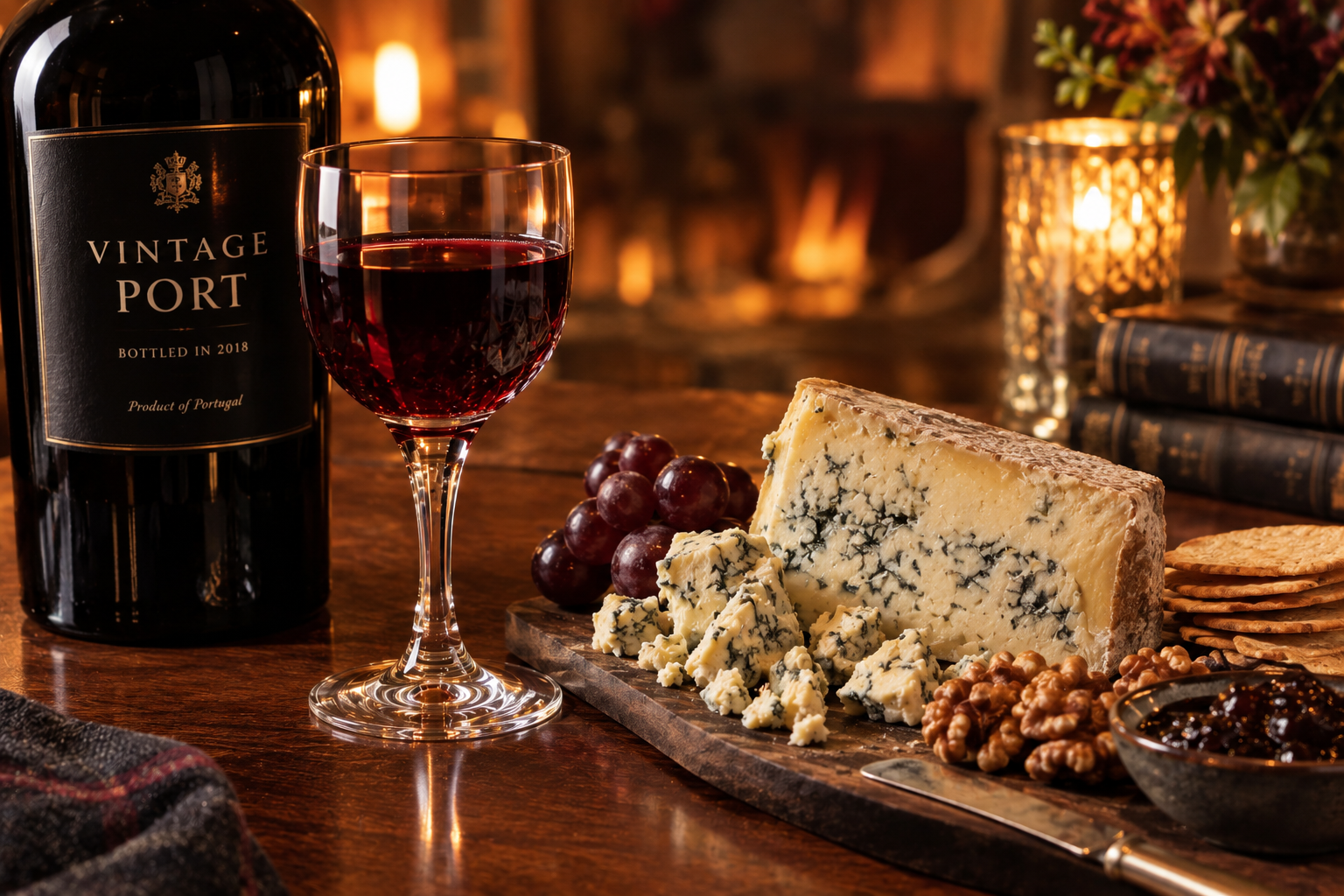
Vintage Port represents the pinnacle—made only in exceptional years from a single harvest, aged extensively, and capable of developing for decades in the bottle [2]. It's rich, complex, and demands food that can stand up to its intensity.
White Port often gets overlooked, but it shouldn't. Made from white grapes, it ranges from dry to sweet and works surprisingly well as an aperitif or mixed into cocktails [1].
The Port and Food Intensity Matrix
Here's where pairing gets practical. Match the wine's weight to the food's weight, and you'll rarely go wrong.
Light-Intensity Pairings
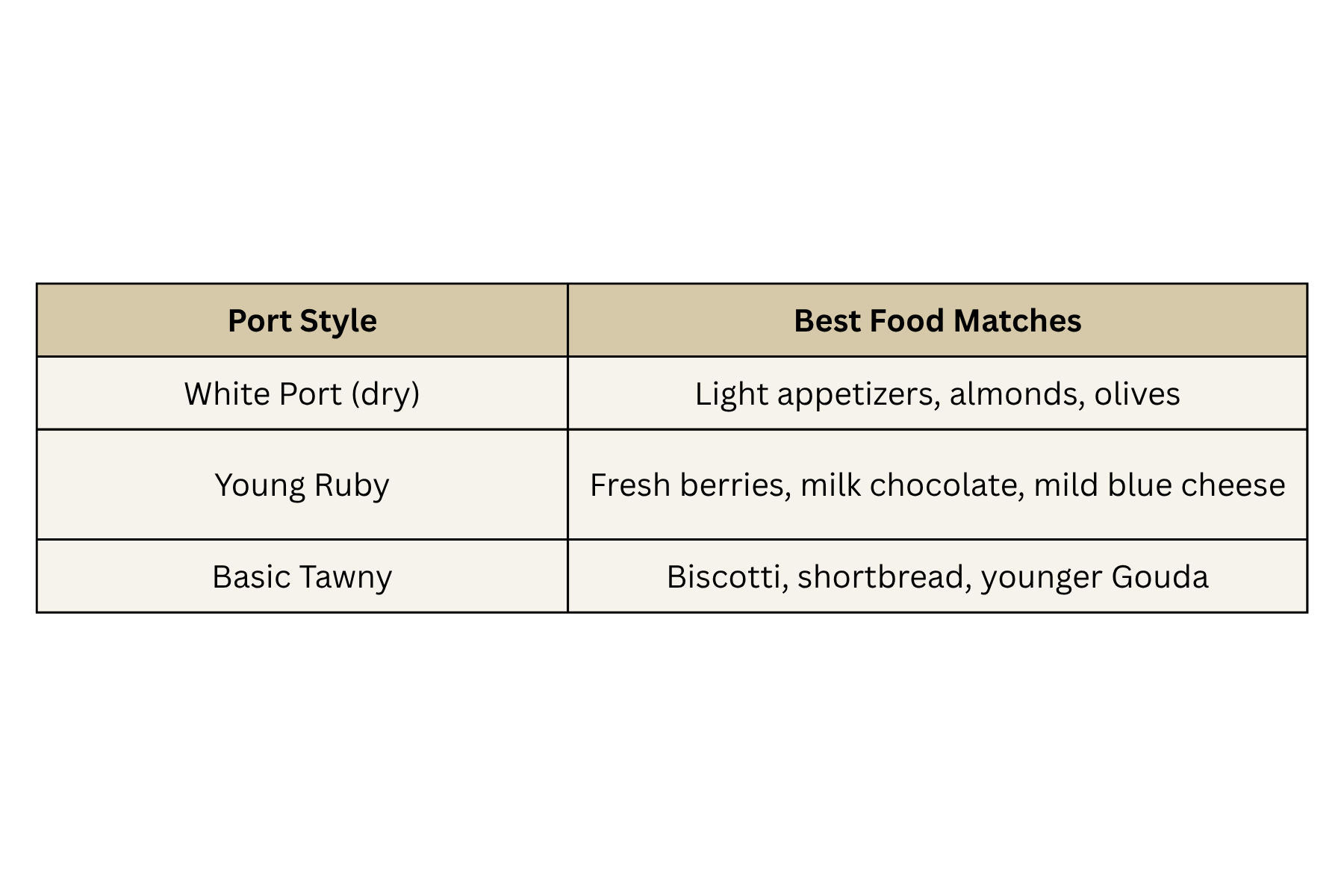
Medium-Intensity Pairings
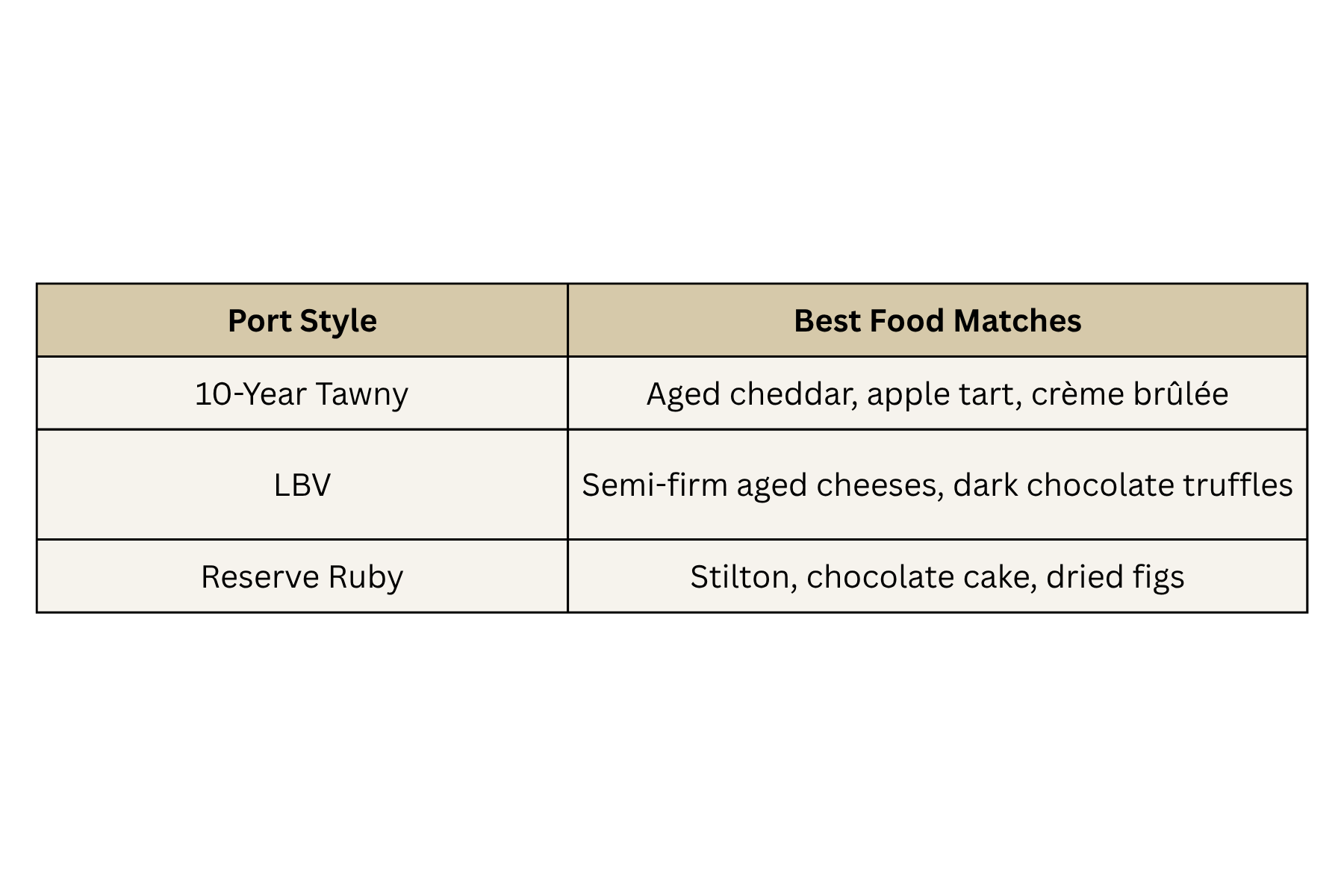
Full-Intensity Pairings
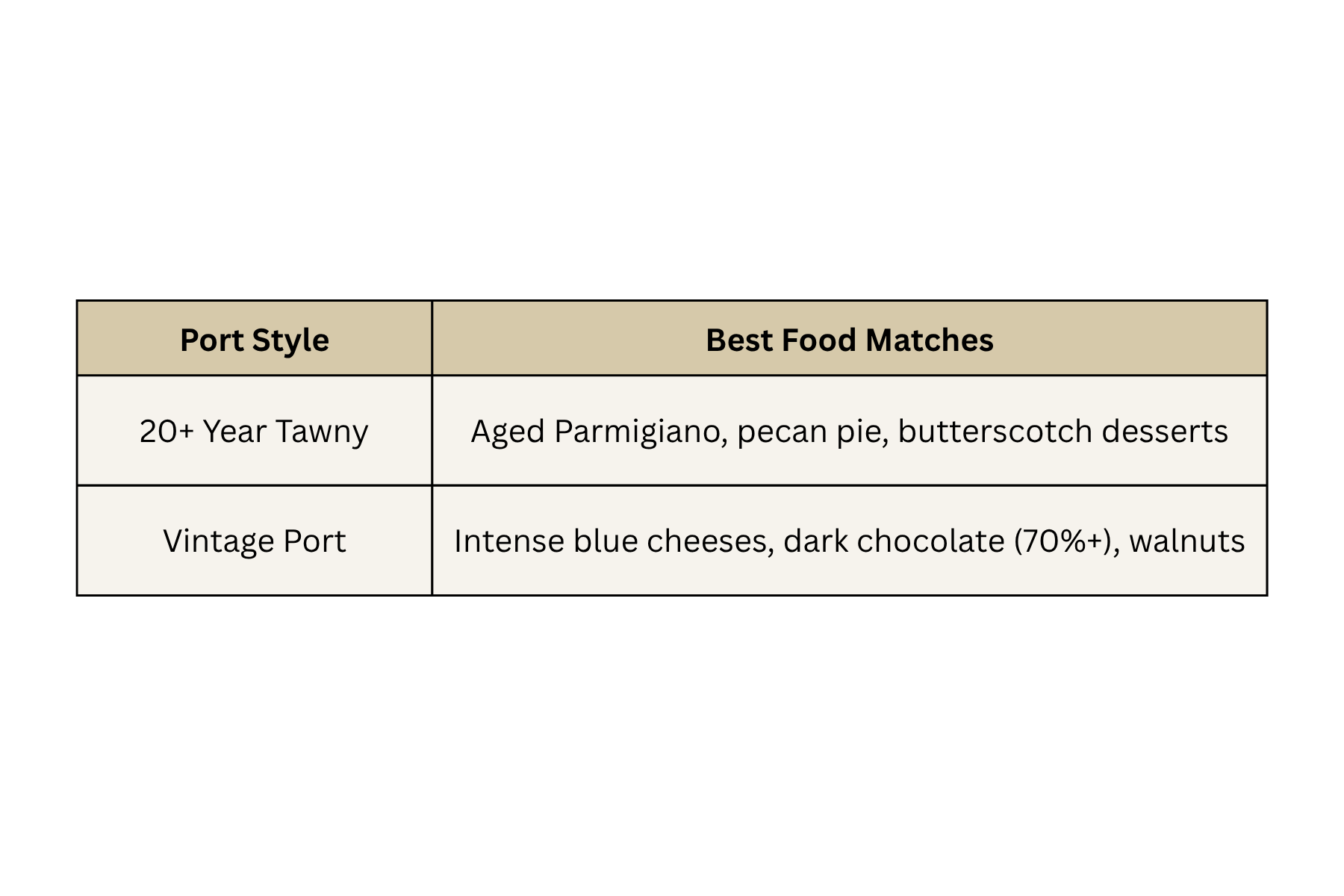
The principle is simple: delicate foods need lighter Port styles; bold foods need Port with enough structure to hold their own [3].
Port and Cheese: A Perfect Match
Cheese and Port belong together. The wine's natural sweetness balances salty, savory, or pungent cheese flavors—it's one of the most reliable pairings in the wine world.
Blue Cheese
The classic pairing. Stilton and Vintage Port is legendary for good reason [3]. The wine's richness matches the cheese's intensity while the sweetness counters the salt. But you don't need Stilton specifically—Roquefort, Gorgonzola, or any quality blue works beautifully.
Try this: A wedge of blue cheese drizzled with honey alongside a glass of Ruby Port. The honey bridges the flavors together.
Aged Hard Cheeses
Tawny Port's nutty, caramelized notes complement aged cheeses remarkably well. Think aged Gouda, Manchego, or Parmigiano-Reggiano. The wine's oxidative character echoes the toasty, crystalline qualities that develop in cheese as it ages.
Try this: 20-year Tawny with aged Gouda and a few walnut halves.
Soft and Creamy Cheeses
These require a lighter touch. Triple-cream cheeses can overwhelm delicate Port, but a basic Tawny or lighter Ruby works when paired with something like Brie with a drizzle of fig jam.
Building a Port-Friendly Cheese Board
For your next gathering, include:
One blue cheese (the anchor pairing)
One aged hard cheese (for Tawny)
Accompaniments: walnuts, dried figs, quince paste, dark honey
Sliced apples or pears (these refresh the palate between bites)
Keep portions small. This is sipping and nibbling territory, not a meal.
Port and Chocolate: Getting It Right
Chocolate and Port seems obvious, but this pairing has pitfalls. Get the chocolate intensity wrong, and either the wine or the dessert disappears.
The Sweetness Mistake Everyone Makes
Here's the rule: the wine should be at least as sweet as the food [3]. Pair super-sweet milk chocolate with a drier Port style, and the wine tastes thin and bitter. The chocolate's sugar overwhelms whatever fruit or complexity the Port offers.
This is why milk chocolate works better with fruitier Ruby styles (which feel sweeter on the palate), while dark chocolate needs the concentration of LBV or Vintage Port to stand up.
Chocolate Intensity Guide
Milk chocolate (under 50% cacao): Young Ruby Port. The wine's fresh berry notes complement milk chocolate's creaminess without fighting for attention.
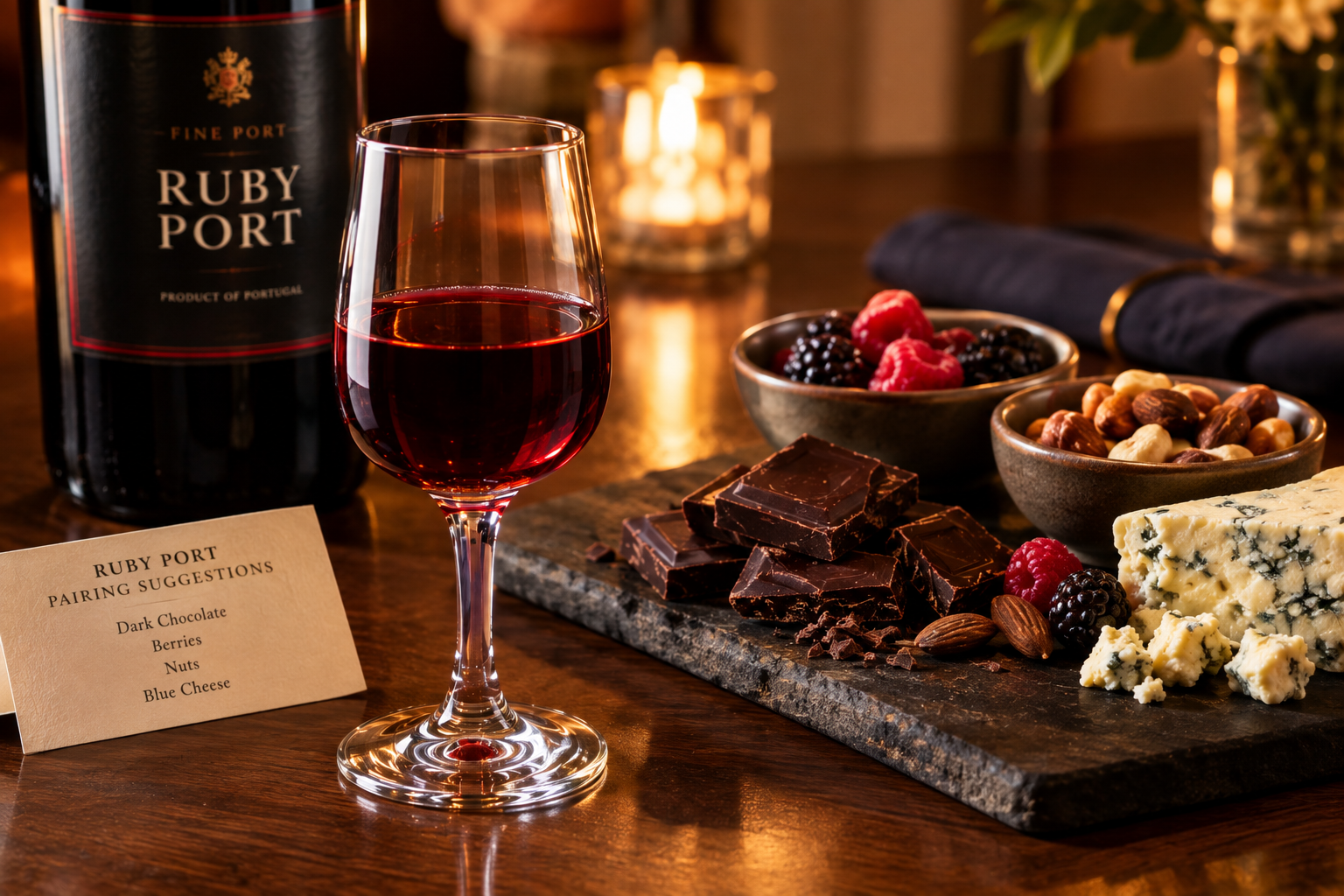
Semi-sweet chocolate (50-65% cacao): LBV or Reserve Ruby. You need more structure to match the chocolate's increasing intensity.
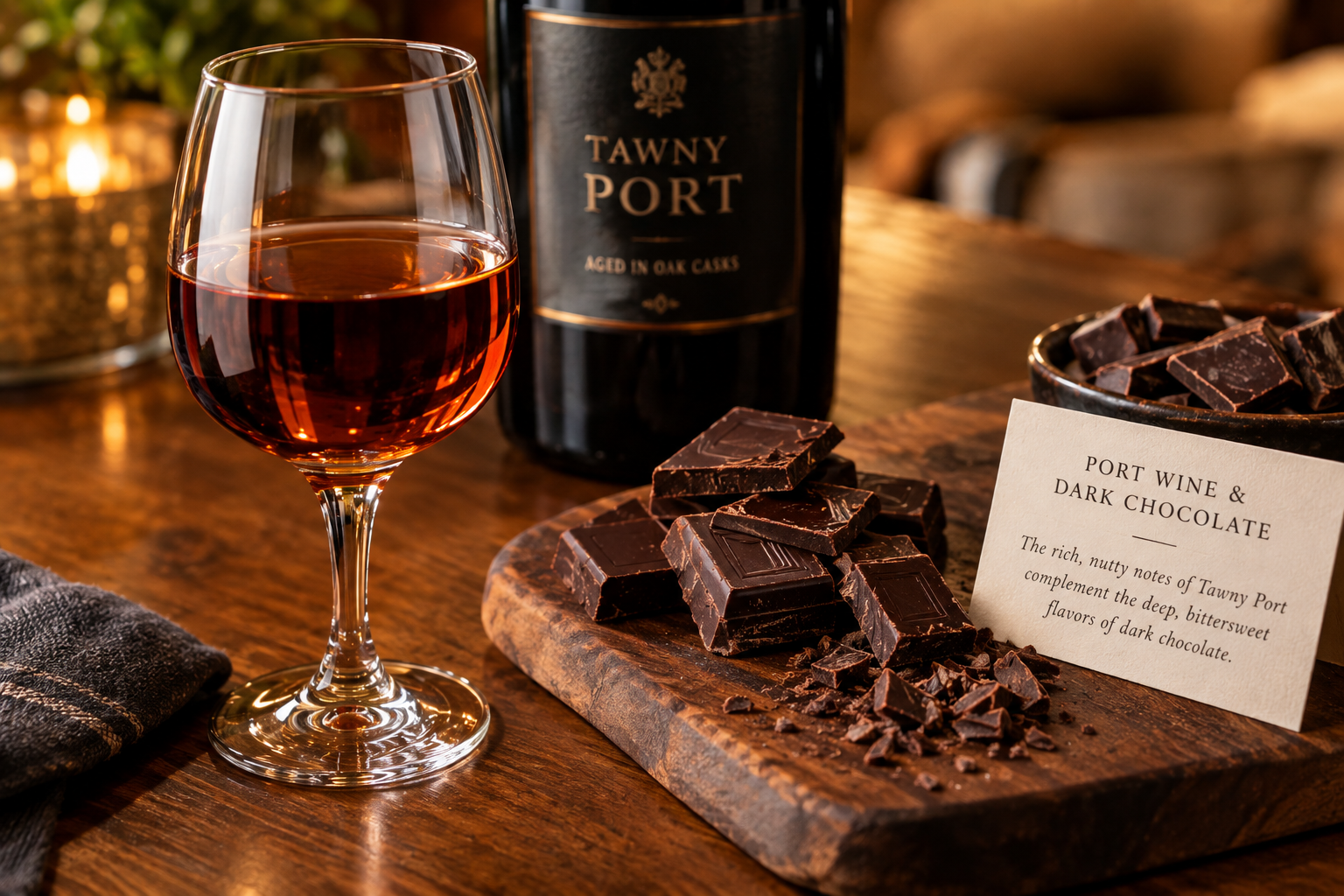
Dark chocolate (65-80% cacao): Vintage Port or 20-year Tawny. The wine's depth and concentrated flavors can handle dark chocolate's bitterness and complexity.
Very dark chocolate (80%+ cacao): Proceed carefully. At this intensity, the chocolate becomes more bitter than sweet. Aged Tawny's nutty character often works better than even the richest Vintage Port.
Beyond Plain Chocolate
Chocolate desserts follow similar logic, with adjustments:
Chocolate cake or brownies: LBV or Ruby—the wine cuts through richness
Chocolate mousse: 10-year Tawny—lighter texture needs lighter Port
Chocolate with nuts: Tawny is your friend (the nut flavors echo)
Chocolate with fruit: Ruby styles emphasize the fruit notes
After-Dinner Sipping: Port on Its Own
Sometimes the best pairing is no pairing at all. Port rewards contemplation.
Serving Temperature Matters
This detail makes a noticeable difference:
Ruby and LBV: Slightly below room temperature (around 60-65°F). Too warm and they taste heavy; too cold and the fruit disappears.
Tawny: Can be served slightly cooler than Ruby, especially aged Tawny styles. Some people even lightly chill 10-year Tawny in summer.
Vintage Port: Room temperature, but not warm-room temperature. If your house runs warm, a few minutes in the fridge takes the edge off.
White Port: Chilled, like white wine. It's refreshing that way.
Pour Size
Port is strong—typically 19-22% alcohol versus 12-14% for table wine. A standard pour is about 3 ounces, roughly half a regular wine glass [4]. Small pours let you actually taste what you're drinking without overwhelming your palate (or your head).
Glassware
You don't need special Port glasses, but smaller glasses work better than giant fishbowl wine glasses. The smaller opening concentrates aromatics, and the modest size reminds everyone that Port is meant for sipping, not gulping.
Hosting an After-Dinner Port Moment
You don't need a formal occasion. Here's how to make it happen naturally.
Keep It Simple
Set out:
One bottle of Port (Tawny is the most versatile starting point)
A small cheese selection (one blue, one aged)
Dark chocolate (broken into pieces, not whole bars)
A few nuts or dried fruit
That's it. No ceremony required.
The Small-Pour Approach
If you're offering Port to guests who've never tried it, pour small and explain simply:
"This is Tawny Port—aged about 10 years, so you'll taste some nutty, caramel-like flavors. It's strong, so sip it slowly. Try it with that cheese."
That guidance removes intimidation and gives people permission to actually taste what they're drinking.
Managing a Bottle Over Time
Once opened, Port lasts longer than regular wine:
Ruby and LBV: A week or two in the refrigerator
Tawny: Remarkably stable—a few weeks to a month refrigerated
Vintage Port: Drink within a few days; it's the most delicate once opened
This staying power makes Port practical for home entertaining. You can open a bottle for two guests and finish it the following weekend.
Where Port Fits at The Pip
At The Pip, we're always looking for curated wines that surprise people—bottles you won't find lining grocery store shelves. Port fits that philosophy. It's a small-producer category filled with family estates doing things the long way, and those are exactly the kinds of wines we get excited about.
Whether you're exploring fortified wines for the first time or you already know you love a good Tawny, swing by and ask us what we're pouring. We'll point you toward something interesting and help you figure out what to pair it with from our tapas-style menu.
After all, that's what we're here for: making "good taste" feel easy.
Come Hang Out
Curious about Port but not sure where to start? Stop by The Pip and let us pour you something. We'll help you find a style you love—no wine expertise required. Check out our current menu and plan your visit. Explore What We're Pouring →
Frequently Asked Questions
What's the best Port for beginners?
Start with a 10-year Tawny. It's approachable, food-friendly, and shows off Port's nutty, caramel character without being too intense. Tawny also keeps well after opening, so you're not racing to finish the bottle. Pair it with aged cheese or dark chocolate to see why people love this wine.
Should Port be served cold or at room temperature?
It depends on the style. Ruby and LBV drink best slightly below room temperature—around 60-65°F. Tawny can be served a touch cooler, and white Port should be chilled like white wine. Avoid serving any Port too warm, which makes the alcohol feel harsh.
How long does Port last after opening?
Longer than you'd expect. Tawny Port stays good for weeks to a month in the refrigerator. Ruby and LBV last a week or two. Vintage Port is the exception—drink it within a few days once opened, as it's more delicate. The fortification that makes Port strong also helps preserve it.
Why does Port pair so well with blue cheese?
The combination works because Port's sweetness balances blue cheese's salt and pungent intensity. It's a contrast pairing—opposites that complement rather than mirror each other. The wine's richness also matches the cheese's bold flavor, so neither overwhelms the other [3].
Is Port too sweet for people who don't like sweet wines?
Not necessarily. Tawny Port, especially aged versions, tastes more nutty and complex than overtly sweet. The sweetness is there, but it's balanced by acidity and those developed, caramelized flavors. If you've only had cheap, syrupy dessert wines, quality Port may surprise you.
About The Pip
The Pip Wine Bar & Shop is a curated destination in Downtown Dixon, California, where discovering your next favorite wine should feel easy—not intimidating. We focus on hand-selected bottles from small producers, craft cocktails, and a tapas-style menu designed for sharing. Whether you're meeting friends halfway between Sacramento and the Bay Area or looking for your new neighborhood spot, we're here to help you sip, snack, and slow down. Come hang out with us.
Works Cited
[1] Wine Folly — "Port Wine Guide."
https://winefolly.com/deep-dive/port-wine-guide/
[2] Taylor's Port — "Understanding Port Wine Styles."
https://www.taylor.pt/en/what-is-port-wine/port-wine-styles
[3] Wine & Spirit Education Trust — "Food and Wine Pairing Principles."
https://www.wsetglobal.com/knowledge-centre/
[4] VinePair — "How Much Wine to Pour: A Visual Guide."
https://vinepair.com/articles/how-much-wine-to-pour/