
Orange Wine Without the Hype: Taste, Texture, and Food Pairings
I remember the first time I poured a glass of orange wine for someone who'd never tried it. She looked at the amber liquid, then back at me, and asked if we'd run out of white wine and just mixed in some red. Fair question—orange wine looks like nothing else on the shelf.
That glass was a Radikon Slatnik, and watching her expression shift from confusion to curiosity to genuine delight reminded me why I love introducing people to this style. Orange wine isn't trying to replace your favorite white or red. It's something else entirely—and once it clicks, it opens up a whole new way of thinking about wine.
Here's what you actually need to know, without the sommelier gatekeeping.
What Makes Orange Wine Different
Orange wine isn't made from oranges. It's white wine made the way you'd typically make red wine.
When winemakers produce standard white wine, they press the grapes and remove the skins immediately. The juice ferments alone, giving you that familiar pale, crisp character.
Orange wine takes the opposite approach. The winemaker leaves white grape skins in contact with the juice during fermentation—sometimes for a few days, sometimes for six months or longer. That extended skin contact extracts color, tannins, and phenolic compounds that typical white wines never develop.
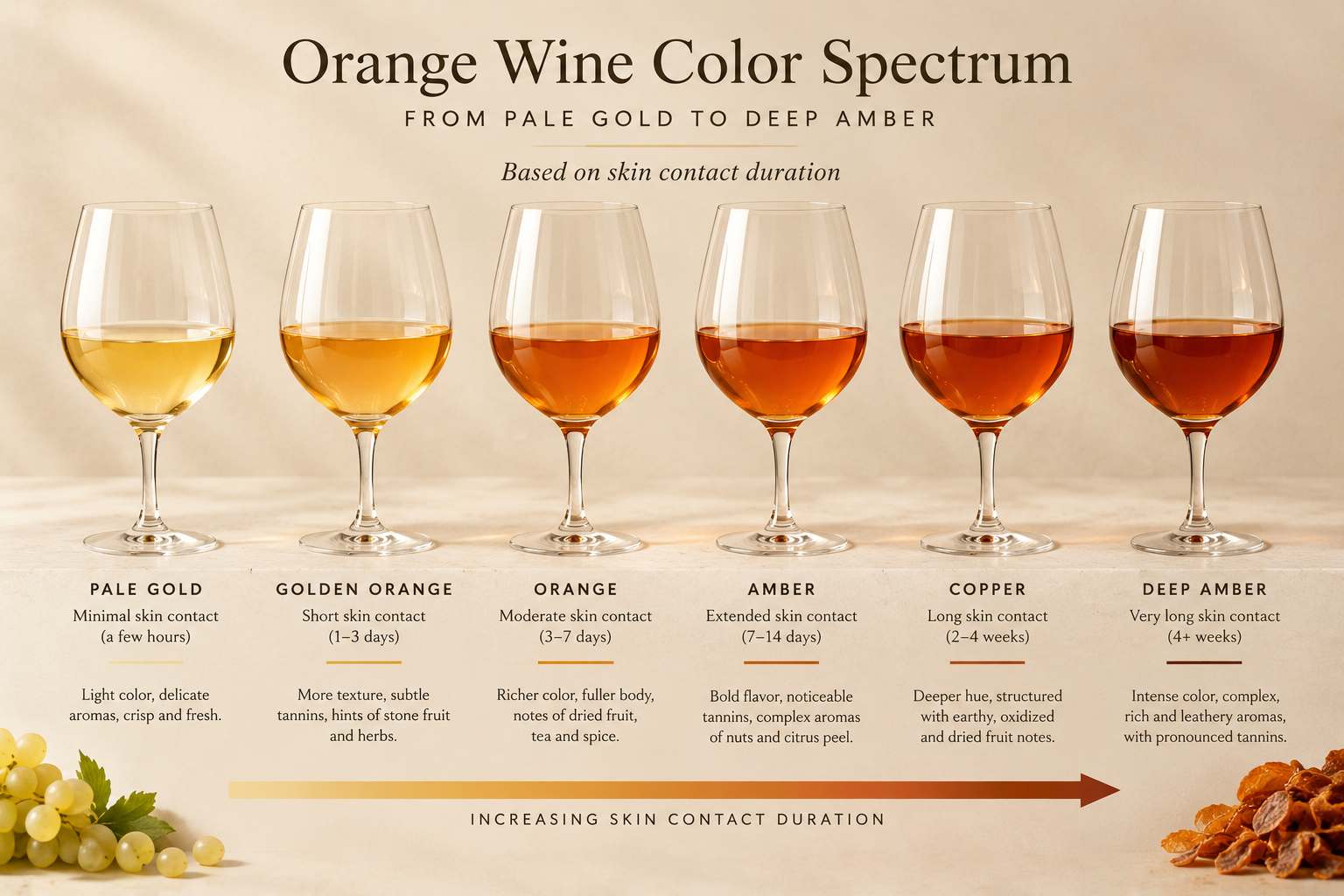
The result sits somewhere between white and red wine in both appearance and structure. Colors range from pale gold to deep copper. Textures range from slightly grippy to genuinely tannic—that pleasant drying sensation you get from strong tea or a bold red.
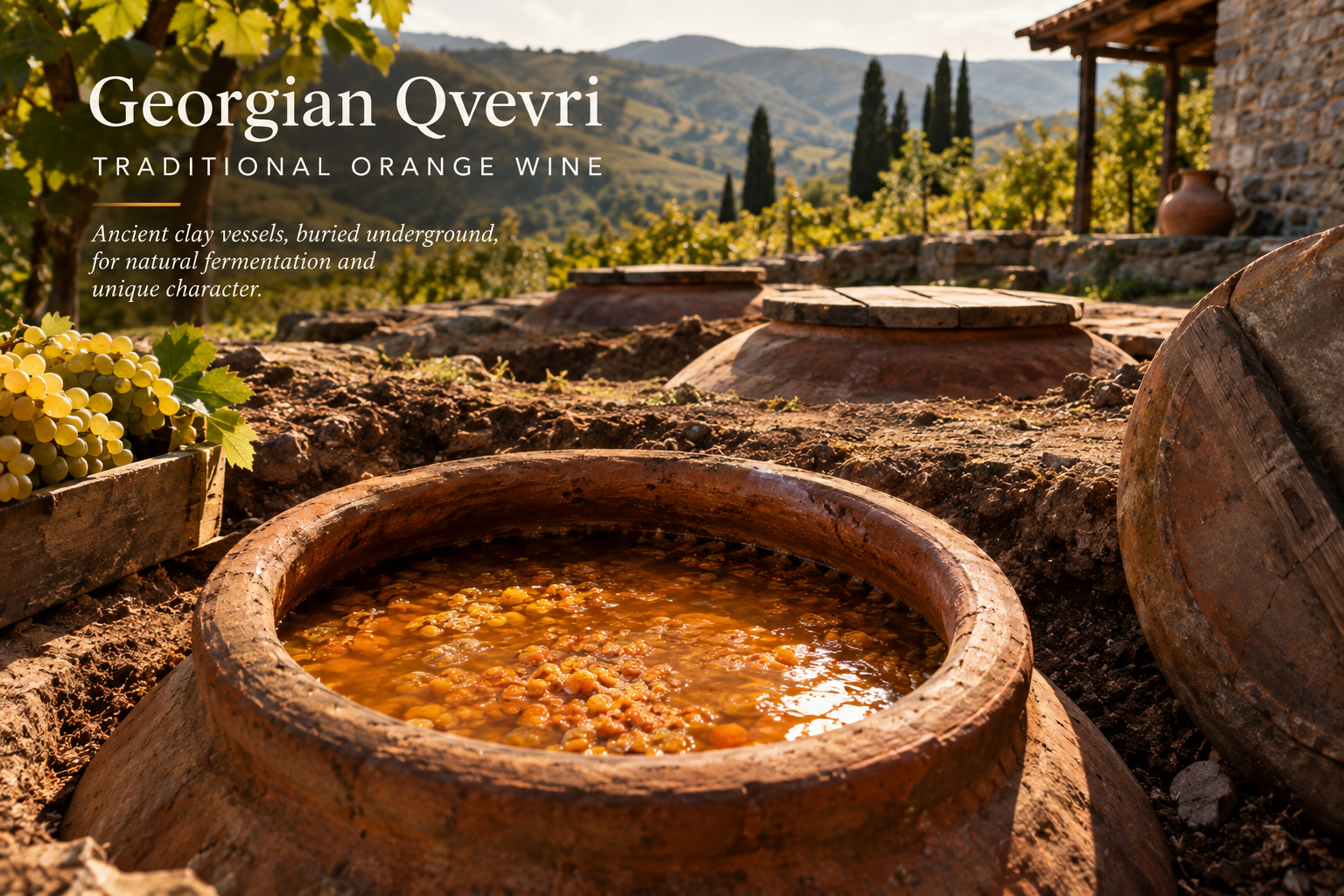
Winemakers in the Republic of Georgia have been making wine this way for roughly 8,000 years using clay vessels called qvevri, buried underground. What feels trendy to us is actually ancient. The modern revival started in the 1990s when Italian producers Josko Gravner and Stanko Radikon began experimenting with extended maceration in northeastern Italy's Friuli-Venezia Giulia region—and the wine world took notice.
You'll also hear orange wine called "skin-contact white" or "amber wine," particularly when discussing Georgian bottles, where the amber terminology connects to millennia of tradition.
The Skin-Contact Spectrum
Not all orange wines taste the same. The range runs wide, and knowing where a bottle falls helps you pick something you'll actually enjoy.
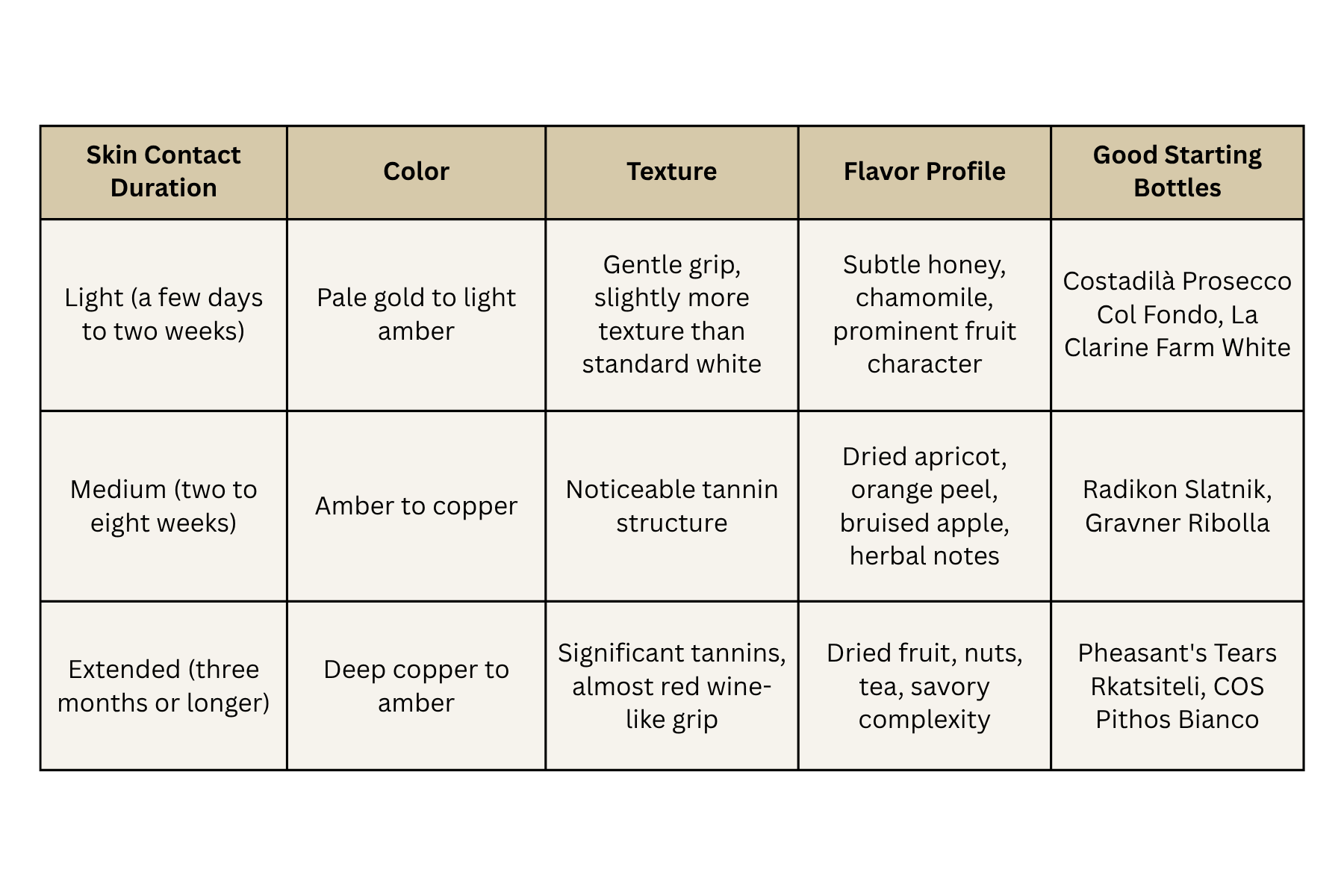
Maceration time isn't the only factor. Grape variety, fermentation temperature, whether stems are included, and aging vessel all shape the final wine. But skin contact duration gives you the clearest shorthand for intensity.
What to Expect in the Glass
If you approach orange wine expecting white wine behavior, you'll be confused. Here's what's actually happening:
Texture comes first. The defining characteristic is grip—that drying sensation on your palate similar to strong tea. This tannin structure is exactly what makes orange wine so food-friendly. It can stand up to dishes that would flatten a delicate white.
Aromas get complex. Expect dried stone fruits, citrus peel, chamomile, honey, nuts, and sometimes earthy or savory notes that surprise you. The best orange wines balance these elements. Ones that miss the mark can tip into oxidized or overly rustic territory.
Acidity holds everything together. Good orange wine keeps bright acidity underneath all that texture. This prevents heaviness and keeps the wine fresh and lively.
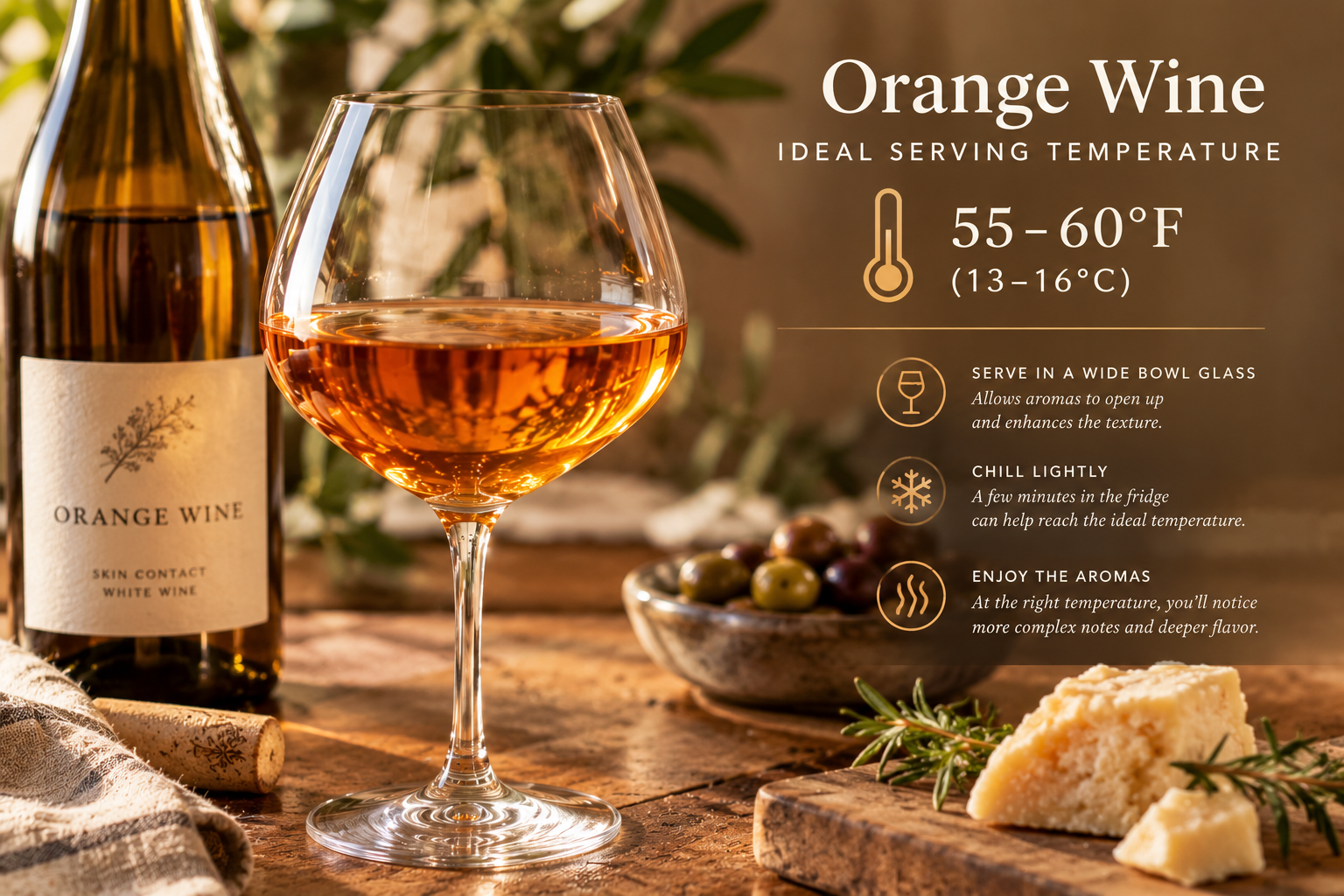
Temperature matters more than you'd think. Serve it around 55-60°F—slightly cooler than red wine, warmer than typical white. Too cold and the tannins turn harsh. Too warm and you lose freshness.
Serving It Right
Glassware: Skip the narrow white wine glass. A wider bowl—like what you'd use for red wine—gives aromatic compounds room to open up and softens any tannic edge. Nothing fancy required.
Decanting: Many orange wines benefit from 30 minutes of air, especially bottles with extended skin contact. This mellows tannins and lets layered aromatics unfold gradually.
After opening: Orange wines hold up better than delicate whites once you've pulled the cork. The tannins and phenolic compounds from skin contact act as natural preservatives. Most stay vibrant for three to five days in the refrigerator. Bolder expressions may last even longer.
Food Pairings: Where Orange Wine Earns Its Place
This is where orange wine genuinely stands apart. The combination of white wine acidity and red wine tannins creates pairing possibilities that neither style can match alone.
Pairings That Work Beautifully
Rich poultry: Roasted chicken with crispy skin, duck confit, turkey with all the fixings. Tannins cut through richness while fruit notes complement the meat.
Pork in all forms: Grilled chops to braised belly—orange wine handles pork's sweetness and fat without flinching.
Hard and aged cheeses: Aged cheddar, Gruyère, Manchego. The mutual complexity creates harmony rather than competition.
Nut-forward dishes: Salads with toasted almonds, pasta with walnut pesto, anything with hazelnuts. These echo the nutty notes many orange wines develop naturally.
North African and Middle Eastern cuisine: Tagines, shakshuka, dishes with cumin and coriander, preserved lemon. These flavor profiles align remarkably well with orange wine's aromatic complexity.
Mushroom dishes: Earthy risotto or sautéed chanterelles meet their match in orange wine's savory undertones.
Combinations That Might Surprise You
Sushi and sashimi: The texture and subtle tannins work with raw fish in unexpected ways. Try it with richer fish like salmon or yellowtail.
Thai and Vietnamese food: Aromatic, slightly sweet, with heat and herbs—these cuisines often clash with conventional wine choices. Orange wine navigates the complexity.
Charcuterie spreads: Cured meats, pickled vegetables, tangy condiments. Orange wine's structure finds balance with all of it.
Where to Be Careful
Very delicate seafood: Light white fish or oysters can get overwhelmed by tannic orange wines. Stick to lighter skin-contact styles if you're eating delicate shellfish.
Heavy desserts: Orange wine's tannins and dryness can clash with sugary preparations. Dessert is rarely the right moment.
Regions and Producers Worth Knowing
Understanding where orange wine comes from helps you navigate a wine list or shop with confidence.
Republic of Georgia: The ancestral home of this style. Georgian winemakers using traditional qvevri produce some of the most distinctive expressions available. Pheasant's Tears makes accessible bottles that showcase these ancient methods clearly—their Rkatsiteli is a great place to start if you want to taste history.
Friuli-Venezia Giulia, Italy: Josko Gravner and Stanko Radikon pioneered the contemporary orange wine revival here during the 1990s. Gravner's adoption of Georgian qvevri brought ancient and modern techniques together. Radikon's wines—particularly the Slatnik and Oslavje—remain benchmarks for the style.
Slovenia: Just across the Italian border, Slovenian producers share deep traditions of skin-contact whites. Movia and Kabaj offer excellent examples that bridge Italian and Eastern European winemaking philosophies.
California and Oregon: American winemakers have embraced the style with enthusiasm. Producers like Donkey & Goat, Arnot-Roberts, and La Clarine Farm put their own interpretations on traditional techniques—often with excellent results and easier availability.
These wines often come from small producers who prioritize quality over volume. That's not marketing speak—extended maceration ties up production capacity, requires patience, and tolerates variable results. Industrial-scale winemaking rarely accommodates that kind of uncertainty.
What to Ask Before Buying
Walking into a wine shop or reading a wine list, these questions help you find the right bottle:
"How long was the skin contact?" This gives you the clearest indication of intensity. A few days means approachable; several months means bold and tannic.
"What grape variety?" Some grapes produce more accessible orange wines. Pinot Grigio (especially northeastern Italy's "Ramato" style), Ribolla Gialla, and Rkatsiteli tend toward approachable expressions. Grüner Veltliner and Sauvignon Blanc can produce more challenging versions.
"Is it natural or conventional?" Many orange wines come from natural or minimal-intervention winemaking, which can add funky, unpredictable elements. If you prefer cleaner fruit expression, ask about the approach. Neither is better—it's about knowing what you're getting.
"What should I eat with this?" A knowledgeable server or shop employee can guide you based on what you're planning to serve.
"Have you tried this one?" Personal recommendations from someone who knows the wine beat generic descriptions every time.
Your First Three Bottles
If you're new to orange wine, a progression helps you understand what you're tasting:
First bottle: Radikon Slatnik or Costadilà Prosecco Col FondoThese lighter-style bottles won't overwhelm you. Pair with roasted chicken or a charcuterie spread and notice how the wine's subtle grip interacts with fat and salt.
Second bottle: Gravner Ribolla or Movia LunarMedium maceration shows more pronounced character—dried apricot, orange peel, that distinctive amber color. Try it with mushroom pasta, aged cheese, or a tagine.
Third bottle: Pheasant's Tears Rkatsiteli or COS Pithos BiancoTraditional Georgian methods or extended Sicilian maceration. These wines have real tannin structure and want substantial food—braised meat, a complex grain dish with nuts and dried fruit, or an aged Gruyère.
Come Taste With Us
Orange wine rewards curiosity, and tasting with a little guidance transforms confusion into genuine appreciation.
We keep a rotating selection of thoughtfully chosen orange wines—from approachable introductions to bold expressions from small producers you won't find in grocery stores. Not sure where to start? Tell us what you usually drink, and we'll point you toward something that fits.
The best way to understand orange wine is to taste it with context—and maybe pair it with a few bites that bring out its best qualities. Come hang out with us.
Frequently Asked Questions
Is orange wine the same as natural wine?Not necessarily, though there's significant overlap. Many natural winemakers embrace orange wine techniques because extended skin contact adds complexity without additives. However, conventional producers also make orange wine. The defining characteristic is extended skin contact with white grapes, not a specific winemaking philosophy. You'll find orange wines made both ways.
Does orange wine taste like oranges?No—the name refers to the color, which ranges from pale gold to deep amber depending on maceration time and grape variety. Flavor profiles include dried stone fruit, citrus peel, honey, nuts, and herbal notes. Some people detect orange peel aromatics, but that's different from fresh orange fruit flavor.
How long does orange wine last after opening?Longer than most white wines. The tannins and phenolic compounds from skin contact act as natural preservatives. Many orange wines remain enjoyable for three to five days when stored properly in the refrigerator. Bolder, more tannic examples may last even longer—we've had bottles stay vibrant for a full week.
Why is orange wine sometimes called amber wine?The term "amber wine" originated in Georgia, where this style has been produced for thousands of years in traditional clay vessels called qvevri. Some producers and regions prefer "amber" because it avoids confusion with orange-flavored beverages and connects to the wine's ancient heritage.
Is orange wine more expensive than regular white wine?Often, yes. Extended maceration ties up production capacity longer than standard white winemaking, and many orange wines come from small producers with limited output. However, approachable bottles exist at various price points—especially from regions with strong traditions like Italy's Friuli-Venezia Giulia or the Republic of Georgia. Ask us what's drinking well in your budget.
Our Approach to Wine Discovery
We seek out wines from small producers who prioritize quality and character over mass production. Our curated selection reflects genuine enthusiasm for discovering bottles that tell a story—whether that's a traditional Georgian amber wine or an Italian winemaker's modern interpretation of ancient techniques.
When you ask us about orange wine or anything else on our shelves, you're getting honest perspective from people who've tasted what we're recommending. We think great wine experiences come from thoughtful guidance, not intimidation. Not sure what you like? Tell us what you usually drink. We'll help you find something new.
Sources:
VinePair Orange Wine Explainer
UNESCO Qvevri Winemaking Heritage