
How Long Does Open Wine Last? A Real-Life Guide by Style
You finally opened that bottle you've been saving. Poured a glass, maybe two. Now it's sitting on your counter and you're wondering: is this still good tomorrow?
Good news—you don't need to finish the whole bottle tonight (unless you want to). How long open wine lasts depends mostly on the style, how you store it, and a few simple tricks that can stretch your pour across multiple evenings.
We put together this real-life guide so you can enjoy wine at your own pace without the anxiety of "did I wait too long?" Because wasted wine? That's a tragedy we can help you avoid.
Why Wine Changes After You Open It
The moment you pop the cork or twist the cap, oxygen starts working on your wine. At first, this can actually be a good thing—a little air opens up aromas and softens flavors. That's why people swirl their glass or decant certain bottles [1].
But after a while, oxygen stops being helpful and starts breaking down the compounds that make wine taste good. The fresh fruit fades. The brightness dulls. Eventually, that lovely bottle starts tasting flat, vinegary, or just... off.
How fast this happens varies dramatically by wine style. A big, tannic red holds up much longer than a delicate sparkling wine. Understanding these differences means you can plan your pours smarter.
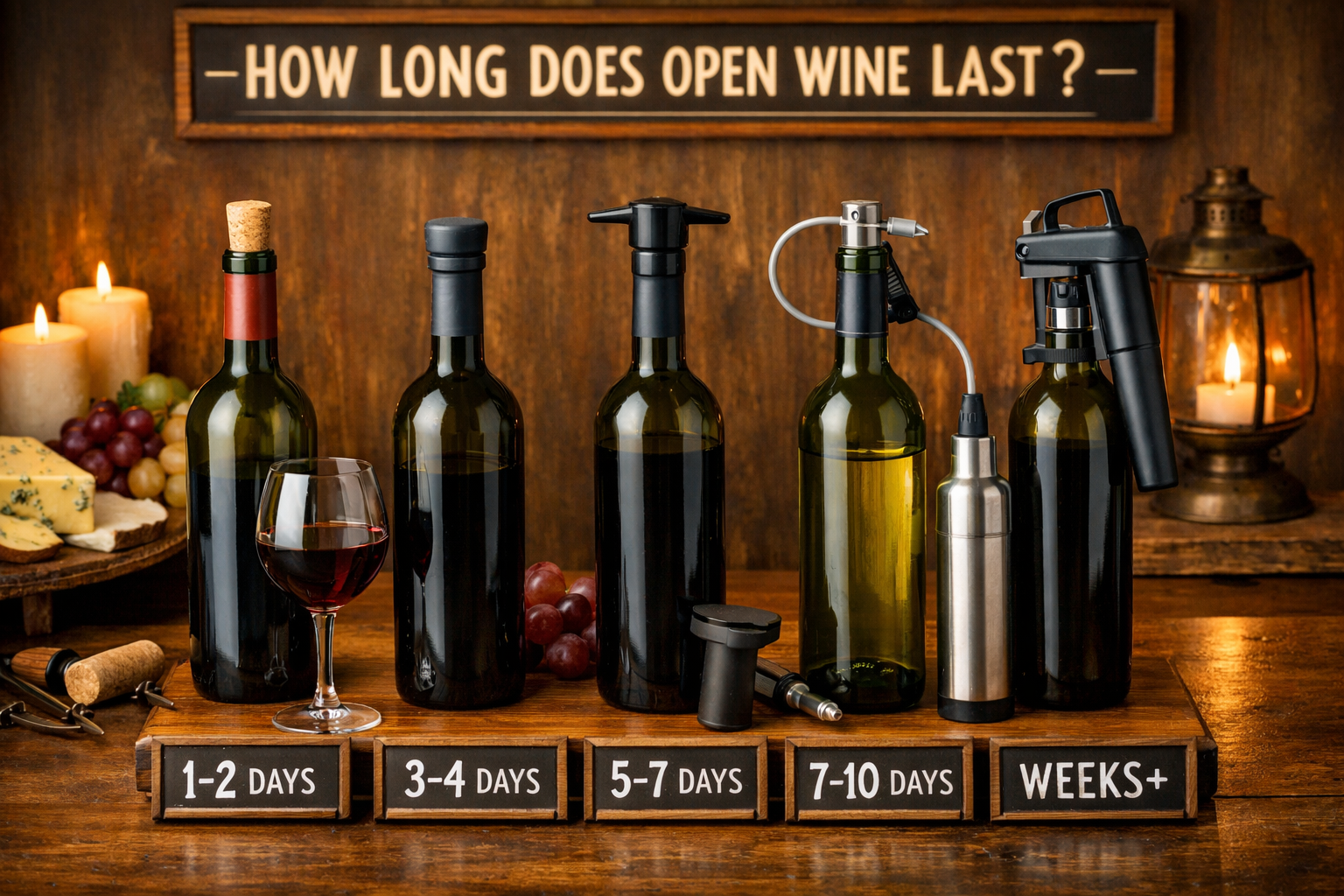
How Long Different Wine Styles Last Once Opened
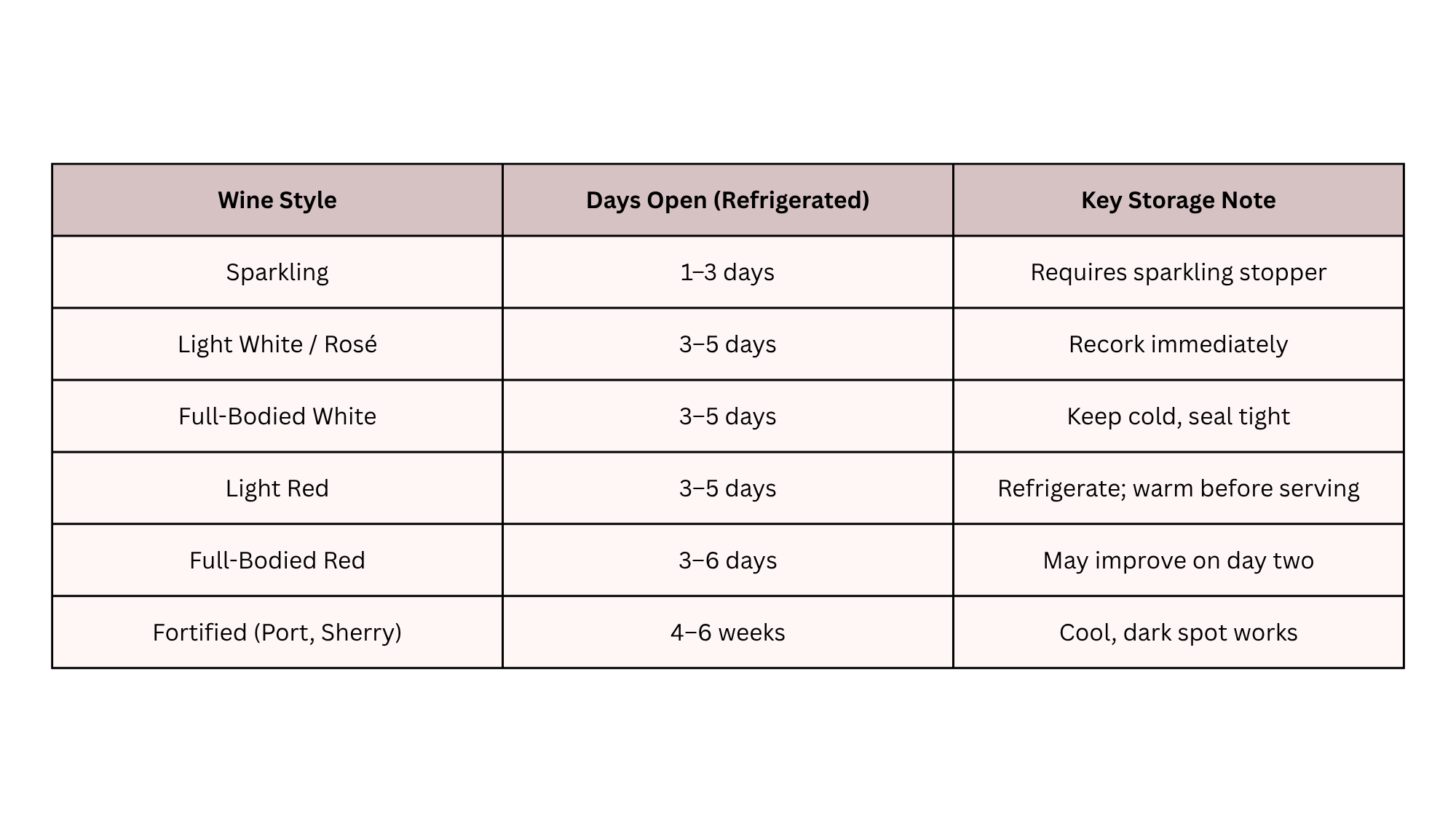
Here's your refrigerator-card breakdown. Clip this, screenshot it, stick it on your fridge—whatever helps you remember.
Sparkling Wine: 1–3 Days
Those bubbles you love? They start escaping the moment you open the bottle. A proper sparkling wine stopper helps trap carbonation, but even then, your window is short [2].
Storage tip: Always refrigerate immediately with a sparkling-specific stopper. Regular corks don't seal tight enough.
Light White and Rosé Wines: 3–5 Days
Crisp whites like Sauvignon Blanc and most rosés stay fresh for several days when refrigerated with a cork or screw cap. Their bright, fresh character fades gradually rather than crashing suddenly [3].
Storage tip: Recork and refrigerate right after pouring. The cold slows oxidation significantly.
Full-Bodied White Wines: 3–5 Days
Oaked Chardonnays and richer whites follow similar timelines. Their fuller structure gives them a bit more staying power, though they may lose some of their buttery complexity toward day four or five [3].
Storage tip: Same rules—refrigerate promptly and seal well.
Light Red Wines: 3–5 Days
Lighter reds like Pinot Noir are more delicate than their bolder cousins. They start showing oxidation earlier, losing their fresh berry notes and developing duller flavors.
Storage tip: Yes, refrigerate these too. Just pull the bottle out about 30 minutes before your next glass to take the chill off.
Full-Bodied Red Wines: 3–6 Days
Big reds with lots of tannins—think Cabernet Sauvignon, Syrah, or Malbec—have built-in protection. Tannins act as natural antioxidants, buying you extra time [4].
Storage tip: Refrigeration still helps. And here's something interesting: some bold reds actually taste better on day two after they've had time to open up.
Fortified Wines: 4–6 Weeks (or More)
Port, sherry, Madeira—these outliers laugh at your oxidation concerns. The added spirits and winemaking processes make them incredibly stable once opened [3].
Storage tip: Most fortified wines do fine in a cool, dark spot. Refrigeration extends their life even further.
Your Quick-Reference Storage Chart
Closure Tips That Actually Matter
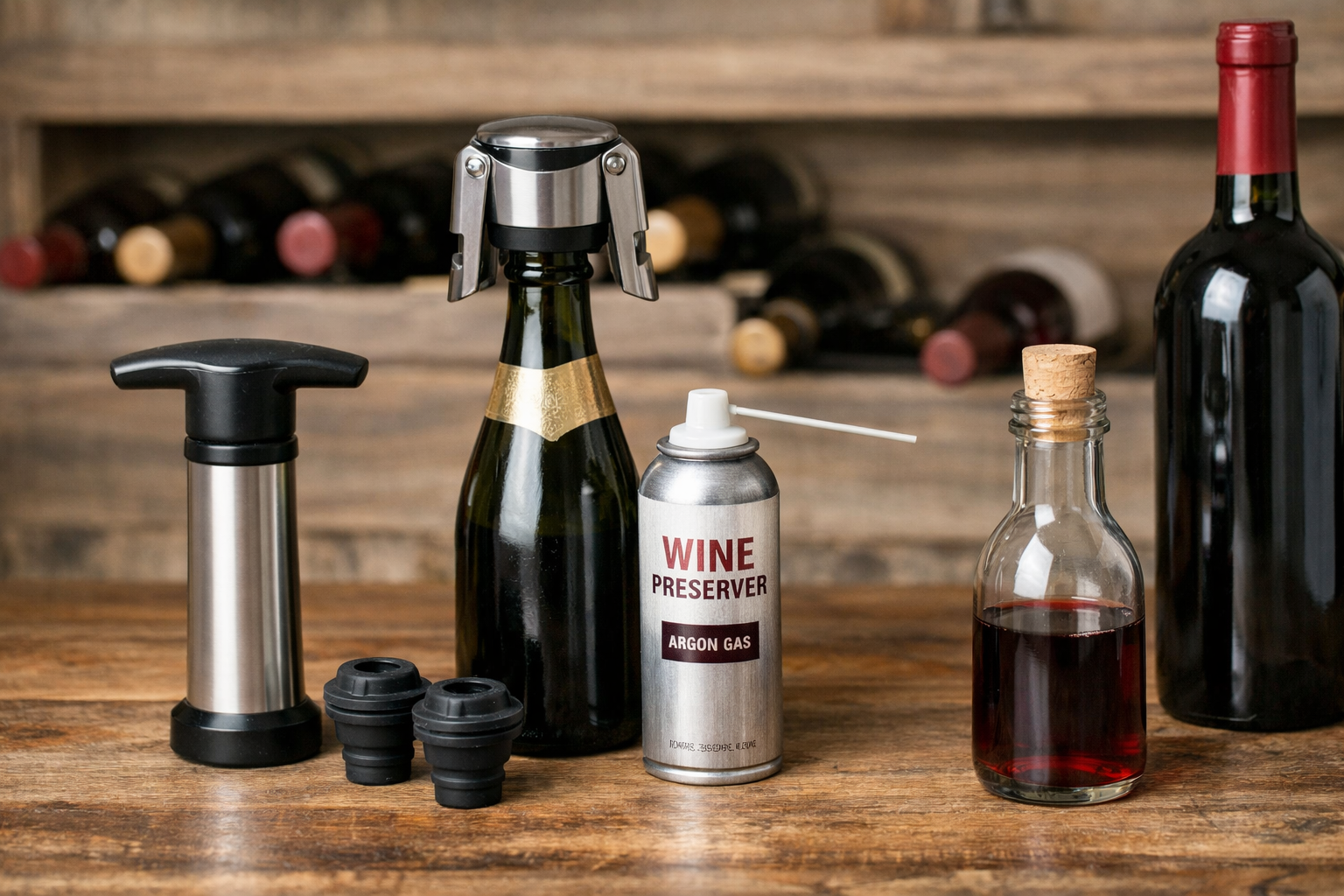
How you seal that bottle makes a real difference. Here's what works:
Original cork or screw cap: Perfectly fine for most still wines. Just make sure it's actually creating a seal—worn corks don't always cooperate.
Vacuum pumps: These handheld tools remove air from the bottle. They're inexpensive and can add a day or two to your wine's drinkable window [1].
Sparkling stoppers: Essential for anything bubbly. These clamp onto the bottle and create a tight seal that keeps carbonation from escaping.
Inert gas sprays: Products that spray argon or nitrogen into the bottle before sealing displace the oxygen. A bit more involved, but serious wine savers swear by them.
The "smaller bottle" trick: If you're halfway through a bottle, pour the remainder into a clean half-bottle and cork it. Less air space means slower oxidation.
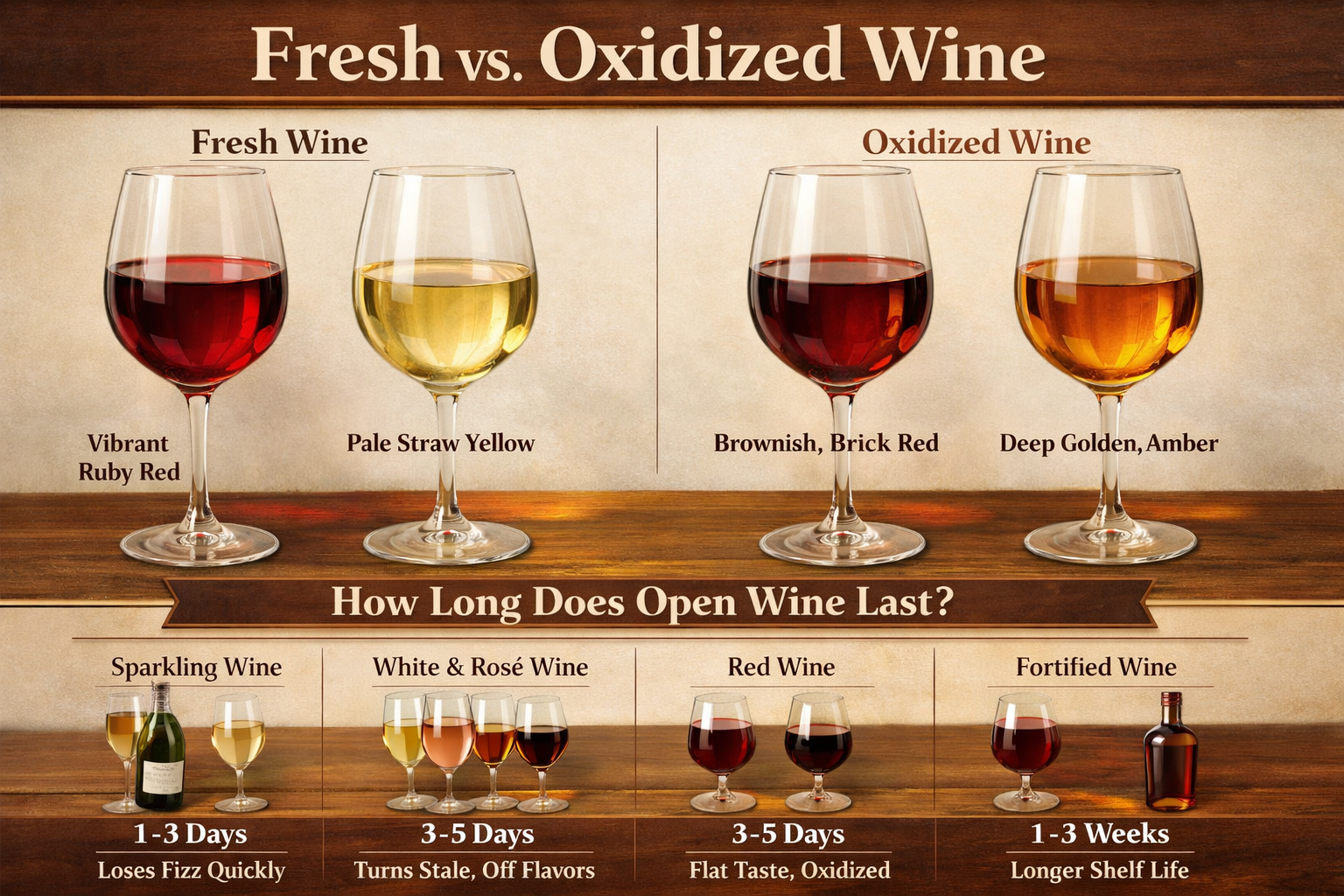
Smell and Taste Stop Signs: When to Pour It Out
Not sure if that three-day-old bottle is still good? Trust your senses. Wine gives clear signals when it's past its prime.
Warning Signs to Watch For
Vinegar smell: The most obvious giveaway. If your wine smells sharp and acidic like salad dressing, oxidation has won.
Flat, dull aromas: Remember how that Sauvignon Blanc smelled like fresh citrus when you opened it? If now it smells like... nothing much? It's fading.
Brown or brick-colored edges: Some color change is normal in older wines, but if your white wine looks amber or your red has gone muddy brown, proceed with caution.
Fizz in a still wine: Tiny bubbles in a wine that shouldn't have them can indicate refermentation. Not dangerous, but not what you signed up for.
Off-putting flavors: Cooked, nutty, or sherry-like notes in a wine that shouldn't have them signal advanced oxidation. Musty or wet cardboard flavors might indicate cork taint that's become more apparent over time.
The Good News
Wine that's slightly past its peak isn't unsafe—it just doesn't taste great. You won't get sick from a glass of oxidized wine. It's a quality issue, not a safety issue [5].
Still, why drink something that doesn't bring you joy? When in doubt, pour it out (or cook with it—oxidized wine can still work in sauces and braises).
Simple Habits That Maximize Your Wine's Life
A few small changes make a big difference:
Refrigerate everything. Yes, even reds. Cold temperatures slow oxidation dramatically.
Recork immediately. Don't leave the bottle sitting open while you chat. Seal it between pours.
Store upright once opened. Unlike sealed bottles, open wine does better standing up—less surface area exposed to air.
Finish lighter wines first. If you've got both a Pinot Grigio and a Cabernet open, drink the white first. It won't last as long.
Buy half-bottles for solo nights. Planning to have just a glass or two? Smaller formats mean less waste and fresher wine.
Stop By and Let's Talk Wine
Still have questions about what to do with that half-finished bottle at home? Curious which wines hold up best for your weeknight-glass-here-and-there lifestyle?
Come hang out with us at The Pip. We'll help you find bottles that fit how you actually drink—whether that's polishing off a bottle with friends or savoring it across a few quiet evenings. Tell us what you like, and we'll guide you from there.
Frequently Asked Questions
Can I drink wine that's been open for a week?
Most wines won't taste great after a week, but they're not unsafe. Give it a smell first—if it's gone vinegary or flat, it's past its prime. Full-bodied reds and fortified wines are your best bets for longer storage, sometimes lasting well beyond a week when refrigerated properly.
Should I refrigerate red wine after opening it?
Yes, refrigeration helps all wines last longer once opened. The cold slows down the oxidation process that makes wine go stale. Just pull the bottle out about 20–30 minutes before serving so it can warm up to a comfortable drinking temperature.
Do wine preservation tools really work?
Vacuum pumps and inert gas systems can extend your wine's drinkable window by a day or two. They work by reducing oxygen exposure. For most casual home drinkers, a vacuum pump offers good value without much hassle. Sparkling wine stoppers are essential for bubbly.
How can I tell if open wine has gone bad?
Trust your nose first. Vinegar smells, flat aromas, or musty notes are clear signals. Visually, watch for unusual color changes or unexpected fizz. Taste-wise, if it's noticeably duller, sharper, or just unpleasant compared to when you opened it, the wine is past its peak.
Does boxed wine last longer than bottled wine once opened?
Bag-in-box wines can last several weeks after opening because the bag collapses as you pour, minimizing air contact. This makes boxed wine a practical choice if you drink wine slowly. The quality varies by producer, but the format itself does extend freshness.
About Our Wine Guidance
At The Pip Wine Bar & Shop in Downtown Dixon, we spend our days helping people find wines they'll actually enjoy—and that includes helping you make the most of every bottle you take home. Our team tastes constantly, talks with winemakers and distributors, and pays close attention to how wines hold up in real-life situations. We're happy to recommend bottles that suit your drinking style, whether you're sharing with a group or savoring solo glasses throughout the week.
Works Cited
[1] Wine Folly — "How Long Does Wine Last After Opening?"
https://winefolly.com/tips/how-long-does-wine-last-after-opening/
[2] VinePair — "How Long Does Sparkling Wine Last After Opening?"
https://vinepair.com/articles/how-long-does-sparkling-wine-last-after-opening/
[3] Wine Spectator — "How Long Can I Keep an Open Bottle of Wine?" https://www.winespectator.com/articles/how-long-can-i-keep-an-open-bottle-of-wine-5954
[4] Decanter — "How Long Does Red Wine Last Once Opened?"
https://www.decanter.com/learn/how-long-does-red-wine-last-opened-ask-decanter-377498/
[5] Healthline — "Is It Safe to Drink Old Wine?"
https://www.healthline.com/nutrition/is-old-wine-safe-to-drink
Simple Habits That Maximize Your Wine's Life
A few small changes make a big difference:
Refrigerate everything. Yes, even reds. Cold temperatures slow oxidation dramatically.
Recork immediately. Don't leave the bottle sitting open while you chat. Seal it between pours.
Store upright once opened. Unlike sealed bottles, open wine does better standing up—less surface area exposed to air.
Finish lighter wines first. If you've got both a Pinot Grigio and a Cabernet open, drink the white first. It won't last as long.
Buy half-bottles for solo nights. Planning to have just a glass or two? Smaller formats mean less waste and fresher wine.
Stop By and Let's Talk Wine
Still have questions about what to do with that half-finished bottle at home? Curious which wines hold up best for your weeknight-glass-here-and-there lifestyle?
Come hang out with us at The Pip. We'll help you find bottles that fit how you actually drink—whether that's polishing off a bottle with friends or savoring it across a few quiet evenings. Tell us what you like, and we'll guide you from there.
Frequently Asked Questions
Can I drink wine that's been open for a week?
Most wines won't taste great after a week, but they're not unsafe. Give it a smell first—if it's gone vinegary or flat, it's past its prime. Full-bodied reds and fortified wines are your best bets for longer storage, sometimes lasting well beyond a week when refrigerated properly.
Should I refrigerate red wine after opening it?
Yes, refrigeration helps all wines last longer once opened. The cold slows down the oxidation process that makes wine go stale. Just pull the bottle out about 20–30 minutes before serving so it can warm up to a comfortable drinking temperature.
Do wine preservation tools really work?
Vacuum pumps and inert gas systems can extend your wine's drinkable window by a day or two. They work by reducing oxygen exposure. For most casual home drinkers, a vacuum pump offers good value without much hassle. Sparkling wine stoppers are essential for bubbly.
How can I tell if open wine has gone bad?
Trust your nose first. Vinegar smells, flat aromas, or musty notes are clear signals. Visually, watch for unusual color changes or unexpected fizz. Taste-wise, if it's noticeably duller, sharper, or just unpleasant compared to when you opened it, the wine is past its peak.
Does boxed wine last longer than bottled wine once opened?
Bag-in-box wines can last several weeks after opening because the bag collapses as you pour, minimizing air contact. This makes boxed wine a practical choice if you drink wine slowly. The quality varies by producer, but the format itself does extend freshness.
About Our Wine Guidance
At The Pip Wine Bar & Shop in Downtown Dixon, we spend our days helping people find wines they'll actually enjoy—and that includes helping you make the most of every bottle you take home. Our team tastes constantly, talks with winemakers and distributors, and pays close attention to how wines hold up in real-life situations. We're happy to recommend bottles that suit your drinking style, whether you're sharing with a group or savoring solo glasses throughout the week.
Works Cited
[1] Wine Folly — "How Long Does Wine Last After Opening?"
https://winefolly.com/tips/how-long-does-wine-last-after-opening/
[2] VinePair — "How Long Does Sparkling Wine Last After Opening?"
https://vinepair.com/articles/how-long-does-sparkling-wine-last-after-opening/
[3] Wine Spectator — "How Long Can I Keep an Open Bottle of Wine?" https://www.winespectator.com/articles/how-long-can-i-keep-an-open-bottle-of-wine-5954
[4] Decanter — "How Long Does Red Wine Last Once Opened?"
https://www.decanter.com/learn/how-long-does-red-wine-last-opened-ask-decanter-377498/
[5] Healthline — "Is It Safe to Drink Old Wine?"
https://www.healthline.com/nutrition/is-old-wine-safe-to-drink