
How Much Wine Do You Need for a Party? A Bottle Formula Without Guesswork
Every week at The Pip, someone walks in mid-planning mode: "I'm hosting 25 people Saturday. How much wine do I actually need?"
It's the question that stops party planning cold. Buy too little and you're making an awkward mid-event run. Buy too much and you're staring at a case of unopened bottles wondering what happened.
Here's the good news: there's a simple formula that works. Once you know it, wine math stops being stressful.
The Standard Wine Bottle Formula
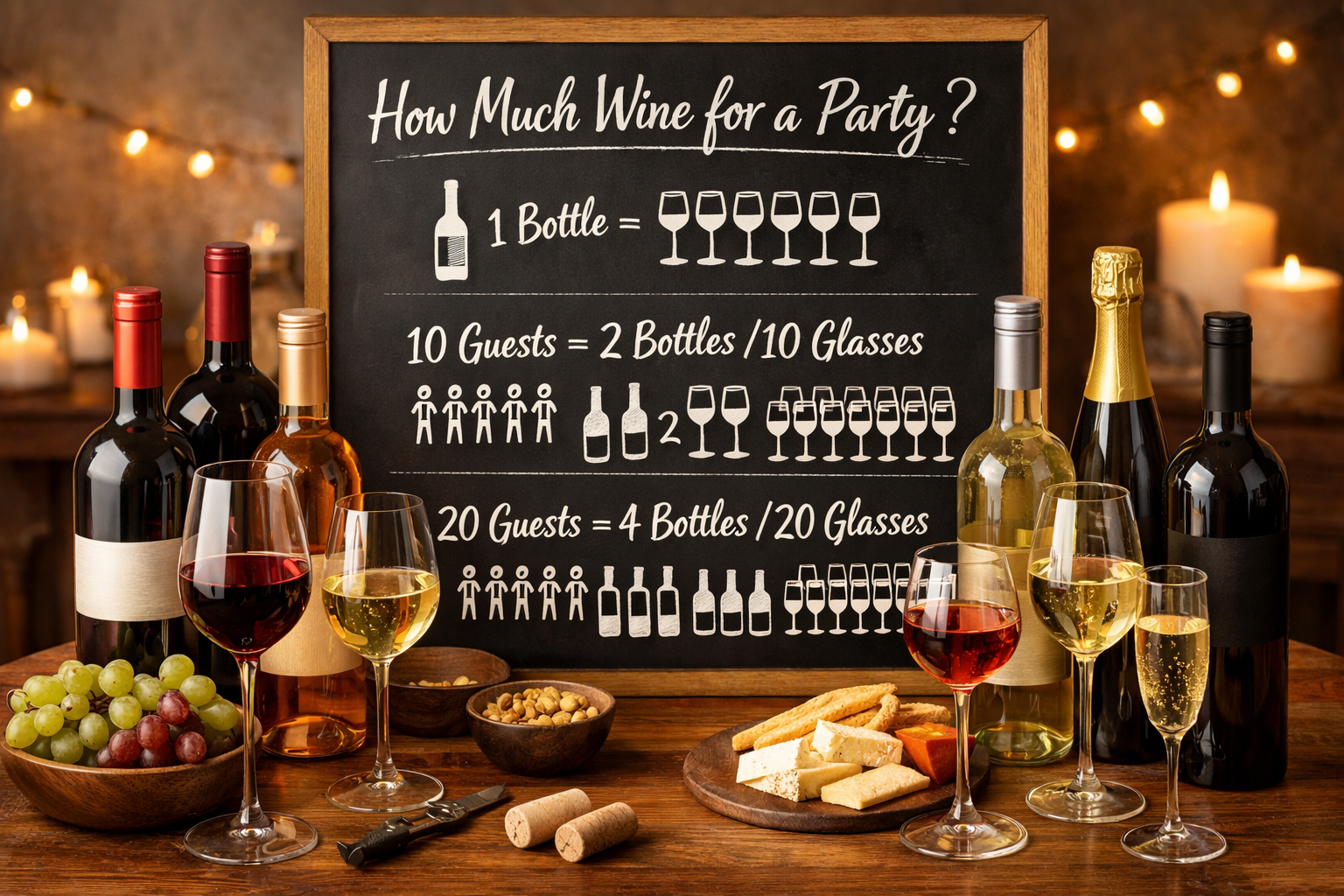
A standard 750ml wine bottle holds about five glasses of wine—assuming a proper 5-ounce pour, the kind you'd get at a wine bar rather than the generous splash your friend calls "a glass."
A note about real-world pouring: Most hosts pour heavier at home, closer to 6 or 7 ounces. If you know your crowd pours generously, calculate using 4 glasses per bottle instead of 5. Better to have extra than to run short.
Here's your baseline formula:
Number of guests × glasses per person ÷ 5 = bottles needed
For a typical two-to-three hour gathering where wine is the main drink, plan on two glasses per guest. A four-hour party? Bump it to three glasses.
So for 20 guests at a three-hour dinner party:
20 guests × 2.5 glasses ÷ 5 = 10 bottles
That's your starting point. Now let's make it accurate for your specific party.
Adjusting for Your Actual Crowd
That formula assumes everyone drinks wine at the same pace. Your party won't work that way.
Know Your Guest Mix
Think about who's actually coming:
Wine enthusiasts will drink more than average
Casual sippers might nurse one glass all night
Mixed-drink fans might skip wine entirely for cocktails or beer
A solid estimate: roughly half to two-thirds of your guests will actively drink wine throughout the event. The rest will have one glass and switch to something else—or stick with sparkling water.
Event Duration Matters
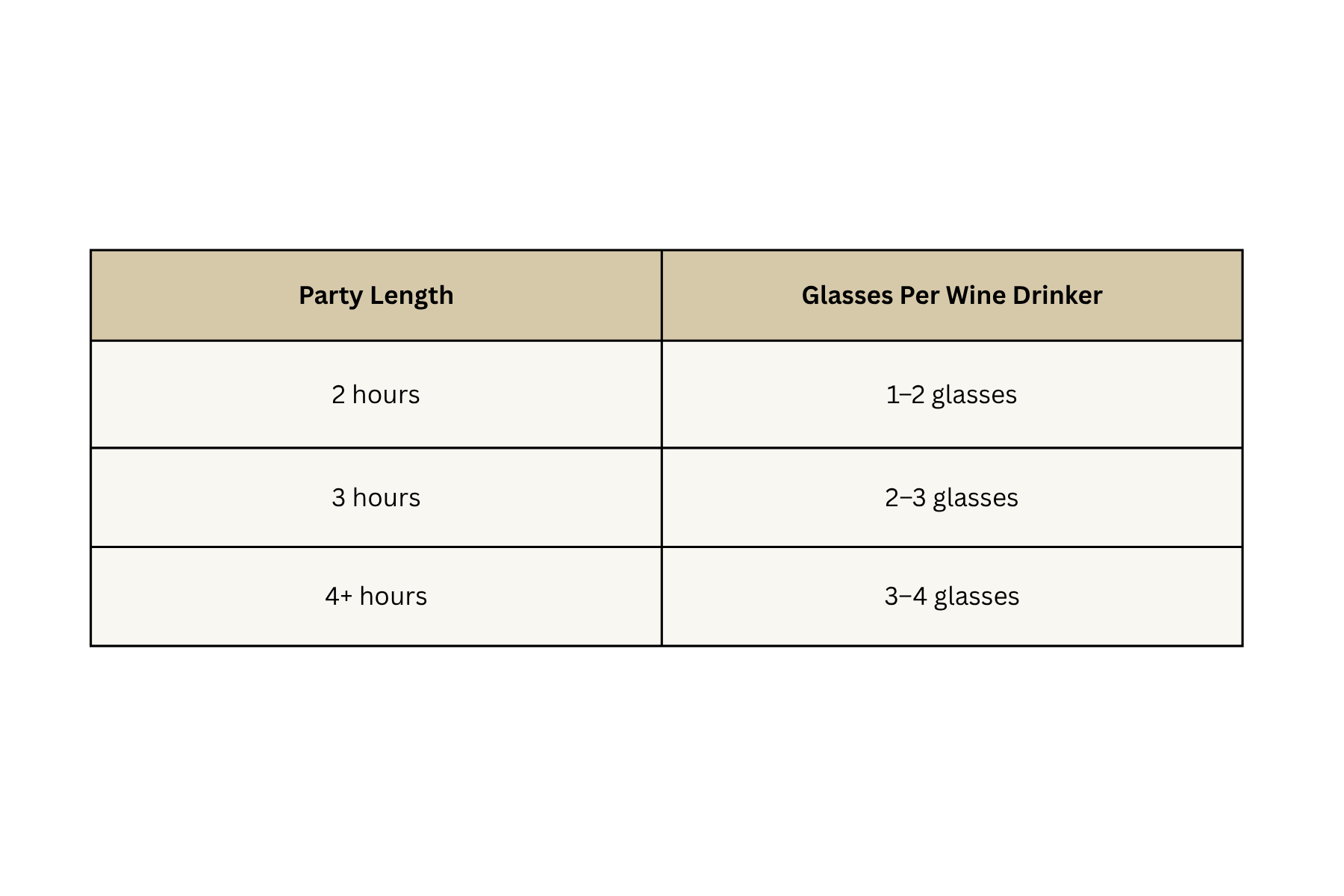
Longer events don't mean linear increases. People pace themselves (mostly). But you do need a buffer.
Food Changes Everything
Serving a full meal? Wine consumption typically goes up. Those bottles pair with courses, and dinner stretches the timeline.
Appetizers-only or tapas-style bites? People tend to drink a bit less, but they graze longer.
Heavy food + long event = more wine
Light bites + short event = less wine
The Red vs. White Split
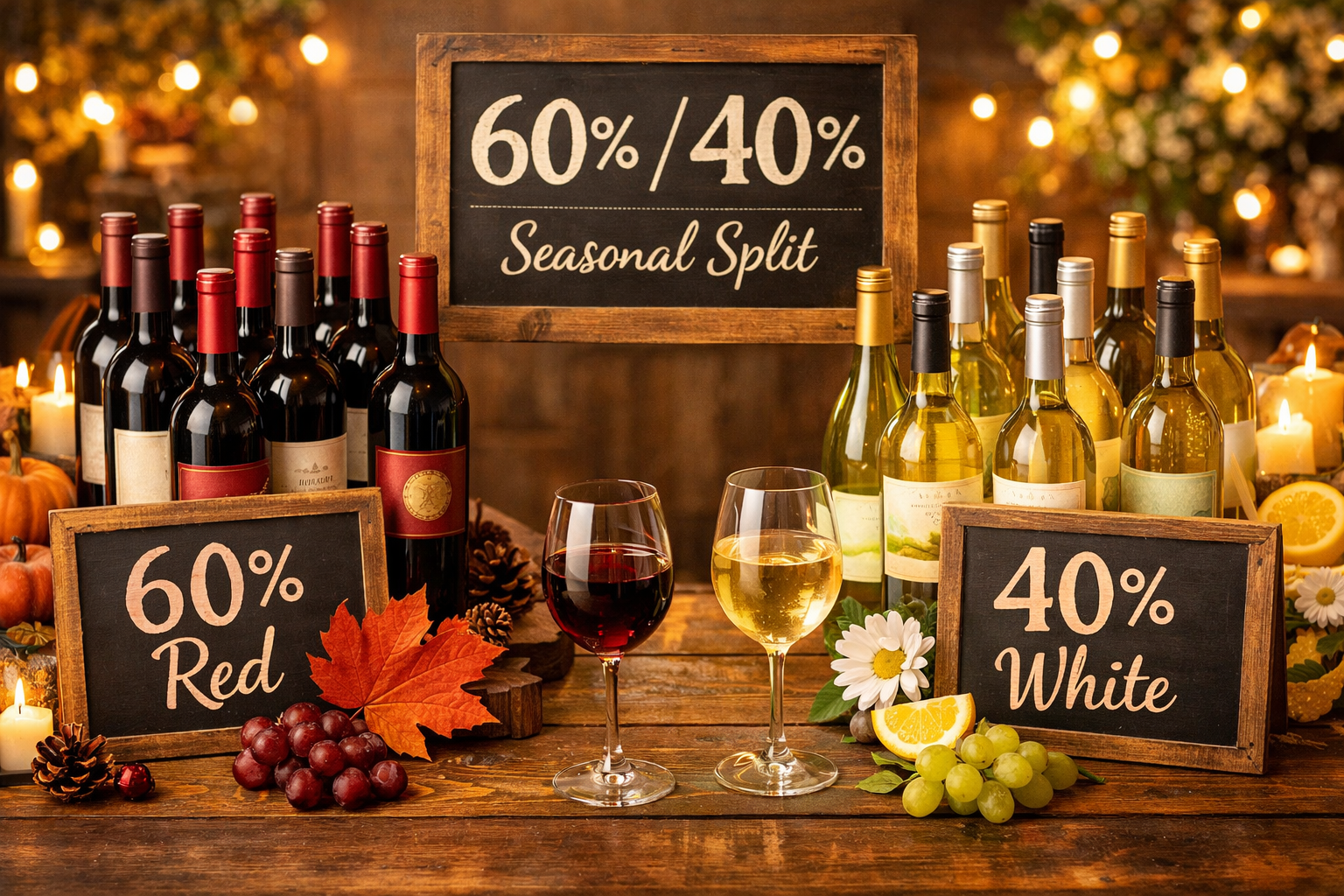
Unless you know your crowd's preferences, a safe starting point is 60% white and rosé, 40% red for spring and summer gatherings. Flip that ratio in fall and winter.
But honestly? Ask a few key guests what they prefer. Or better yet—offer variety and let people choose.
For a 10-bottle order:
4 bottles white
2 bottles rosé
4 bottles red
Adjust based on season, menu, and what you know about your friends.
Don't Forget the Non-Drinkers
Here's where hosts consistently underestimate: non-alcoholic options.
Roughly 20–30% of guests at most gatherings won't drink alcohol—whether they're driving, pregnant, taking a break, or simply prefer not to. They still want something interesting in their glass.
Stock sparkling water, a nice mocktail option, or non-alcoholic wine. These guests matter just as much, and thoughtful options show you considered everyone.
Buying by the Case: The Smart Move
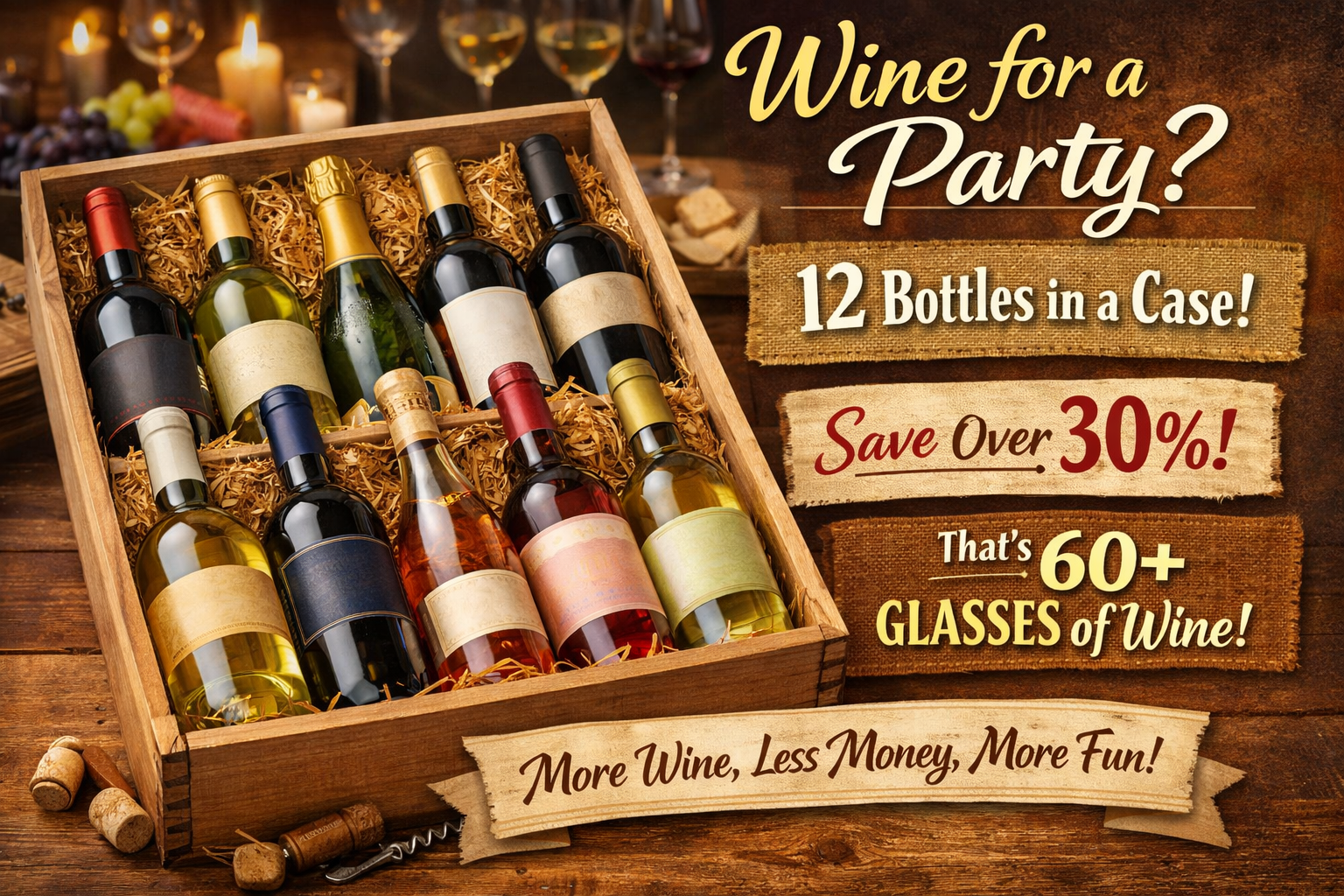
Wine is typically sold in 12-bottle cases, and buying a full case often saves you 10–15% compared to individual bottles.
If your math lands you at 10 bottles, rounding up to 12 might actually cost you less per bottle—and you'll have a comfortable buffer built in. Most wine shops (including ours) offer case discounts, and it's worth asking even if it's not posted.
Pro tip: You don't need 12 of the same bottle. Many shops let you mix a case—grab a few whites, a few reds, and a couple bottles of rosé to hit your split while still getting the discount.
The Buffer Table: Your Safety Net
Even with perfect math, add a buffer. Events run long. Surprise plus-ones show up. Someone really loves that Pinot.
Add 10–15% to your final bottle count.
If your formula says 10 bottles, grab 11 or 12. Unopened bottles keep—enjoy them yourself or save them for next time.
Here's a quick reference for common party sizes:

These assume roughly 60–70% of guests are active wine drinkers.
Sparkling Wine: Different Math
Champagne, prosecco, and sparkling wines follow slightly different rules.
First, sparkling pours are smaller—typically 4 ounces instead of 5. That gives you about six glasses per bottle.
Second, sparkling often serves a specific moment: the toast, the arrival hour, or dessert. You're not necessarily pouring it all night.
For a champagne toast:
Plan one glass per guest
One bottle covers 6 guests
30 guests = 5 bottles for the toast
If sparkling is available throughout the party, use the standard formula but calculate with 6 glasses per bottle instead of 5.
Quality Over Quantity
When buying for a party, the temptation to go cheap is real. But mid-range bottles that you'd actually enjoy drinking make a better impression than twice as many forgettable pours.
Your guests notice quality, even if they can't articulate why.
A curated selection of wines from small producers or interesting regions creates conversation. It makes your party memorable. And when you buy by the case from a shop that knows wine, you're getting guidance plus savings—not just volume.
Not sure what to pick? That's exactly what a good wine shop is for. Walk in, describe your event, share your budget, and let someone guide you. No embarrassment required.
Putting It All Together: A Real Example
The scenario: You're hosting 25 guests for a four-hour dinner party with tapas-style bites. It's summer. Mix of wine lovers and casual drinkers.
The math:
Assume 70% actively drink wine = ~18 wine drinkers
Four-hour party = 3 glasses each
18 × 3 = 54 glasses
54 ÷ 5 = 10.8 bottles
Add 15% buffer = ~12 bottles
The split:
5 bottles white (summer preference)
3 bottles rosé (crowd pleaser in warm weather)
4 bottles red (for those who want it)
Don't forget:
Sparkling water and a mocktail option for non-drinkers
Ice, proper glassware, and a plan for chilling whites and rosés
When You Need More Than Math
Sometimes a formula isn't enough. You need advice.
Private parties, group celebrations, and events with specific wine pairings deserve a conversation with someone who knows bottles—not just math. Questions like "What if half my guests only drink red?" or "What pairs with the menu I'm planning?" or "Can I return what we don't open?"—those are the conversations that turn a good party into a great one.
Come Hang Out With Us
Got a party coming up and want to get the wine exactly right? We love this stuff.
Stop by The Pip. Tell us your headcount, your timeline, and your vibe. We'll help you build a selection that fits—with bottles you won't find at the grocery store and zero judgment about what you don't know.
Planning a private party? Even better. Private parties are our favorite, and we can walk you through quantities, selections, and all the details that make hosting feel easy.
Whether it's a birthday, a reunion, or just an excuse to gather good people, we've got you.
Check out our curated selection →
Frequently Asked Questions
How many glasses of wine are in a standard bottle?
A standard 750ml bottle contains approximately five glasses at a proper 5-ounce pour. Many people pour heavier at home—closer to 6 or 7 ounces—which means party math often underestimates needs. For generous pourers, calculate using 4 glasses per bottle and add a buffer to your final count.
Should I buy more red or white wine for my party?
Season and menu matter most. Warmer months favor whites and rosés—aim for about 60% of those and 40% red. In fall and winter, flip that ratio. When in doubt, variety wins. Offer two to three options of each and let guests choose their preference.
How do I calculate wine for a wedding or large event?
Use the same per-person formula but assume a longer duration and add a larger buffer of 15–20%. For formal events, guests typically drink more during cocktail hour and less during dinner. Many venues and caterers have specific guidance based on their experience with similar events.
What if some of my guests don't drink wine?
Plan for 20–30% of guests to skip wine entirely. Have quality alternatives ready: craft cocktails, beer, sparkling water, and interesting non-alcoholic options. Thoughtful options show you considered everyone—not just the wine drinkers.
Is buying wine by the case worth it for a party?
Usually, yes. Most wine shops offer 10–15% off when you buy a full case of 12 bottles, and many let you mix different wines to hit that number. If your math lands you at 10 bottles, rounding up to a case often costs the same or less—and you'll have a built-in buffer for your event.
About Our Wine Expertise
The Pip Wine Bar & Shop is a curated wine bar and bottle shop in Downtown Dixon, California. We specialize in hand-selected wines from small producers—bottles you won't find in grocery stores or big-box retailers. Our team helps hosts plan everything from casual gatherings to private parties, offering practical guidance on quantities, pairings, and selections that fit your budget and taste. We're here to make wine feel approachable, not intimidating.