How to Order Wine at a Wine Bar When You Don't Know What You Like (No-Embarrassment Script)
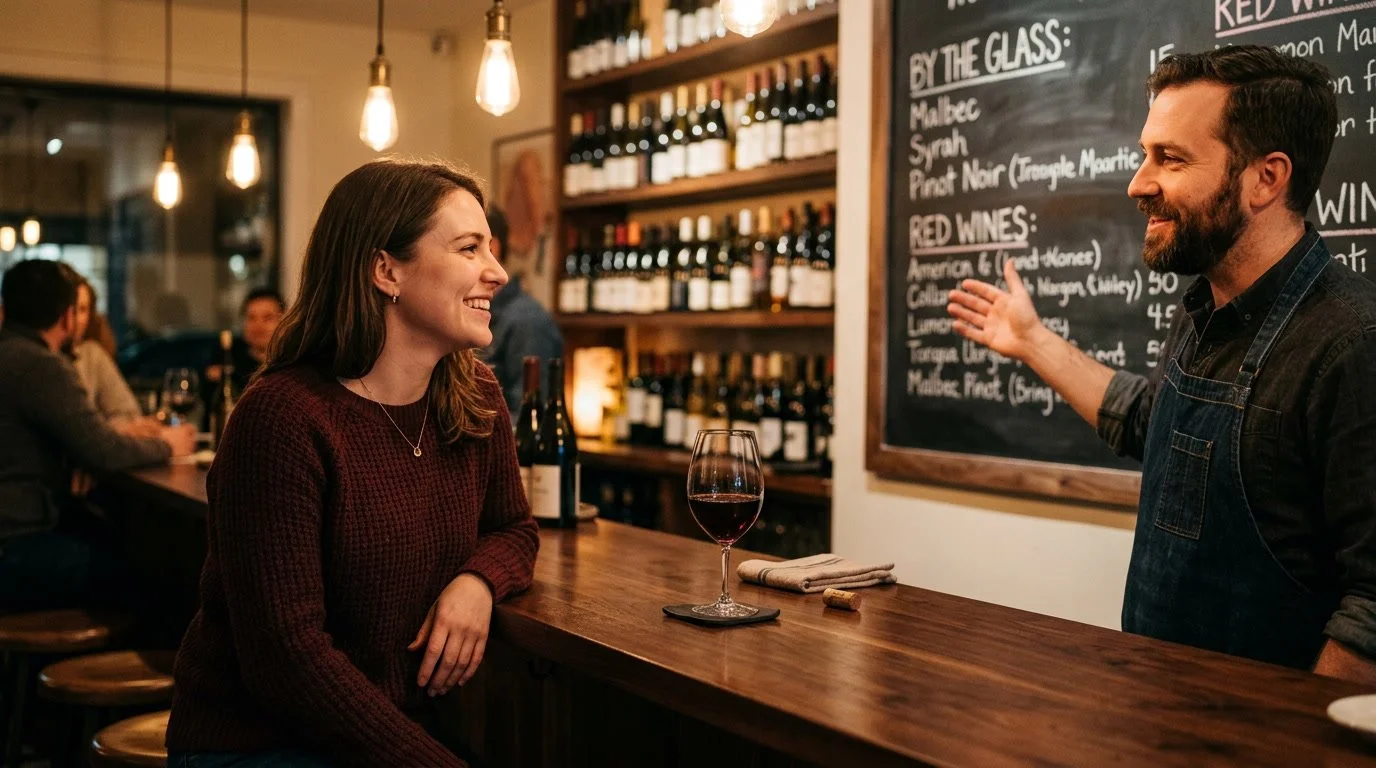
You're at a wine bar. The menu lists twenty-something wines with tasting notes that might as well be written in code. "Mineral-driven." "Bright acidity." "Elegant tannins." You're thinking: I just want something good.
Most people who walk into a wine bar don't have a go-to order memorized. They're figuring it out as they go—and that's exactly how it should work. The staff behind the counter aren't waiting to quiz you. They're hoping you'll ask questions so they can match you with something you'll actually enjoy.
At The Pip Wine Bar & Shop in Downtown Dixon, we guide guests through this exact process every day. This guide gives you the words to say, a simple framework to figure out your preferences, and plain-English translations for all that wine jargon. No pretending required.
You're at a wine bar. The menu lists twenty-something wines with tasting notes that might as well be written in code. "Mineral-driven." "Bright acidity." "Elegant tannins." You're thinking: I just want something good.
Most people who walk into a wine bar don't have a go-to order memorized. They're figuring it out as they go—and that's exactly how it should work. The staff behind the counter aren't waiting to quiz you. They're hoping you'll ask questions so they can match you with something you'll actually enjoy.
At The Pip Wine Bar & Shop in Downtown Dixon, we guide guests through this exact process every day. This guide gives you the words to say, a simple framework to figure out your preferences, and plain-English translations for all that wine jargon. No pretending required.
Why Admitting You're Unsure Is the Smart Move
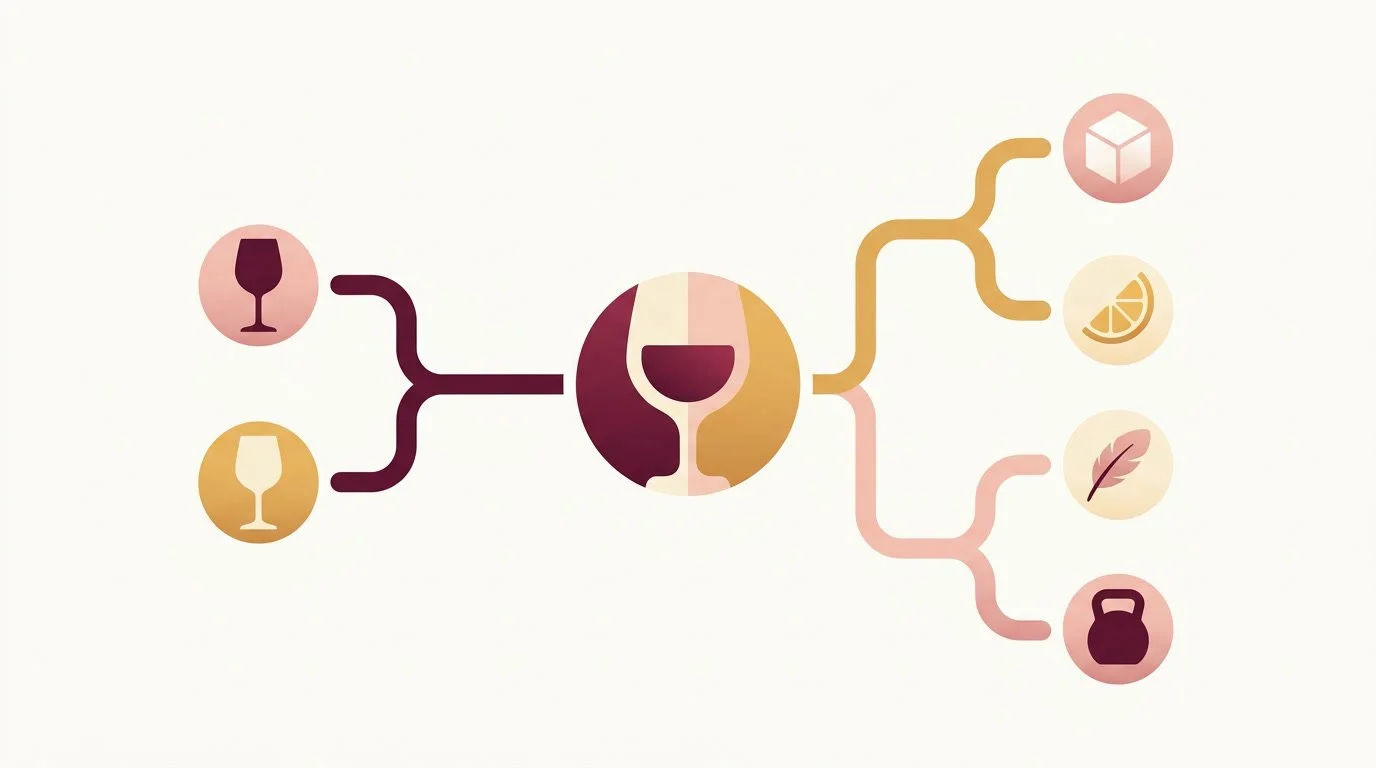
Wine bar staff hear "I don't really know wine" multiple times per shift. It's one of the most common things people say—and it's genuinely helpful information.
When you admit you're still figuring out your preferences, it signals that you're open to guidance. That's useful. It means the person helping you can ask better questions, learn what flavors you enjoy in other contexts, and steer you toward something tailored to your palate rather than whatever happens to be popular or expensive.
The alternative? Pretending you know more than you do, nodding along, and ending up with an $18 glass you don't enjoy but feel stuck drinking.
A blank slate is a gift to a good bartender. Let them work with it.
The 3-Question Framework (Answer These Before You Order)
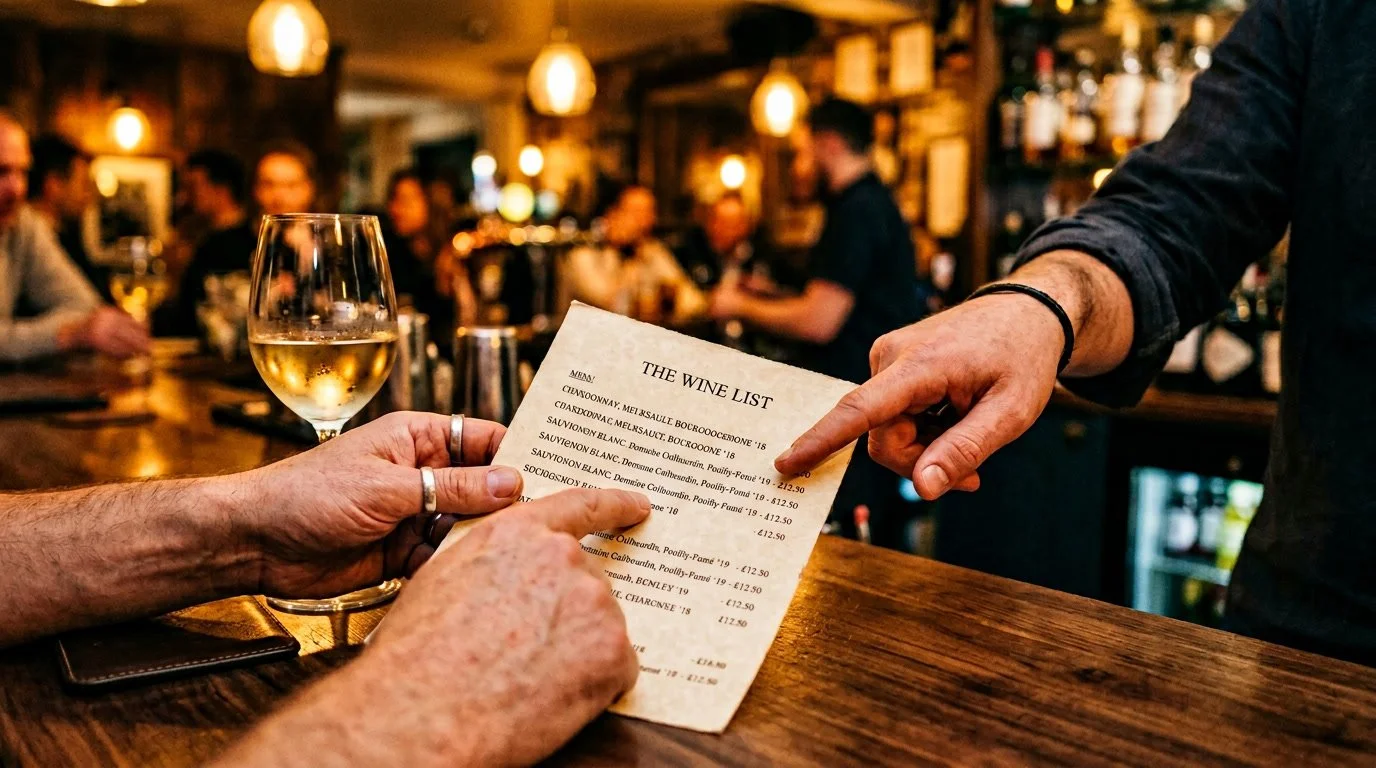
Before you even glance at the menu, run through these three questions in your head. They'll narrow your options fast and give you useful language for asking for help.
Question 1: Red, White, or "Surprise Me"?
Start with color. If you already know you lean one direction, great—that cuts the list in half. If you genuinely don't have a preference, consider:
What are you eating? Heavier dishes (steak, rich pasta) tend to pair well with red. Lighter fare (seafood, salads, cheese boards) often works better with white or rosé.
What's the weather like? Hot afternoon? A chilled white or rosé might hit the spot. Cooler evening? Red could feel more satisfying.
No preference at all? Say "surprise me." Staff love this because it gives them room to pick something interesting.
Question 2: Sweet or Dry?
This question trips people up, but it's simple once you understand the terms. "Dry" means "not sweet"—the wine finishes without residual sugar [1].
Think about your preferences in other drinks:
Do you take your coffee black, or do you add cream and sugar?
Do you reach for lemonade or unsweetened iced tea?
Would you pick a tart green apple or a ripe peach?
If you gravitate toward sweeter flavors, you might prefer an off-dry or sweeter wine. If you like things less sugary, dry wines are probably your territory.
Question 3: Light or Bold?
This is about intensity and weight, not color.
Light wines feel delicate and refreshing—easy to drink, not demanding. Think skim milk.
Bold wines have more presence, more weight on your tongue, more "oomph." Think whole milk.
Neither is better. It depends on what you're in the mood for.
Scripts That Actually Work (Copy These)
You don't need to sound like a sommelier. You need to communicate clearly. These phrases get the job done.
When You Have Zero Clue
"I'm not really a wine expert, but I'd love your help finding something. I usually drink [beer/cocktails/nothing specific], and I'm looking for something [refreshing/easy to drink/interesting]."
When You Know One Thing About Your Taste
"I know I don't like sweet wines. What would you recommend in a dry white?"
"I had a red wine once that was really smooth—not bitter at all. Can you point me toward something like that?"
When You Want to Be More Specific
"I'm looking for something crisp and refreshing—kind of like a citrusy cocktail but in wine form."
"Do you have anything that's bold but not super dry? I want flavor without that puckery feeling."
When You Want to Try Something New
"What's something on this menu that I probably haven't tried before? I'm open to being surprised."
"What are you excited about right now? I'll try whatever you recommend."
When You Have a Budget in Mind
"I'd love to stay around $12–15 a glass. What are my best options in that range?"
"What's your favorite pour under $15?"
This is completely normal to ask. Good wine bars have options at multiple price points, and staff would rather guide you to something you'll enjoy within your budget than watch you stress over prices.
Wine Jargon Translated Into Plain English
Tasting notes can feel like a foreign language. Here's a cheat sheet:
Understanding even a handful of these terms makes it much easier to describe what you want—or don't want [2].
How to Handle the Taste Test
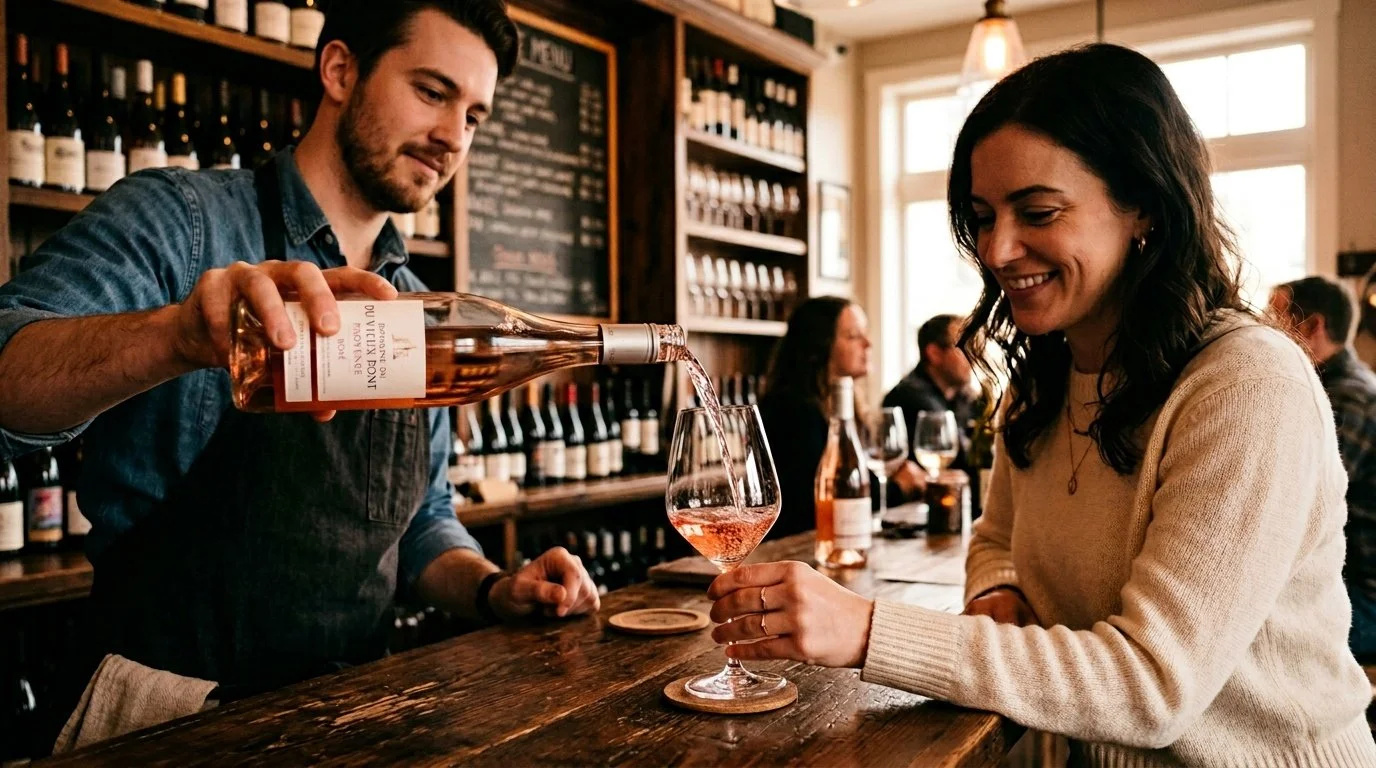
At most wine bars, when you order a glass, you'll get a small pour to taste before they fill it up. This isn't a test of your wine knowledge—it's a chance to check that the wine isn't flawed (corked, oxidized, or off in some way) and that it suits your taste.
Swirl it gently to release the aromas. Take a quick sniff—does it smell appealing, off-putting, or neutral? Then take a sip and let it sit on your tongue for a moment.
The only question you need to answer: Do I want a whole glass of this?
You don't need to identify "notes of blackcurrant with a whisper of tobacco." You just need to know if you like it.
If you don't, it's completely acceptable to say: "This isn't quite what I was hoping for—can we try something else?" Good wine bars expect this. That's the whole point of the taste.
What If You Order a Glass and Don't Like It?
Sometimes you're a few sips in and realize the wine isn't for you. This happens to everyone, including people who drink wine regularly.
Your options:
Ask if you can switch. Many places will work with you, especially if you mention it early and you're polite about it.
Use it as information. Tell the staff what you didn't like—"too bitter," "too sweet," "weird aftertaste"—and they'll steer you better on the next pour.
Order something else entirely. Cocktails, beer, whatever sounds good. The goal is enjoying your evening, not forcing yourself through a glass you're not into.
Don't suffer in silence. Speak up.
Mistakes to Avoid (And What to Do Instead)
Ordering the second-cheapest wine to seem "not cheap but not flashy."Staff recognize this pattern. Skip the strategy and just ask what they'd recommend at whatever price feels comfortable.
Asking for a specific wine without checking if they carry it.Wine bars often curate their selection and may not stock the obvious names. Ask what they have in the style you're looking for instead.
Staying quiet when you're confused.Questions create conversations. Conversations lead to better recommendations. A good wine bar wants you to ask.
Over-ordering.Start with one glass. See how you feel. You can always order another.
When in Doubt: The Staff Pick
Most wine bars have a "by the glass" selection that rotates based on what's drinking well right now. The staff pick or featured pour is usually priced reasonably, selected because it's genuinely good, and something the team is excited to share.
Asking "What's your favorite thing on the menu right now?" is a reliable move.
A Note on Wine Bar Etiquette
You don't need to dress up. You don't need to whisper. You don't need to pretend you've been drinking wine since you were legally allowed to.
Wine bars—especially comfortable neighborhood spots—exist to help you discover what you like. The whole point is exploration, not performance.
Walk in curious. Ask questions. Try something new. If you hate it, try something else. That's how everyone figures out their preferences.
Come hang out with us. At The Pip Wine Bar & Shop in Downtown Dixon, we guide guests through this exact process every day. Tell us what you usually drink—or what you definitely don't like—and we'll take it from there. No judgment, no quiz, just good pours and honest recommendations.
Frequently Asked Questions
What should I say if I've never been to a wine bar before?
Be direct about it. Something like, "This is my first time at a wine bar—what would you recommend for someone just getting into wine?" works well. Staff appreciate the honesty because it helps them calibrate their suggestions. Most wine bars thrive on introducing newcomers to bottles they'll love, so you're giving them exactly the information they need.
Is it okay to describe flavors I like in other drinks?
Absolutely. Saying "I like citrusy cocktails" or "I usually drink light beer" gives staff useful information to work with. Wine professionals are skilled at translating your existing preferences into wine recommendations. This approach often works better than trying to use wine terminology you're not comfortable with.
What if I can't pronounce the wine's name?
Point at it on the menu or describe where it is—"the third one down under whites." Nobody expects you to nail French or Italian pronunciation. Wine bar staff hear mispronunciations constantly and genuinely don't mind. What matters is getting you a glass you'll enjoy, not a pronunciation test.
How much should I expect to pay for a glass at a wine bar?
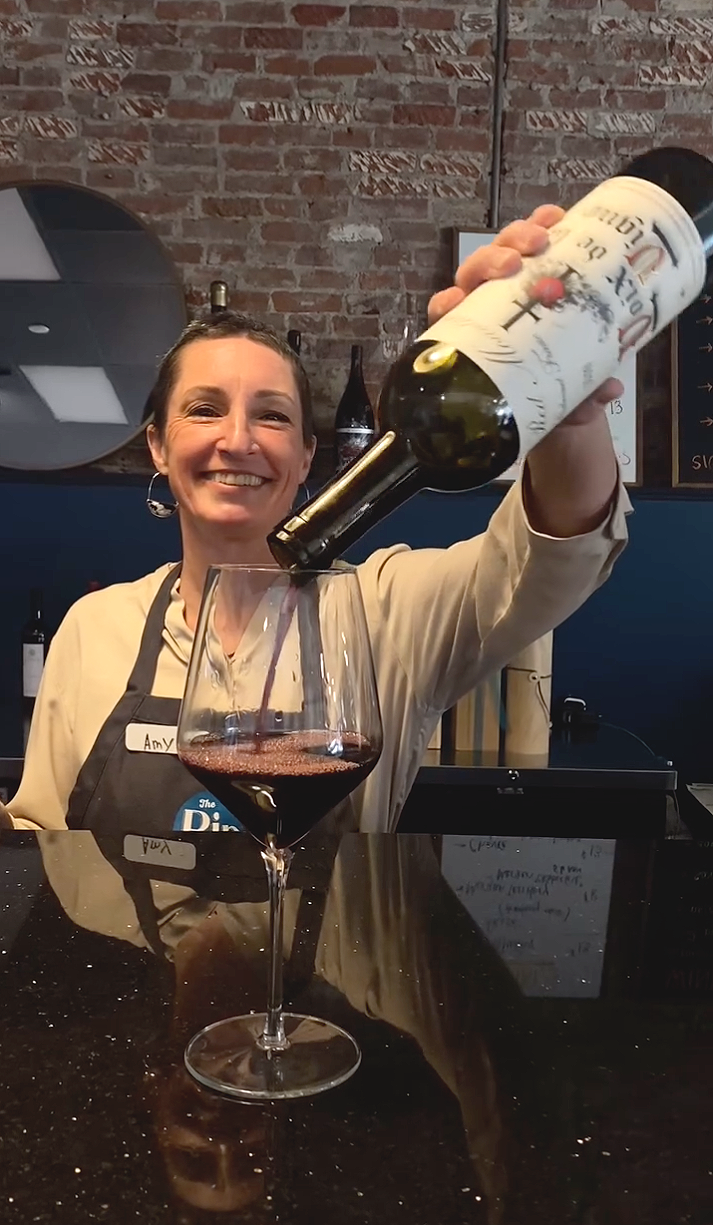
Glass prices vary by region and establishment. Many wine bars offer selections ranging from around $10 to $20, with premium pours priced higher. If you have a budget, it's perfectly fine to ask for recommendations within that range. A good wine bar will have options at multiple price points and won't make you feel awkward for asking.
Can I send back a glass of wine I don't like?
Policies vary, but many wine bars will work with you if you mention it early—especially within the first few sips. The key is communicating what you didn't like so they can find something better suited to your taste. A good bartender would rather help you find something you enjoy than watch you struggle through a glass you hate.
About The Pip Wine Bar & Shop
The Pip is a woman-owned wine bar and bottle shop in Downtown Dixon, California. We specialize in hand-selected wines from small producers you won't find in big-box stores—plus craft cocktails, wine slushies, and tapas-style bites. Our staff takes pride in guiding guests toward wines they'll genuinely enjoy, whether you're a seasoned collector or someone who just knows they "don't like the bitter ones." We believe wine should feel approachable, and every question is a good one. Come hang out, ask anything, and let us help you find your new favorite pour.
Cited Works
[1] VinePair — "Wine 101: What Does 'Dry' Wine Actually Mean?" https://vinepair.com/articles/what-does-dry-wine-mean/
[2] Wine Folly — "Wine Terminology: A Beginner's Guide to Wine Words." https://winefolly.com/tips/wine-terminology/