
How to Store Wine at Home Without a Cellar: A Complete Guide for Apartment Dwellers and Renters
At The Pip, customers walk out with bottles they're genuinely excited about—a bold Syrah for next month's dinner party, a crisp Albariño for this weekend, maybe something special tucked away for an anniversary. Then comes the question we hear constantly: "How do I actually store this at home?"
Most wine lovers don't have temperature-controlled cellars. They have apartments, rentals, or houses where "wine storage" means a kitchen counter or the top of the fridge. The good news? You don't need a cellar to store wine properly. You need to understand what wine actually needs—and what destroys it.
Why Storage Matters (Even for Bottles You'll Drink Soon)
Wine continues evolving from the moment it's sealed. Temperature swings, light exposure, and vibration accelerate chemical reactions that can turn a delicious bottle into an expensive disappointment.
Proper storage isn't just for collectors aging Bordeaux for decades. Even bottles you plan to drink within a few months benefit from basic care. The difference between wine stored well and wine stored poorly? You'll taste it.
Heat is the biggest enemy. Temperatures above 70°F push wine into premature aging, cooking out fresh fruit flavors and leaving behind flat, stewed notes [1].
Light breaks down wine. UV light from windows and fluorescent bulbs triggers reactions that create sulfur-based off-flavors—sometimes described as wet cardboard or cooked cabbage [2].
Vibration disturbs the process. Constant movement interferes with the slow chemical development that helps wine age gracefully.
The ideal storage conditions mirror an underground cellar: 55°F, 70% humidity, darkness, and stillness. But "ideal" and "realistic" are different things. Let's work with what you've actually got.
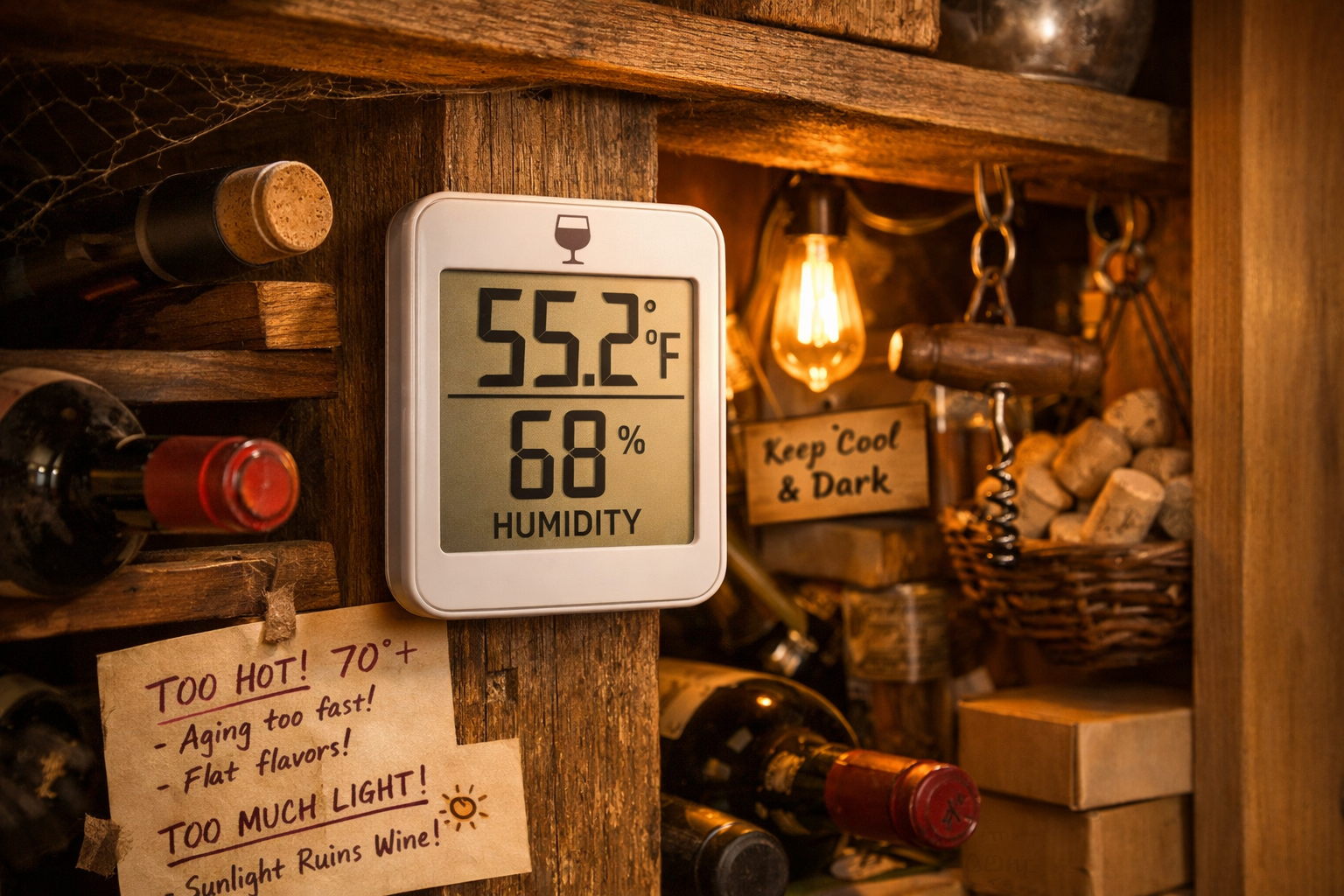
Room-by-Room Storage Audit: Finding Your Best Spot
Before buying any equipment, walk through your home with fresh eyes. You're looking for the coolest, darkest, most stable location available.
The Kitchen
Usually the worst choice. Kitchens experience the biggest temperature swings in any home—ovens running, dishwashers steaming, afternoon sun through windows. That wine rack on your counter looks beautiful but subjects bottles to fluctuations that can damage wine within weeks.
The top of your refrigerator? Even worse. Refrigerator compressors generate heat, creating a warm zone directly above.
Renter-safe fix: If kitchen storage is unavoidable, choose a lower cabinet away from the stove, dishwasher, and exterior walls that heat up in summer. Keep bottles away from radiators and baseboard heaters.
Living Room and Common Areas
Mixed results. Living spaces often maintain more stable temperatures than kitchens, but light exposure becomes the problem. That sunny corner where you display bottles? UV rays are slowly degrading the wine inside.
Renter-safe fix: A closed cabinet or closet in the living area works well. Keep bottles away from windows, heating vents, and HVAC registers.
Bedroom Closets
Often the best apartment option. Interior closets stay naturally cooler and darker than most rooms. They're insulated from exterior temperature changes and don't have appliances generating heat.
Renter-safe fix: Clear a low shelf in a closet that doesn't share a wall with a water heater or furnace. Add a simple thermometer to monitor conditions.
Under the Bed
A classic renter hack. The space under your bed offers darkness, relative temperature stability, and protection from foot traffic. It's consistently one of the most practical storage spots in apartments and rentals.
Renter-safe fix: Use a low plastic bin or wooden crate to keep bottles organized and horizontal. Check that the space stays cool—avoid beds positioned against exterior walls that receive direct afternoon sun.
Basement or Garage
High potential, but check carefully. Basements can be excellent—naturally cool and stable. But unfinished basements may have humidity problems, and garages experience extreme temperature swings in many climates.
Renter-safe fix: If you have basement access, a corner away from the water heater works well. Avoid garages unless they're climate-controlled.
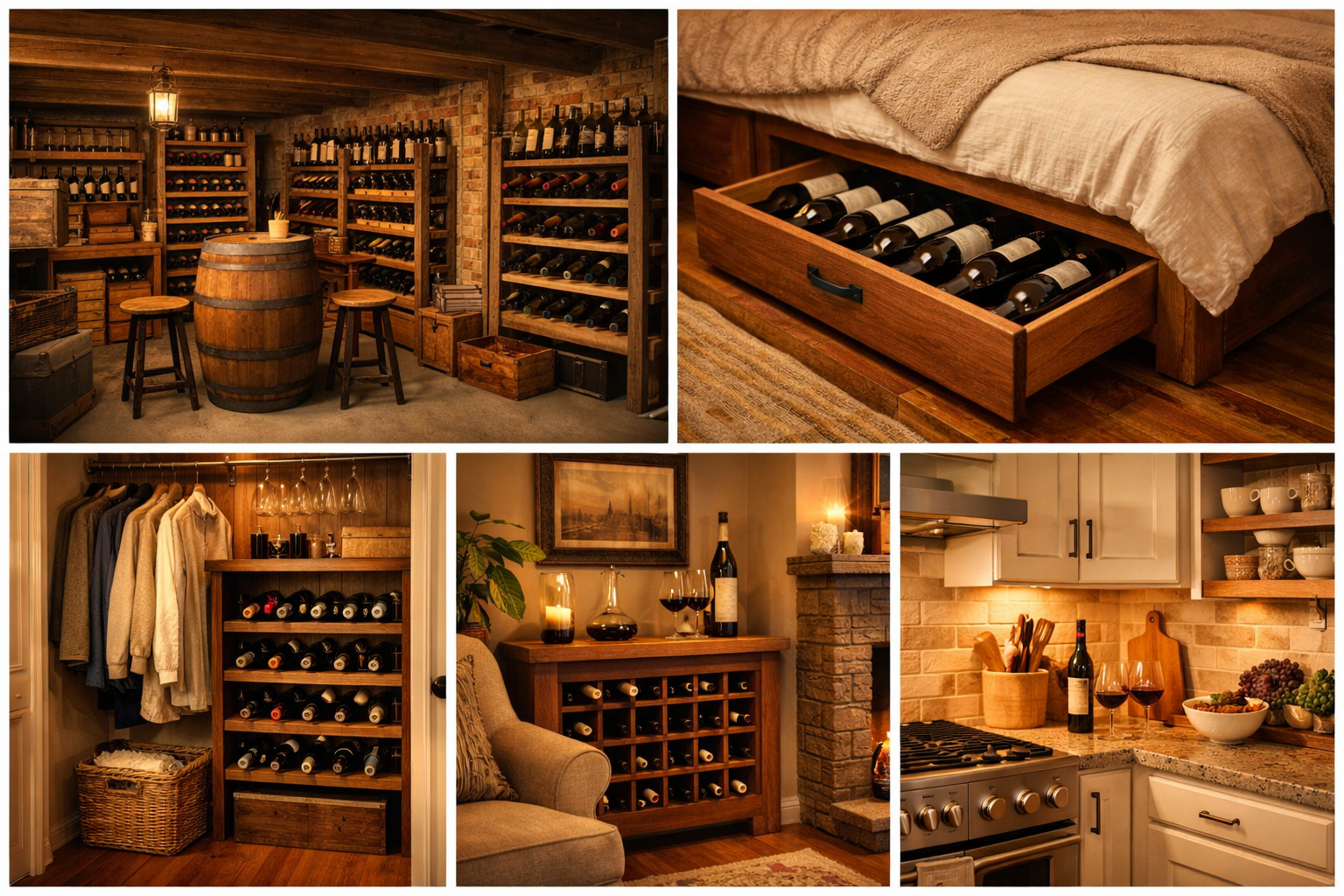
The Three Enemies: Heat, Light, and Vibration
Understanding exactly how each factor damages wine helps you make smarter storage decisions.
Heat Damage
Wine stored above 70°F ages faster than intended. The chemical reactions that normally create complexity happen too rapidly and produce different results. Instead of developing nuance, heat-damaged wine loses fruit character and develops a cooked or jammy taste [1].
Temperature consistency matters almost as much as the actual number. Wine stored at a steady 65°F will fare better than wine constantly cycling between 55°F and 75°F. Each fluctuation causes liquid to expand and contract, potentially pushing wine past the cork and allowing oxygen in.
Temperature guidelines:
Below 55°F: Fine for long-term storage, though very cold temps slow aging
55–65°F: The sweet spot for most wines
65–70°F: Acceptable for short-term storage (weeks to a few months)
Above 70°F: Avoid for anything but immediate consumption
Light Damage
UV light triggers chemical reactions that break down compounds in wine, creating unpleasant sulfur-based molecules [2]. This is why most wine bottles use colored glass—green and brown filter out some UV light.
Colored glass isn't complete protection. Extended exposure to any bright light, including fluorescent bulbs, can damage wine over time.
Light protection strategies:
Store in closed cabinets or closets
Keep bottles in their original cardboard boxes
Avoid display-style wine racks near windows
If using a glass-door wine fridge, choose one with UV-protective glass
Vibration Effects
This factor is subtler but still matters. Constant vibration—from a compressor refrigerator, washing machine, or high-traffic location—disturbs sediment and interferes with aging. The proteins and tartrates that naturally settle out of wine get stirred back up, potentially affecting clarity and flavor development.
Vibration reduction tactics:
Keep wine away from refrigerators, washing machines, and dryers
Avoid high-traffic areas where doors constantly open and close
If using a wine fridge, thermoelectric models produce less vibration than compressor models
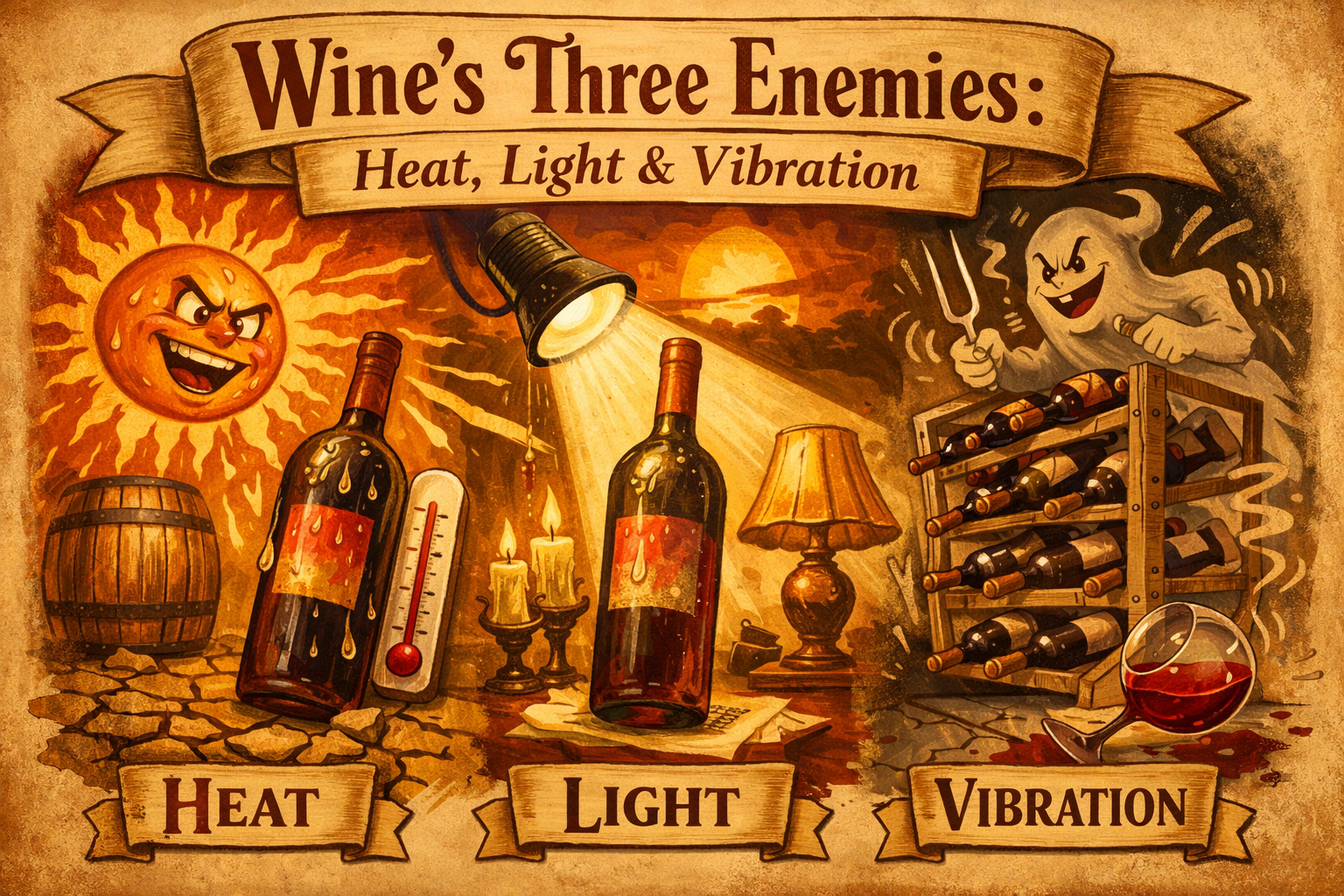
Renter-Safe Storage Solutions That Actually Work
You don't own the place. You can't install built-in storage. Here's what you can do.
Budget-Friendly Options (Under $50)
Wine boxes: Keep bottles in their original cardboard shipping boxes or purchase inexpensive wooden wine crates. These provide darkness and some insulation against temperature changes. Store them horizontally on a closet floor or under the bed.
Styrofoam wine shippers: If you've ordered wine by mail, save those foam inserts. They provide excellent temperature stability and stack neatly in closets.
Dark fabric wraps: For bottles you want to display but protect, wrap them in dark cloth napkins or purpose-made wine sleeves.
Mid-Range Solutions ($50–$200)
Countertop wine coolers: Small thermoelectric wine fridges holding 6–12 bottles provide temperature and humidity control without installation. They're portable when you move and maintain steady temps around 55°F.
Insulated wine bags: High-quality insulated bags can buffer bottles against temperature swings during especially hot or cold periods.
Worth the Investment ($200+)
Freestanding wine refrigerators: A 20–30 bottle unit provides serious protection without permanent installation. Look for dual-zone models if you want to store both reds and whites at optimal serving temperatures.
Key features to prioritize:
Thermoelectric cooling (quieter, less vibration) over compressor cooling
UV-resistant glass doors
Humidity control
Vibration-free operation
Drink Soon vs. Protect Longer: A Decision Framework
Not every bottle needs the same level of care. Here's how to think about storage based on when you'll actually drink the wine.
Drink Within 1–2 Weeks
Storage needs: Minimal. A cool, dark spot in your kitchen or pantry works fine. The wine won't have time to suffer from less-than-ideal conditions.
What to prioritize: Keep it out of direct sunlight and away from heat sources.
Drink Within 1–3 Months
Storage needs: Moderate. Temperature stability starts mattering more.
What to prioritize: Find that cool closet or interior cabinet. Lay bottles on their sides if they have corks. Monitor with a thermometer to ensure temps stay below 70°F.
Drink Within 3–12 Months
Storage needs: More significant. Poor storage will noticeably affect quality in this timeframe.
What to prioritize: Consider a small wine fridge if you regularly keep bottles this long. At minimum, store in the coolest, most stable spot in your home. Keep bottles horizontal to prevent cork drying.
Aging 1+ Years
Storage needs: Full protection required.
What to prioritize: A wine refrigerator is essentially necessary unless you have a naturally cool basement. You need consistent temperature (55°F ideal), darkness, humidity control, and minimal vibration.
Quick Reference: Storage Decision Table
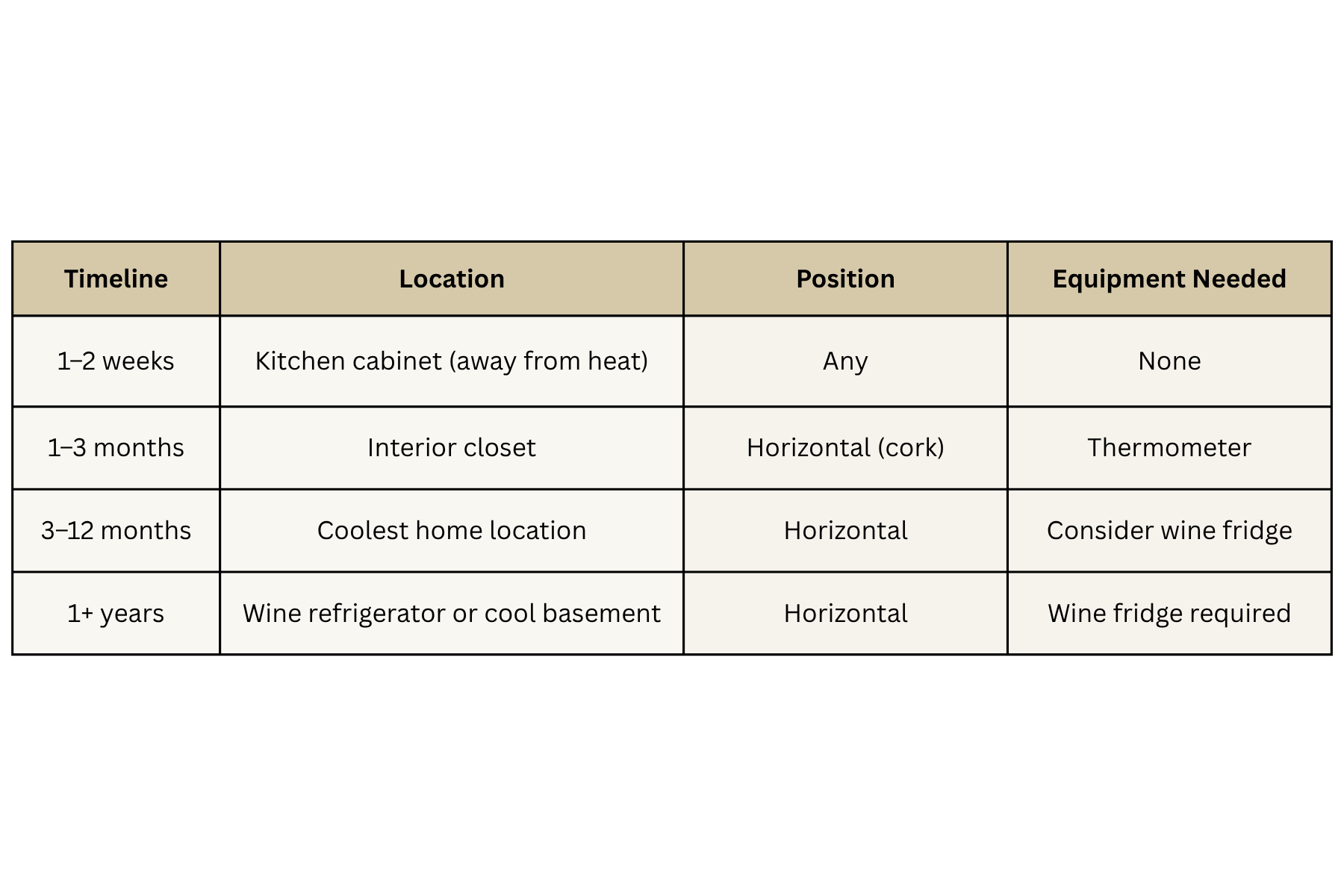
Quick Reference: Storage Decision Table
Cork vs. Screw Cap: Does Position Matter?
Cork-sealed bottles: Store horizontally. Wine needs to stay in contact with the cork to keep it from drying out. A dried cork shrinks, allowing oxygen to seep in and oxidize the wine [3].
Screw cap bottles: Position doesn't matter. Store however fits your space.
Synthetic corks: Position is purely organizational preference. Synthetic corks are made from plastic or plant polymers and never dry out, so horizontal storage doesn't affect wine health—it just keeps your collection tidy.
For mixed collections, storing everything horizontally simplifies organization and works for all closure types.
Humidity: The Often-Overlooked Factor
Wine experts recommend 60–70% humidity for long-term storage. Too dry, and corks shrink. Too humid, and labels get moldy (which doesn't affect the wine but hurts resale value).
Most homes hover around 30–50% humidity, depending on climate and season. For short-term storage, this is fine. For longer-term aging, consider:
Placing a small bowl of water near stored bottles (low-tech but effective)
Using a humidifier in your storage area during dry winter months
Choosing a wine fridge with humidity control features
Starting a Collection Without a Cellar
If you've caught the wine bug and want to start collecting, here's how to do it practically without dedicated cellar space.
Start Small and Focused
Begin with 6–12 bottles you actually want to drink. Don't buy cases hoping to age them unless you've solved your storage situation first.
Buy Wines That Don't Need Long Aging
Many excellent wines are delicious upon release. Ask your local wine shop which bottles they recommend drinking now versus cellaring. Build your collection around wines you'll enjoy within your storage capabilities.
Track What You Have
A simple spreadsheet or notes app works fine. Record:
What you bought
When you bought it
Where you stored it
When you plan to drink it
This prevents the frustrating scenario of finding a forgotten bottle that's past its prime.
Consider Off-Site Storage
For serious collectors without home cellar options, professional wine storage facilities exist in most metro areas. They offer temperature-controlled lockers at monthly fees for small capacities.
Signs Your Wine Has Been Stored Poorly
Sometimes you inherit bottles or receive gifts that weren't stored well. Here's how to spot potential problems before opening:
Cork pushing out: If the cork has risen above the lip of the bottle, heat expansion has occurred. The wine may be oxidized.
Weeping or sticky residue: Wine seeping past the cork suggests temperature damage.
Crystalline deposits: Not a storage problem—these tartrate crystals are harmless and natural.
Faded or damaged labels: Suggests light or humidity exposure. The wine inside may or may not be affected.
Murky appearance (white wines): Could indicate heat damage, though some natural wines are intentionally cloudy.
When in doubt, open it and taste. Many wines survive imperfect storage better than expected. But if something tastes off, trust your palate.
Your Wine Deserves Better Than the Kitchen Counter
Storing wine properly doesn't require a mansion with a custom cellar. It requires understanding what wine needs—cool, dark, stable, still—and finding the best approximation your living space allows.
Start with an honest audit of your home. Find that interior closet, under-bed space, or unused cabinet. Add a thermometer. Store bottles horizontally. For wines you're keeping longer than a few months, consider investing in a small wine fridge.
The payoff? Every bottle tastes the way the winemaker intended. No cooked flavors. No oxidation. Just the wine you were excited to buy, delivered exactly as it should be.
Ready to find bottles worth storing properly? Swing by The Pip and let us help you choose wines that match both your taste and your timeline. We'll guide you toward bottles perfect for drinking this weekend—and maybe a few worth tucking away for something special.
Frequently Asked Questions
Can I store wine in a regular refrigerator?
For short periods (up to a month), yes. But regular refrigerators run too cold for long-term storage (typically 35–38°F versus the ideal 55°F), and compressor vibration isn't great for wine. They also tend to be very dry inside, which can dry out corks over time. Use your kitchen fridge for whites and rosés you'll drink within a few weeks, but not for aging.
How long can wine sit on a kitchen counter?
If your kitchen stays below 70°F and bottles aren't in direct sunlight, a few weeks won't cause major damage for everyday wines. However, temperature spikes from cooking and appliance heat make kitchens poor choices for anything beyond immediate consumption. Move bottles to a cooler spot if you're keeping them longer than a week or two.
Does wine go bad if it gets warm once?
Brief warmth exposure—like carrying bottles from a car on a hot day—usually doesn't ruin wine. The danger comes from sustained heat or repeated temperature cycling. Get warm bottles into cool storage promptly, and they'll likely be fine. Extended storage above 70°F, however, will noticeably degrade quality.
What's the minimum investment for proper wine storage at home?
Zero dollars if you have the right spot already. A cool, dark interior closet costs nothing and provides decent storage for wines you'll drink within several months. Add a thermometer for around $10 to monitor conditions. For longer aging or temperature-challenged homes, a 6-bottle thermoelectric wine cooler starts around $75–$100 and handles most enthusiasts' needs.
Should I worry about humidity in my apartment?
For bottles you'll drink within a year, not significantly. Cork integrity becomes a concern mainly for wines aged multiple years. If you're storing bottles longer-term and your home runs dry (below 50% humidity), consider placing a small water bowl nearby or using a wine fridge with humidity control. Most casual collectors don't need to stress about humidity.
About This Guide
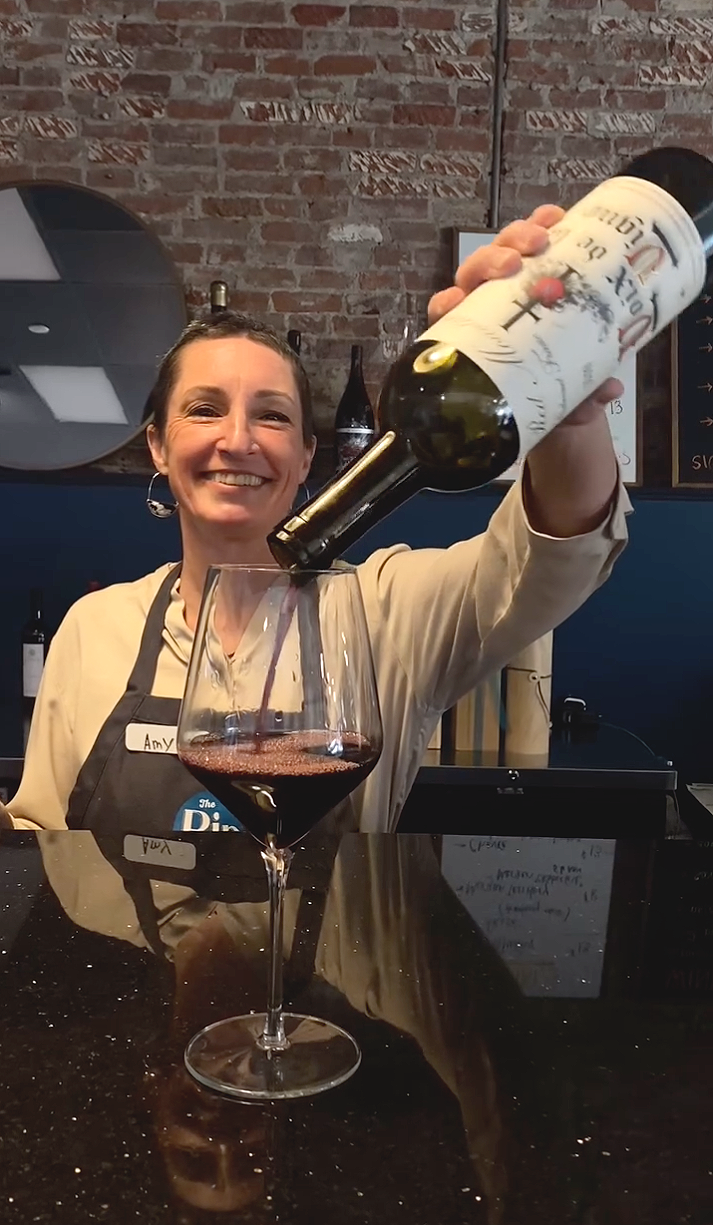
This guide was created by The Pip Wine Bar & Shop to help wine enthusiasts store their bottles with confidence—whether you're keeping something for next week's dinner or saving it for a special occasion. We're a Downtown Dixon wine bar and bottle shop specializing in curated, unique selections you won't find in grocery stores. Our team helps customers choose wines every day and understands the practical questions real people have about enjoying wine at home.
Works Cited
[1] Wine Spectator — "How to Store Wine at Home."
[2] VinePair — "Does Light Affect Wine Storage?"
[3] Wine Folly — "Wine Storage Basics."