
Sake for Wine Drinkers: Find a Style by Acidity, Body, and Aroma
You already know what you like in a glass of wine. That bright, crisp Sauvignon Blanc that cuts through creamy cheese. The full-bodied Cabernet that demands a hearty meal. The aromatic Gewürztraminer that smells like a flower shop in the best possible way.
Sake has all of that, too.
If you've ever stared at a sake menu and felt completely lost, you're not alone. The terminology feels foreign because it literally is. But sake operates on the same flavor principles as wine—acidity, body, aroma, sweetness—and once you see those connections, that intimidating menu becomes a treasure map to your new favorite pour.
Key Takeaways:
Sake and wine share the same core flavor dimensions: acidity, body, aroma, and sweetness
Your existing wine preferences translate directly to sake styles
Temperature dramatically changes sake's character (unlike wine)
A few simple ordering phrases can help you find what you'll love
At The Pip, we love helping wine lovers discover sake through a lens they already understand. Let's translate.
Why Wine Knowledge Transfers Directly to Sake
Sake and wine share more DNA than you might expect. Both are fermented beverages where the production process dramatically shapes the final flavor. Both range from bone-dry to dessert-sweet, from whisper-light to full-bodied, from neutral to explosively aromatic [1].
The biggest difference? Rice instead of grapes. But the way sake brewers manipulate that rice creates the same spectrum of characteristics wine lovers obsess over.
When you describe a wine as "crisp" or "round" or "floral," you're talking about acidity, body, and aroma. Sake uses different words for the same concepts. Once you crack that code, ordering becomes intuitive.
One key distinction worth knowing: while wine gets its sugars directly from grapes, sake relies on a mold called Koji to convert rice starches into fermentable sugars. This process—unique to sake—is why rice can produce such a wide range of flavors despite being a neutral-tasting grain [1].
The Acidity Translation: From Crisp to Round
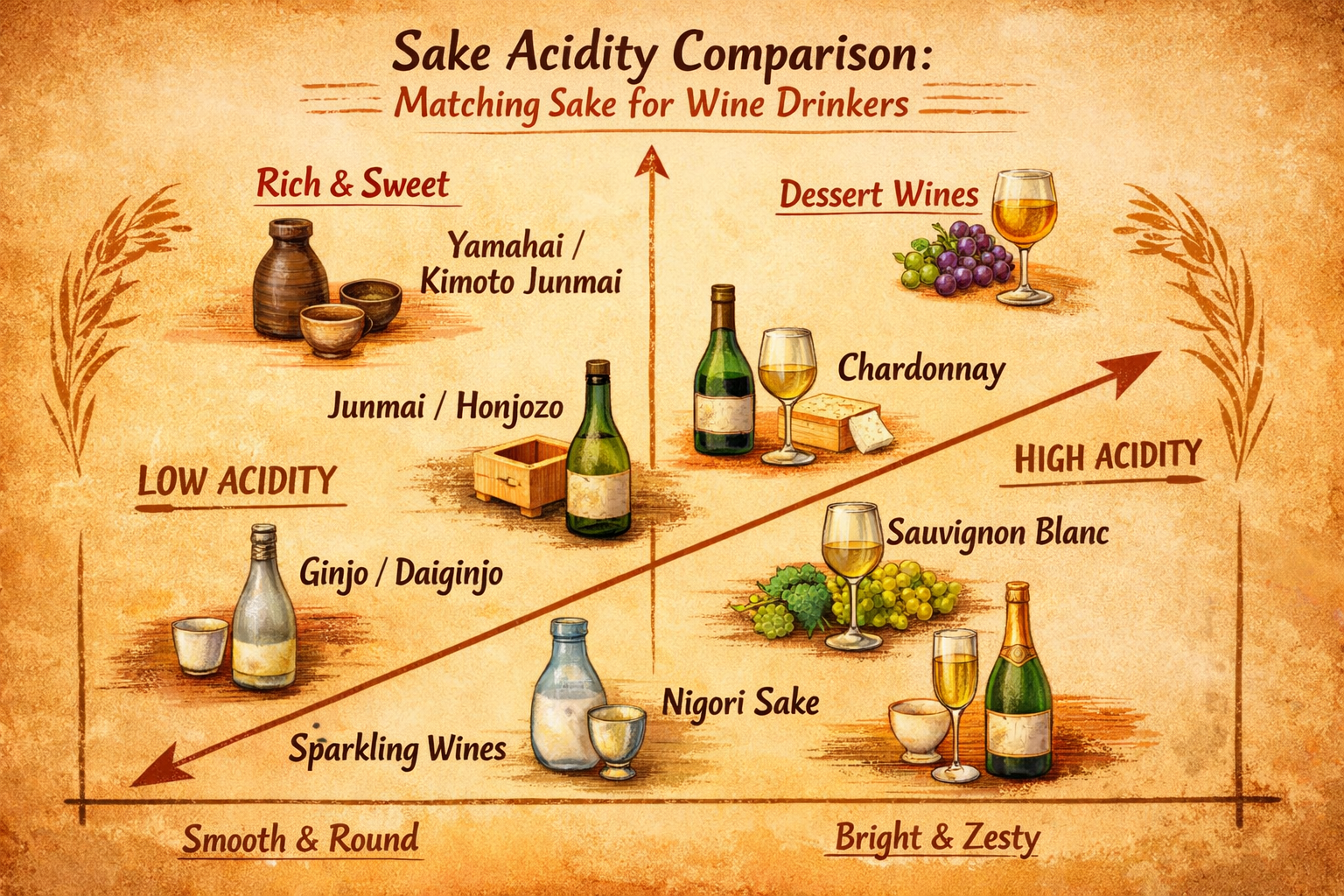
Acidity makes wine feel alive. It's that mouthwatering quality in a Chablis or the backbone of a good Chianti. Sake acidity works identically—it determines whether a pour feels bright and refreshing or soft and smooth.
High-acid sakes taste crisp, clean, and food-friendly. They cleanse your palate between bites and make rich dishes sing. If you reach for Sauvignon Blanc, Albariño, or unoaked Chardonnay, high-acid sake will feel familiar [2].
Low-acid sakes feel rounder, softer, more contemplative. They coat your mouth rather than cut through it. Fans of buttery Chardonnay or Viognier often gravitate here.
What to Order
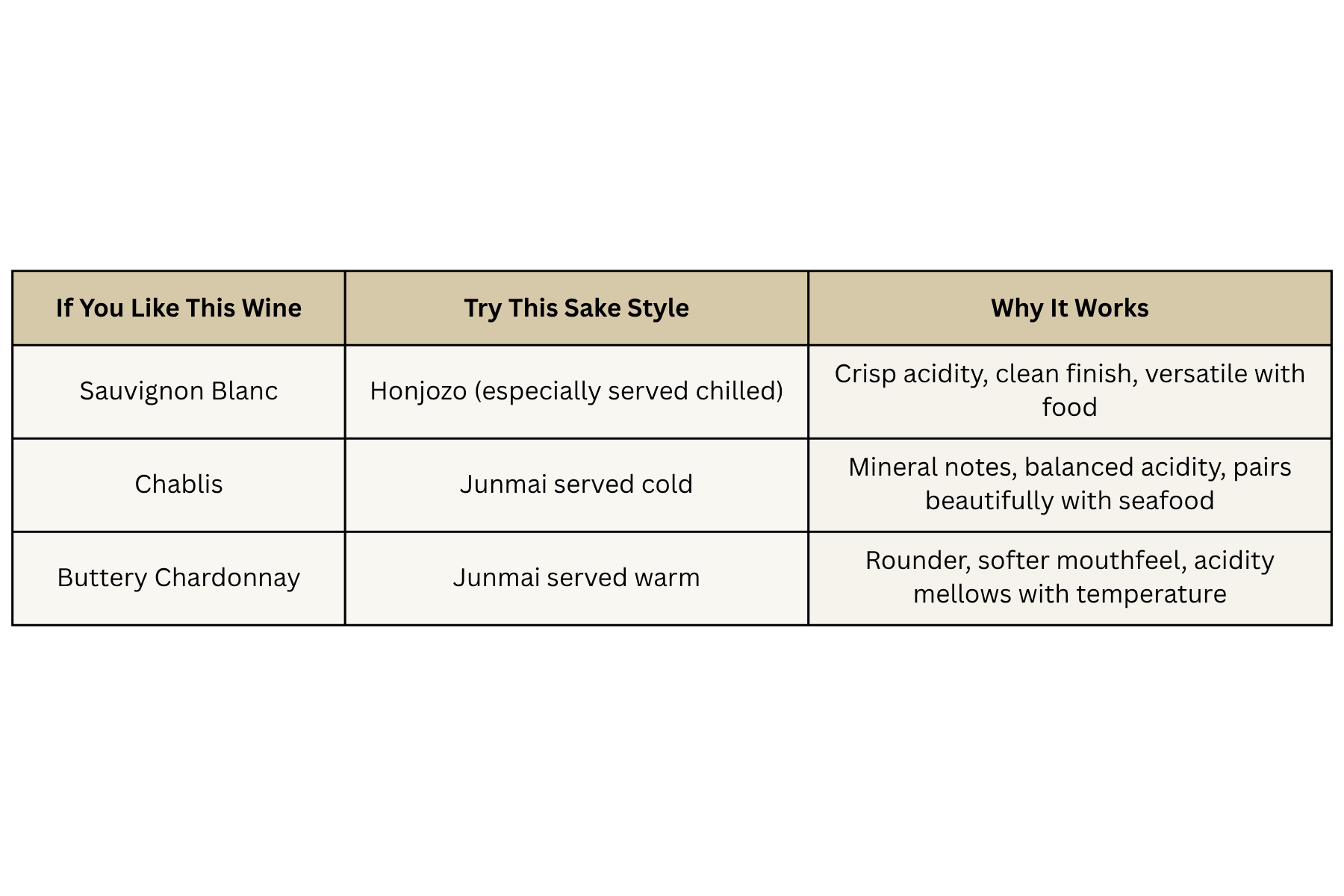
Ordering phrase: "I like crisp, high-acid wines. What sake would you compare to that?"
The Body Translation: Light to Full
Body in wine comes from alcohol, residual sugar, and extraction. In sake, it's largely determined by the rice polishing ratio and brewing style [3].
The simplified version: the more brewers polish away the outer layers of the rice grain, the lighter and more delicate the sake tends to be. Less polishing often means more umami, more texture, more weight.
Light-bodied sakes feel delicate and ethereal. They're the Pinot Grigio of the sake world—easy drinking, refreshing, perfect for warm weather or light dishes.
Medium-bodied sakes offer more presence without heaviness. Think unoaked Chardonnay or Grüner Veltliner territory.
Full-bodied sakes bring richness and depth. These are your Rhône whites, your aged Burgundies—sakes that want attention.
What to Order
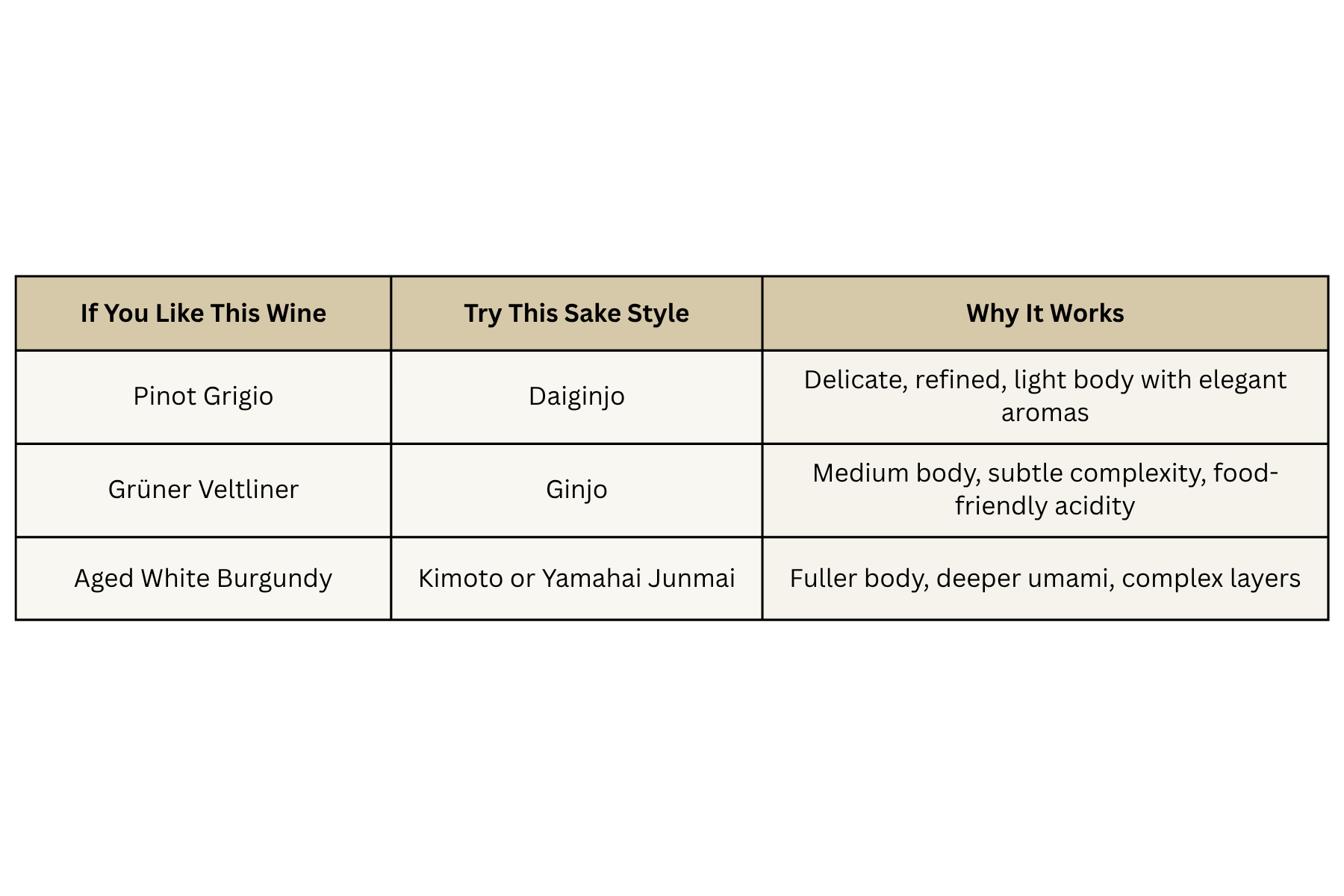
Ordering phrase: "I usually prefer fuller-bodied whites with some richness. What sake has that weight?"
The Aroma Translation: Subtle to Expressive
Some wines announce themselves from across the room—think Muscat or Torrontés. Others reveal themselves slowly, like a restrained Burgundy. Sake follows the same spectrum.
Ginjo and Daiginjo sakes are the aromatics. Extended low-temperature fermentation combined with specific yeast strains creates fruity, floral notes: apple, pear, melon, tropical fruit, sometimes flowers [1]. Those Gewürztraminer-like aromas? They come from the yeast, not the rice itself—which is why sake can smell so expressive despite starting from a neutral grain.
Junmai and Honjozo sakes tend toward subtler, earthier notes. You'll find rice, grain, mushroom, umami. They're the quiet wines that reveal themselves in layers rather than first impressions.
What to Order
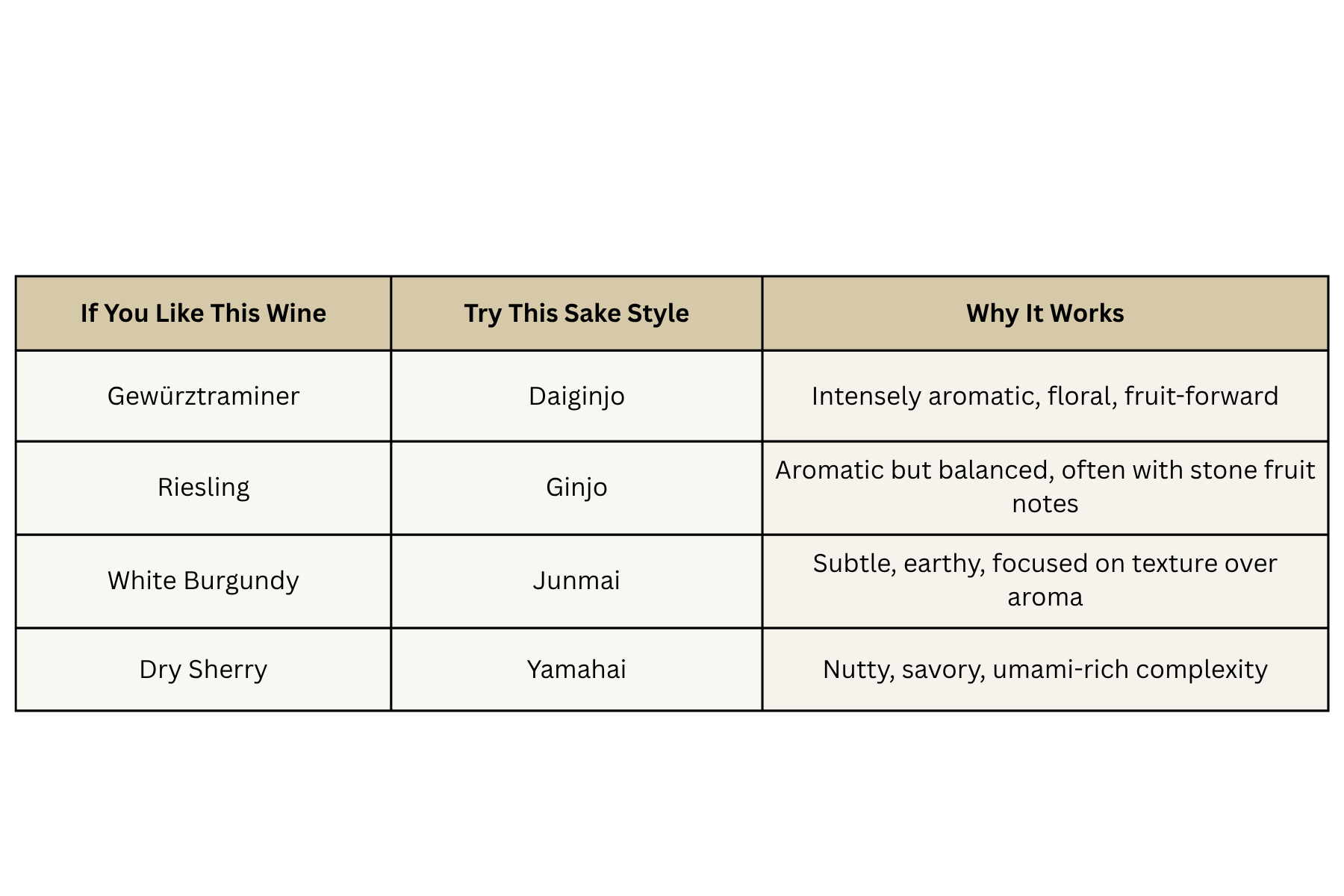
Ordering phrase: "I love aromatic wines with lots of floral and fruit notes. Show me something expressive."
The Sweetness Translation: Bone-Dry to Dessert
Most sake is technically dry—far drier than most people expect [2]. That fruity aroma in a Daiginjo? It smells sweet but often tastes bone-dry. The aromatic compounds created during fermentation aren't from residual sugar—similar to how a dry Riesling can smell like peaches but finish completely dry.
That said, the spectrum exists:
Dry sakes finish clean with no residual sugar. They're your Muscadet, your Sancerre.
Off-dry sakes have just a hint of sweetness, like a German Kabinett Riesling.
Sweet sakes include dessert styles that rival late-harvest wines.
Quick Sweetness Guide (SMV / Nihonshudo)
On English-language menus and bottle labels, you'll often see "SMV" (Sake Meter Value)—this is the same measurement the Japanese call Nihonshudo. Higher positive numbers mean drier; negative numbers mean sweeter.
SMV +6 or higher: Very dry
SMV +1 to +5: Dry
SMV -1 to +1: Off-dry
SMV -6 or lower: Sweet
Don't worry about memorizing this. Just know that most premium sake lands in the dry-to-off-dry range. If you prefer sweeter wines, ask specifically—options exist, but they're the exception rather than the rule.
Ordering phrase: "I like my wine on the drier side. Is this sake dry or will it have some sweetness?"
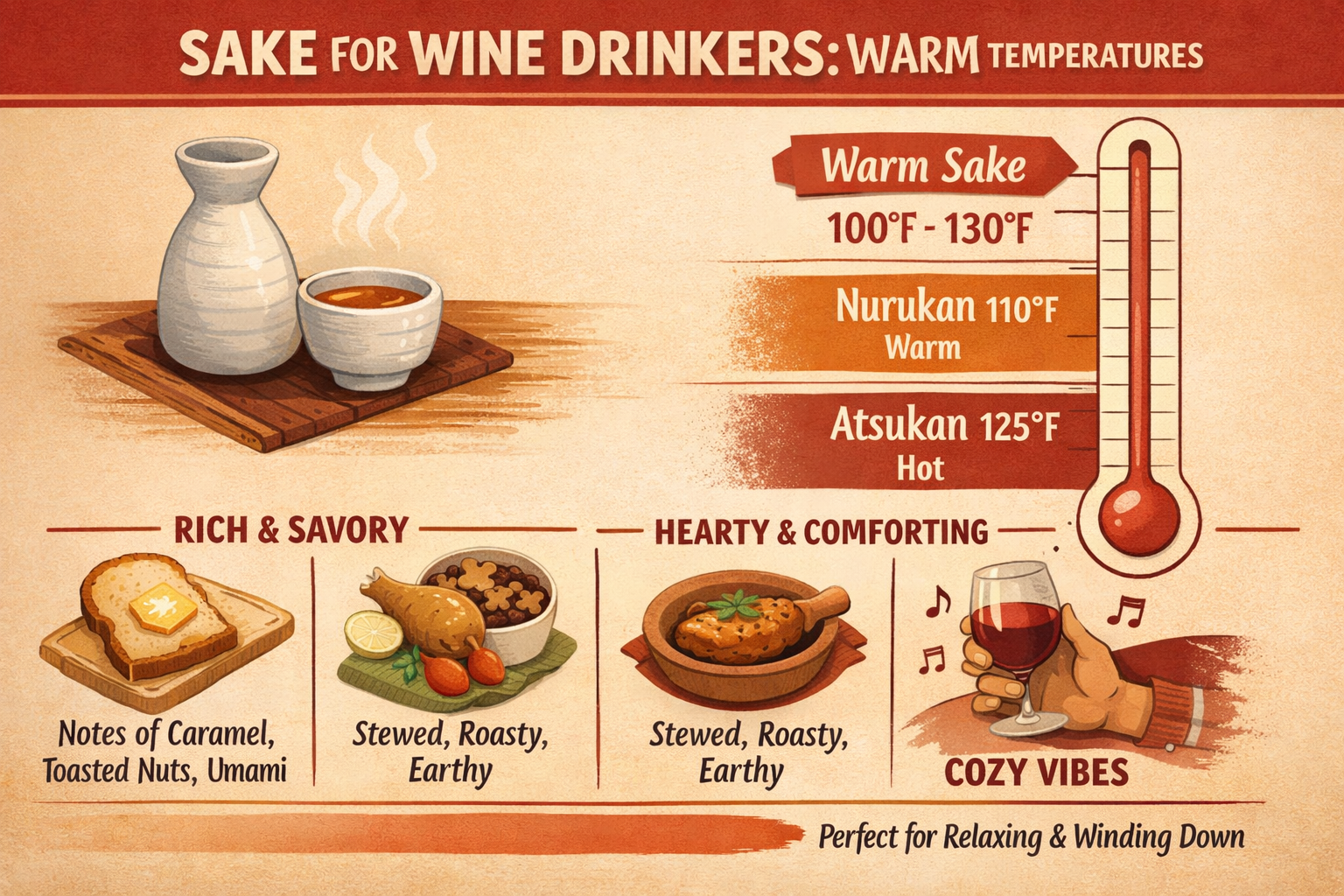
The Temperature Difference: Wine Doesn't Do This
Unlike wine—where serving temperature follows pretty standard rules—sake can be served across a wide range, and temperature dramatically changes the experience [3].
Chilled (41-50°F): Emphasizes crispness and aroma. Ginjo and Daiginjo styles shine here.
Room temperature (59-68°F): Opens up complexity. Good Junmai works beautifully.
Warm (95-104°F): Softens acidity, brings out umami. Honjozo and rustic Junmai styles transform.
Hot (122-140°F): Bold move. Only certain sakes can handle this, and it creates an entirely different drinking experience.
A sake you didn't love chilled might become your favorite warm. Don't be afraid to experiment.
Ordering phrase: "How do you recommend serving this? I'm curious to try it at different temperatures."
Sparkling Sake: Your Prosecco Alternative
Love bubbles? Sparkling sake exists, and it's genuinely delightful.
Most sparkling sakes are light, slightly sweet, lower in alcohol, and dangerously easy to drink. They're closer to a casual Prosecco than a complex Champagne—but that's part of the charm.
Serve them ice-cold. Pair them with fried foods, brunch, or nothing at all. They're perfect for the wine drinker who reaches for Cava or Crémant.
Ordering phrase: "Do you have any sparkling sake? I'm in a bubbly mood."
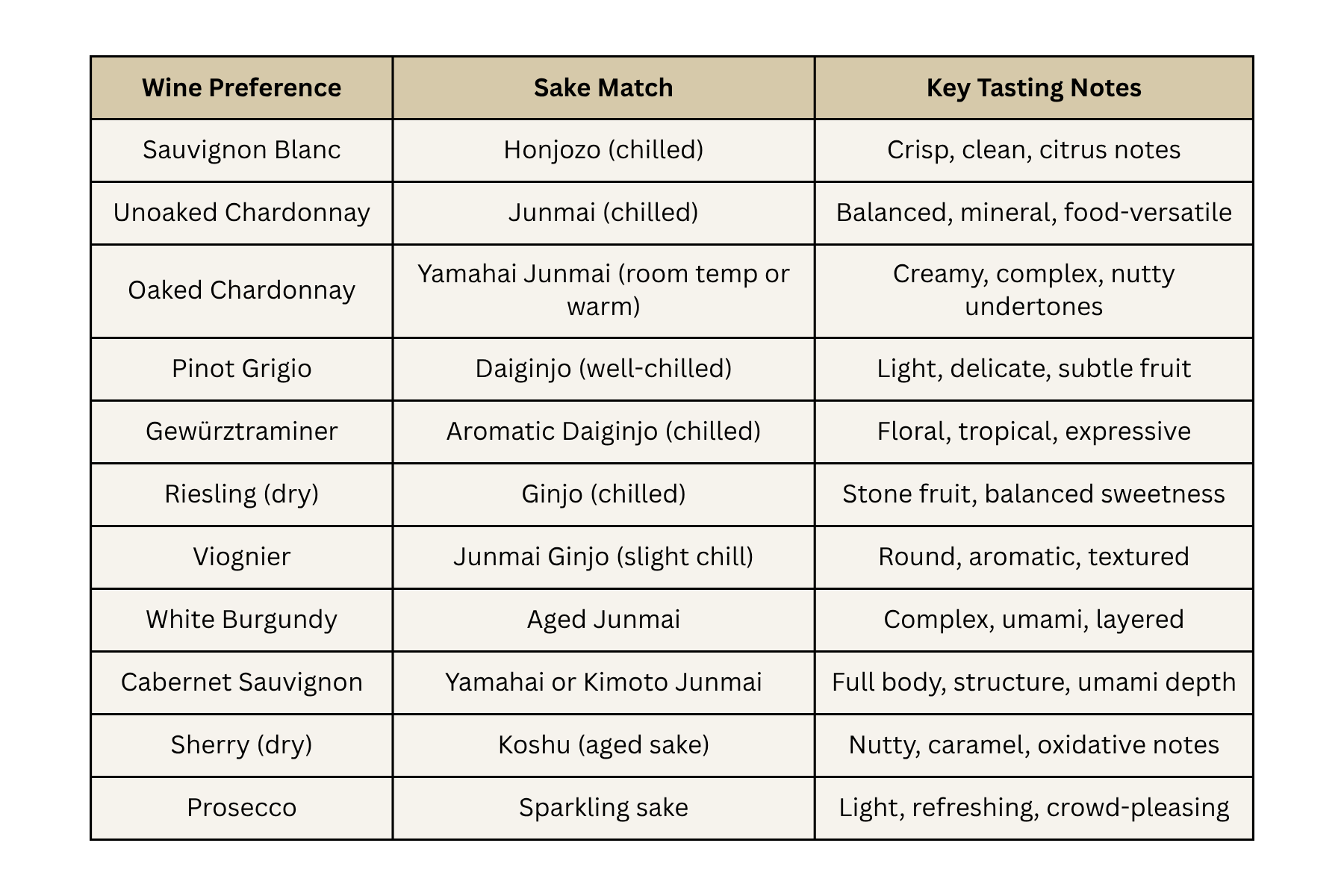
The Complete Wine-to-Sake Translation Chart
Sake Terminology Decoded
You don't need to memorize Japanese to order sake confidently. But a few key terms help:
Junmai: Pure rice sake, no added alcohol. Often richer and more umami-forward.
Honjozo: A small amount of brewer's alcohol added. Often lighter and crisper.
Ginjo: Rice polished to at least 60% of its original size. More refined, more aromatic.
Daiginjo: Rice polished to at least 50%. The most refined, most aromatic category.
Junmai Ginjo / Junmai Daiginjo: Combines the purity of Junmai with Ginjo/Daiginjo refinement.
Yamahai / Kimoto: Traditional brewing methods that create fuller, gamier, more complex sakes.
Nigori: Unfiltered, cloudy sake. Often creamier with a bit of sweetness.
Nama: Unpasteurized. Fresh, lively, needs refrigeration.
Koji: The mold that converts rice starch to sugar—the secret ingredient that makes sake possible.
Start Your Sake Journey Here
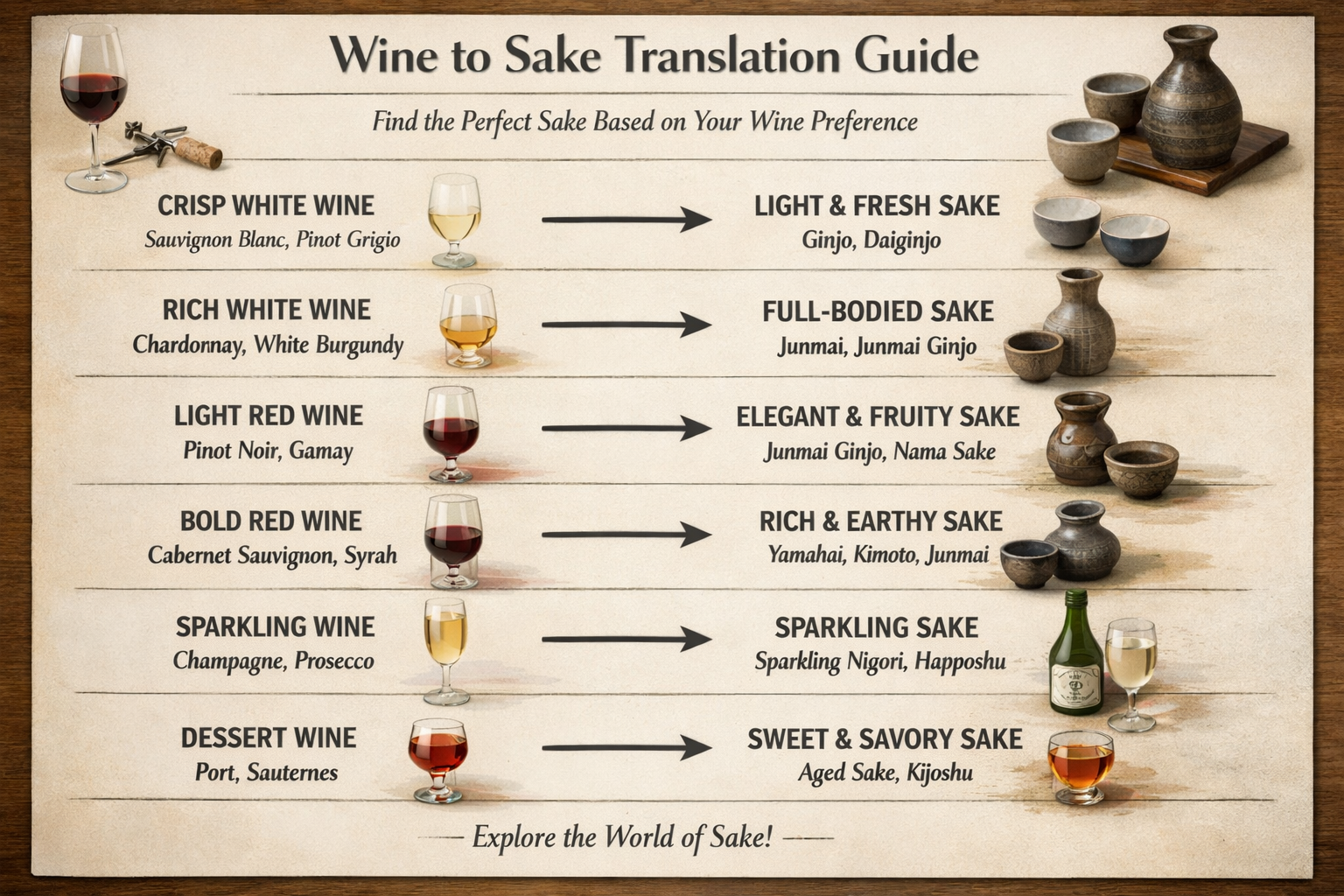
The best way to learn is to taste. Here's your action plan:
First visit: Pick one sake based on your wine preference using the chart above. Notice how your expectations align with reality.
Second visit: Try the same style at a different temperature. See how it transforms.
Third visit: Branch out. If you usually drink light wines, try something fuller. If you love aromatics, explore the subtle side.
Keep track of what you like. Sake labels are harder to remember than wine labels (unless you read Japanese), so take photos or notes.
Take Your New Favorite Home
Once you find a style you love, grab a bottle from our retail selection. Sake pairs beautifully with home-cooked meals—especially dishes that might overwhelm wine, like miso-glazed fish or teriyaki anything.
Our curated selection at The Pip focuses on small producers making interesting, food-friendly sake. The same philosophy behind our wine picks applies: no mass-market, no boring. Just good stuff worth discovering.
Ready to translate your wine palate into sake?
Come hang out with us. Tell us what you usually drink, and we'll guide you toward something you'll love. That's what we're here for.
Frequently Asked Questions
Is sake more like wine or beer?
From a production standpoint, sake is technically brewed like beer—using fermentation to convert starches into alcohol. But from a drinking experience, it's much closer to wine. The flavor profiles, food pairing principles, and serving rituals all mirror wine culture more than beer culture [1]. Wine lovers typically find sake intuitive once they understand the terminology.
What's the best sake for someone who drinks dry white wine?
Start with a Junmai or Honjozo served chilled. These styles offer the crisp, clean, food-friendly profile that dry white wine drinkers appreciate. If you love highly aromatic whites like Gewürztraminer, branch into Ginjo or Daiginjo for more expressive fruit and floral notes [2].
What sake should a red wine drinker try?
If you love bold, structured reds like Cabernet Sauvignon or Syrah, look for Yamahai or Kimoto-style Junmai sakes. These traditional brewing methods create fuller body, deeper umami, and savory complexity that resonates with red wine lovers. Aged sake (Koshu) also appeals to fans of earthy, developed reds.
Does sake have less alcohol than wine?
Most premium sake ranges from 14-16% ABV—very similar to wine. Sake is often naturally higher (up to 20%) but commonly diluted to around 15% before bottling. Undiluted sake (genshu) stays at that higher level, closer to fortified wine territory. Sparkling sakes often run lower, around 5-8% [3].
Can I age sake like wine?
Most sake is meant to be consumed fresh, ideally within a year of bottling and refrigerated once opened. However, intentionally aged sake (Koshu) does exist and develops complex nutty, caramel notes similar to oxidative wines like sherry. Standard sake doesn't improve with age the way tannic reds can [2].
Why does fruity-smelling sake taste dry?
This confuses many wine drinkers at first. The aromatic compounds in Ginjo and Daiginjo sakes—created by specific yeast strains during fermentation—smell like fruit but aren't from residual sugar. It's similar to how a dry Riesling can smell like peaches but finish completely dry. Trust your palate over your nose.
Why Trust The Pip for Sake Guidance
The Pip Wine Bar & Shop in Downtown Dixon specializes in helping people discover what they love—whether that's wine, craft cocktails, or sake. Our curated selection focuses on small producers making exceptional products you won't find in big-box stores. When you ask us what to try, we listen to what you already enjoy and guide you toward something that fits your palate. That approach works whether you're exploring your hundredth bottle of wine or your first glass of sake.
Works Cited
[1] Sake Service Institute — "Sake Basics: Understanding Sake Categories and Production." https://www.sakeserviceinstitute.com/sake-basics
[2] Wine Folly — "Sake for Wine Lovers: A Beginner's Guide to Japanese Rice Wine." https://winefolly.com/deep-dive/sake-for-wine-lovers
[3] Japan Sake and Shochu Makers Association — "Sake Production Methods and Classification Standards." https://www.japansake.or.jp/sake/english/knowledge/